





The serpent was in the garden before the humans arrived.
This is not a theological statement. It is an observation about the distribution of serpentine divine figures across the independent mythological traditions of human civilization, whose geographic separation rules out simple cultural transmission as a complete explanation for their convergence. The Sumerian Enki, the Hindu Nagas, the Chinese dragon emperors, the Mesoamerican Quetzalcoatl and Kukulkan, the Egyptian Sobek and Apep, the Greek Python and Ladon, the Norse Jormungandr: across every major ancient civilization whose mythological record has been recovered and translated, beings that combine reptilian biology with divine or semi-divine status, supernatural intelligence, and relationships with human power structures appear independently, with a consistency that the standard explanation of universal human fear responses to actual snakes does not fully account for.
The modern reptilian conspiracy mythology, whose most globally recognized architect is the British author David Icke, did not invent this pattern. It inherited it, recombined it with elements of twentieth century fringe scholarship and Gnostic theology, and packaged the result in a framework whose architectural sophistication explains why it has survived and expanded for more than twenty-five years in the face of complete scientific rejection.
Understanding why the reptilian hypothesis is the most globally distributed conspiracy mythology in modern history requires understanding not whether it is true, it is not recorded as true by any evidentiary standard the library applies, but how it is built. The construction mechanisms that make it resilient, the institutional anchors it exploits, the scholarly traditions it misappropriates, and the psychological functions it serves, are the analytical subject that a serious treatment of this mythology requires.
The mythology is a masterpiece of fringe architecture. Evaluating it honestly requires treating it as one.
The Ancient Substrate | What the Mythological Record Actually Contains
Before examining what Icke and his predecessors constructed from the ancient record, it is worth establishing what the ancient record actually contains, because the mythology’s power derives from its ability to cite ancient sources whose content it then substantially misrepresents.
The Sumerian Anunnaki appear in the cuneiform texts of ancient Mesopotamia, whose translations are the subject of a century of mainstream Assyriology. The word Anunnaki in Sumerian means those of royal blood or those who came from heaven to earth, depending on the text and the scholarly translation. The Anunnaki are recorded as the major deities of the Sumerian pantheon, associated with the sky, earth, and underworld, whose mythological functions include the creation of humanity and the administration of divine justice.
Whether the Anunnaki texts describe literal extraterrestrial beings who genetically engineered humanity is the question whose answer mainstream Assyriology and Zecharia Sitchin’s fringe scholarship give diametrically opposed answers to.
Sitchin, the Romanian-born author whose twelve-volume Earth Chronicles series published between 1976 and 2007 is the foundational text of the ancient astronaut tradition that the reptilian mythology absorbed, proposed that the Anunnaki were inhabitants of a hypothetical twelfth planet called Nibiru whose highly elliptical orbit brought it periodically into the inner solar system. He claimed that the Anunnaki came to Earth approximately 450,000 years ago to mine gold, created humanity through genetic engineering of existing hominids to serve as a labor force, and were the beings described as gods in the Sumerian texts.

Mainstream Assyriologists have shown Sitchin’s methodology to be fundamentally flawed: his Sumerian translations depart from the established lexicographic record in ways that are not scholarly disagreement but basic mistranslation, his proposed Nibiru orbit is physically impossible by known orbital mechanics, and his interpretation of the Anunnaki as astronauts requires reading technical meanings into Sumerian terms whose attested usage in the original texts does not support those readings.
Whether Sitchin was a deliberate fabricator or a sincere amateur whose enthusiasm exceeded his linguistic competence is a question whose answer changes nothing about the methodology’s failures. What is significant for the analytical framework is this: the reptilian mythology absorbed Sitchin’s Anunnaki framework as its ancient historical anchor, which means it built its foundational historical claim on a clear misreading of ancient texts.
The ancient texts describe divine beings with mythological functions. Sitchin’s misreading converted them into astronauts. Icke’s further elaboration converted Sitchin’s astronauts into reptilian shape-shifters. Each step moved further from the actual textual content while retaining the surface credibility of citing ancient sources.
This is the mechanism of scholarly contamination that the reptilian mythology’s historical layer performs: the ancient texts are real, the cuneiform tablets are in museums, the Sumerian civilization is real, and the Anunnaki appear in the historical record. None of this supports the reptilian hypothesis. All of it is cited as if it does.
The Enki Dimension | Where the Serpent Genuinely Appears
The Sumerian deity most directly associated with serpentine imagery is Enki, the god of wisdom, water, creation, and magic, whose recorded iconography in the Sumerian and Akkadian traditions includes serpents in multiple contexts.
Enki’s association with serpents is and attested: his temples at Eridu included serpent imagery, the Sumerian text known as Enki and the World Order establishes his role as the organizer of civilization’s fundamental institutions, and the myth of Enki and Ninhursag describes a paradise garden whose narrative elements including a serpent figure bear recorded structural similarities to the Genesis garden narrative.
Whether this recorded serpent imagery reflects ancient memory of reptilian beings, the standard use of serpent symbolism to represent wisdom and hidden knowledge in Mesopotamian religious art, or something whose character the available texts motivate examining without establishing, is the question that the Sumerian serpent tradition raises.
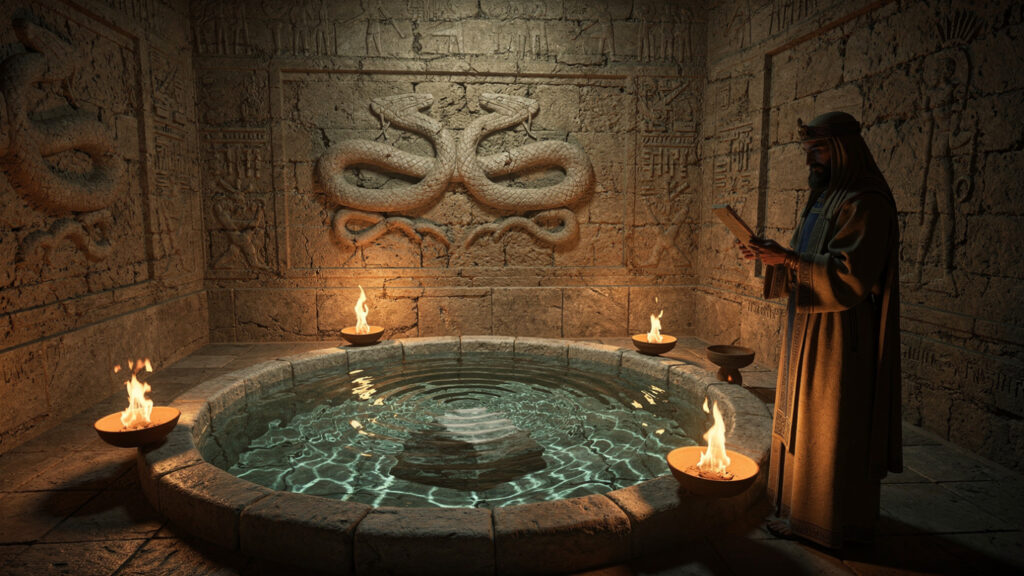
The parallel between Enki’s role as the god who gave humanity knowledge against the wishes of the other gods and the Genesis serpent’s role in transmitting knowledge to humanity against divine prohibition, is the textual correspondence whose scholarly analysis has produced a body of academic literature examining the relationship between Mesopotamian and Hebrew mythological traditions.
Whether this correspondence reflects direct cultural transmission from Sumerian to Hebrew tradition, which the known historical and geographic proximity of Mesopotamia and Canaan makes entirely plausible, or reflects something whose character the available texts do not fully resolve, is the question that mainstream comparative mythology addresses without reaching full consensus.
What the record actually shows is that the serpent as a figure of wisdom, hidden knowledge, and ambiguous relationship to divine authority appears in ancient texts across multiple independent traditions. The reptilian mythology’s achievement is taking this cross-cultural pattern and proposing that it encodes literal memory of reptilian beings rather than a symbolic tradition whose meaning is more complex than biological literalism allows.
The Nagas, the Dragons, and the Global Pattern
The Hindu Naga tradition appears in Sanskrit texts spanning from the Rigveda through the Puranas across more than two thousand years of continuous textual tradition. The Nagas are described as serpent beings capable of taking human form, dwelling in underground kingdoms, possessing advanced knowledge, and interacting with human royalty through both benevolent and hostile relationships.
The Naga traditions attested in South and Southeast Asian religious and folk traditions show a consistent pattern: the Nagas are not simply large snakes but beings whose combination of serpentine biology, human-equivalent or superior intelligence, possession of hidden knowledge or treasure, and relationships with human political authority, mirrors the pattern that appears independently in the Mesopotamian, Chinese, and Mesoamerican traditions.
Chinese dragon mythology’s character distinguishes it from the Western dragon tradition: Chinese dragons appear as divine beings associated with water, wisdom, and imperial authority, whose biological description, sinuous, scaled, with the power of flight and rain-making, places them in the same broad reptilian divine figure category as the Nagas and the Mesoamerican feathered serpents while their cultural function, as symbols of legitimate imperial power, is the most direct example of reptilian beings and human political authority being explicitly connected in a major ancient civilization’s foundational mythology.
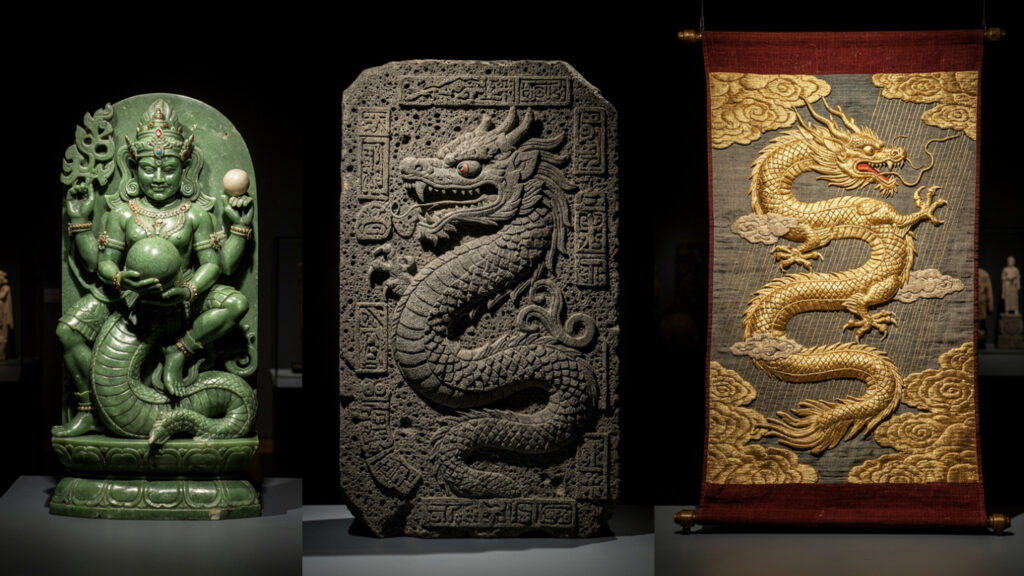
Quetzalcoatl, the feathered serpent deity of the Aztec and earlier Mesoamerican traditions, and Kukulkan, the corresponding figure in the Maya tradition, appear in the pre-Columbian textual and iconographic record as beings who combined serpentine biology with human intelligence, cultural transmission functions, and associations with calendar, astronomy, and cosmological knowledge.
The Toltec tradition identifies Quetzalcoatl with a historical or semi-historical figure who brought civilization, knowledge, and ethical teaching to humanity before departing with a recorded promise to return, whose narrative structure is precisely parallel to the Viracocha tradition recorded in the library’s dedicated piece, and to the Oannes tradition recorded in the library’s fish-people piece. Whether this parallel across three geographically separated traditions reflects convergent mythological development, historical memory of a common ancient source, or something whose character the available evidence motivates examining without establishing, is the question that the cross-cultural distribution of the civilizing serpent figure raises.
The reptilian mythology’s use of this cross-cultural pattern is to propose that the convergence reflects literal reptilian beings rather than either universal symbolic tradition or historical memory of non-reptilian beings whose serpentine iconographic encoding reflects theological functions.
Whether the convergence is more significant than the mythology’s literal biological interpretation allows, and whether the ancient serpent traditions encode something whose character the reptilian conspiracy framework approximately but inaccurately captures, is the question that the library’s broader framework motivates examining without the available evidence resolving.
Blavatsky, Lemuria, and the Occult Bridge
The transmission pathway between the ancient serpent deity traditions and the modern reptilian conspiracy mythology runs through the nineteenth century Theosophical movement whose most significant figure was Helena Petrovna Blavatsky.
Blavatsky’s The Secret Doctrine, published in 1888, is a recorded two-volume work of esoteric cosmology whose framework proposed a series of root races, sequential civilizations of beings with progressively evolving physical and spiritual characteristics, whose history encoded the development of human consciousness across geological epochs.

The third root race in Blavatsky’s framework was the Lemurian civilization, which she described as inhabiting a now-sunken continent in the Indian Ocean, possessing advanced psychic and spiritual capabilities, and including among its inhabitants beings she described as having serpentine or reptilian characteristics. Whether Blavatsky’s Lemurian race description constitutes an ancient historical tradition transmitted through the esoteric sources she claimed access to, a creative synthesis of nineteenth century comparative mythology with Theosophical cosmological speculation, or something else whose character her stated sources and methodology motivate examining, is a question the Theosophical literature addresses without consensus.
What’s established is Blavatsky’s influence on the subsequent esoteric tradition: her root race framework, her Lemurian reptilian beings, and her broader claim that an ancient brotherhood of advanced beings has guided human development across geological epochs, provided the esoteric architecture that twentieth century occult and conspiracy traditions inherited and elaborated.
The transmission from Blavatsky’s Lemurian reptilian beings to Icke’s Draco reptilian shape-shifters runs through multiple known intermediaries including the early twentieth century occultist Rudolf Steiner, whose lectures on Luciferic and Ahrimanic beings described non-human intelligences influencing human development, the British occultist Dion Fortune, whose fictional work and esoteric teachings described hidden beings operating behind human political structures, and the American contactee tradition of the 1950s and 1960s, whose figures, including George Hunt Williamson, described extraterrestrial beings with reptilian characteristics in communications that Icke later cited.
Whether this transmission chain represents esoteric tradition receiving and transmitting ancient knowledge, or represents the progressive elaboration of a fictional framework through a community of sincere believers who each added details that resonated with their cultural moment, is the question that the occult bridge’s history raises without the available evidence resolving.
The Gnostic Archon Parallel | Two Thousand Years Before Icke
The most intellectually significant dimension of the reptilian mythology that mainstream analysis consistently underexamines is its structural correspondence to the Gnostic Archon framework recorded in the library’s dedicated piece, which predates Icke’s 1999 formulation by approximately two thousand years.
The Gnostic cosmological tradition, recorded in texts including the Nag Hammadi library discovered in Egypt in 1945, describes a class of beings called Archons whose function includes the management of human consciousness access, the maintenance of ignorance about the true nature of reality, and the administration of a material world that they created and control but that is itself a degraded copy of a higher reality.
The Archons in the surviving Gnostic texts are described with characteristics that map directly onto the reptilian mythology’s description of its controlling entities: they are not fully real in the ontological sense that human souls are real, they lack the divine spark that animates human consciousness, they are capable of mimicking human appearance and behavior without possessing the qualities they imitate, and their interest in human beings is the management and harvesting of human consciousness rather than interaction with human beings as equals.
Whether the Gnostic Archon tradition encodes ancient knowledge of non-human intelligences whose character the Gnostic cosmological framework approximately describes, represents a sophisticated philosophical framework for understanding the human experience of alienation and external control whose insights Gnostic teachers encoded in theological language, or reflects something whose character the available Nag Hammadi texts motivate examining without establishing, is the question the library’s Gnostic Archon piece develops at length.
The relevance to the reptilian mythology is this: Icke’s framework, whether he consciously drew on the Gnostic tradition or arrived at a structurally similar framework independently, reproduces the Gnostic Archon cosmology’s essential architecture in biological and political language rather than theological language. The Draco reptilians who lack human emotion and consciousness, who manipulate human perception through control of media and institutional structures, who harvest human emotional energy for their own purposes, and who maintain their control through the management of human ignorance about their existence, are the Gnostic Archons described in the vocabulary of twenty-first century alternative research rather than second century CE Alexandrian theology.
Whether this structural correspondence reflects Icke’s conscious or unconscious absorption of the Gnostic tradition, represents independent convergence on the same framework because both traditions are approximately describing the same real phenomenon, or reflects the psychological tendency to generate Archon-like controllers as an explanatory framework when the experience of being controlled by unintelligible forces becomes sufficiently intense, is the question that the correspondence raises.
The Gnostic tradition is real. The Nag Hammadi library is in the Coptic Museum in Cairo. The Archon descriptions are in the translated texts. Icke’s framework is in his published books. The structural correspondence is real and cannot be coincidental in the sense of being random.
David Icke | The Architecture of The Biggest Secret
David Icke published The Biggest Secret in 1999 after a decade of public ridicule that had followed his 1991 declaration on a BBC talk show that he was the son of God and that the world would soon be destroyed by natural disasters. Whether this earlier declaration reflected a spiritual experience, a psychological crisis, or a deliberate performance whose purpose was the one Icke subsequently pursued, is a question that his biography addresses without resolving.
By 1999, Icke had developed a framework whose construction mechanics deserve serious analytical attention independent of their relationship to factual truth.
The framework’s foundational claim is that a race of shape-shifting reptilian extraterrestrials originating from the Draco constellation has been present on Earth for thousands of years, has interbred with human bloodlines to create hybrid beings who carry sufficient reptilian DNA to serve as vessels for Draco consciousness, and that these hybrids currently occupy the highest positions of power in human institutions including governments, financial systems, median organizations, and religious institutions.
The framework’s construction solves three foundational problems that any large-scale conspiracy theory must address.
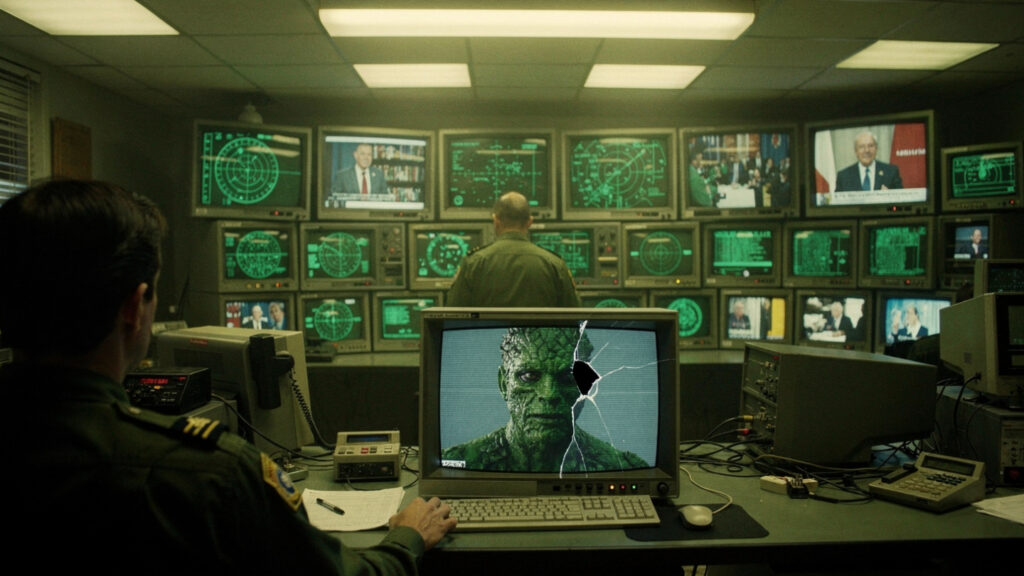
The first problem is the evidence problem. If reptilian beings control every major human institution, why is there no mainstream evidence? The shape-shifting mechanism is the solution: the beings appear human because they are capable of projecting a holographic human appearance using technology derived from their advanced understanding of frequency and vibration. The evidence of their reptilian nature is visible only when the holographic projection malfunctions, which produces the viral videos of apparently shape-shifting politicians and media figures that the conspiracy community treats as evidence.
Whether the shape-shifting videos capture holographic projection failures, video compression artifacts whose technical character produces visual anomalies that pareidolia-primed viewers interpret as biological shape-shifting, or deliberate video manipulations created by people who already believe the framework and are motivated to find confirmation, is the technical question that the video encoding literature addresses without the conspiracy community accepting the technical explanation.
The video compression artifact explanation is well established and technically sound: MPEG and H.264 video compression algorithms produce visual artifacts at block boundaries, during rapid movement, and in areas of high contrast that can produce the appearance of distorted facial features, unusual eye shapes, and skin texture changes in compressed video whose original quality is insufficient to resolve the features that the pareidolia-primed viewer is seeking. Whether this explanation accounts for every video cited as shape-shifting evidence without residual unexplained anomalies is the question that systematic technical analysis of the cited videos would address.
The second problem is the historical problem. How did the reptilian elite establish and maintain their control across millennia without leaving a historical trace? The Anunnaki-Sitchin framework is the solution: the historical record contains abundant apparent evidence of the reptilian presence in the form of the ancient serpent deity traditions, but these accounts have been misinterpreted as mythology rather than history. The reptilian beings are the Anunnaki, the Nagas, the dragons, the feathered serpents: the ancient mythological record is the historical record that mainstream scholarship has filed under religion rather than evidence.
The problem with this solution is the one the Sitchin section above shows: it requires accepting Sitchin’s translation methodology as more accurate than mainstream Assyriology’s, which requires accepting systematic mistranslation as scholarship. The framework’s resilience does not depend on this being accepted by mainstream scholarship. It depends only on its being accepted by the audience that already distrusts mainstream scholarship.
The third problem is the motivation problem. Why would beings sufficiently powerful to control every major human institution bother with the forms of control the framework describes? The consciousness harvesting explanation is the solution: the Draco beings feed on the frequencies of human emotional energy, particularly fear, anxiety, and stress, which human beings in conditions of conflict, scarcity, and uncertainty generate in abundance. The institutional structures the reptilian elite maintain, wars, economic instability, media-generated anxiety, are the farming systems that produce the emotional energy the beings require.

This motivation framework is the Gnostic Archon model’s emotional energy harvesting description translated directly into biological terms. Robert Monroe’s loosh concept, developed in his out-of-body research and covered in the library’s dedicated Monroe piece, proposes an identical framework from a consciousness research direction rather than a conspiracy theory direction. Whether the convergence between Icke’s emotional energy harvesting framework, Monroe’s loosh concept, and the Gnostic Archon tradition’s own description of Archon activity represents three independent approaches to the same phenomenon, or represents the cultural transmission of a single ancient framework through multiple channels, is the question that the structural convergence raises.
The Bloodline Architecture | From Sumer to Windsor
The claim that reptilian beings established hybrid bloodlines through interbreeding with human families, and that these bloodlines are the mechanism through which reptilian consciousness has maintained continuous control over human institutions across millennia, is the framework’s most politically fraught element and the one whose relationship to well known antisemitic conspiracy traditions most directly requires honest analytical attention.
The bloodline framework proposes that royal and aristocratic families, whose genealogical connections to each other Icke traces through historical records, carry sufficient reptilian genetic material to serve as vessels for Draco consciousness. The families he identifies, the British royal family, various European aristocratic dynasties, American political dynasties including the Bush family, and prominent banking families, are the frequent subjects of his claims.
Whether Icke’s bloodline framework encodes traditional antisemitic conspiracy theory in biological rather than ethnic terms appears in the academic literature on conspiracy theory and prejudice. The overlap between Icke’s bloodline families and the families featured in well known antisemitic conspiracy traditions, the banking families and political dynasties that appear in both traditions, and the mechanism of hidden biological difference from ordinary humanity that both frameworks use to explain the controlling elite’s behavior, have been recorded by researchers including the British academic Matthew Feldman and the Anti-Defamation League as structurally antisemitic regardless of Icke’s explicit denials of antisemitic intent.
Whether Icke is antisemitic by intention or has constructed a framework whose architectural choices reproduce antisemitic conspiracy theory’s essential structure in different biological language is a question that his public statements and his defenders’ and critics’ arguments have not resolved to consensus.
What the analysis actually supports is the structural correspondence: both traditions propose a hidden elite whose biological difference from ordinary humanity explains their behavior, whose family identities appear in both frameworks with substantial overlap, and whose control over human institutions is maintained through mechanisms that ordinary human observers cannot easily detect. Whether this structural correspondence is independent construction, conscious or unconscious inheritance, or reflects both traditions approximately describing a pattern in human elite behavior through different explanatory frameworks, is the question the correspondence raises without the available evidence resolving.
John Rhodes and the Terrestrial Alternative
John Rhodes represents the elaboration of the reptilian framework that shifts its foundational claim from extraterrestrial to terrestrial origin, and in doing so produces a hypothesis that is simultaneously more scientifically plausible and less capable of explaining the framework’s most dramatic claims.
Rhodes proposed that reptilian beings capable of human-level intelligence need not have arrived from the Draco constellation. They could have evolved from Earth’s own prehistoric reptile lineage, specifically from theropod dinosaurs whose known evolutionary trajectory showed progressive development of larger brain-to-body ratios across the Cretaceous period.
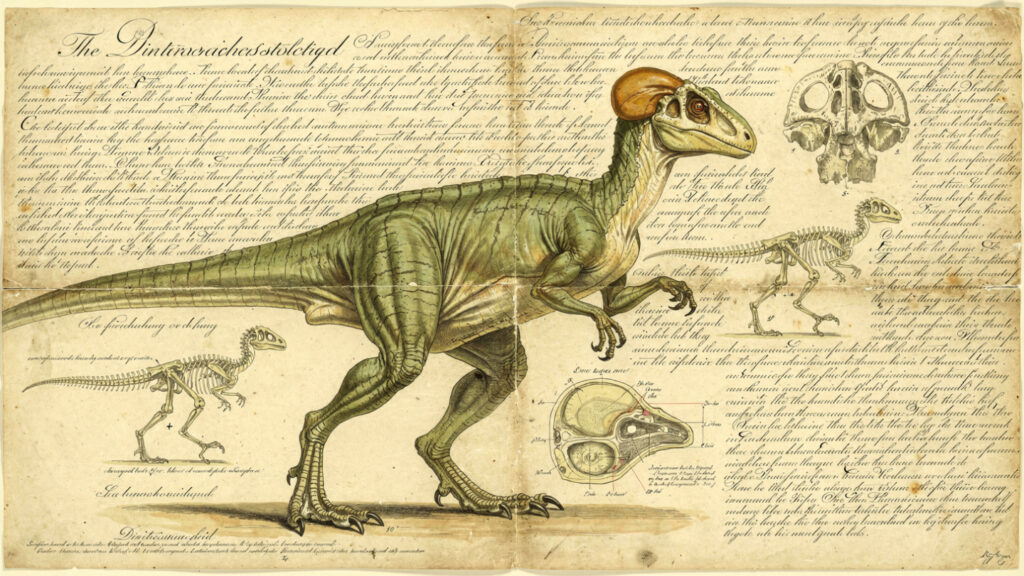
The scientific basis Rhodes cited was the published speculation by Canadian paleontologist Dale Russell, who published a thought experiment in 1982 proposing that if the troodon, a small, relatively large-brained theropod, had continued evolving along its known trajectory rather than going extinct in the K-Pg event, it might have eventually developed a humanoid body plan driven by the same locomotion and manipulation pressures that shaped human evolution.
Russell’s thought experiment produced a speculative illustration called the Dinosauroid, a bipedal, large-brained, humanoid figure with a lizard-like head that he explicitly identified as speculative rather than as a prediction. Whether the Dinosauroid represents an evolutionary possibility or reflects the anthropocentric bias of imagining that intelligence necessarily produces humanoid body plans is a question that evolutionary biologists have examined, with the consensus being that intelligence in non-mammalian lineages would likely produce very different forms rather than convergently humanoid ones.
Rhodes’s elaboration is that such beings, if they evolved, would have had tens of millions of years of head start on human civilization and would have developed technology and social organization whose sophistication relative to humanity’s current level is comparable to humanity’s sophistication relative to the common ancestor we share with modern reptiles. They would not need to arrive from another star system. They would simply need to have survived and developed in a location where human civilization has not encountered them, which Rhodes proposes as the extensive, largely unmapped underground cave systems and deep ocean environments whose areas remain unmapped by human exploration.
Whether this framework is more or less credible than Icke’s extraterrestrial version depends on which foundational impossibility the reader finds less implausible: that a non-human intelligent species evolved on Earth and remained hidden from human civilization for the entire span of recorded history, or that shape-shifting extraterrestrials arrived from the Draco constellation thousands of years ago.
Neither is established. Both are structurally interesting as mythology.
Jordan Maxwell and the Symbol Layer
Jordan Maxwell’s contribution to the reptilian mythology is the symbolic analysis layer that converts existing public visual culture into a confirmation system for the reptilian presence, without requiring any physical evidence of the beings themselves.
Maxwell’s public work, spanning decades of lectures and publications, proposes that serpent and reptilian imagery in corporate logos, heraldic devices, religious iconography, and institutional symbols encodes deliberate acknowledgment of the reptilian elite’s presence and authority by the human institutions that serve them.
The symbolic evidence Maxwell and his tradition cite includes the caduceus, the medical symbol featuring two serpents entwined around a staff, which is recorded as an ancient symbol of the Greek god Hermes and the Roman Mercury associated with commerce, communication, and the transmission of messages between worlds. Whether its use in medical contexts encodes reptilian elite acknowledgment or reflects the well known historical use of the symbol in the context of the healing traditions of Asclepius, whose own rod features a single serpent, is the question that the symbol’s own history addresses without the reptilian interpretation being required.

The Alfa Romeo logo, the British royal family’s heraldic devices, the papal staff, the American eagle’s noted stylistic similarities to certain reptilian forms, and the well known use of dragon imagery in Welsh heraldry and Chinese imperial symbolism, are all cited in the Maxwell tradition as components of a deliberate global symbol system encoding reptilian presence.
The cognitive mechanism the symbol layer exploits appears in the psychology of motivated reasoning: once a viewer has internalized the reptilian framework, the symbol-identification process becomes self-reinforcing because any serpentine or reptilian element in any public symbol is interpreted as confirmation of the framework rather than as independent evidence for it. The framework cannot be falsified by the symbol layer because the symbol layer’s methodology, finding serpent imagery in a world that has used serpent symbolism continuously for six thousand years of recorded history, will always produce apparent confirmations regardless of whether the framework is correct.
The Internet Amplification Engine
The reptilian hypothesis’s trajectory from fringe publication to globally distributed mythology appears in the history of internet content propagation whose mechanisms deserve analytical attention.
The framework that Icke published in 1999 reached a relatively small audience through his lecture circuit and book sales in the pre-social median era. The transformation of the reptilian hypothesis from a fringe belief held by a modest audience into the most globally distributed conspiracy mythology of the twenty-first century is recorded as a product of digital platform dynamics rather than of any new evidentiary development.

YouTube’s algorithm, known to optimize for engagement rather than accuracy, systematically recommended reptilian content to viewers who had watched adjacent conspiracy content about elite control, political corruption, and secret societies. The pathway from distrust of institutional power to reptilian elite content appears in the platform algorithm literature: viewers who watch content about political corruption are recommended content about elite secret societies, which leads to content about Freemasonry and the Illuminati, which leads to content about the Anunnaki, which leads to content about shape-shifting politicians.
Each step in this recommendation pathway is logically connected to the previous one from the perspective of a viewer whose concern is elite institutional control and its hidden mechanisms. The algorithm does not distinguish between real evidence of institutional corruption, whose real-world examples are abundant and well known, and the extension to reptilian biology, whose evidentiary basis is nonexistent.
The viral video ecosystem amplified the visual evidence layer: videos purporting to show politicians exhibiting reptilian characteristics, whose content is explained by video compression artifacts by the technical literature, circulated through the platform ecosystem with engagement metrics that the algorithm interpreted as audience interest, producing further recommendations to audiences who had no prior interest in the reptilian framework.
Whether this amplification represents deliberate platform design, the organic operation of engagement optimization that happens to reward sensationalism, or the deliberate weaponization of the platform’s recommendation systems by actors with interests in the reptilian mythology’s propagation, is the question that the platform’s known behavior raises without the available evidence establishing the most explanation.
The Psychological Architecture | What the Framework Addresses
The psychological functions that the reptilian hypothesis serves for its audience appear in the academic literature on conspiracy theory belief and deserve analytical examination rather than simple dismissal as pathology.
The framework addresses three real psychological needs whose character in the contemporary cultural moment makes the reptilian mythology’s appeal comprehensible without requiring the framework’s literal acceptance.
The first is the recorded need for a complete explanatory framework for observed elite behavior. Human political and economic elites demonstrably behave in ways that prioritize their own interests over those of the populations they nominally serve, demonstrably coordinate across institutional lines in ways that are not fully transparent, and demonstrably access information and resources not available to ordinary citizens. The reptilian framework converts this real behavioral pattern into a complete explanatory system: the elites behave this way because they are not human in the relevant sense, because their motivations are alien to human values, and because their coordination reflects a common origin rather than emergent human institutional behavior.

Whether this explanatory framework is correct is a different question from whether it is psychologically compelling. It is psychologically compelling because it converts a complex, multi-causal, historically contingent pattern of real institutional behavior into a single cause whose character, non-human biological identity, explains all the observed features simultaneously.
The second is the recorded appeal of having access to hidden knowledge. The reptilian framework’s audience is not composed primarily of people who believe they are being victimized without understanding why. It is composed primarily of people who believe they understand something that most people do not, which is a fundamentally different psychological relationship to the framework. Whether this understanding is accurate is a different question from whether possessing it is psychologically valuable.
The third is the recorded conversion of complex systemic problems into an enemy whose identification enables a response. Environmental degradation, economic inequality, institutional corruption, and the experience of powerlessness in relation to large-scale systems whose operation the individual cannot influence, are problems whose causes are distributed, complex, and resistant to individual action. The reptilian framework converts these distributed systemic causes into an identifiable enemy whose removal would solve all the problems simultaneously. Whether this conversion is accurate is a different question from whether it is motivating.
The Antisemitism Question | The Framework’s Most Serious Analytical Problem
The overlap between the reptilian elite hypothesis and well known antisemitic conspiracy traditions is the element of the analytical framework that requires the most direct treatment and the one that mainstream analysis most frequently avoids.
The structural correspondence is specific: both the reptilian elite framework and traditional antisemitic conspiracy theory propose a hidden group whose biological difference from ordinary humanity explains their behavior, whose family identities are substantially overlapping in both frameworks, whose control over banking, media, and political institutions is the mechanism of their global power, and whose ultimate goal is the subjugation of the general population to their interests.
Whether this structural correspondence means that the reptilian framework is antisemitic by design, antisemitic by absorption of pre-existing conspiracy frameworks without conscious awareness of their origin, or not antisemitic because the biological identification is with reptilian genetics rather than Jewish ethnicity, is the question that academic researchers have addressed with varying conclusions.
The academic position, represented by researchers including Michael Barkun whose A Culture of Conspiracy is the most cited academic treatment of the modern conspiracy tradition, is that the reptilian framework functions as a superseding conspiracy theory that absorbs and recombines elements of traditional antisemitic conspiracy theories while replacing the ethnic identification with a biological one that provides plausible deniability while preserving the essential structural claim.
Whether this analysis is correct requires examining whether the framework’s claims about its identified elite families would, if the reptilian biological identification were removed, reproduce the essential structure of traditional antisemitic conspiracy theory. The clear overlap in identified families suggests that the answer is yes.
This does not mean that everyone who believes the reptilian framework is antisemitic in the intentional sense. It means that the framework’s architecture incorporates and transmits the essential structure of antisemitic conspiracy theory to audiences who might reject that tradition if it were presented in its undisguised form.
The Pop Culture Ecosystem
The reptilian hypothesis’s relationship to popular science fiction is bidirectional and well established: the mythology influences science fiction, and science fiction’s formulations feed back into the mythology’s elaboration.
The television series V, whose original 1983 NBC broadcast and 2009-2011 remake both feature reptilian aliens disguised as attractive humans who infiltrate human political structures, functions as both reflecting existing reptilian mythology and contributing visual and narrative elements to its subsequent elaboration. Whether V‘s original creator Kenneth Johnson drew on the existing contactee and fringe research tradition or independently developed similar narrative elements, and whether the 2009 remake’s timing relative to the reptilian mythology’s peak internet propagation was coincidental or reflected deliberate engagement with the cultural moment, is a question the available record motivates without resolving.
The Elder Scrolls video game franchise’s Argonian race, the Mass Effect franchise’s Turian and Drell species, and the Doctor Who Silurian tradition all represent the science fiction elaboration of reptilian intelligence as a narrative subject whose treatment, as beings whose relationship to humanity ranges from hostile to ambiguous to collaborative depending on the franchise’s thematic concerns, reflects the mythological range of the ancient serpent deity tradition rather than the simple villain formulation of the conspiracy framework.
H.P. Lovecraft’s clear influence on the reptilian mythology’s imagery deserves mention: his own reptilian deity figures including the Great Race of Yith and the Serpent People of Valusia, published in the 1920s and 1930s, are known to have influenced elements of the alternative research tradition that preceded Icke, whose imagery of ancient reptilian beings associated with underground locations and the manipulation of human civilization through occult means maps directly onto Lovecraft’s own fictional framework.
Whether Lovecraft was drawing on esoteric traditions, as he claimed in surviving correspondence, or was generating original fiction whose imagery happened to align with traditions he was unaware of, is the question that his biography and intellectual influences address without fully resolving.
What the Mythology Actually Reveals
The reptilian hypothesis in its fully developed form is not primarily a theory about biology. It is a theory about power, whose biological formulation is the mechanism that converts the observable phenomenon of elite institutional behavior into a framework whose emotional and explanatory power exceeds what accurate descriptions of institutional corruption typically produce.
Human elites do demonstrably coordinate across institutional lines. Human institutional structures do demonstrably prioritize their own perpetuation over the populations they nominally serve. The behaviors that the reptilian framework attributes to non-human biological nature are real behaviors and are well established without requiring the biological explanation.
The mythology’s achievement is converting these real behaviors into a framework that is simultaneously more emotionally satisfying and more epistemically limiting than accurate institutional analysis. More emotionally satisfying because it provides an enemy whose nature explains everything and whose identification feels like revelation. More epistemically limiting because the biological framework is unfalsifiable in a way that institutional analysis is not: real evidence of elite corruption confirms the framework, the absence of evidence confirms the holographic concealment, and any attempt to refute the framework confirms that the refuters are either deceived or agents.
The ancient serpent traditions are recorded across multiple independent civilizations. Something in human cultural history produced a convergent pattern of serpentine divine figures associated with wisdom, hidden knowledge, and relationships with human power that the standard evolutionary fear-of-snakes explanation does not fully account for.
Whether that something is the cultural memory of non-human intelligences whose character the serpent deity traditions approximately encode, the universal symbolic function of the serpent as an expression of the ambiguous relationship between hidden knowledge and institutional power, or something whose character the available evidence motivates examining without establishing, is the question that the ancient traditions raise.
The reptilian conspiracy mythology appropriated this question and answered it with a biological claim whose evidentiary basis is nonexistent and whose architectural sophistication is remarkable.
The ancient serpent was in the garden before the humans arrived.
What it was doing there is the question that six thousand years of recorded mythology, two thousand years of Gnostic theology, three centuries of occult tradition, and twenty-five years of the most globally distributed modern conspiracy framework have been attempting to answer.
None of them have answered it definitively.
The serpent remains in the garden, recorded in the texts, depicted in the temples, and encoded in the mythology of every civilization that looked up and wondered what was watching.
The real, declassified Gateway Process document offers one grounded starting point for that question.