The device showed the future. That is the reason they took it apart.
Dan Burisch did not come forward gradually, the way most whistleblowers do, releasing fragments over years to protect themselves from consequences they cannot fully anticipate. He came forward with the architecture of the entire program: the underground facility, the alien biology, the Eisenhower agreements, the device itself, and the content of what the device showed before the people operating it decided that operating it had become more dangerous than destroying it. His testimony sits at the intersection of everything the disclosure community has been circling for decades without landing on. The Stargates. The Majestic 12. The treaty that traded human sovereignty for technological access. The timeline that ends badly.
Burisch holds a PhD in microbiology from a New York state institution, earned in 1989. Before that, a degree from the University of Nevada Las Vegas in 1986. These are verifiable credentials in a field with verifiable peer review. He was not a fringe researcher who developed exotic beliefs over time. He was a working scientist who received a visit from two men in military uniforms at his university in 1986 and accepted a position he was not supposed to describe to anyone.
What he eventually described has not been refuted. It has been ignored, which is a different thing.
The Facility Below the Desert
The place Burisch called Century IV sits beneath the surface of the Nevada desert as a component of the larger complex known publicly as Area 51 and known internally by the designation S4. Bob Lazar described the same facility in the late 1980s from the perspective of a nuclear physicist brought in to reverse-engineer propulsion systems. The two accounts, developed independently and from different professional vantage points, describe the same physical space with a consistency that random confabulation does not produce.
Lazar described the craft he worked on, including its geometry, its propulsion mechanism using element 115 as a gravity wave amplifier, and the bay in which it was housed. Burisch, arriving at the same facility five years later under Project Aquarium, describes the same bay. He calls it the Bay of Galileo. In it he saw multiple craft. One matched Lazar’s description precisely. Another he identified as the vehicle that came down outside Roswell, New Mexico, in July 1947.
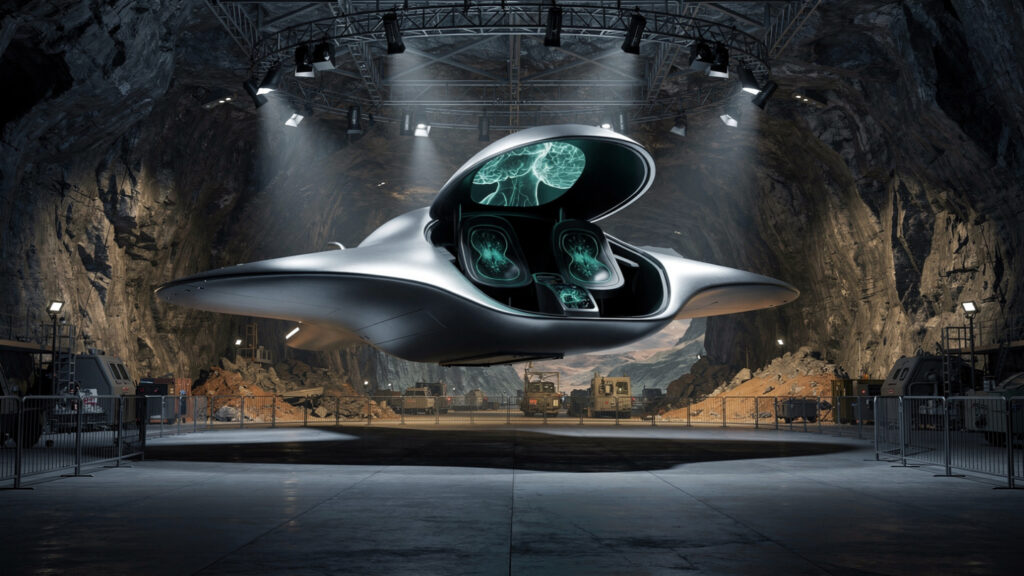
Colonel Philip J. Corso, who served on Eisenhower’s National Security Council and later published The Day After Roswell in 1997 before his death the same year, described the Roswell vehicle from a different angle entirely. Corso’s access came through the Army Research and Development office, where he claims recovered material from the crash was systematically fed into the US defense industrial base as apparent independent innovation. The integrated circuit. Fiber optics. Night vision technology. Corso’s account frames the Roswell material as the foundation of the technological acceleration of the second half of the twentieth century.
Burisch’s account adds a biological dimension Corso did not address in detail. The beings recovered at Roswell carried two brains. One managed biological function. The other interfaced directly with the craft. The craft and the pilot were not separate systems. The vehicle responded to the navigator’s cognition rather than to manual controls. The implications of this for how the vehicle was operated, and for what reverse-engineering it actually required, reframe everything that has been published about the propulsion systems Lazar described.
The Eisenhower Agreement
In February 1954, President Dwight D. Eisenhower disappeared from a scheduled public appearance in Palm Springs, California. The official explanation was an emergency dental appointment. Several researchers, including journalist and former naval intelligence officer William Moore, have documented this disappearance in the context of a separate event: a meeting at Muroc Air Force Base, later renamed Edwards, between Eisenhower and representatives of at least two non-human civilizations.
Burisch identifies these groups as the P-45 and P-52 Orion races, designations derived from their temporal origin rather than their spatial one. The naming convention is significant. These are not beings from a distant star system visiting the present. They are beings from a version of the human future traveling backward through time. The P-45 designation indicates an origin approximately 45,000 years forward from the current date. The P-52 designation indicates 52,000 years. The genetic analysis Burisch conducted under Project Aquarium confirmed that the biological material he examined was human in origin. Modified, extended, adapted for environments the current human body cannot survive. But human.
The meeting produced a formal agreement. Eisenhower’s administration accepted the right of these future human civilizations to conduct limited biological study of the current population. The terms specified that subjects would experience no lasting harm and would retain no conscious memory of the interaction. In exchange, the US government received technological information including the specifications for devices that would allow limited observation of future timelines.
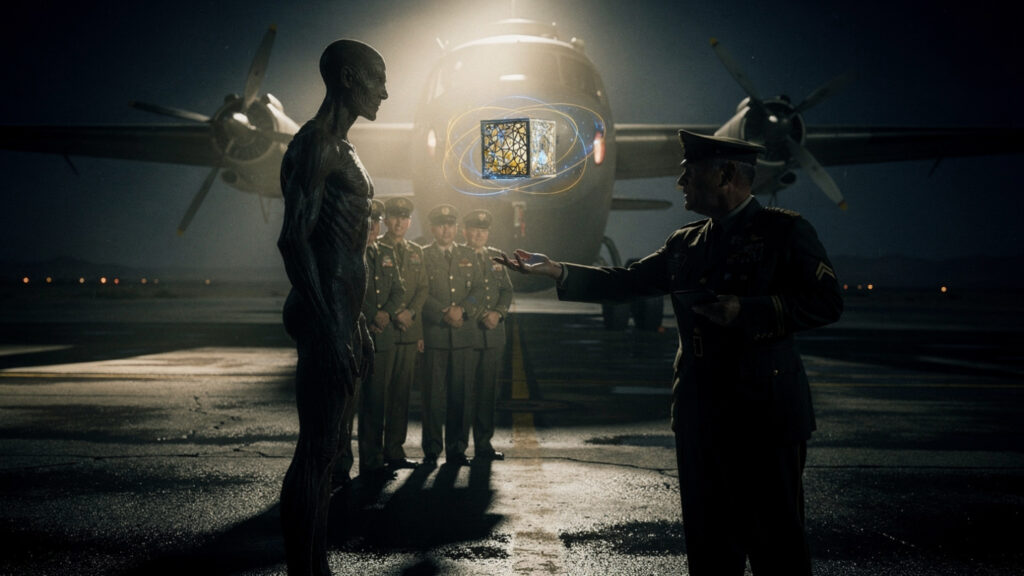
The Orion Cube arrived as part of this exchange. Eight centimeters by eight centimeters. A device capable of displaying probability distributions of future events. Burisch describes it as a Stargate in miniaturized form, a compressed version of the same technology that in its full installation occupied a significant portion of a secured chamber at S4. The Cube passed through the hands of multiple administrations and was used, according to Burisch, by senior figures in government and the private sector to inform decisions whose public rationale could never acknowledge the actual basis.
The Architecture of the Device
The full-scale Looking Glass installation was not a single piece of technology. It was a system, and its construction drew on a source that the intelligence community had been studying since at least the 1940s.
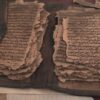
The Sumerian tablets. Specifically, the cuneiform texts recovered from the ancient Mesopotamian sites that describe in technical rather than mythological language the construction and operation of devices used to communicate with other planetary civilizations. The Majestic 12 research program, working from translations that have never been made public, extracted from these texts the underlying principles of wormhole generation and the geometric configurations required to stabilize a traversable aperture long enough to transmit information in either temporal direction.
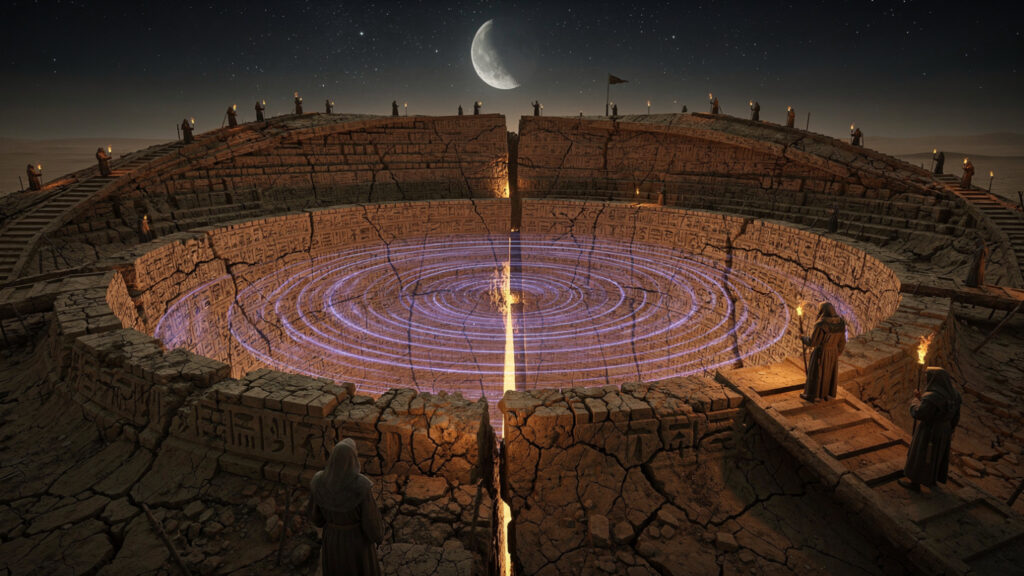
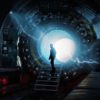
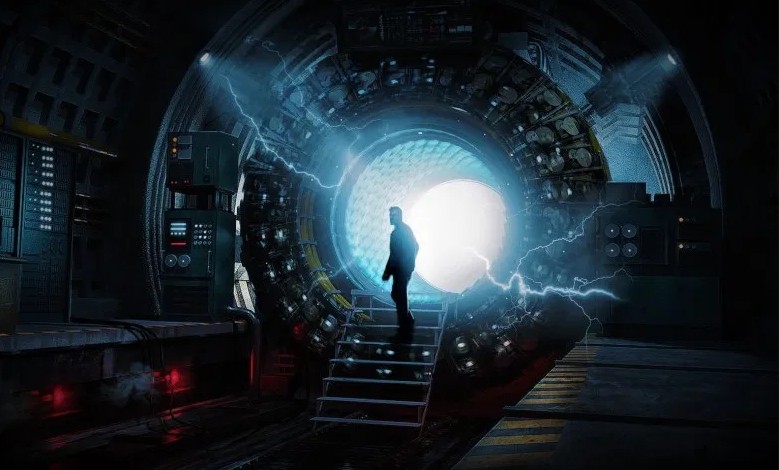
Burisch describes the installation as a large apparatus positioned adjacent to a platform. The platform allowed physical objects, including personnel, to be positioned at the aperture of the generated wormhole. The device in observation mode displayed probability distributions of future events, not a single fixed timeline but a weighted range of possible outcomes with associated likelihood values. In transmission mode it could move physical matter across spatial coordinates instantly.
He watched a person die during one of the transmission experiments.
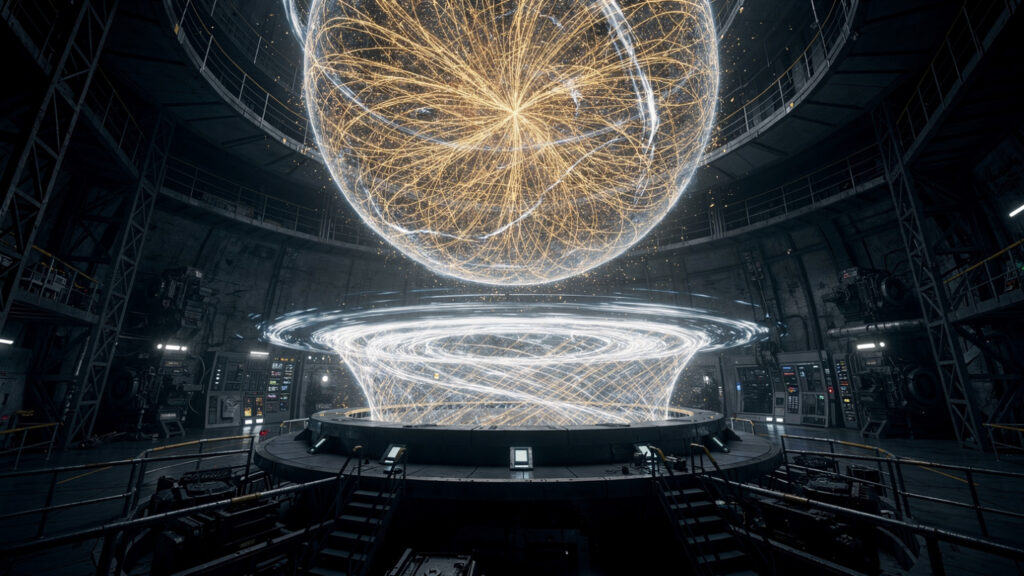
The failure mode was not violent in the way that fiction depicts teleportation accidents. The individual entered the aperture correctly. The destination coordinates had been verified. Something in the quantum state of the biological material at the moment of transmission was incompatible with the reconstructed state at arrival. The person who emerged was not the person who entered in any functionally meaningful sense. Burisch does not elaborate on what that distinction meant in practice. The implication is sufficient.
What the Device Showed
The Looking Glass program produced a problem that the device itself could not solve. As more installations became operational, the number of groups using Looking Glass to observe and potentially influence the forward timeline increased. The observations themselves began affecting the probabilities the device was measuring. The timeline became sensitive to the act of looking at it in a way that made reliable prediction impossible and reliable intervention actively dangerous.
Multiple research groups, governmental and otherwise, were using Looking Glass by the late 1990s. Each group’s observations and the decisions those observations generated were feeding back into the probability distributions being measured by every other group’s installations. The system had become self-referential. The future being observed was increasingly a future that had been shaped by the observation of it, which had then been observed by other groups, which had shaped it further.
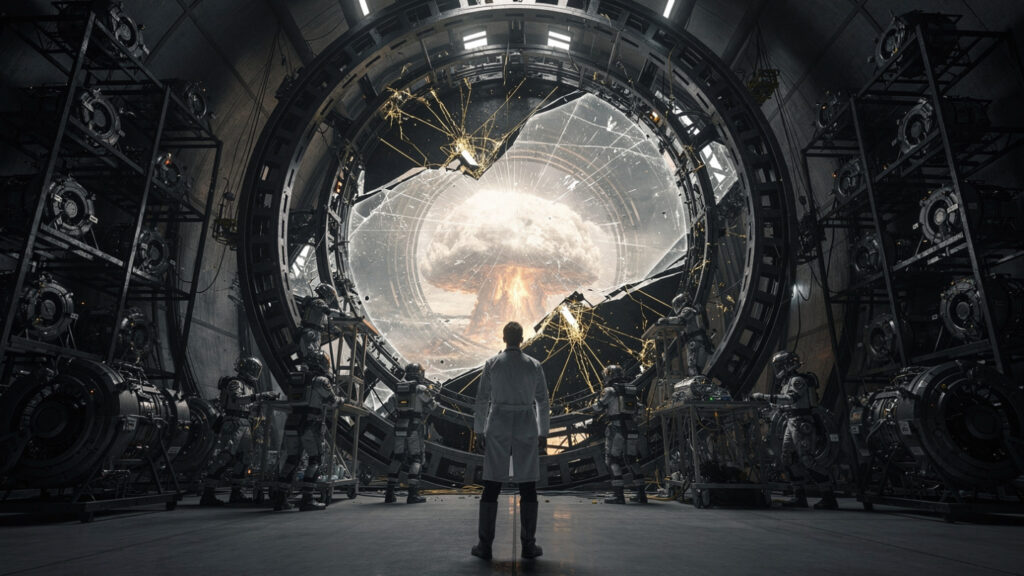
The content of what was consistently visible across multiple independent observations involved a catastrophic event sequence centered on a temporal window in the early twenty-first century. The nature of the sequence varies across testimonies and has been extensively discussed in the communities that have followed Burisch’s work since 2006. What does not vary is the response to it. By 2006, Burisch testified, all fifty Looking Glass installations worldwide had been dismantled under an agreement between the major governments that had been operating them.
Fifty installations. The number implies a program of extraordinary scale operating across multiple nations simultaneously. The agreement to dismantle them all implies that what they collectively showed was consistent enough across installations to produce consensus on the response.
The device that showed the future was destroyed because of what it showed.
The Stargates Already in Place
The looking Glass technology was constructed on Earth using extraterrestrial specifications. But the specifications described something that already existed in the planetary infrastructure. Burisch’s testimony includes a claim that has received less attention than the Looking Glass material but carries heavier long-term implications.
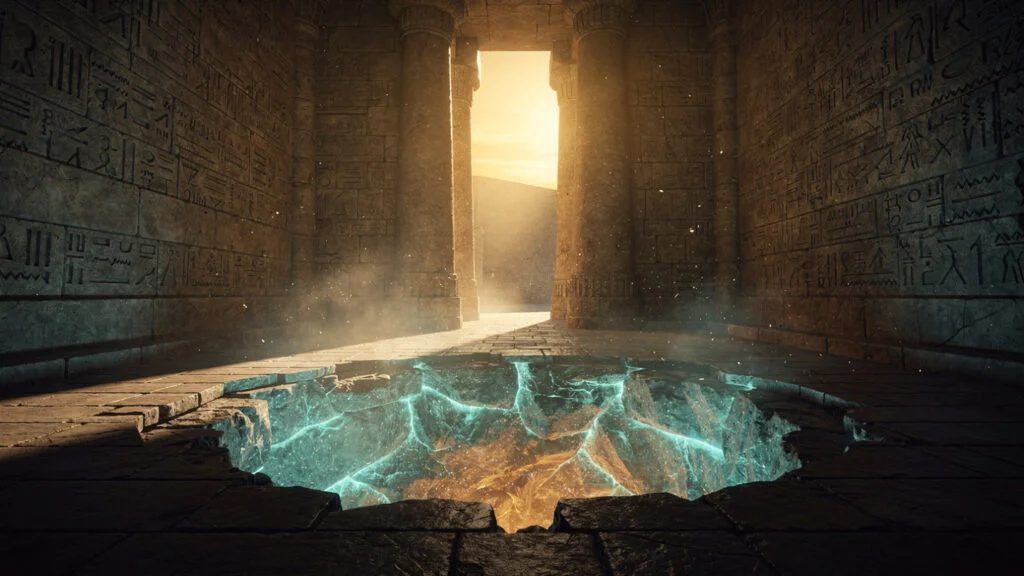
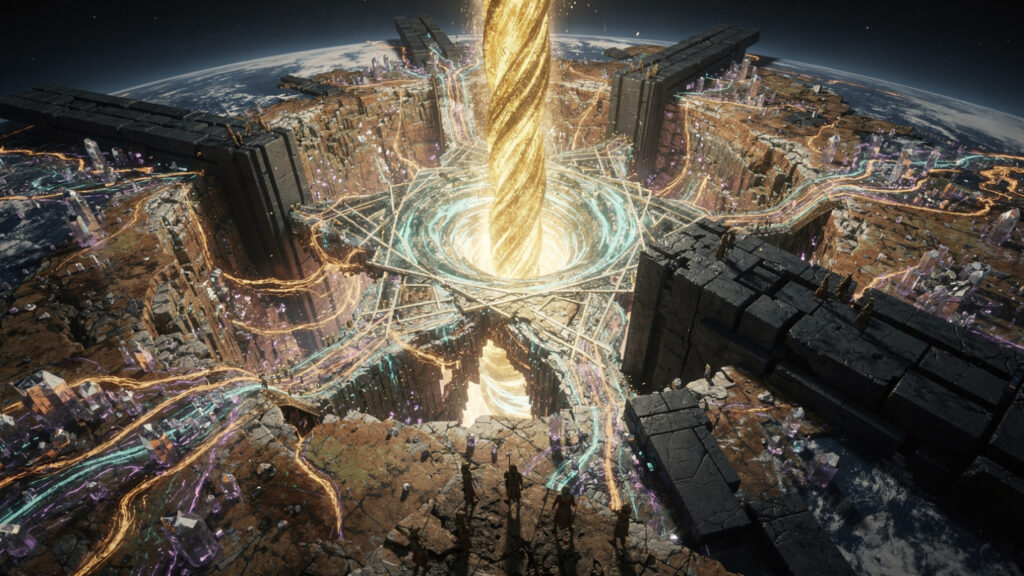
The Sumerian texts do not only describe how to build Stargates. They describe Stargates that already existed when the texts were written, built into geographical locations by the civilization the texts refer to as the Anunnaki. These installations are not constructed devices. They are features of the planetary architecture, points where the geometry of space-time permits aperture formation with significantly lower energy requirements than the artificial installations at S4 required.
The locations of these natural Stargates correspond with a precision that is uncomfortable to dismiss to the sites of the oldest continuously inhabited sacred spaces in the current archaeological record. The placement was not coincidental in the original construction. The temples and monuments and ritual sites that human civilization has built on these locations for ten thousand years are parked on top of infrastructure that predates them by an order of magnitude.
The artificial installations have been dismantled. The natural ones have not. They cannot be. They are part of the planet.

The Silence After the Testimony
Dan Burisch gave his most detailed testimony between 2004 and 2007. He named names, specified facilities, described biological material in the precise technical language of a working microbiologist, and provided enough corroborating detail to allow independent verification of his institutional context, his educational credentials, and his presence in Nevada during the periods he described.
The response from the institutions he named was silence.
Not denial. Silence carries different information than denial. A denial requires constructing a counter-narrative and defending it against scrutiny. Silence requires nothing, and it forecloses nothing. The intelligence community has spent seventy years demonstrating that silence is the more durable response to testimony it cannot fully discredit. Lazar received silence. Corso received silence. Burisch received silence.
The Looking Glass program, if it existed at the scale Burisch describes, represents the most significant covert research program in human history. Its subject matter was the future of the species. Its conclusion was a decision to destroy the instrument rather than continue using it. That decision was implemented globally and in secret.
What the fifty installations showed in the years before they were taken apart has not been published. The people who made the decision to dismantle them are not speaking. The Sumerian texts that provided the construction specifications remain only partially translated in any public document.
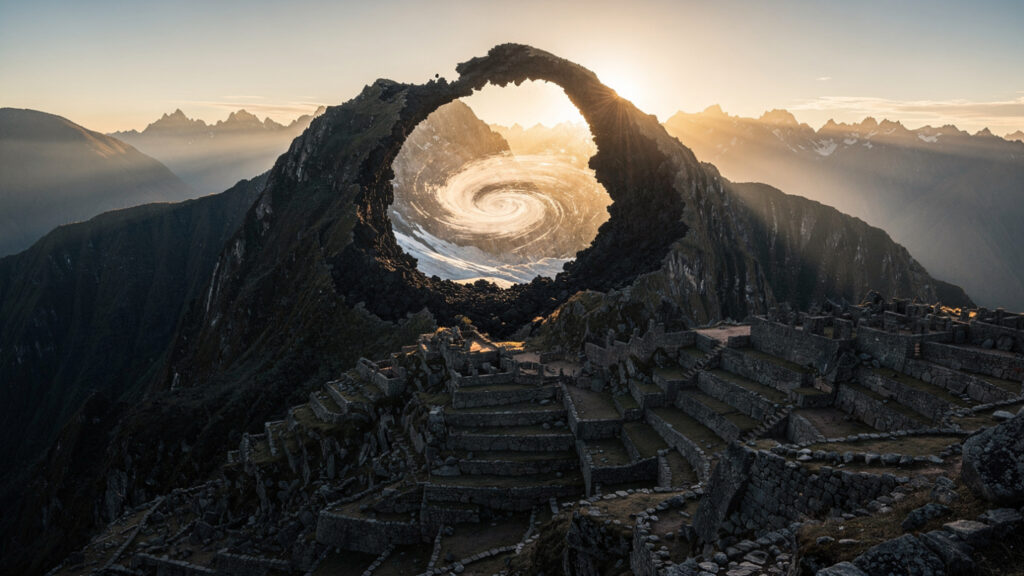
The apertures in the planetary architecture that required none of the artificial infrastructure, the ones built into the geography before recorded history began, are still there.
Nobody has explained what they are waiting for.
Project Looking Glass remains exactly one man’s account, documented nowhere else, verified by no one outside it.