




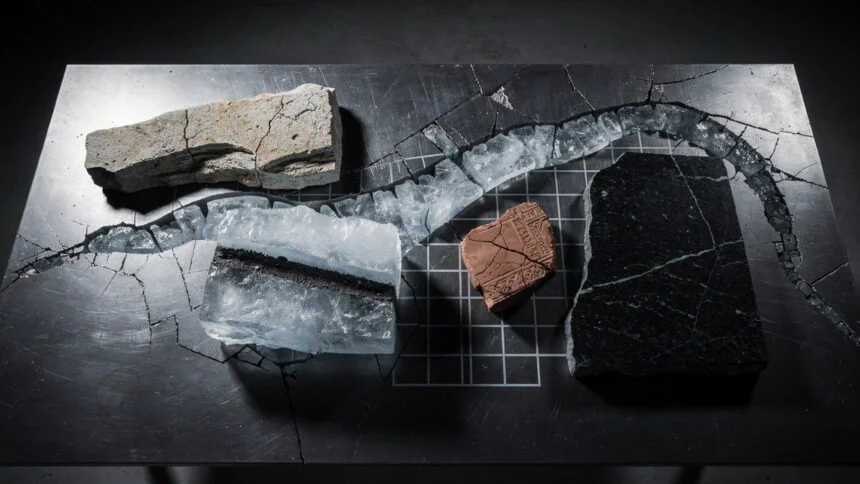
There is a problem with the way anomalies are studied.
Each one arrives in its own container. The Sphinx’s water erosion evidence sits in the geology literature. The carvings at Göbekli Tepe sit in archaeology. The Piri Reis map belongs to cartography. The ancient Pleiades traditions belong to archaeoastronomy. The Master of Animals motif belongs to art history. The Younger Dryas Impact Hypothesis belongs to climate science and geophysics. Each field examines the anomaly in front of it, constructs the explanation available within its own discipline, and then moves on, often without asking whether another field is examining an anomaly with the same temporal signature, the same structural characteristics, or the same unexplained origin.
That separation is useful when the question is narrow. It becomes a problem when the evidence itself crosses disciplinary boundaries. A geological anomaly does not become less geological because it has astronomical implications. An architectural orientation does not cease to be archaeological because the date it points toward matters to climatology. A symbol does not become irrelevant because its recurrence requires the historian, the archaeologist, and the astronomer to look at it simultaneously. The disciplines are real. The boundaries between them are methodological conveniences. The anomalies do not necessarily respect those boundaries.
A map is only readable when its sections are assembled. If the sections of that map are distributed across twelve different archives, catalogued under twelve different subject headings, and examined by twelve different academic disciplines that rarely place their findings on the same table, then no one has actually read the map. They have read fragments of it. They have become experts in individual pieces of terrain while remaining unable to see whether those pieces form a recognizable structure when placed beside one another.
This piece attempts that assembly. It does not begin with the claim that a lost civilization has been proven. It begins with the evidence itself and asks what becomes visible when anomalies normally studied in isolation are placed on a common chronological and geographic framework. Some of the evidence is strong and widely accepted. Some is disputed. Some consists of interpretations that remain controversial. The important question is not whether every piece has the same evidentiary status, because it does not. The question is whether several independent lines of evidence, originating in different disciplines and separated by thousands of years and thousands of kilometres, begin to describe the same historical problem.
The pattern that emerges is not a single object hidden beneath the sand. It is a sequence. It has dates. It has geographical spread. It has recurring astronomical references, recurring iconographic forms, recurring engineering questions, and recurring claims of inherited knowledge. None of these, taken alone, proves the existence of an unknown civilization. Taken together, however, they produce a question that becomes increasingly difficult to dismiss simply because each individual anomaly has been assigned to a different academic room.
Something left this record.
What left it is the question.
The Window
Everything in this investigation ultimately orients around a period whose existence is not in serious dispute: the Younger Dryas, the abrupt climatic interval between approximately 12,900 and 11,700 years ago during which temperatures in the Northern Hemisphere fell sharply, glacial conditions returned, ecosystems were disrupted across enormous geographic areas, and many large mammals disappeared from regions in which they had persisted for thousands of years. The event appears not in one isolated record but across multiple independent archives, including Greenland ice cores, marine and lake sediments, pollen sequences, and paleontological records, giving it a temporal position that is unusually secure even while the causes and mechanisms behind particular aspects of the event remain debated.
The Younger Dryas is therefore the fixed point around which the rest of the investigation can be oriented. We know that the climate changed dramatically. We know that ecosystems changed with it. We know that the transition into the Younger Dryas and the transition out of it were unusually abrupt in comparison with many other major climatic shifts. What remains contested is precisely what combination of mechanisms produced those changes, and whether the archaeological and environmental disturbances associated with the period should be understood as separate regional developments or as components of a larger global disruption.

The conventional explanation for the Younger Dryas has centred on changes to the North Atlantic climate system, particularly disruptions involving freshwater input and the Atlantic Meridional Overturning Circulation. That framework accounts for important features of the event, but questions remain concerning the precise mechanism, the abruptness of the onset, and the relationship between climatic disruption and the simultaneous changes recorded in ecosystems and human populations. Those unresolved questions have created room for competing hypotheses, including the Younger Dryas Impact Hypothesis, first formally proposed in 2007 by Richard Firestone and colleagues, which argues that a cosmic impact or airburst contributed to the onset of the climatic disruption.
The impact hypothesis remains contested, and that distinction matters. Various researchers have reported materials interpreted as impact-related, including nanodiamonds, microspherules, platinum-group elements, and other markers at or near the Younger Dryas boundary, while other researchers have disputed the interpretation, distribution, or significance of some of those materials. A 2018 study examining material from sites across multiple countries reported evidence for a widespread impact-related layer, while subsequent work has continued to challenge aspects of the hypothesis. The scientific record therefore does not justify turning the impact hypothesis into an established fact. It does, however, establish something more useful for the larger argument: the Younger Dryas boundary represents a real and unusually important chronological threshold across which multiple environmental and archaeological changes can be examined.
That threshold is where the map begins.
Göbekli Tepe and the Oldest Temple
Göbekli Tepe, in southeastern Turkey, was brought to archaeological prominence through excavations beginning in the 1990s under Klaus Schmidt and the German Archaeological Institute, and its significance was immediate because it forced archaeologists to reconsider one of the assumptions built into the conventional story of civilization: that large-scale ritual architecture depended upon settled agricultural communities already possessing the surplus food, permanent settlements, and social hierarchy required to organize monumental construction. The site was built by communities conventionally characterized as hunter-gatherers, yet those communities produced monumental stone architecture on a scale and with an iconographic sophistication that fundamentally altered the discussion about what complex societies were capable of before agriculture.
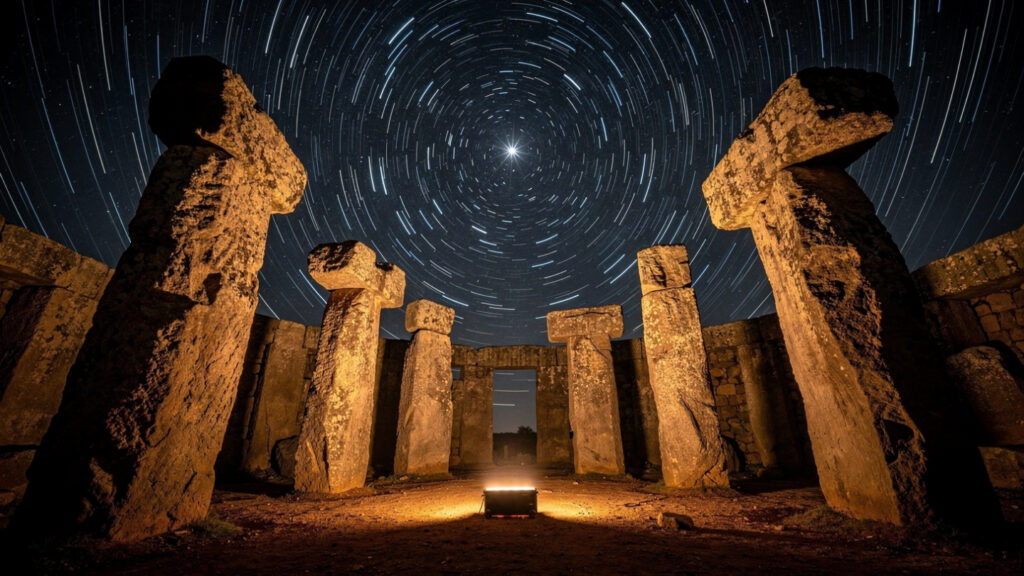
The site contains monumental T-shaped limestone pillars, many weighing several tonnes and some substantially more, arranged within carefully constructed circular or subcircular enclosures and decorated with reliefs of foxes, snakes, wild boars, birds, aurochs, and other animals. The imagery is not random decoration. It forms a coherent visual program repeated across different enclosures and construction phases, suggesting that the people responsible for the site possessed not merely the ability to move stone but an established conceptual and organizational system governing how that stone was transformed into architecture. The site was subsequently backfilled, a fact that adds another layer to the problem because the reasons for the deliberate burial of the enclosures remain a subject of archaeological discussion.
The dating is what makes Göbekli Tepe particularly important to the larger chronology. Its earliest monumental phases belong to the period around 11,500 years ago, placing them immediately after the end of the Younger Dryas. The site therefore appears at precisely the point where the climate record shows the world emerging from one of the most dramatic disruptions of the late Pleistocene, yet it does not appear in an archaeological landscape already populated by centuries of comparable monumental construction. It appears early.
That does not mean that Göbekli Tepe appeared from nowhere. Archaeology has increasingly demonstrated that hunter-gatherer communities possessed greater social complexity, symbolic systems, long-distance exchange networks, and capacity for collective labour than older models allowed. The discovery does not require an invisible civilization to explain it. What it does require is a more sophisticated understanding of how technical and organizational knowledge accumulated, transmitted, and transformed before the appearance of the first cities. The question therefore shifts from “How could hunter-gatherers build this?” to the more difficult question of what intellectual and social history preceded the builders who could.
The astronomical interpretations make that question even more interesting, although they also require caution. Andrew Collins and Rodney Hale have argued that elements of the site’s architecture correspond to astronomical orientations, including proposed relationships between Enclosure D and the changing position of stars across the prehistoric sky. If some of these orientations were intentional and date-specific, then the site would preserve evidence of a sophisticated astronomical tradition whose development predates the monument itself. The existence of astronomical observation at Göbekli Tepe is not controversial, the extent to which particular orientations encode precise precessional dates is.
That distinction matters because precession is not a phenomenon that can be inferred from looking at the sky once. Earth’s axial precession unfolds across approximately 26,000 years, meaning that detecting and deliberately exploiting its long-term effects requires sustained observation across generations. If the proposed alignments are intentional and encode a specific astronomical epoch, then the builders were not simply looking upward. They were inheriting a tradition of observation that had already accumulated a considerable depth of time.
And that is the first coordinate.
The Sphinx and Its Clock
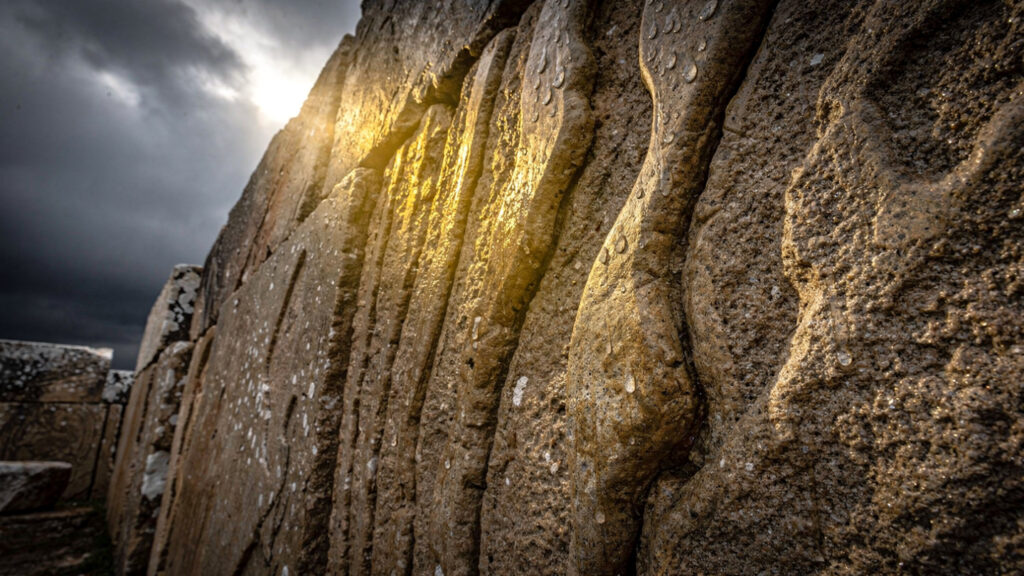
The Great Sphinx of Giza presents a different kind of problem because its anomaly begins not with astronomy but with the stone itself. The monument faces east, and its body bears weathering features whose interpretation has generated one of the longest-running disputes between geological and Egyptological approaches to the monument. Robert Schoch, a geologist at Boston University, argued beginning in the early 1990s that the deep vertical weathering features visible on the Sphinx enclosure are more consistent with prolonged exposure to rainfall and runoff than with the predominantly arid conditions of the conventional Old Kingdom date.
The geological argument is straightforward in its basic form but consequential in its implications. Water leaves a different signature on limestone than wind-driven sand erosion does, and the Sphinx enclosure contains features that Schoch interpreted as evidence of substantial precipitation occurring after the original carving of the monument. Egyptologists have challenged the proposed chronology and have pointed to the monument’s architectural, cultural, and historical relationship with the Fourth Dynasty and the broader Giza complex. The dispute has never been simply about whether rain can weather limestone. It is about how much weathering occurred, when it occurred, and what that tells us about the monument’s original construction and subsequent modification.
The climatic context is important because northeastern Africa underwent a substantially wetter period after the Younger Dryas, commonly associated with the African Humid Period. If significant portions of the Sphinx’s weathering were produced by rainfall during an earlier climatic regime, then the monument would have to be older than its conventional Fourth Dynasty attribution, or at minimum would contain substantially older carved surfaces later incorporated into the monument known today. That is a geological inference, not a proven archaeological chronology, but it creates a striking temporal overlap with the period in which the first monumental architecture of the Near East was emerging.
The astronomical argument adds another layer. Robert Bauval and Graham Hancock proposed that the Sphinx’s eastward orientation and leonine form should be read in relation to the constellation Leo and the precessional position of the equinox, with approximately 10,500 BCE representing a particularly significant alignment in their model. Egyptological scholarship has disputed the interpretation, particularly the assumption that the Sphinx was designed as a precessional marker in this precise sense. Yet once again, the disagreement is not over whether the monument faces east or whether precession exists. It concerns what meaning, if any, its orientation carried to its builders.
Put beside Göbekli Tepe, the Sphinx becomes interesting for a reason that neither monument possesses in isolation. One monument is associated with astronomical orientation in a period immediately after the Younger Dryas. The other has been argued to contain geological evidence for substantial rainfall and astronomical symbolism that could place its origins far earlier than the conventional date. The interpretations remain disputed. The overlap in the questions they generate does not.
The Piri Reis Question
The Piri Reis map moves the investigation from stone to paper and from prehistoric monuments to the history of cartography. Drawn in 1513 by the Ottoman admiral Piri Reis, the surviving fragment is accompanied by his own description of the sources from which he compiled it, including earlier maps associated with Portuguese and Mediterranean traditions and material he attributed to older geographical knowledge. The map became famous in the twentieth century because some researchers, most prominently Charles Hapgood, argued that its southern coastline represented Antarctica before the continent was covered by its present ice sheet.
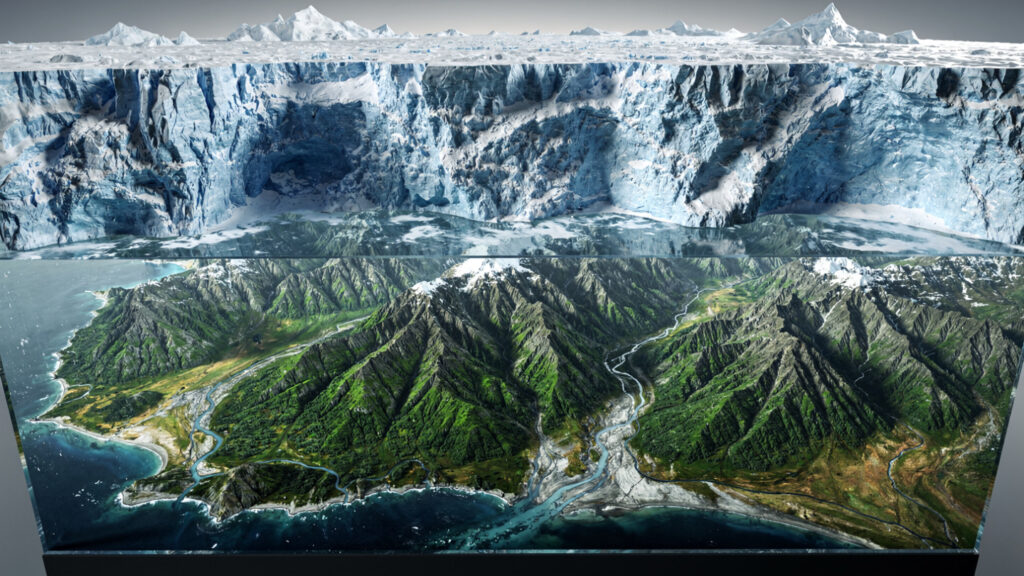
The established geographical fact is that Antarctica’s coastline exists beneath a massive ice sheet and that modern seismic and radar surveys can reconstruct portions of the subglacial landscape. The controversial question is whether the southern landform represented on the Piri Reis map corresponds to that buried coastline, or whether the apparent correspondence is the result of distorted geography, mistaken identification, compilation from conventional sources, or selective matching. Some portions of the proposed correspondence have appeared compelling to advocates of the ancient-map hypothesis. Other portions are inconsistent or ambiguous enough that mainstream cartographic scholarship does not accept the map as evidence of a prehistoric Antarctic survey.
What remains genuinely interesting even after the strongest claims are stripped away is the transmission problem. Piri Reis did not present his map as an isolated act of discovery. He described himself as a compiler working from earlier cartographic sources, which means that the history of the map necessarily extends backward beyond the surviving document. That does not prove that those sources contained a map of ice-free Antarctica. It does, however, establish a general historical mechanism through which geographical knowledge can survive long after the people who first produced it have disappeared.
A map can outlive its civilization. A copy can outlive the original. A compilation can preserve a feature whose source has vanished so completely that later generations no longer understand why it is there. If the Piri Reis map contains genuinely anomalous geographical information, the central question is therefore not merely who drew the surviving fragment in 1513. It is how much older knowledge could have travelled through successive copying traditions without preserving the identity of the people who first generated it.
The Master of Animals and the Handbag
The most provocative evidence in the pattern is not always the most spectacular. Sometimes it is the repetition of an image. The library’s existing Master of Animals investigation traces a recurring composition in which a central human or divine figure appears between two animals, a motif that can be followed through a remarkable sequence of cultures: the seated female figure flanked by leopards at Çatalhöyük, Mesopotamian cylinder seals, the Indus Valley Pashupati seal, the Egyptian Gebel el-Arak knife, Minoan imagery, and eventually the Gundestrup Cauldron.
The existence of the motif does not, by itself, demonstrate a single origin. Similar symbolic compositions can emerge independently because they express a powerful and intuitive visual idea: the human or divine figure standing at the boundary between civilization and the animal world. What becomes more difficult to dismiss is the appearance of related details across widely separated cultural contexts, particularly the recurring object resembling a handled container or “handbag” held by figures in contexts separated by thousands of years and enormous geographic distances.
At Göbekli Tepe, the object appears in the site’s iconographic repertoire. Similar forms have subsequently been identified by researchers in Mesopotamian representations associated with the Apkallu and in later Mesoamerican imagery. The chronology is important because the Göbekli Tepe examples are dramatically earlier than the Mesopotamian and Mesoamerican examples. If the objects are genuinely the same symbolic element rather than unrelated visual forms that merely resemble one another, then the conventional direction of cultural diffusion becomes difficult to sustain.
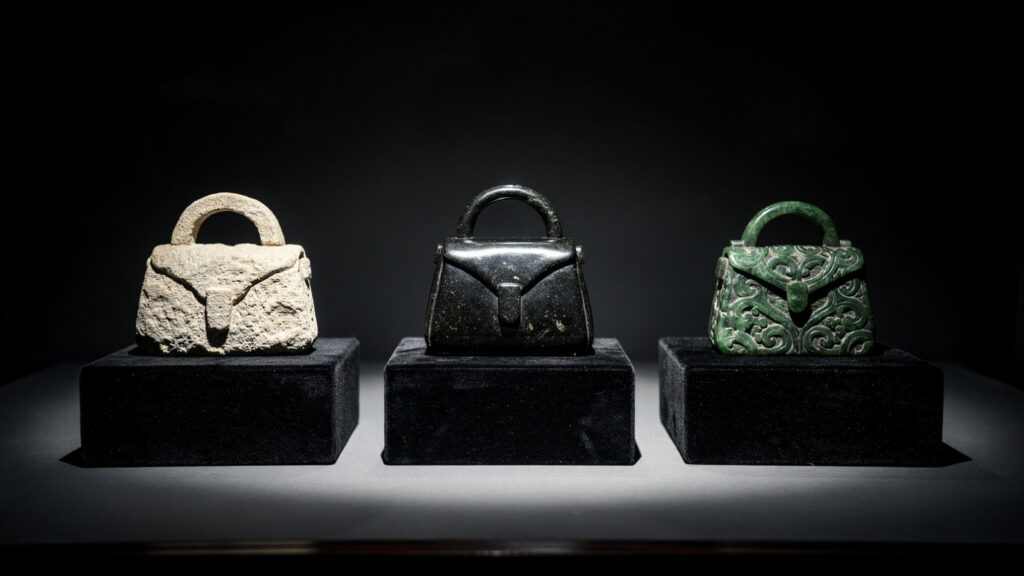
This is where the question becomes larger than iconography. A recurring symbol is a carrier. It can preserve information long after the language in which that information was originally expressed has disappeared. The symbol may survive while its meaning changes, just as a word can survive after its original referent has vanished. If the same highly specific object was repeatedly reproduced across cultures, then either there was some form of transmission, or independent societies repeatedly converged on an unusually specific visual convention. Determining which explanation is stronger requires comparative analysis of the actual images, their dates, their archaeological contexts, and the degree of similarity between them.
The point is not that a carved “handbag” proves that someone travelled from Göbekli Tepe to Sumer or from the ancient Near East to Mesoamerica. The point is that symbols can preserve connections that ordinary historical narratives overlook because the symbol is studied as art in one culture and mythology in another. The object becomes interesting precisely because it refuses to remain inside one discipline.
The Pleiades Thread
The Pleiades provide an even older thread. The library’s Pleiades investigation examines research by Barnaby Norris and Ray Norris concerning the possibility that some Aboriginal Australian traditions encode astronomical relationships whose structure may preserve memories from before the major dispersals of modern humans across Eurasia. The extraordinary claim is not that a written text survived for 100,000 years. No such text exists. The claim concerns the possibility that astronomical knowledge, embedded in oral tradition, can preserve information across immense periods of cultural transmission.
The Pleiades are particularly useful for such an investigation because they are not arbitrary objects. They are a visible star cluster whose members move through the sky according to measurable stellar mechanics, and the apparent configuration of the cluster changes over long periods as the stars move relative to one another. If an ancient tradition preserves a specific relationship between the Pleiades, Orion, and the number of visible stars, then modern astronomy can test whether the described configuration is compatible with particular historical periods. The sky becomes a clock, not because ancient people possessed modern instruments, but because celestial motion leaves a measurable signature in the traditions that describe it.

The Pleiades thread therefore reaches further back than the Younger Dryas. Its importance to this investigation is not that it proves a civilization existed before 12,900 years ago. It does not. Its importance is that it demonstrates a mechanism through which information can survive enormous stretches of time without surviving in the form we normally expect evidence to take. A story can function as an archive. A ritual can function as an archive. An astronomical tradition can function as an archive even when the people preserving it no longer know why the information is correct.
That possibility changes the way the later evidence should be read. If human communities were capable of preserving astronomical knowledge through tens of thousands of years of migration and cultural separation, then the question of how much information might survive the disappearance of a particular society becomes more interesting. The answer may not be found in a surviving library or inscription. It may be distributed across traditions whose original context has been lost.
The Serapeum and the Engineering Problem
The Serapeum of Saqqara introduces another category of anomaly: precision. The underground complex contains enormous granite sarcophagi associated with the Apis bull cult, many of them manufactured from single blocks of stone whose scale alone presents a substantial logistical challenge. Some of the boxes have remarkably smooth internal surfaces and carefully finished corners, and nineteenth-century investigators including William Flinders Petrie recorded measurements that later became central to claims about their extraordinary precision.
The strongest claims surrounding the Serapeum often go considerably beyond what the surviving evidence can securely establish, particularly when nineteenth-century measurements are converted into modern claims about tolerances and then compared directly with modern machining technology. The conventional archaeological explanation remains that the chambers and sarcophagi belonged to the long development of the Apis cult, with construction and use occurring across several periods of Egyptian history. The more interesting question is therefore not whether the Serapeum is literally impossible to build, because it plainly was built, but what techniques, labour organization, stone-working methods, measurement systems, and transportation infrastructure were required to produce objects of this scale and finish.
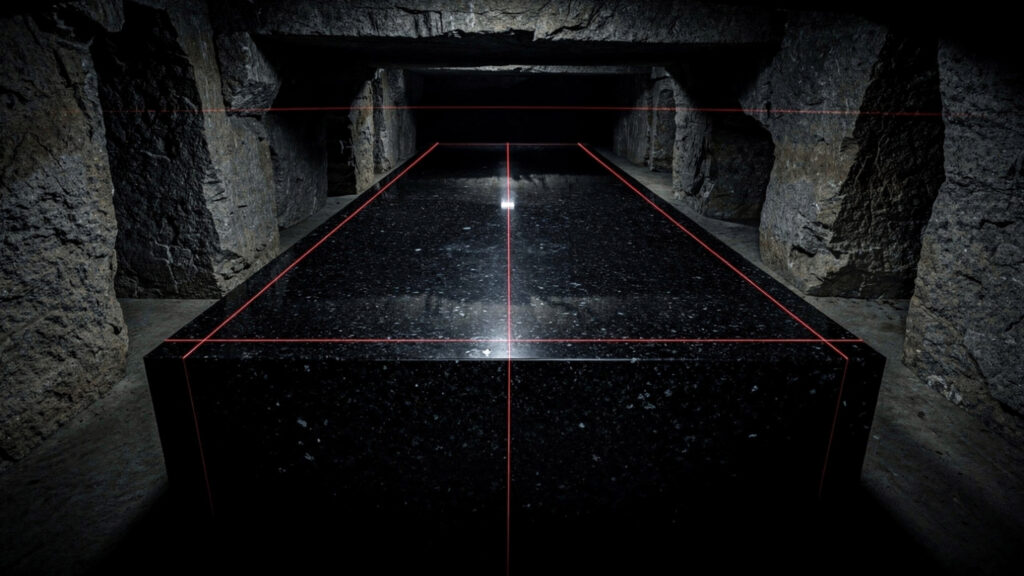
That question connects the Serapeum to Göbekli Tepe in an unexpected way. The two sites are separated by thousands of years and belong to radically different cultural environments, yet both force the same basic question: how much technical and organizational knowledge can be inferred from a finished monument when the development of that knowledge is no longer visible in the surviving archaeological sequence? We can measure the final product. We can identify the workers’ tools when those survive. What is much harder to reconstruct is the invisible accumulation of techniques that made the final result possible.
The Colombian Cliff and the Last Witnesses
The Colombian Amazon introduces something different again: a direct visual record of a world that was disappearing. The Serranía de la Lindosa and surrounding rock-art regions contain tens of thousands of painted images distributed across enormous cliff surfaces, including representations interpreted as giant sloths, mastodons, ancient horses, and other animals associated with the Pleistocene environment. The dating of the earliest paintings and the identification of particular species remain subjects of ongoing archaeological research, but the broad importance of the site is unmistakable: people were recording animals that no longer exist in the ecosystems their descendants inhabited.
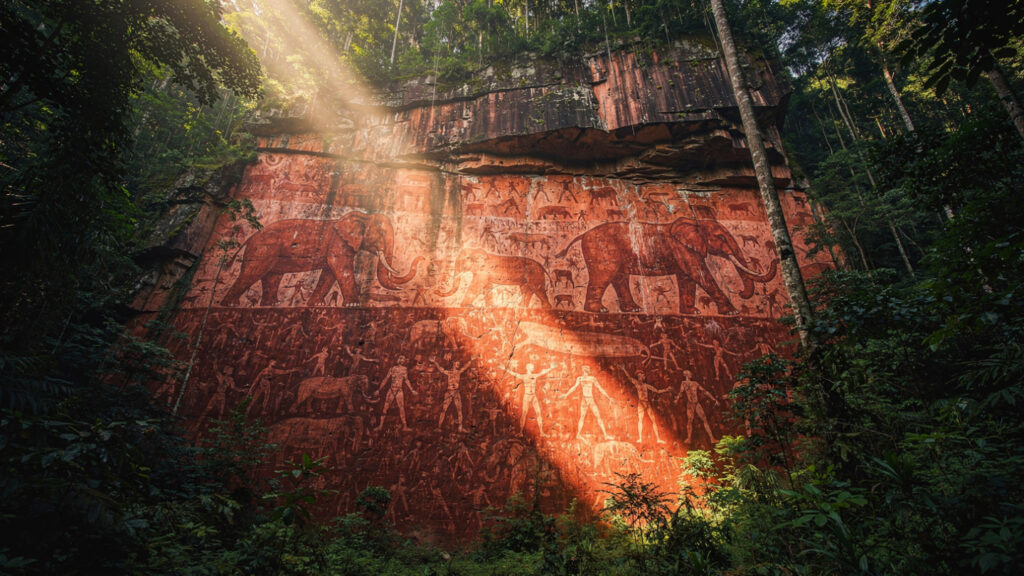
These paintings matter because they move the argument away from monuments built thousands of years later and back toward the people who experienced the environmental transition itself. The artists were not reconstructing extinct animals from fossils. They were recording a living world, or at minimum preserving visual memories of one, at a time when the climate and ecosystems of the continent were undergoing enormous change. The images therefore occupy the boundary between environmental history and human memory, preserving information that neither an ice core nor an archaeological settlement can provide on its own.
Some of the compositions have also been compared with the broader Master of Animals tradition, although such comparisons require considerably more caution than the existence of the animal imagery itself. Similar human-animal compositions can arise independently, and resemblance does not establish transmission. Yet the chronological position of the Colombian paintings creates an intriguing possibility: the visual relationship between humans and megafauna that later becomes prominent in the symbolic systems of several civilizations may have much older roots, extending back into the Pleistocene world that disappeared during the climatic transition.
The cliff may therefore represent something close to a last witness. Not a witness who tells us exactly what happened, but one who preserves the world that existed immediately before it changed.
The Emerald Tablet and the Transmission Claim
The final piece is not archaeological in the ordinary sense. It is textual, intellectual, and historical, and precisely because of that it must be treated differently. Isaac Newton’s surviving papers contain extensive work on alchemy and Hermetic literature, including his own translation of the Emerald Tablet, a short text traditionally associated with Hermes Trismegistus and surrounded by claims of immense antiquity. The tablet’s supposed origin cannot be established from those claims. What can be established is that Newton himself took the Hermetic corpus seriously enough to devote substantial intellectual effort to it, despite the fact that later generations would largely separate the Newton of physics from the Newton who studied alchemy and ancient wisdom.
The phrase most famously associated with the Emerald Tablet, “as above, so below,” has subsequently been compared with modern ideas about relationships between different scales of physical reality, including the holographic principle. But the comparison must not be turned into a retroactive prediction claim. Newton did not discover twentieth-century physics hidden inside an ancient text, and the Hermetic tradition did not secretly formulate the holographic principle centuries before modern physics. What is genuinely interesting is the transmission claim itself: the Hermetic writers presented certain knowledge as inherited knowledge, as something received from a source older than the civilization currently preserving it.

That claim is not evidence that the transmission actually occurred in the manner described by the texts. Ancient cultures frequently attributed knowledge to primordial sages, gods, or legendary ancestors, and such attributions are part of the history of ideas rather than independent proof of the events they describe. But the recurrence of the transmission idea is itself significant when placed beside the archaeological evidence. Göbekli Tepe raises the question of inherited knowledge that predates the monument. The Pleiades traditions raise the possibility that astronomical information can survive through extraordinary periods of oral transmission. The Hermetic tradition explicitly describes knowledge as something received from an older source.
Three very different archives are describing the same mechanism.
The Coordinates
Now the pieces can be placed on a single timeline. Not because they have been proven to belong to one civilization, but because chronology is the first test any proposed connection has to survive. At approximately 12,900 years ago, the Younger Dryas begins, while human communities across multiple continents are living through an environmental transition that is recorded in climate archives and reflected in the disappearance of large animals. In the Colombian Amazon, rock art preserves images of a Pleistocene world populated by animals that would soon vanish. Around the same boundary, researchers have identified materials they interpret as evidence of a cosmic impact or airburst, although that interpretation remains contested.
Approximately 11,700 years ago, the Younger Dryas ends. Within the following centuries, monumental architecture appears at Göbekli Tepe in a form that forces archaeology to reconsider the relationship between hunting, ritual, social organization, and construction. The builders are not emerging from an archaeological vacuum, they belong to a broader population history that includes earlier stone-working and ritual traditions. Yet the scale and coherence of Göbekli Tepe remain remarkable, particularly because the site appears so early in the conventional sequence of monumental construction.
Then comes the broader post-Younger Dryas window. The Near Eastern world enters the African Humid Period. Agriculture develops over subsequent millennia. Permanent settlements become increasingly common. Monumental architecture expands. Astronomical observation becomes embedded in ritual and calendrical systems. Symbolic motifs travel, transform, disappear, and return. In Egypt, the Sphinx eventually emerges within the historical landscape of Giza, carrying with it a geological debate over the age of its earliest carved surfaces and an astronomical debate over the meaning of its orientation.
Later still, the first cities appear. Mesopotamia develops increasingly complex systems of writing, administration, religion, and monumental architecture. Egypt develops its own state and monumental tradition. The Indus civilization emerges with its own urban system and symbolic repertoire. Across these civilizations, motifs appear that resemble earlier forms, including the Master of Animals composition and the recurring handled object that later observers describe as a handbag or container. Whether these similarities represent diffusion, independent invention, inherited symbolism, or some combination of all three remains an open question.
The Pleiades thread runs through the entire sequence at a different scale. It begins, according to the most ambitious interpretations of the astronomical evidence, deep in human prehistory and travels through migrations, oral traditions, and later civilizations. It does not establish a lost global civilization. What it establishes is the extraordinary capacity of human cultures to preserve information about the sky for periods far longer than the survival of any individual political system.
The coordinates are therefore not a single point on a map. They are a temporal window and a geographic distribution: the period surrounding and following the Younger Dryas, and the remarkably wide geographical range across which humans developed, preserved, or possibly inherited forms of knowledge whose origins are not always visible in the archaeological record immediately preceding them.
That is the pattern worth investigating.
Not a lost city.
A missing layer.
Something may have happened during the transition out of the Pleistocene that transformed human societies on a scale we have not yet fully reconstructed. Climate changed. Ecosystems changed. Megafauna disappeared. Human settlement patterns changed. Monumental construction appeared. Long-distance exchange intensified. Astronomical observation became increasingly important. Symbolic systems persisted and migrated. The question is whether these developments should continue to be understood as a series of unrelated regional innovations or whether some of them represent different responses to a common transformation.

There is another possibility, more provocative but also more difficult to demonstrate: that some of the knowledge appearing in the early Holocene was not invented from nothing but inherited from earlier populations whose social structures disappeared before their knowledge did. If that were true, the archaeological signature would not necessarily resemble a city. It might look exactly like what survives after a civilization collapses: isolated techniques without an obvious origin, symbols whose meanings have become detached from their first context, astronomical traditions whose antiquity exceeds the institutions preserving them, and stories that continue long after the circumstances that created them have vanished.
This is where the metaphor of the map becomes useful, provided we do not mistake the metaphor for proof. A civilization does not have to leave behind a surviving archive for its knowledge to influence the civilizations that follow it. It only has to leave something that can be inherited: a ritual, a measurement, an orientation, a story, a symbol, a technical procedure, or an observation of the sky that later generations preserve because it appears meaningful even after they no longer understand its original purpose.
The pieces do not have to look like a civilization in order to be remnants of one.
What the Map Shows
The assembled evidence does not prove the existence of a technologically advanced pre-Younger Dryas civilization comparable to Sumer or Egypt. It does not prove that Antarctica was surveyed without ice thousands of years before the first known civilizations. It does not prove that Göbekli Tepe was built by survivors of a lost global culture, that the Sphinx dates to 10,500 BCE, or that the repeated handbag imagery represents one object transmitted across continents. Each of those claims requires its own evidentiary demonstration, and several remain controversial precisely because the evidence does not yet compel a single interpretation.
But rejecting those strongest claims does not make the underlying questions disappear. Göbekli Tepe remains unexpectedly early monumental architecture. The Sphinx remains the subject of a serious geological debate over weathering and chronology. The Piri Reis map remains a fascinating document of cartographic transmission, even if its Antarctic interpretation is disputed. The Pleiades traditions demonstrate how astronomical information can persist through oral cultures. The Master of Animals motif demonstrates the extraordinary persistence and transformation of symbolic forms. The Serapeum demonstrates the technical sophistication of ancient Egyptian stoneworking. The Colombian rock art preserves a visual record of a vanished Pleistocene ecosystem.
None of these facts requires the others to be true. That is precisely why the assembly is interesting.
When independent pieces of evidence point toward the same question, the correct response is not to force them into a single answer. It is to investigate the connection. The mistake would be to move directly from “these anomalies resemble one another” to “therefore one lost civilization caused all of them.” The opposite mistake is equally serious: to assume that because each anomaly has a conventional explanation available within its own discipline, there can be no larger historical relationship between them.
The real question lies between those two extremes. How much knowledge can survive the disappearance of the society that produced it? How long can an astronomical observation remain embedded in oral tradition? How far can a symbol travel before its original meaning disappears? How much technical expertise can be preserved in a monument even when the developmental sequence that produced that expertise is no longer visible? And what happens to our understanding of history when the surviving evidence is distributed across categories that were invented thousands of years after the people who created it were gone?
For two centuries, we have been reading the pieces in separate rooms. The Egyptologist studies the monument. The geologist studies the stone. The archaeologist studies the settlement. The archaeoastronomer studies the sky. The climatologist studies the ice. The cartographer studies the map. The art historian studies the symbol. The historian studies the story. Each sees something real. Each also sees only part of the structure.
The map was never hidden in a single chamber waiting for someone to discover it. If there is a map, it was distributed across different kinds of evidence because that is how knowledge survives when its original institutions disappear. It survives in stone. It survives in ritual. It survives in stories. It survives in the orientation of buildings and the names given to stars. It survives in symbols whose original meanings may have been forgotten. It may even survive in fragments of technical knowledge whose original context disappeared long before the monuments themselves did.
That possibility should make us uncomfortable.
Not because it proves that a lost civilization definitely existed. It does not. The uncomfortable possibility is smaller and more consequential: that our definition of evidence may be too narrow to recognize what survives when a civilization disappears. We are trained to look for cities, inscriptions, royal tombs, administrative records, and recognizable technological sequences. But a civilization that vanished through catastrophe, migration, environmental change, or cultural absorption might leave something far less obvious behind.
A star position can survive. A ritual can survive. A story can survive. A symbol can survive. A measurement can survive. A stone aligned to a horizon can survive long after the people who understood why it was aligned have disappeared. A memory repeated for generations can become tradition, and a tradition can eventually outlive the world that gave it meaning.
These are fragile things individually. Together, they can become remarkably durable.
That is why the map matters. Not because every line has been decoded. Not because every anomaly has the same explanation. Not because a pattern automatically proves the civilization we might imagine behind it. It matters because the pieces are real, because many of them have been available for generations, and because some of the most important questions only become visible when evidence from different disciplines is allowed to occupy the same chronological frame.
The next step is therefore not to decide what the map means.
The next step is to determine whether it is a map at all.
That requires doing something archaeology, geology, astronomy, climatology, anthropology, and history rarely have the opportunity to do together: stop treating the anomalies as isolated objects and ask whether the relationships between them contain information of their own.
Because if the pieces are unrelated, the map will disappear when we test the connections.
But if the connections survive the test, then the question changes.
We are no longer asking why so many anomalies exist.
We are asking what happened to the people who left them behind.