



The dispute over Mount Graham is ongoing, and genuinely significant: a decades-long conflict between the San Carlos Apache Tribe’s religious and cultural claims and an international astronomical observatory built directly on the mountain’s sacred summit.
What follows covers that controversy accurately, and separates it clearly from a fabricated “Nibiru hunting” and “Stargate” narrative that circulates alongside it with no credible source.
The “Great Sitting Mountain”
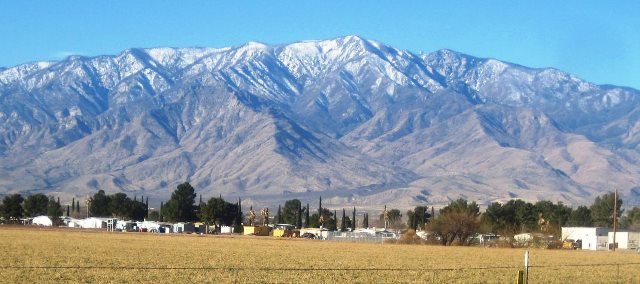
Mount Graham, called Dził Nchaa Sí’an in the Apache language, rises to roughly 3,267 meters near Safford, Arizona, close to the San Carlos Apache Reservation. The mountain’s spiritual significance to Apache communities is well documented: it is described by tribal members and religious practitioners as a sacred site connected to the Ga’an, spiritual beings central to Apache religious practice, and as a place where ancestors are buried and traditional ceremonies are conducted. This is a serious religious and cultural claim, not a peripheral detail, and it deserves to be treated with the same weight and respect any established religion’s sacred site would ordinarily receive from outside observers.
The Decades-Long Controversy
Construction of the Mount Graham International Observatory began in the late 1980s, a multi-institutional astronomical project involving the University of Arizona, the Vatican Observatory, and European partner institutions. This is extensively documented: the San Carlos Apache Tribe, joined by environmental organizations and religious freedom advocates, has opposed the project for decades, citing both its sacred religious significance and its location within critical habitat for the endangered Mount Graham red squirrel, a federally listed subspecies found nowhere else on Earth. Legal challenges were filed and actively litigated through the 1990s, and Congress ultimately granted the project several exemptions from standard environmental review requirements, a controversial legislative decision that Apache advocates and environmental groups continue to criticize as having bypassed normal protections. This is a serious, and still unresolved, conflict between religious freedom, indigenous sovereignty, environmental protection, and scientific research interests, worth taking seriously on exactly those terms rather than through any invented lens.
“Mount Graham is the home of the spiritual messenger of the past, Ga’an,” says a local Apache community member, describing Ga’an as central to ceremonies the Apache people have relied on across generations.
The “LUCIFER” Telescope Name
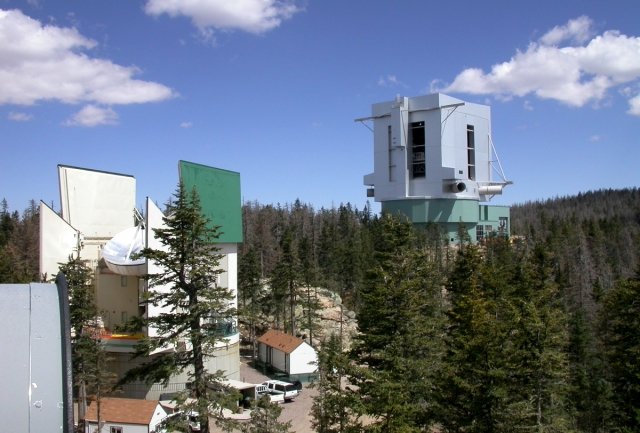
This needs a direct, clear correction, since it’s a well-documented case of a scientific acronym being mistaken for something sinister. LUCIFER is real, but it stands for “Large Binocular Telescope Near-infrared Utility with Camera and Integral Field Unit for Extragalactic Research,” a technically descriptive acronym chosen by the German astronomical institutes that built the instrument, an infrared spectrograph and camera used to study star-forming regions and distant galaxies. The instrument became operational in 2010, and its documented purpose is entirely conventional astrophysical research. Notably, the instrument’s name was officially changed to “LUCI” in 2012, permanently dropping the ending that had drawn public attention, a checkable fact that undercuts any theory of a deliberately chosen sinister name. This specific “Vatican built a telescope named after Satan” claim has circulated online for well over a decade and has been directly and independently addressed by multiple sources, including organizations with no institutional interest in defending the Vatican, confirming it traces to nothing more than an unfortunate acronym.
“Hunting Nibiru”
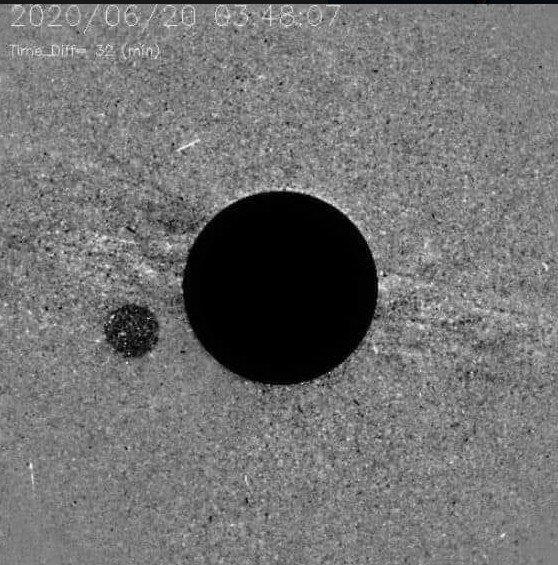
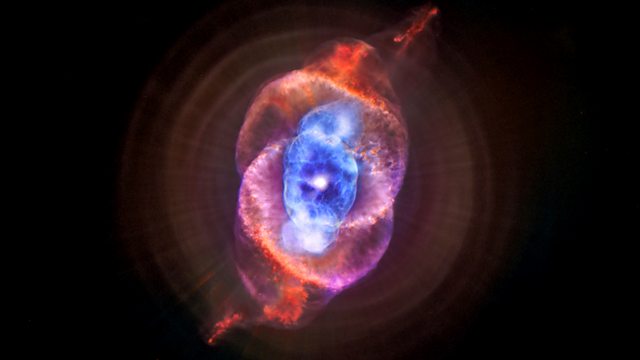
No verification could be found for claims involving a “SILOE” space program, a “Sky Hole 12” telescope, or any Vatican statement connecting Mount Graham’s telescopes to tracking a planet called Nibiru, despite an extensive search for any credible underlying source. These claims trace primarily to the 2013 book Exo-Vaticana by Thomas Horn and Cris Putnam, a published book, but one written for a fringe Christian conspiracy readership rather than presenting credentialed scientific, journalistic, or Vatican institutional sourcing. No named, verifiable Vatican Observatory scientist has been identified making these claims, and the published scientific literature describing the observatory’s actual instruments consistently describes conventional astrophysics research, star formation, extragalactic observation, exoplanet characterization, not planetary tracking of any undiscovered body.

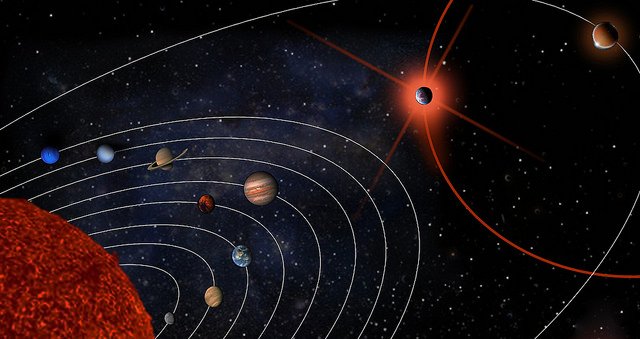
The astronomical concept the Nibiru myth itself distorts is worth explaining, since real “Planet X” style searches have a legitimate scientific history separate from the Nibiru claims. Astronomers have conducted serious searches for undiscovered bodies in the outer solar system for over a century, including the search that led to Pluto’s 1930 discovery, and a currently active area of research proposes a possible undiscovered “Planet Nine” based on real orbital clustering observed among distant Kuiper Belt objects, published by astronomers including Konstantin Batygin and Mike Brown at Caltech. This legitimate scientific search bears no relationship to the separate Nibiru mythology, which traces to a different, non-credentialed source and describes an object on a return orbit supposedly threatening Earth on a specific timeline, a claim that has failed to materialize repeatedly since it first began circulating decades ago and has no connection to any actual, published astronomical research conducted at Mount Graham or anywhere else.
The History of the Vatican Observatory
Additional institutional accountability is worth knowing here: the Vatican Observatory’s modern funding, including its portion of the Mount Graham telescope’s construction and operating costs, is supported through the Vatican Observatory Foundation, a publicly registered American nonprofit organization that solicits donations from Catholic supporters, subject to standard US nonprofit financial disclosure requirements, not funded through any hidden or unaccountable channel. This ordinary institutional structure, a registered nonprofit soliciting public donations for a publicly acknowledged research telescope, is worth knowing as a factual matter distinct from the more dramatic secrecy this genre of story typically implies.
The Vatican’s actual astronomical involvement extends much further back than most retellings suggest, since the Vatican Observatory is an old and legitimate scientific institution rather than a recent or secretive addition. Its roots trace back over 250 years, with a formal modern observatory established under Pope Leo XIII in 1891, explicitly intended to demonstrate the Church’s support for empirical science following the historical controversy surrounding Galileo. The observatory relocated its primary instruments over the following century to escape growing light pollution around Rome, eventually partnering with the University of Arizona to build the Vatican Advanced Technology Telescope on Mount Graham, which became operational in 1993. Jesuit astronomers staffing the observatory publish peer-reviewed research in mainstream astronomical journals and participate openly in international scientific conferences, a transparent, long-established scientific institution operating in full public view, not a secretive operation conducting undisclosed surveillance.
What the Vatican Observatory Actually Says About Extraterrestrial Life
The Vatican Observatory does engage publicly with questions about extraterrestrial life and Christian theology, worth reporting accurately rather than through secondhand characterization. Vatican Observatory astronomers, including Jesuit priests holding doctorates in astrophysics, have written and spoken publicly, through the observatory’s own official channels, about how discovering microbial or intelligent life elsewhere might be reconciled with Catholic theology, an openly published area of theological and scientific discussion, not a secret. This transparent public engagement is a very different thing from claims of a secretive, unnamed “famous Jesuit” providing hidden information about tracked celestial threats to an unnamed researcher, a claim with no independently verifiable source anywhere.
The Mount Graham Red Squirrel Controversy
This environmental dispute and the Apache religious freedom dispute, while distinct in their legal basis, have often reinforced each other in practice, with tribal advocates and conservation groups frequently coordinating their public opposition even while pursuing separate legal strategies, worth acknowledging directly. This coalition between indigenous religious freedom advocates and environmental organizations is itself a notable feature of the controversy’s history, reflecting how a single contested site can generate genuinely separate but mutually reinforcing grounds for opposition, each grounded in its own distinct body of federal law.
The separate environmental dimension of this controversy deserves expanding on, since it produced its own well-documented legal history distinct from the religious freedom questions above. The Mount Graham red squirrel, a subspecies found only on this single mountain’s high-elevation forest, was listed as endangered under the Endangered Species Act in 1987, shortly before observatory construction began. Environmental organizations, including the Mount Graham Coalition, pursued extended legal challenges through the early 1990s arguing the observatory’s construction and access roads threatened the squirrel’s already fragile habitat. Congress responded in 1988 with the Arizona-Idaho Conservation Act, which granted the observatory project statutory exemptions from certain standard environmental review requirements, a controversial legislative intervention that environmental law scholars have continued to study and debate for decades as a notable case of Congress directly overriding standard endangered species protections for a specific project. This legal history runs parallel to, and is sometimes conflated with, the separate Apache religious freedom dispute, though the two, while connected by their shared location, involve genuinely distinct legal frameworks and advocacy communities.
Why This Myth Has Persisted for Over a Decade
Why the “Vatican’s secret alien-hunting telescope” story has proven so durable is genuinely instructive. Real Vatican involvement in astronomy provides a verifiable institutional anchor, and the coincidentally striking acronym “LUCIFER” provided an arresting hook that required no additional embellishment to generate attention on its own. Once an institution and a striking name combine, additional invented details, secret Jesuit informants, hidden planet-tracking programs, classified space telescopes with ominous names, can attach themselves to the story with relatively little resistance, since the anchors already lend the whole narrative an air of credibility the invented additions haven’t independently earned. This same basic pattern, an institution plus a genuinely striking coincidental detail plus a chain of unverifiable additions, recurs constantly across similar stories, and recognizing it here is useful for evaluating the next version of this pattern wherever it next appears, regardless of which institution or striking coincidence it happens to attach itself to.
Why the Actual Controversy Deserves Attention on Its Own Terms
The genuinely important story here doesn’t need an invented Nibiru narrative to matter. The San Carlos Apache Tribe’s ongoing objections raise substantive questions worth taking seriously in their own right: how religious freedom protections apply to indigenous sacred sites, how federal legislative exemptions from environmental review should be granted, and how scientific institutions should weigh research value against the sincere religious and cultural claims of the communities whose land they build on. These are live questions in American law and policy, still actively discussed by legal scholars, tribal advocates, and religious freedom organizations. Attaching a fabricated conspiracy about hunting a mythical planet to this controversy doesn’t strengthen the Apache community’s serious case. It gives critics an easy, irrelevant target to dismiss instead of engaging with the substantive religious and legal questions actually at stake.
Mount Graham’s story, a sacred mountain, a world-class telescope, and an unresolved conflict between two forms of reverence for the same place, one religious and one scientific, is compelling and important enough without any embellishment. It’s a story that touches on still-contested questions about how the United States balances indigenous religious freedom against federal legislative authority, questions that remain unresolved decades after the observatory’s construction began, and that deserve ongoing, serious attention on their own merits rather than being buried under an invented conspiracy that has nothing to do with the actual people and communities most affected by this decades-long dispute.