James Bryce was a serious man.
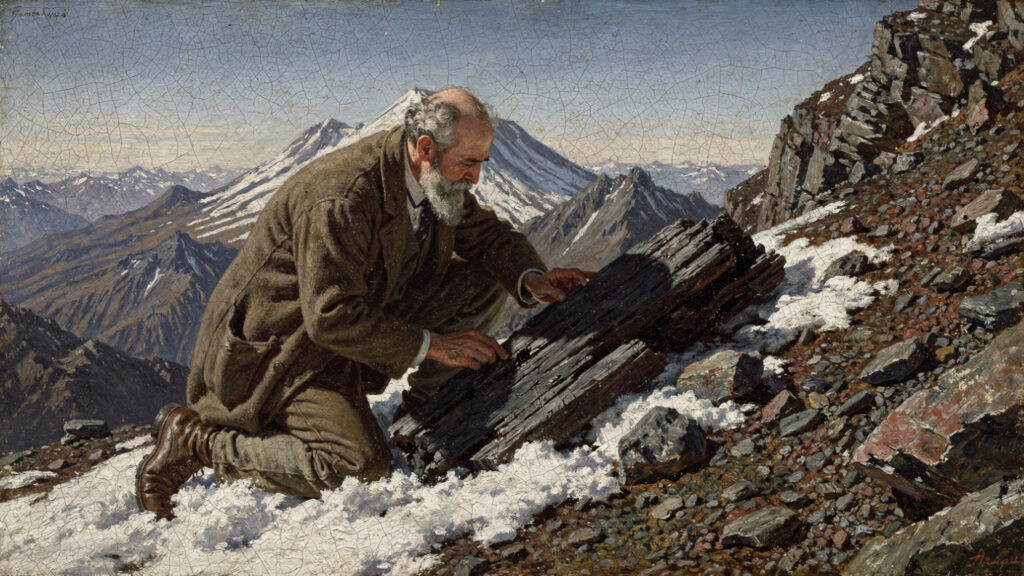
The British lawyer, historian, and diplomat who would become British Ambassador to the United States, whose scholarly work included the foundational study of the Holy Roman Empire and whose political career included membership in Gladstone’s cabinet, climbed Mount Ararat in 1876 and at approximately 13,000 feet found a piece of worked timber whose character he recorded in his published account.
Bryce was explicit about what distinguished the timber from random drift wood: it was at an altitude where no trees grow, its dimensions suggested deliberate human construction rather than natural formation, and its character, worked rather than raw, implied intentional cutting and shaping by human hands. He took a piece with him and recorded the find in his 1877 book Transcaucasia and Ararat.
Whether Bryce found a piece of Noah’s Ark, a remnant of a later structure built on the mountain by pilgrims or monks who sought proximity to the traditionally identified resting place of the biblical vessel, or a piece of timber that arrived at 4,000 meters altitude through a geological process whose mechanism is not recorded, is the question that the find raises without the available evidence resolving.
What makes Bryce’s account significant for the library’s framework is not that he was a credulous biblical literalist: he was a serious professional skeptic whose subsequent political career included significant engagement with the empirical analysis of institutional claims. He recorded what he found because he found something he could not explain through the conventional categories available to him.
He was not the first. He was not the last.
The Convergence of Independent Reports
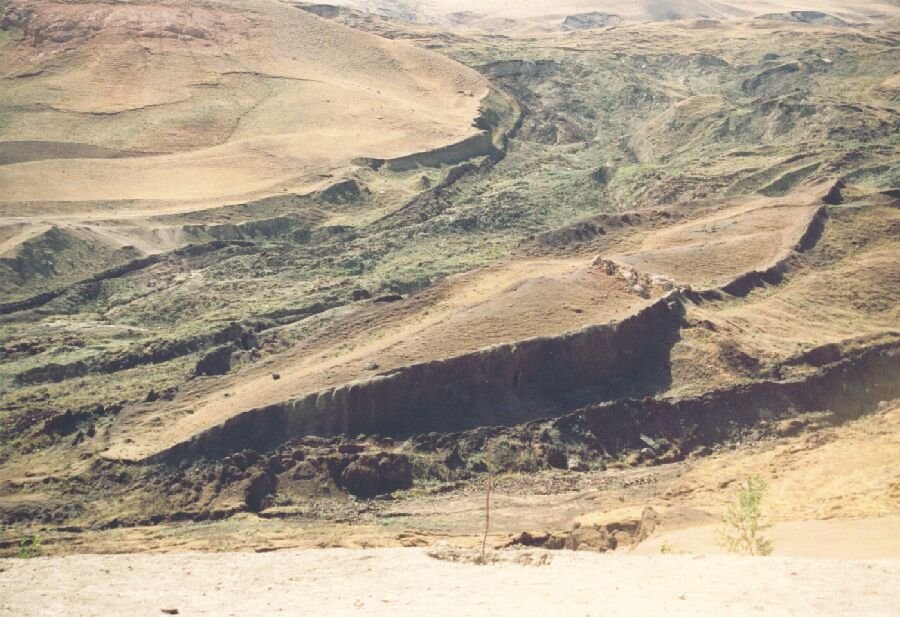
The recurring pattern of independent observers reporting large wooden structures at approximately 4,000 meters on Ararat’s northeastern or northwestern face across two centuries is the evidentiary core of the Ararat question.
The 1833 Turkish expedition’s reported sighting, the 1876 Bryce timber find, the 1916 Russian aviator Vladimir Roskovitsky’s claimed aerial observation of a ship-like structure partially exposed by glacial retreat, and the 1955 and 1969 expeditions of French explorer Fernand Navarra who recovered wood samples from the same general area, are the recorded sequence whose geographic consistency, multiple observers of different nationalities and backgrounds reporting the same general location on the mountain, is the evidentiary feature that cannot be explained simply by cultural suggestion.
Navarra’s physical evidence is the most specifically documentable element: in 1955 he recovered wood samples from beneath glacial ice at approximately 4,000 meters. In 1969 he returned with a more substantial team and recovered additional samples. The samples were submitted to multiple radiocarbon dating laboratories whose results produced inconsistent dates ranging from approximately 1,400 years old to approximately 5,000 years old, with the different laboratory results reflecting either genuine sample variation, contamination of ancient wood by younger material through moisture infiltration over centuries, or analytical methodology differences between the laboratories.
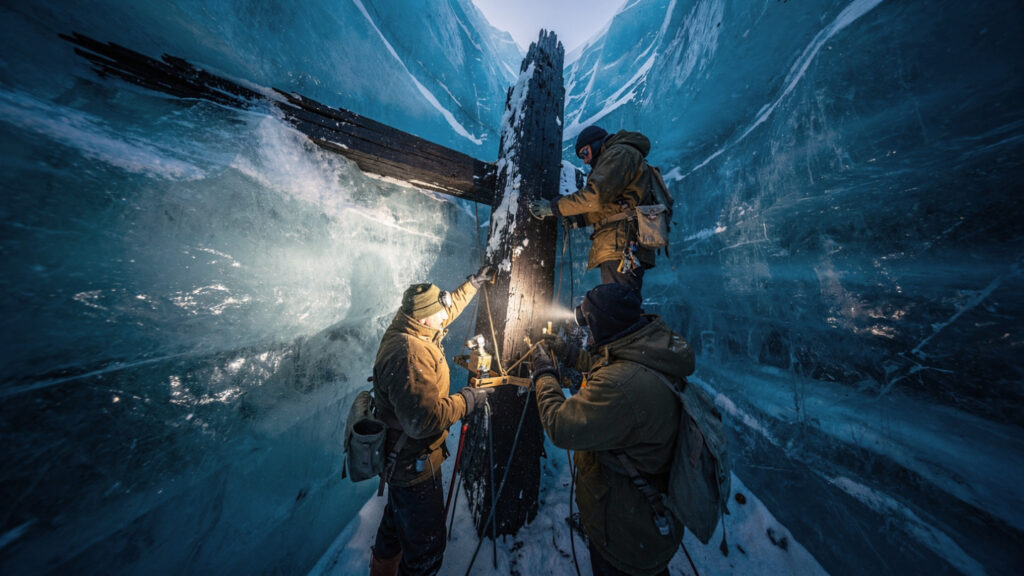
Whether the Navarra samples are from a structure predating the conventional biblical flood narrative’s proposed dating, from a medieval or Byzantine construction whose builders sought proximity to the sacred site, or from natural timber that arrived at altitude through geological processes, is the question that the inconsistent dating results leave genuinely open.
The LIDAR survey methodology that identified the Aguada Fénix complex in Mesoamerica and the ground-penetrating radar that has been applied to the Egyptian pyramids’ subsurface architecture represents the modern survey methodology whose application to the Ararat glacial zone would address the question most directly. Whether the Turkish access restriction has prevented systematic modern survey from being conducted by teams with sufficient technological capability to characterize what is under the ice, is the research gap that the access history reveals.
The Turkish Access Restriction and Its Multiple Dimensions
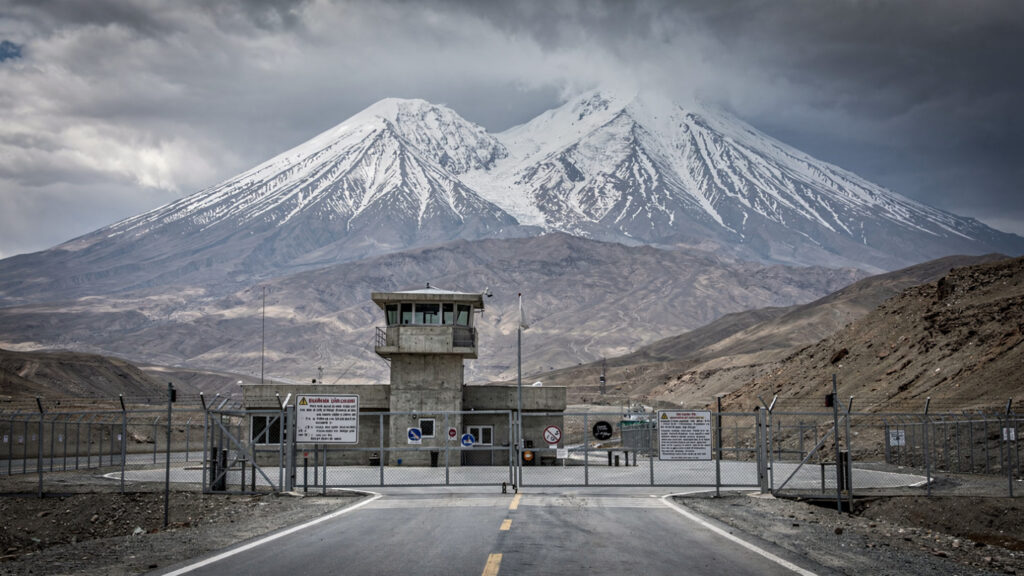
Turkey’s restriction of access to Ararat operates through multiple simultaneous institutional justifications whose combination makes the restriction resistant to simple explanation.
The Kurdish security dimension is real and well established: the Kurdistan Workers Party’s military activity in southeastern Turkey, whose operational area includes the Ararat region, constitutes a real security threat that the Turkish military’s confirmed presence on the mountain’s approaches reflects. Whether this security concern is the primary driver of the access restriction or provides convenient institutional cover for restrictions whose real motivation is different, is the question that the restriction’s history and its extension to periods of reduced Kurdish military activity raises.
The Armenian political dimension is real and specific: Ararat appears on Armenia’s coat of arms, is the primary national symbol of a country with which Turkey has a well known unresolved historical conflict over the Armenian Genocide, and whose prominent identification with a mountain Turkey controls creates a political dynamic that Turkish governments have navigated carefully. Whether facilitating international archaeological expeditions that might produce high-profile discoveries on Ararat would be seen as legitimizing Armenia’s symbolic claim to the mountain, and whether this consideration contributes to the access restriction, is the institutional analysis that the political context motivates.
The Islamic prophecy dimension is real and theologically specific: within the eschatological tradition of Sunni Islam, Noah’s Ark is identified as one of the signs that will appear before the Day of Judgment. Whether a Turkish government that must navigate its relationship with both secular institutional requirements and its Muslim majority population has institutional reasons to avoid facilitating a discovery that would be interpreted through this prophetic framework, and whether this consideration contributes to the access restriction, is the question that the Islamic tradition raises.
None of these dimensions establishes that the Turkish restriction is concealing a genuine discovery. Each establishes a real institutional reason for the restriction that is independent of whether anything is actually on the mountain.
The combination of three simultaneously operating institutional reasons for restricting access, Kurdish security, Armenian political dynamics, and Islamic eschatological significance, produces a restriction whose institutional character is overdetermined: even if one reason were removed, the other two would remain sufficient.
Roskovitsky and the Lost Russian Expedition
The 1916 Russian expedition account is the most dramatically significant element of the Ararat search history and the one whose evidentiary status is most contested.
The account attributes to Russian aviator Vladimir Roskovitsky an aerial observation of a large ship-like structure partially exposed by glacial retreat on Ararat’s northeastern face during a reconnaissance flight. The story holds that Tsar Nicholas II subsequently dispatched a military expedition that located and photographed the structure, and that these materials were lost during the 1917 Russian Revolution.
Whether this account is genuine, a fabrication introduced into the Ararat search tradition by later popularizers, or something whose origin in the historical record can be traced, is the evidentiary question that the account’s known transmission history raises. The earliest known published version of the Roskovitsky account dates to 1940, more than two decades after the claimed events, and no Russian imperial military expedition record supporting the account has been identified in Russian archives.
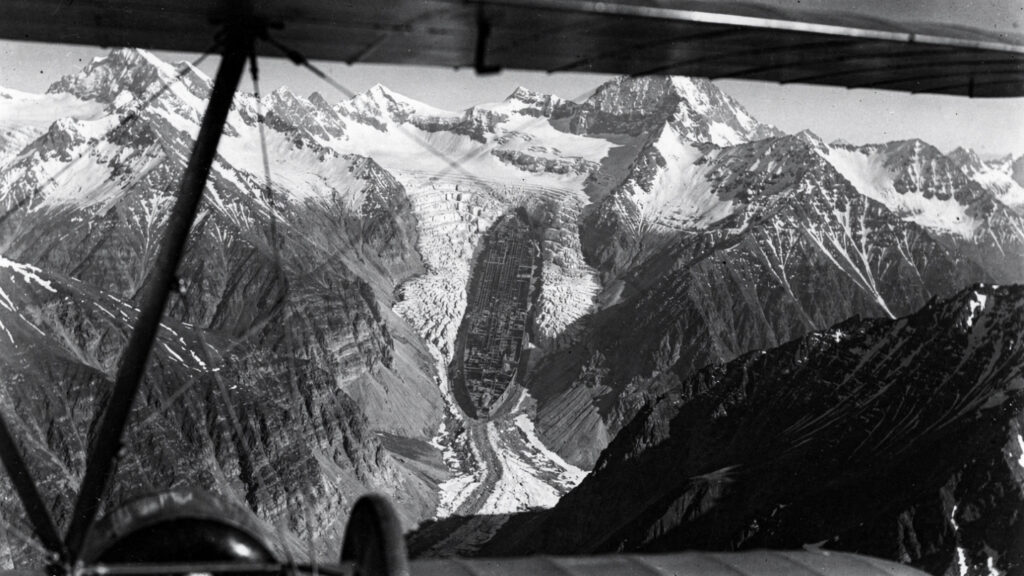
Whether the account was fabricated, represents a genuine oral tradition that was not published until 1940 because of the chaos of the revolutionary period and subsequent Soviet restrictions, or reflects the embellishment of a genuine but less dramatic observation, is the question that the two-decade publication gap raises without the available Russian archival record resolving.
What Navarra’s Wood Means
Fernand Navarra remains the one researcher who physically recovered material from the Ararat glacial zone at altitude, submitted it to laboratory analysis, and produced dated results whose character has not been fully explained.
Navarra’s physical samples were analyzed by multiple independent laboratories. The inconsistency of the results, ranging from approximately 1,400 years before the 1955 collection date to approximately 5,000 years, is the evidentiary anomaly whose explanation the available radiocarbon methodology literature addresses without producing consensus.
Whether the inconsistency reflects contamination of ancient wood by more recent organic material through moisture infiltration over centuries, sampling of wood from different components of the same structure whose different preservation histories produced different apparent dates, or the natural variation expected when radiocarbon dating wood from a high-altitude glacial environment whose preservation conditions differ from standard archaeological contexts, is the technical question that wood scientist and radiocarbon specialist involvement in a properly documented sample collection and analysis program would address.
Whether the access restriction that has prevented such a properly documented program from being conducted reflects institutional concern about what such a program might find, institutional indifference to a question that Turkish authorities consider either already answered or irrelevant to Turkish national interests, or the legitimate security and geopolitical considerations described above, is the question that the restriction’s duration makes progressively more interesting.
The Prophecy Dimension
The Islamic eschatological tradition regarding Noah’s Ark deserves development as the theological context within which a Turkish government’s approach to Ararat expedition permits acquires its most institutional complexity.
The Quran’s account of Noah, called Nuh in Arabic, and the flood is recorded across multiple Quranic passages. The location where the ark came to rest is recorded as al-Judi in the Quran, which Islamic tradition identifies with a mountain in southeastern Turkey, near the Iraqi border, distinct from the Mount Ararat of the biblical tradition. Whether the Quranic al-Judi and the biblical Ararat are the same mountain described through different geographic traditions, different mountains representing independent flood traditions, or the same remembered event whose geographic encoding diverged in the different textual traditions, is a question the comparative religious literature has not resolved to consensus.
The Islamic eschatological tradition’s statement about the ark’s appearance before the Day of Judgment is the element whose institutional implications are most significant for understanding Turkish government attitudes toward Ararat expeditions: if the discovery of the ark is prophesied as a sign of the end times, an openly Muslim government facilitating a discovery that would be widely interpreted as fulfilling this prophecy would be navigating between the scientific and theological framings of the same event simultaneously.
Whether this theological dimension has been explicitly considered in Turkish government decisions about Ararat access permits is not recorded in any available Turkish institutional communication. Whether it operates as an implicit institutional consideration in a country whose government must navigate between secular constitutional requirements and its Muslim majority population is the analytical question that the prophetic tradition and the access restriction’s history together motivate examining.