




Chang’e-4’s landing in Von Kármán crater checks out, and so does what Yutu-2 actually found underground, a genuinely detailed 40-meter subsurface profile published across multiple peer-reviewed journals. The claim that human moon landings remain scientifically contested because of the Van Allen belts isn’t a live debate among experts. Nine Apollo missions carried 25 individual astronauts through those belts, with dosimeter badges confirming exposure levels roughly equivalent to a chest CT scan, well documented, well beneath any dangerous threshold.
Getting that distinction right changes how seriously the rest of the lunar resource and security picture deserves to be taken, because the documented version doesn’t need a debunked radiation myth to stay genuinely significant.
What Yutu-2 Actually Found, Precisely Cited
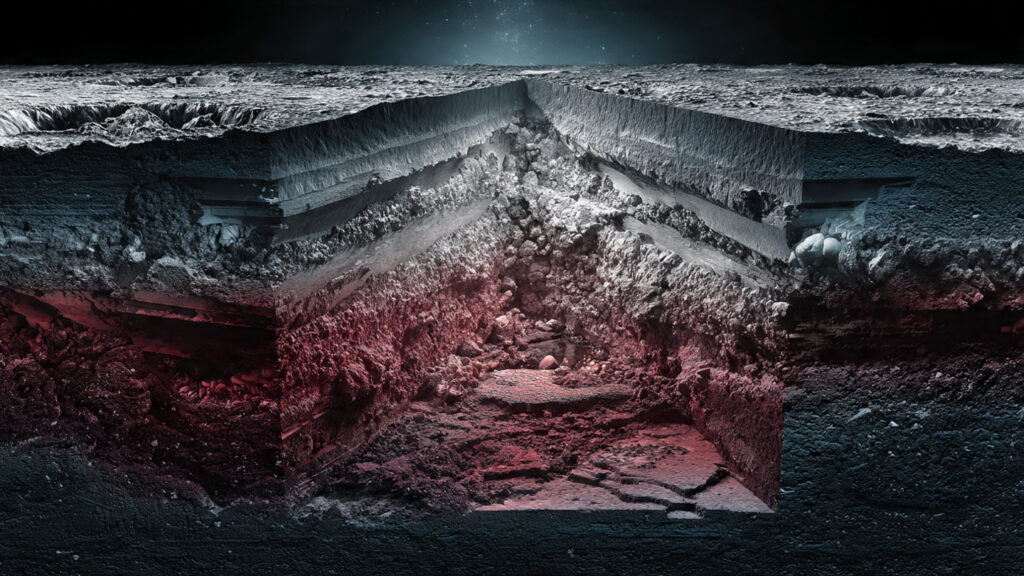
The actual science here is genuinely rich and doesn’t need embellishment. Chang’e-4 landed at 45.457°S, 177.588°E inside Von Kármán crater on January 3, 2019, and its Yutu-2 rover’s Lunar Penetrating Radar mapped subsurface structure to nearly 40 meters, published across multiple peer-reviewed papers in Geophysical Research Letters, Nature Communications, and Astronomy & Astrophysics. The actual stratigraphy shows an 11±4-meter surface regolith layer above a series of discrete ejecta deposits from at least four separate impact events, not a simple two-layer structure. Deeper radar data, penetrating to roughly 360 meters using the instrument’s low-frequency channel, indicated more than three distinct episodes of ancient basalt volcanism. Separately, the rover’s onboard spectrometer identified a genuine olivine-norite rock, published in National Science Review in 2020, likely crystallized from the melt pool created by the South Pole-Aitken basin’s original, enormous impact, a genuine sample of deep lunar mantle material reaching the surface. None of that required speculation. It required a rover, a radar instrument, and several years of peer review.
The Van Allen Belt Claim, Corrected Precisely
This deserves a direct, well-sourced correction rather than a hedge, because the actual historical record settles it cleanly. NASA studied the Van Allen belts extensively before Apollo, using data from physicist James Van Allen’s own 1958 discovery, and planned trajectories that minimized transit time through the belts’ weaker regions while relying on the Apollo command module’s aluminum hull for partial shielding. The math held up in practice: mission planners calculated a roughly 52-minute transit would produce about 13 rads of exposure, far under the 300-rad threshold considered dangerous by contemporary safety standards, and actual dosimeter badges worn by the 25 individual astronauts who made the crossing across nine Apollo missions confirmed actual exposure below that prediction, roughly comparable to a chest CT scan or about twenty chest X-rays. No astronaut experienced any radiation-related medical effects from the crossing. This isn’t an area of live scientific uncertainty. It’s one of the most thoroughly measured and independently confirmed aspects of the entire Apollo program.
Helium-3 and Rare Earths | Genuine Interest, Contested Economics
The strategic interest here is genuine, though the specific economics deserve more hedging than certainty. Helium-3 is a documented byproduct of solar wind that accumulates in lunar regolith, largely absent from Earth because our magnetic field deflects the solar wind that would deposit it, and it’s a genuine candidate fuel for a still-theoretical form of aneutronic fusion that would produce less radioactive waste than current reactor designs. That said, the entire concept remains economically speculative: no fusion reactor capable of actually using Helium-3 as fuel exists yet anywhere, commercial or experimental, which means today’s per-gram value estimates describe a market that doesn’t yet function. The interest in lunar rare earth concentrations, neodymium, dysprosium, and terbium among them, is documented in planetary geology literature, though extraction costs, processing infrastructure, and transport economics remain genuinely unresolved questions rather than settled advantages.
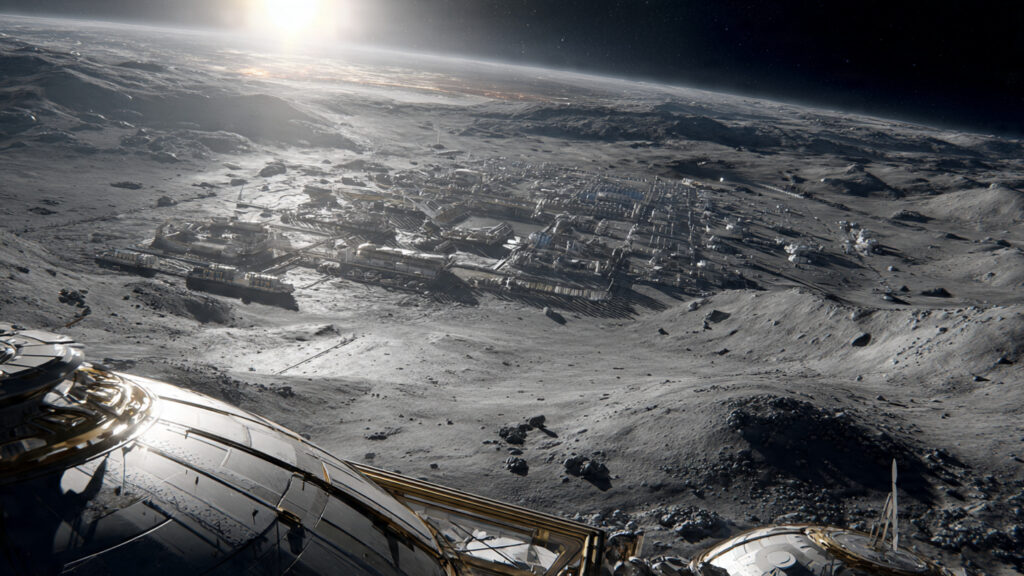
The Renewed Lunar Interest Checks Out. The Weapons Systems Are Speculation.
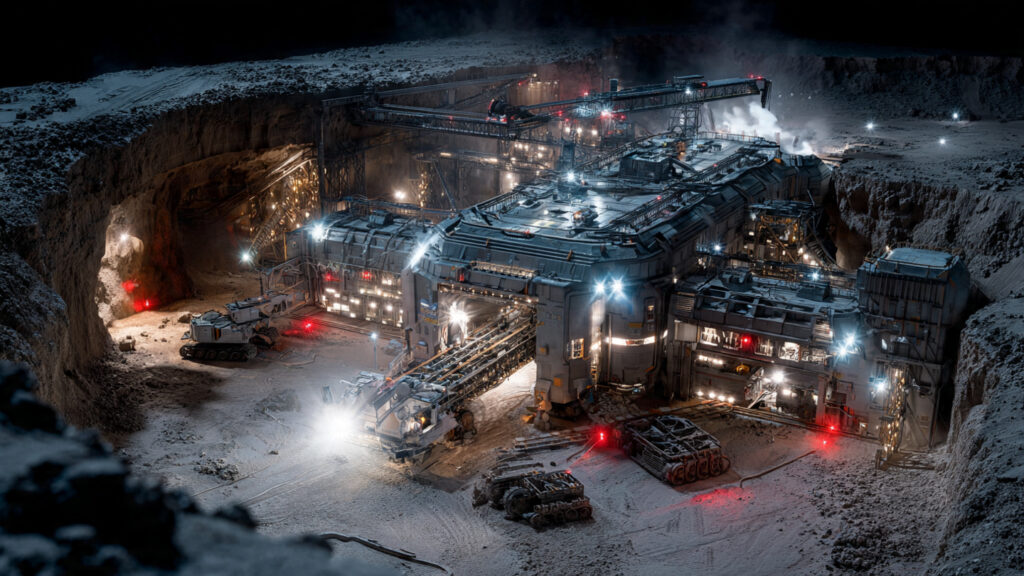
China, the United States, and other space agencies genuinely have returned to active lunar exploration after decades of relatively limited activity, a documented shift in national space policy driven by a mix of scientific, economic, and strategic motivations that space policy analysts discuss openly in public forums and published white papers. That renewed interest is worth taking seriously on its own terms. The specific claims here about spring-loaded kinetic weapons, autonomous robot armies patrolling regolith tunnels, and machines achieving independent battlefield command on the lunar surface describe no program, contract, or defense white paper that’s actually been published anywhere. They’re plausible extrapolations dressed as current fact, a different category of claim than the documented radar data and rover findings above, and worth reading as speculation about a possible future rather than an account of what’s already been built.
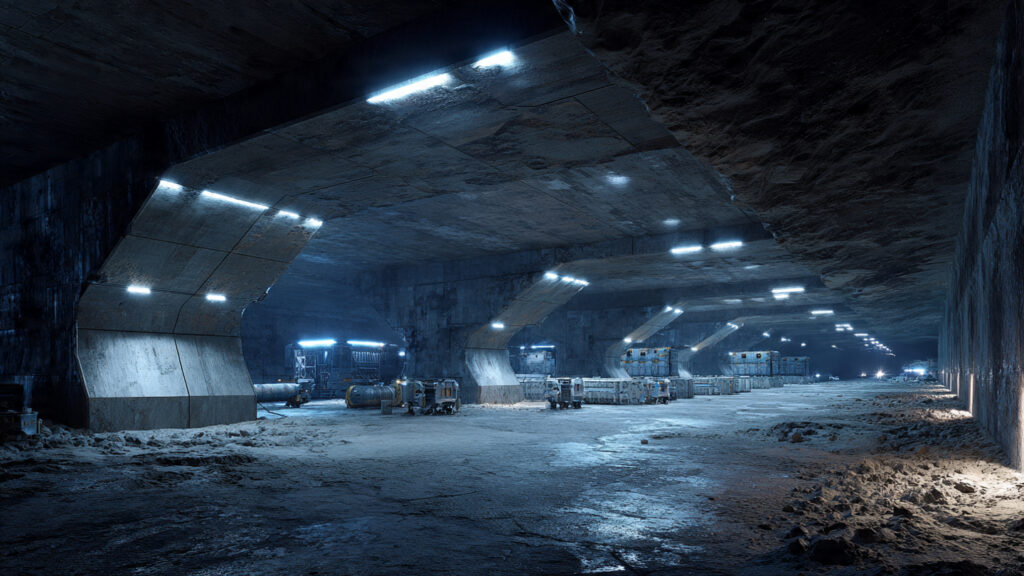
Forty Meters of Radar Data, No Radiation Myth Required
None of the genuine science needs the debunked radiation myth or the speculative arsenal to remain worth close attention. Chang’e-4’s actual subsurface mapping is one of the most detailed geological profiles ever obtained of the lunar farside, published, peer-reviewed, and openly available. Apollo’s astronauts really did cross the Van Allen belts nine times, measured and confirmed safe by their own dosimeters. Helium-3 and lunar rare earths represent a genuine, actively discussed strategic interest whose economics remain genuinely unresolved rather than already proven. Separating the documented radar data from the debunked radiation claim and the speculative weapons systems doesn’t make the Moon a less interesting subject. It makes the real parts easier to actually evaluate.