




Why do so many unrelated traditions describe being born as a kind of forgetting? Across cultures separated by continents and centuries, from the Upanishads to Tibetan Buddhism to Gnostic texts, thinkers have independently returned to strikingly similar questions about identity, repetition, and what dreaming reveals about waking life.
That convergence is genuinely worth exploring, not because any single tradition has the final answer, but because the pattern itself, so many separate cultures reaching for the same handful of images, is a documented feature of human thought worth taking seriously on its own terms.

The Oldest Mystery Is Arriving Without Instructions
Genuinely ancient traditions across unrelated cultures describe incarnation itself as a kind of amnesia, a soul or consciousness entering the world having forgotten a prior, fuller state of being. Plato’s dialogues describe the soul forgetting eternal truths at birth, recoverable only through the process he called anamnesis. Hindu and Buddhist traditions describe consciousness carrying forward through countless lives without memory of what came before, shaped by accumulated karma rather than continuous recollection. That’s not one culture’s isolated idea. It’s a recurring pattern independently reached by philosophical and religious traditions with no direct contact with one another, which is precisely what makes it worth examining rather than dismissing as one tradition’s peculiar belief.

None of these traditions shared a common scripture, yet each independently arrived at the image of birth not as a beginning but as a forgetting, an unusual convergence in the history of ideas, since most cultures disagree far more sharply about what happens after death than they agree about what happens before life.
Why We Keep Repeating Ourselves
This is where the psychology is genuinely well documented, and it needs no metaphysics to hold up. People really do marry compatible-seeming partners who echo the same relational patterns, choose careers or conflicts that recreate earlier dynamics, and find themselves facing what feels like the same lesson in a new setting. Sigmund Freud named this repetition compulsion, an unconscious tendency to recreate unresolved past experiences. John Bowlby’s attachment theory documents how early relational patterns, formed long before conscious memory, continue shaping adult relationships without a person necessarily recognizing the echo.

Buddhist teachings on samsara describe a strikingly similar structure using entirely different vocabulary, a wheel of habitual patterns repeating until they’re consciously understood. Nietzsche’s concept of eternal recurrence asked what it would mean to genuinely confront your life’s patterns, as if you were doomed to relive them exactly, which he intended less as literal cosmology than as a test of how honestly a person can face their own repeated choices. Four intellectual traditions separated by millennia, psychoanalysis, attachment theory, Buddhism, and existential philosophy, arrive at almost the same conclusion: what remains unconscious tends to repeat until it becomes conscious.
Why Humans Have Never Stopped Taking Dreams Seriously
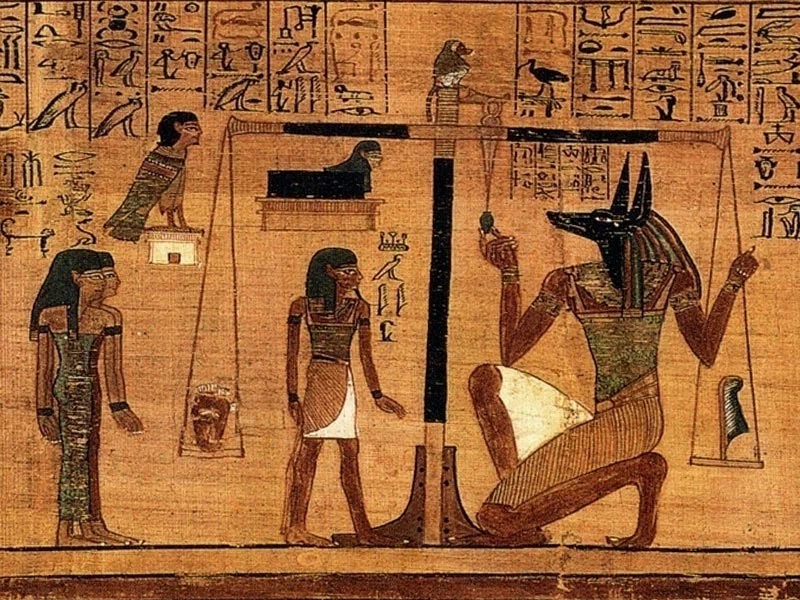
Nearly every civilization on record has treated dreams as significant rather than incidental. Ancient Egyptians compiled dream interpretation manuals, treating dreams as messages requiring skilled reading, some of the oldest surviving papyri on the subject. The Babylonian Talmud devotes substantial attention to dream interpretation, with rabbis in tractate Berakhot debating how dreams should be read and by whom. Medieval Islamic scholarship produced its own extensive dream interpretation tradition, most famously associated with Ibn Sirin, whose work shaped centuries of subsequent practice across the Islamic world.

Aboriginal Australian traditions describe the Dreaming, a foundational, sacred cosmological framework distinct from ordinary night dreams, concerned with the ancestral era in which the world itself was shaped, a genuinely different concept worth understanding on its own terms rather than folded into nocturnal dreaming. Freud and Jung, centuries later, approached dreams as a legitimate psychological subject worth systematic study rather than random noise. That’s an unusually persistent thread across unrelated civilizations and eras: whatever dreams actually are, humans have almost never agreed to simply ignore them.
Dreams as Humanity’s Oldest Laboratory
Many traditions divide sleep into stages that go beyond modern REM classification, and the genuine question worth asking is whether these divisions are purely symbolic or genuine early attempts to map subjective consciousness. Tibetan dream yoga, tracing back to the teachings of the 11th-century Indian Buddhist master Naropa, treats lucid dreaming as a genuine contemplative discipline, cultivating the recognition that experience, waking or dreaming, is more fluid and less fixed than it appears, training practitioners in presence without grasping. Modern lucid dreaming research documents genuine, measurable phenomena, a 2020 study found associations between meditation practice and increased frequency of lucid dreams, and researchers studying the hypnagogic state, the genuine threshold between waking and sleeping where vivid, often bizarre imagery and insight can emerge, have documented it as legitimate neurological territory worth studying on its own terms, not evidence of levels in a constructed game.

Why Every Culture Invents Guardians at the Threshold
The pattern here deserves genuine psychological grounding rather than game mechanics. Carl Jung, working from his theory of a shared collective unconscious, documented a recurring figure across world mythology standing at boundaries between the familiar and the unknown, typically representing the shadow, the parts of a person’s own personality pushed into the unconscious and found frightening to confront directly. The imagery built around that threshold moment turns out to be strikingly consistent across cultures with no contact between them: Cerberus guarding the entrance to the underworld in Greek myth, the riddling Sphinx blocking the road to Thebes, wrathful protector deities standing at the gates of Tibetan Buddhist mandalas, and the cherubim with a flaming sword guarding the entrance to Eden in Genesis.

Each tradition independently placed something fierce at exactly the point of transition. That’s precisely why so many lucid dreamers independently report encountering authority figures, shadow beings, or locked doors at moments of heightened awareness within a dream, a documented pattern researchers studying lucid dreaming have noted repeatedly, consistent with Jung’s broader observation that confronting one’s rejected personality tends to provoke genuine fear before it provokes integration. Crucially, in Jung’s clinical framework, this confrontation leads toward return and integration, a person coming back to ordinary life changed, not toward disappearance.
The Seduction of Winning the Level
This part of the pattern is genuinely worth taking seriously as existential observation rather than conspiracy. Modern life is unusually good at rewarding horizontal movement, a larger house, a higher salary, another title, another purchase. They may all improve life, but none necessarily answers the question of why a person is living it. That’s not a hidden hand keeping anyone trapped. It’s a genuine, widely discussed feature of consumer culture that philosophers and psychologists from existentialist thinkers to modern researchers on hedonic adaptation have documented directly: material rewards reliably fail to produce lasting fulfillment once basic needs are met, a documented finding worth sitting with honestly rather than mythologizing into a controlled simulation.

The Self Beneath the Story
Rather than a sleeping figure with a borrowed face, what several genuine contemplative traditions independently describe is something closer to an underlying awareness beneath ordinary personality. Advaita calls it Atman. Mahayana Buddhism speaks of Buddha-nature. Gnostic writers describe a divine spark. None of these traditions means exactly the same thing, and scholars continue debating how closely they resemble one another. Yet each distinguishes between the personality a person performs and a deeper awareness that observes the performance itself.

Why Children So Often Describe Remembering
Stevenson’s work is worth mentioning not as an argument for reincarnation but because it’s a genuinely interesting, real body of academic research most readers have never encountered. Ian Stevenson, chair of the University of Virginia’s Department of Psychiatry starting in 1957, spent decades documenting children, primarily from cultures with existing reincarnation beliefs, who spontaneously reported detailed memories of a specific deceased person’s life, memories that sometimes began around age two or three and faded as the children grew older.

His 1966 book Twenty Cases Suggestive of Reincarnation drew enough serious interest that Xerox inventor Chester Carlson left the university a bequest specifically to fund continued research, establishing the Division of Perceptual Studies, which continues this work today under psychiatrist Jim Tucker. The research remains genuinely contested. Developmental psychologists have proposed alternative explanations involving childhood imagination, family suggestion, and cultural expectation, and the work has largely stayed within specialized journals rather than gaining broad acceptance in mainstream psychology. Whatever their ultimate explanation, these documented reports are one real reason the deeper question, why human beings keep describing identity as something that precedes and outlasts a single lifetime, refuses to simply disappear.

What the Convergence Actually Suggests
Whether these traditions describe metaphysical reality or simply the deepest architecture of the human mind remains genuinely unresolved, a real, open question serious scholars of religion and psychology continue to debate rather than one that gets settled here. What’s clear is the remarkable convergence itself: unconnected cultures, working in different languages across different centuries, kept returning to strikingly similar observations about repetition, the difficulty of confronting one’s own shadow, and the sense of an underlying awareness beneath the personality’s daily performance. Perhaps awakening is not an escape from the world but a different way of inhabiting it. The oldest traditions repeatedly describe enlightenment not as acquiring secret knowledge but as remembering something ordinary that had become invisible. Whether that memory points beyond the mind or deeper into it remains unresolved. Either way, humanity has spent thousands of years returning to the same question: what, exactly, is it that notices the story while the story is being lived?