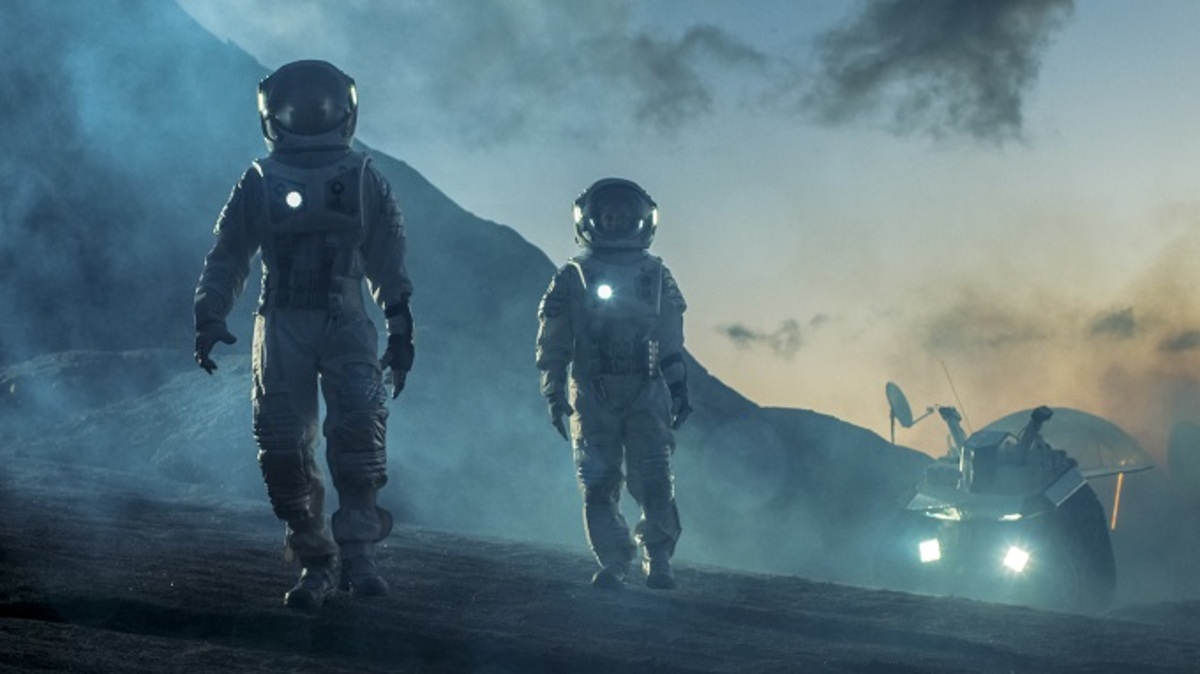





No climbing permit has ever been issued for Mount Kailash.
Not because the ascent is technically impossible. The peak reaches 6,638 meters, a serious but achievable altitude that dozens of neighboring Himalayan summits have surrendered to recorded climbs. Not because the Chinese government, which has administered Tibet since 1950 and manages Kailash as a regulated pilgrimage destination generating substantial annual revenue, lacks the administrative infrastructure to process the application. The stated rationale is religious sensitivity. The pilgrimage traditions of Hinduism, Buddhism, Jainism, and the ancient Bon shamanic framework all identify Kailash as sacred ground whose summit should not be trodden by human feet.
Religious sensitivity is a legitimate consideration. It is also the only category of rationale that forecloses the question the mountain’s geometry raises for anyone who examines it without the framework of the pilgrimage tradition.
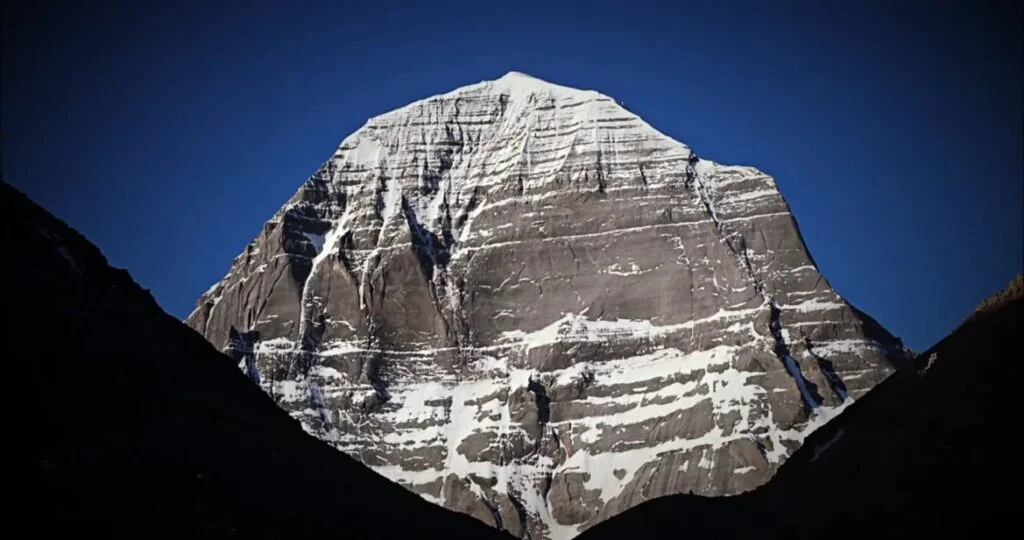
The mountain has four faces. Each face orients within measurable tolerance of a true cardinal direction. North. South. East. West. The slope angles of those four faces approximate the angles of the Great Pyramid of Giza within the margin of error available from ground-level measurement without summit access. The surrounding Himalayan massif presents the chaotic, asymmetric fracture geometry that tectonic uplift produces in granite. Kailash presents a four-sided pyramidal form whose cardinal orientation would require, if produced by natural geological processes, a coincidence of tectonic forces that geologists have not formally modeled because the modeling has not been attempted at this site.
The Chinese government has never issued a permit. Aerial survey of the summit region has been restricted beyond what pilgrimage management requires. The Soviet geological surveys conducted in the region during the 1960s and 1970s produced classified findings whose content has not been released.
Three separate institutional actors have independently decided that categories of investigation of this mountain should not proceed. The convergence of those decisions is its own data point.
The Axis
Four independent religious traditions converging on a single geographic coordinate is not a phenomenon that statistical probability distributes casually across a mountain range containing thousands of peaks.
Hinduism identifies Kailash as Mount Meru, the axis of the world, the cosmic mountain at the center of the universe around which the planetary architecture organizes. The Shiva tradition places the deity’s permanent residence at the summit. The mountain is not a site where the sacred is commemorated. It is a site where the sacred is actively present.
Buddhism identifies Kailash as the residence of Demchog, the deity of supreme bliss, and as the earthly manifestation of the pure realm that advanced practitioners aim to reach through lifetimes of practice. The Tibetan tradition places the mountain at the center of the mandala that describes the structure of enlightened reality.
Jainism identifies Kailash as Ashtapada, the site where Rishabhanatha, the first of the twenty-four Tirthankaras, attained liberation from the cycle of rebirth. The liberation event, in Jain cosmology, establishes a permanent energetic imprint at the geographic location where it occurred.
The Bon tradition, which predates the arrival of Buddhism in Tibet by centuries and represents the oldest surviving shamanic framework in the Himalayan region, identifies Kailash as the seat of all spiritual power in the world. The Bon practitioner Milarepa is recorded as having arrived at Kailash to contest its spiritual authority with a Bon master and having won the contest through a display of power at the summit. The story encodes a historical moment of religious transition while preserving the older tradition’s identification of the site.
Four traditions. Four separate theological frameworks developed across different centuries by populations with no coordinating institution. Each identifying the same mountain as the most significant geographic point in its cosmological map.
The standard explanation is that the mountain’s dramatic visual presence in the landscape, its isolation on the Tibetan plateau, and its proximity to the headwaters of four of Asia’s major rivers, the Indus, the Ganges, the Sutlej, and the Brahmaputra, made it a natural focus for sacred attribution. This explanation requires the four traditions to have independently generated identical cosmological identifications from visual and hydrological impressions. It does not explain why no other peak in the Himalayan range, including peaks of greater height and equal dramatic presence, produced the same convergence.
Something to this location, not its appearance and not its hydrology, drew four independent cosmological frameworks to the same coordinate.
What Ernst Muldashev Found
Ernst Muldashev is a Russian ophthalmologist whose primary professional reputation rests on corneal transplantation research. He led a series of expeditions to the Kailash region in the 1990s under the sponsorship of Russian geographical and scientific institutions, and this needs a more accurate framing than the field has simply gone silent on him. Muldashev’s Kailash claims, published in popular books rather than peer-reviewed geology or archaeology journals, have not been accepted by geologists or Tibetologists, Russian or otherwise, and the reception is better described as the ordinary response scientific institutions give to claims made outside their normal channels of peer review, not as evidence the claims are too difficult to refute. That does not make Muldashev a fraud or his measurements necessarily wrong, but it means his work should be read as one outsider researcher’s unreviewed claims, not as an unrefuted scientific finding.
Muldashev measured. The four-face cardinal orientation he confirmed within one degree of true north, south, east, and west. The slope geometry he measured in comparative relationship to the proportions of the Great Pyramid and other known ancient pyramidal structures. The comparison produced correspondences that the natural geological formation thesis cannot accommodate without proposing a mechanism by which tectonic forces produced pyramidal geometry matching ancient architectural standards.
His expeditions recorded temporal anomalies reported by multiple team members independently. Accelerated hair and nail growth in the vicinity of the peak, at rates inconsistent with the metabolic effects of altitude and cold. Compass deviation patterns that did not correspond to the known magnetic anomaly profile of the region. Psychological effects including acute temporal disorientation, the subjective experience of time passing at rates inconsistent with elapsed clock time, reported by expedition members without prior discussion of the possibility.
Muldashev’s interpretation of these anomalies placed Kailash within a global network of sites he identified as functioning components of a planetary information and energy system installed in the deep geological past. His claim, that the mountain contains subsurface structures whose geometry does not correspond to natural rock formation, has not been formally tested by any institution with the ground-penetrating radar capability to produce a definitive answer, because the access required for that testing has not been granted.
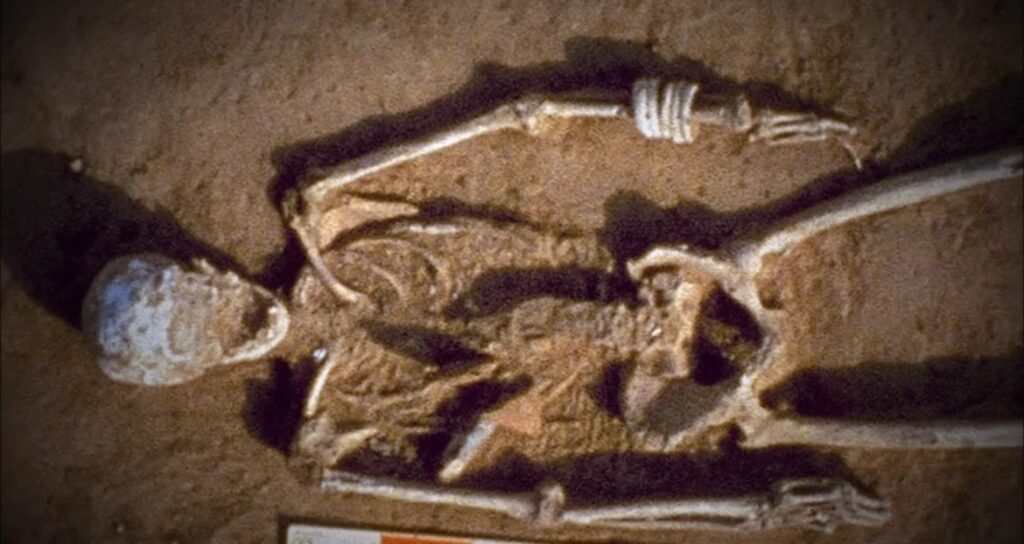
The Russian government classified the Soviet-era geological surveys of the region. Muldashev’s post-Soviet research was conducted with institutional support that subsequently became unavailable. His published findings sit in the public record, unreviewed by the relevant scientific fields rather than unrefuted by them.
The Radioactive Question
The claim that biological remains recovered from the high-altitude fissures of Kailash exhibit elevated levels of radio-isotopes has been in circulation in the alternative research community long enough to have produced a body of secondary commentary without producing a body of primary laboratory analysis available for independent review, which is itself a reason for caution rather than confidence in the claim.
This is the pattern that distinguishes a claim requiring investigation from a claim that has been investigated and found wanting. The radioactive anomaly at Kailash has not been formally tested by any institution with the relevant instrumentation and the access to the site. The absence of formal testing in a region administered by a government with full geological survey capability, applied to a testable claim that has been in the public research record for decades, is the kind of institutional gap that warrants examination rather than dismissal.
The parallel some researchers draw to Mohenjo-Daro needs a direct correction rather than inclusion as a supporting pattern. The claim that vitrified material at Mohenjo-Daro indicates an ancient nuclear or thermite event traces to informal, non-peer-reviewed speculation that has circulated in fringe literature since the 1970s, and it has not been substantiated by mainstream archaeology or materials science. Vitrified deposits at ancient sites generally have mundane, well-understood explanations, including lightning strikes fusing silica-rich soil into fulgurites, or ordinary high-temperature kiln and metalworking byproducts, and no credentialed archaeologist working on the Indus Valley Civilization treats the nuclear-event interpretation as a live possibility. This claim should not be cited as a supporting parallel for anything at Kailash.
The Global Grid
Christopher Dunn published The Giza Power Plant in 1998, an engineering analysis of the Great Pyramid approached from the perspective of a manufacturing engineer rather than an archaeologist, proposing that the King’s Chamber functions as a coupled oscillator converting the Earth’s natural seismic vibrations into directed electromagnetic energy. Egyptology’s lack of a dedicated formal rebuttal to this specific book should not be read as an inability to refute it. Fields generally do not produce formal academic rebuttals to claims published outside peer review, the same way physics does not publish journal articles refuting every self-published perpetual motion machine proposal, and the absence of such a rebuttal here reflects that normal pattern rather than an unanswered challenge.
The connection between Dunn’s Giza thesis and the Kailash geometry is the global grid framework developed by researchers including Bruce Cathie and Ivan T. Sanderson, whose twelve-point electromagnetic vortex map places both Kailash and Giza within the same planetary energy architecture. Angkor Wat in Cambodia, whose temple complex is oriented with astronomical precision that the construction period’s known technology barely explains, sits at an angular relationship to Giza that the grid framework accounts for as a designed correspondence. Puma Punku in Bolivia, whose H-shaped stone blocks are machined to tolerances requiring either advanced tool technology or a construction method not present in the official account of pre-Columbian Bolivia, occupies a third grid coordinate.
The thesis requires accepting that a planetary-scale engineering project was executed by an intelligence with complete geodetic knowledge of the Earth’s surface, the ability to quarry, transport, and construct at scales requiring energy sources not identified in the conventional archaeological record, and the motivation to distribute the resulting installations at geometric coordinates across every inhabited continent.
The motivation question is the one the source material handles least satisfactorily. The monkeyandelf standard does not require an answer to every question the evidence raises. It requires identifying the question clearly.
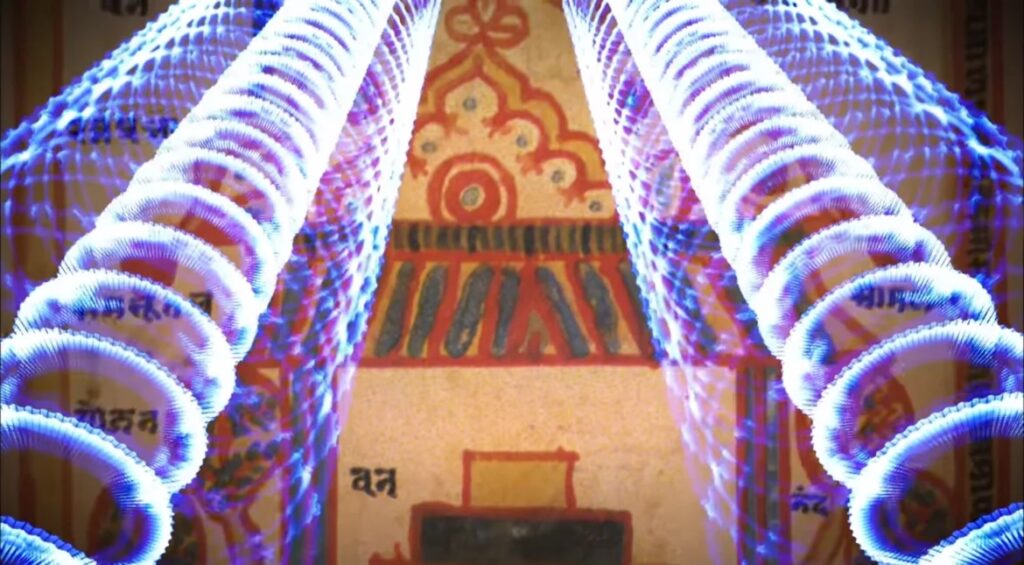
The Sumerian texts identify the Anunnaki as requiring gold for physiological reasons recorded in the previous piece. The Sanskrit texts that describe celestial beings converging on Kailash identify a different requirement: proximity to the radiation field emanating from the mountain’s core, described as an energetic refueling source for physiological systems operating under conditions the Earth’s surface presented as hostile to their biology.
Two separate ancient textual traditions describing non-human physiological requirements that geographic installations addressed. The installations correspond to sites whose geometry, construction precision, and radioactive or electromagnetic anomalies appear in the physical record. The textual descriptions and the physical evidence are pointing at each other across five thousand years.
The Summit That Cannot Be Reached
The Chinese government’s policy on Kailash climbing permits has remained consistent since 1950. The stated rationale, religious sensitivity, applies equally to dozens of peaks across the Himalayan range that have been opened to climbing under managed permit systems. Kailash specifically has never received that management framework.
In 2001 the Chinese government briefly indicated that a Spanish climbing team would be permitted to attempt the summit. The announcement generated immediate protest from Hindu, Buddhist, Jain, and Bon religious organizations across India and Nepal. The permit was rescinded. The Chinese government has not revisited the question publicly since.
The religious protest is real and genuine. The convergence of four traditions in opposition to summit access is consistent with the same convergence that identifies the site as cosmologically significant. What the protest does not explain is why aerial survey and ground-penetrating radar assessment of the summit region, operations that do not involve physical presence on sacred ground, have also not been conducted or published by the institutions that have administered the region for seventy-five years.
A geological survey of a mountain does not require climbing it. The technology exists. The institution administering the region possesses it. The survey has not been published.
The Soviet surveys were classified. The Chinese surveys, if conducted, have not been released. Muldashev’s independent measurements described anomalies that would benefit from follow-up investigation, though it is worth repeating that his original measurements have not themselves been independently verified.
The mountain sits at the center of four cosmological maps. Its geometry is pyramidal and cardinally oriented in a mountain range that produces nothing else resembling it. Its summit region has not been formally surveyed by any institution willing to publish the results.
Whatever the summit region contains has been protected by four separate institutional decisions across three different governments over more than half a century.
The geometry visible from the ground is precise enough to raise the question. The geometry of the decisions to prevent closer examination is equally precise.
Both point in the same direction.