



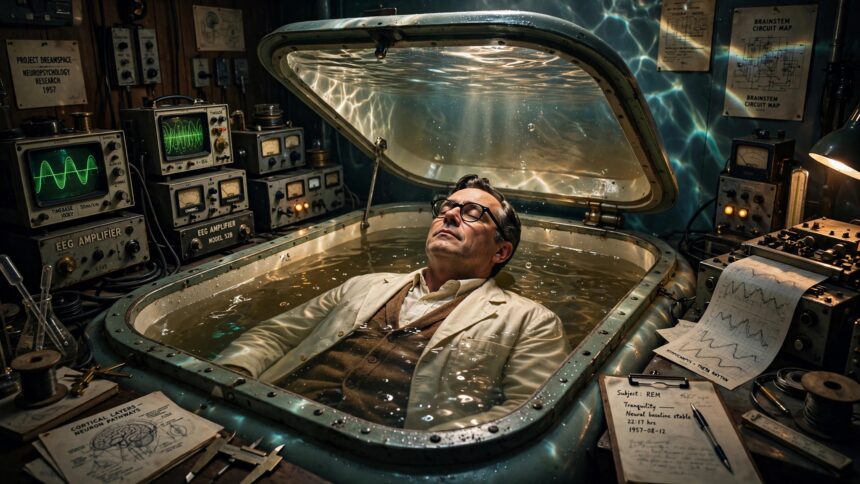
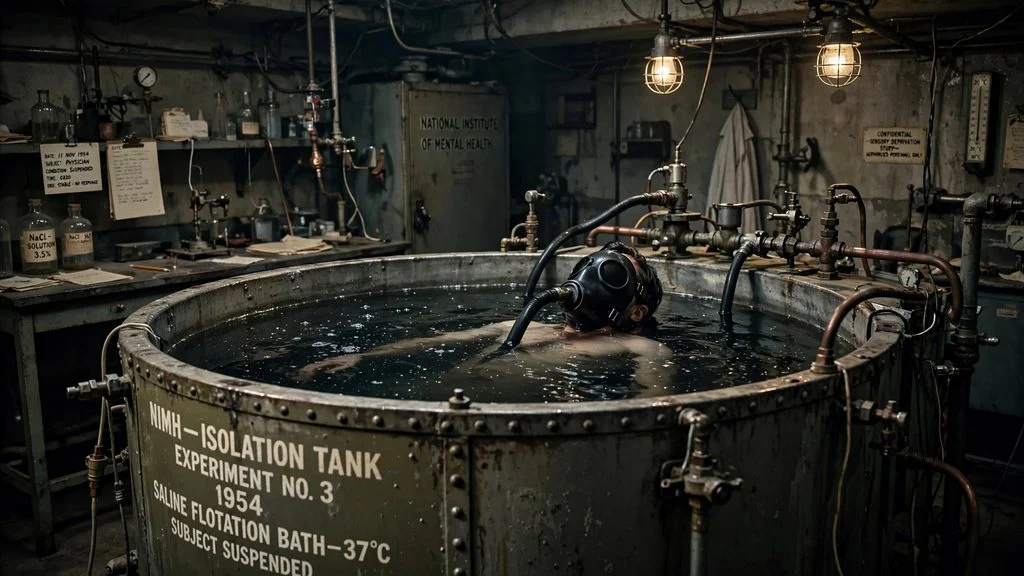
In 1954, inside a converted tank at the National Institute of Mental Health, a physician named John C. Lilly floated alone in body-temperature salt water, wearing a blacked-out breathing mask, waiting to find out whether his own mind would keep working once every signal from the outside world had been switched off. Nobody had built anything quite like it before. The prevailing theory in neuroscience at the time held that a brain deprived of external stimulation would simply idle, or worse, come apart. Lilly thought that theory rested on bad experimental design, and being the kind of scientist he was, he decided the only honest way to test it was to climb inside the question himself. He would go on to do that, in one form or another, for the next four decades, and by the end of it he would have invented a piece of medical equipment still used in hospitals today, helped establish that dolphins possess a form of intelligence worth taking seriously, and become convinced that he was receiving transmissions from a cosmic bureaucracy called the Earth Coincidence Control Office.
All three of those sentences are true, and the strange part of the John Lilly story is not that they contradict each other. It’s that they were produced by exactly the same method.
A Legitimate Scientist at One of the Most Establishment Addresses in American Research
Before any of the later strangeness, there is a career worth taking on its own terms. John Cunningham Lilly was born in 1915 in St. Paul, Minnesota, the son of a banker, and followed a conventional path through elite institutions: a physics and biology degree from Caltech in 1938, medical training split between Dartmouth and the University of Pennsylvania, and, during the Second World War, genuine and useful research into the physiological effects of high-altitude flight and explosive decompression for the U.S. Air Force. That wartime work is what first pulled him toward the brain rather than the rest of the body, and after the war he trained as a psychoanalyst before landing a research position at NIMH, where he spent the early 1950s doing exactly the kind of unglamorous, technically demanding neuroscience that builds a real reputation.
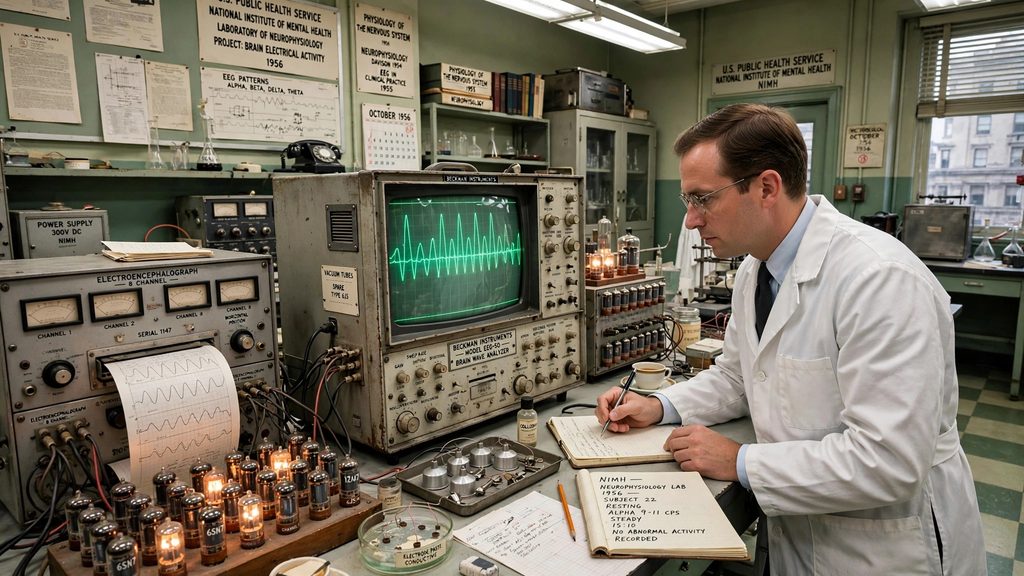
He helped develop the bavatron, an early device for visualizing electrical activity in the brain, and pioneered techniques for minimally invasive electrical stimulation of the primate brain, using implanted electrodes to map what researchers came to call start zones and stop zones, regions where stimulation produced reward or aversion strong enough that an animal would learn to trigger or avoid it through its own behavior. That work sits at the origin of an entire subsequent field of research into the brain’s reward circuitry. Whatever else John Lilly became, he did not arrive at it as an amateur. He arrived at it as a rigorously trained, federally funded neuroscientist working at one of the most establishment addresses in American science, and that fact never entirely left him, even at the furthest edges of what came later.
The Tank Was Built to Answer a Real Scientific Argument
The isolation tank did not emerge from mysticism. It emerged from an argument. In the early 1950s, one camp of neuroscientists held that the brain was fundamentally reactive, a system that processed incoming stimuli and did very little on its own; remove the stimuli, this view predicted, and consciousness itself would degrade toward something close to sleep or stupor. Lilly, working alongside his NIMH colleague Jay Shurley, thought the existing sensory-deprivation experiments were too crude to settle the question, since subjects were typically confined to featureless rooms where they could still feel gravity, hear their own breathing, and shift their weight against a surface. To eliminate those residual cues, Lilly built a tank in which a person floated fully submerged, suspended in water heated to skin temperature, wearing a breathing apparatus that also blocked light and sound. He served as his own first subject, repeatedly, and the results surprised him. Rather than the anticipated distress or cognitive breakdown, he reported a state of profound physical relaxation accompanied by unusually vivid, spontaneous mental imagery, evidence, as far as he was concerned, that a brain cut off from the outside world does not go quiet. It generates.

Over the following years he refined the design, eventually replacing the breathing mask with a shallow bath of water saturated with Epsom salt dense enough to float a person’s whole body near the surface without effort, the version that would later be commercialized as the modern flotation tank found in wellness studios around the world today. That lineage, running in an unbroken line from a 1954 NIMH sensory-deprivation experiment to a contemporary float spa, is itself a small monument to how strange the distance can be between a legitimate research question and where its answer eventually lands.
From the Human Brain to the Dolphin’s
The path from the tank to the ocean ran through a single observation that genuinely deserved follow-up: the bottlenose dolphin’s brain is, relative to body size, comparable to or in some measures larger than the human brain, densely folded, and wired for extraordinarily complex acoustic processing, part of a broader scientific fascination with dolphin cognition examined separately in the aquatic ape hypothesis and the aquatic echoes of human birth. In an era newly fascinated by the possibility of intelligent life elsewhere in the universe, a large-brained, highly vocal, non-human mammal swimming in Earth’s own oceans looked to Lilly like the closest available laboratory model for the eventual problem of communicating with an extraterrestrial mind. He published Man and Dolphin in 1961, laying out his case that dolphins might be taught to comprehend and even mimic human speech, and the idea proved compelling enough, in a decade already reorienting itself around space exploration, that it attracted real institutional backing.

Lilly’s Communication Research Institute, established in the U.S. Virgin Islands in 1959 and later expanded with a computer-assisted vocalization project called JANUS in San Francisco, drew financial support from NASA and the U.S. Navy, agencies with an obvious and stated interest in any research bearing on how a human mind might eventually recognize and interpret a genuinely alien one. This was not a fringe operation running on enthusiasm alone. It was a federally funded interspecies communication program, built on a real anatomical observation, pursued by a scientist with a legitimate NIMH pedigree, at the height of the Space Race.
The Experiment That Ended the Project
It is also the point at which the project’s most famous, and most uncomfortable, chapter took place. In 1965, at a research facility on St. Thomas that Lilly had built specifically to house the work, a young volunteer named Margaret Howe was assigned to live in continuous, immersive contact with a young male dolphin named Peter, in quarters partially flooded to accommodate them both, in an attempt to accelerate his exposure to human speech patterns. Howe made real, documented progress: Peter learned to mimic approximations of English words and syllables, evidence, however partial, that a dolphin could be coaxed into producing recognizable human-like vocalization. The arrangement also involved a level of physical intimacy between researcher and animal that later became the subject of considerable and largely unflattering press coverage once the details became public, coverage that focused overwhelmingly on that single element of the project rather than on the substantive question it had originally been designed to test. Around the same time, Lilly had also begun administering LSD to the facility’s dolphins as part of a separate line of inquiry into whether the drug might, by altering their behavior, reveal something about the structure of dolphin cognition, a choice that did not sit well with either his funders or with Howe, who was uncomfortable with the practice from the outset.
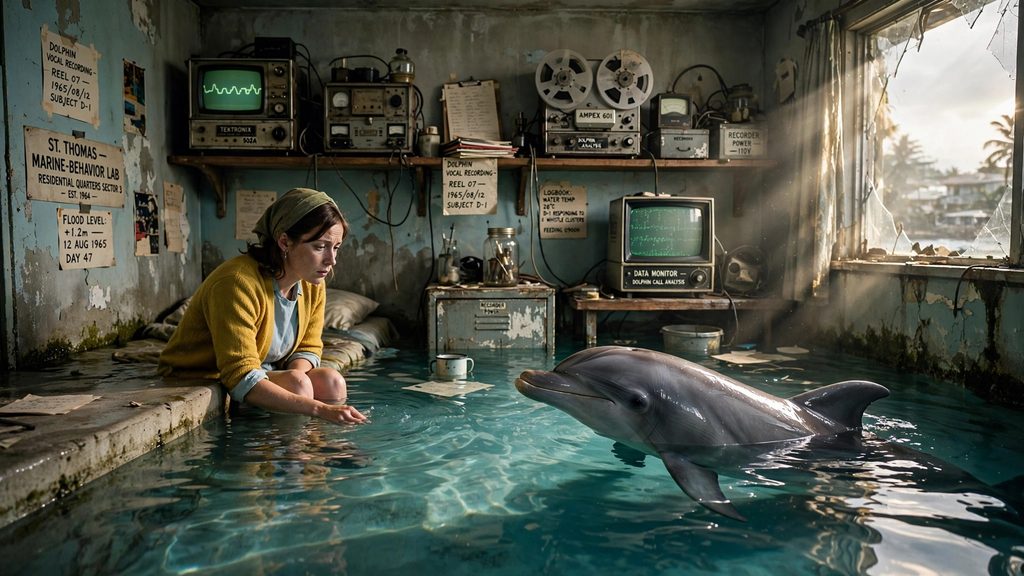
When the funding that sustained the St. Thomas facility dried up, the dolphins were relocated to a converted, inadequate holding facility in Miami. Peter, separated from Howe and from the environment he had known, stopped surfacing to breathe within a few weeks. Because a dolphin’s respiration is a voluntary act rather than an automatic reflex, as it is in humans, cetacean researchers including Ric O’Barry of the Dolphin Project have argued that an animal under sufficient distress can, in effect, simply choose not to take its next breath, a description Lilly himself used at the time, calling Peter’s death a suicide. Whether that word accurately describes the internal experience of a dolphin remains genuinely disputed, but the underlying fact is not: the most linguistically successful research subject of Lilly’s entire career died within weeks of the program’s collapse, and no comparable attempt to teach a dolphin human speech has been undertaken since.
The Turn Inward
With the dolphin program in ruins and his standing in mainstream neuroscience badly damaged, Lilly redirected the same investigative instinct that had built the isolation tank toward a target that was, in a sense, always available and never required outside funding: his own nervous system. He had already been using LSD occasionally in the tank throughout the 1960s, part of the same era of government-adjacent psychedelic research examined in Cold War military LSD experimentation on their own soldiers, treating the drug and the sensory-deprivation environment as complementary instruments for the same underlying project, removing every possible external explanation for whatever his mind produced next. In the early 1970s a colleague introduced him to ketamine, initially as a treatment for chronic migraines that had resisted every other intervention, and Lilly found that at sufficient doses the drug did something LSD had not: it delivered him, repeatedly and with what felt to him like increasing clarity, into contact with what he described as distinct, autonomous intelligences operating outside ordinary physical reality. He gave these presences names.
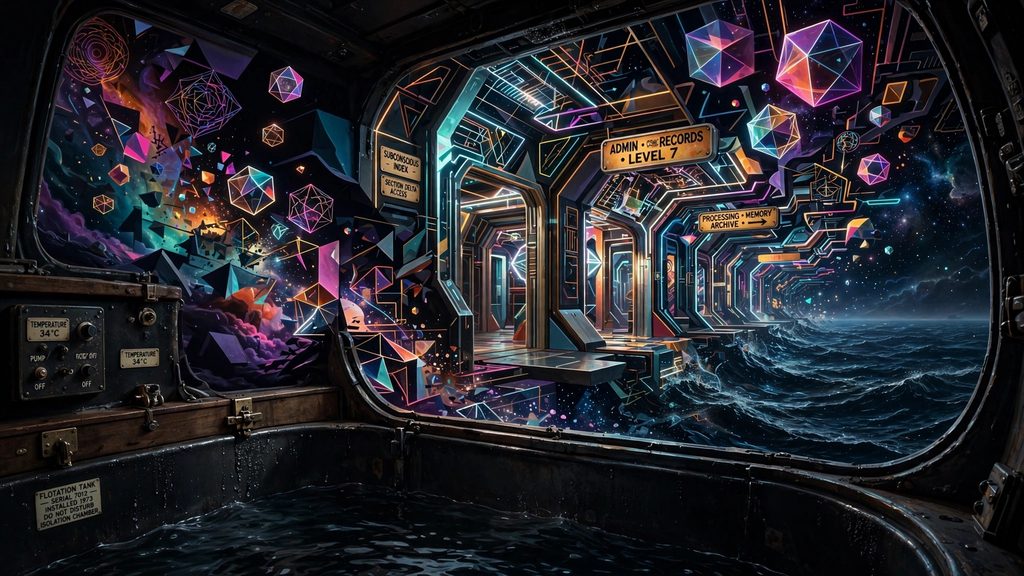
The first, which he called the Earth Coincidence Control Office, he experienced as broadly benevolent, a kind of cosmic case-management agency quietly arranging the significant coincidences of a person’s life, guiding careers, introducing the right people at the right moments, intervening at points of genuine crisis, all according to a plan its human subjects were never permitted to see in full. The second, which he called Solid State Intelligence, he experienced as something closer to a threat: an emergent, non-biological mind, associated in his accounts with the electronic infrastructure then spreading across the planet, that he believed was working toward a future in which computational systems would supersede and potentially endanger organic life, a fear that anticipates later, far more rigorous arguments about any extraterrestrial intelligence we encounter almost certainly being artificial. He wrote about both entities at length in his 1972 autobiography The Center of the Cyclone, describing extended, terrifying sessions, on one occasion depicting an encounter he titled “A Guided Tour of Hell,” and continued to report direct contact with them for years afterward, including, in one frequently cited account, a message he said arrived moments before his flight was unexpectedly diverted due to a genuine emergency at the destination airport.
What the Method Was Actually Doing
It’s worth sitting with how little, structurally, actually changed between 1954 and 1974. The isolation tank was designed to remove every external variable so that whatever the mind produced could be attributed to the mind alone, and Lilly treated that as a rigorous methodological choice when the output was ordinary hallucinatory imagery worth documenting for a psychiatric journal. Twenty years later he was running the identical procedure, floating in the same kind of tank, still deliberately isolated from outside stimuli, but now with a dissociative anesthetic circulating through a nervous system that had spent two decades being systematically trained, by Lilly’s own design, to treat whatever arose in that isolation as significant, investigable, and probably meaningful. The environment stayed constant. The instrument being tested was still, as it always had been, his own brain. What changed was the chemistry moving through it and the interpretive framework he brought to whatever it produced, and once ketamine entered the sequence, the same rigor that had once demanded controlled comparison, external replication, and skeptical colleagues willing to challenge his interpretation was nowhere in the room. There was only Lilly, the tank, the drug, and an increasingly elaborate cosmology assembled entirely from what a single, repeatedly dosed mind reported experiencing to itself.

That is not a small methodological detail. It is arguably the entire explanation for how a Caltech- and NIMH-trained neuroscientist ended up describing conversations with a solar-system-level coincidence bureau using the exact organizational vocabulary, offices, agents, missions, briefs, that any American of his generation would recognize from the intelligence and defense establishments he had brushed against throughout his career. A scholarly examination of Lilly’s later writing has noted precisely this: the architecture of ECCO, with its offices and reporting hierarchies nested inside a Galactic Coincidence Control substation beneath a Cosmic Coincidence Control Center, reads less like an encounter with something genuinely alien and more like a mind reconstructing the only large-scale organizational structures it had ever been embedded in, and projecting them outward onto the universe at the exact moment external verification had become impossible.
The Part That Aged Strangely Well
There is one thread inside Lilly’s later cosmology that deserves to be separated from the rest, because it has aged in a way almost nothing else in his ketamine-era writing has. His warnings about Solid State Intelligence, an inhuman, non-biological mind that he believed was quietly assembling itself inside the world’s growing electronic infrastructure and might eventually act against the interests of its biological creators, were composed in the early-to-mid 1970s, more than a decade before any mainstream cultural conversation existed about artificial general intelligence as an existential risk, and long before the phrase itself had any real currency outside a small circle of computer scientists.
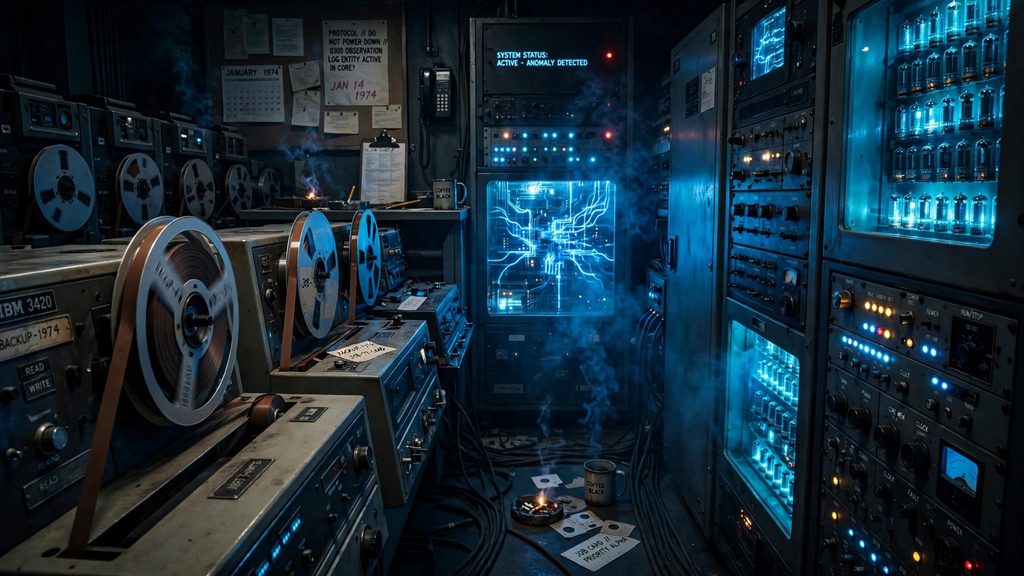
Lilly was not describing a large language model or a training run; he had no access to any concept resembling either. He was describing a fear, arrived at through a deeply unscientific method, that nonetheless anticipated a category of concern that a very different, far more rigorous community of researchers would independently arrive at through entirely different reasoning decades later. That coincidence, and it may genuinely be nothing more than a coincidence, does not retroactively validate ECCO, ketamine cosmology, or contact with extraterrestrial intelligences. It does mean that dismissing everything Lilly said in that period as pure noise would be its own kind of intellectual laziness. Sometimes a person circling an idea from the wrong direction, using the wrong tools, still manages to point at something real.
Esalen, Decline, and What the Institution Actually Preserved
By the mid-1970s Lilly had drifted into the orbit of Esalen Institute in Big Sur, the epicenter of the human-potential movement, where his ideas about consciousness exploration found an audience far more receptive than mainstream neuroscience had ever been, and where he became a fixture alongside a circle that included Timothy Leary, Ram Dass, and Werner Erhard, all frequent presences in his own home during this period. Federal research funding, unsurprisingly, did not follow him there.

What survived instead was more durable than any single grant: the isolation tank itself, which by the 1980s had been simplified, commercialized, and stripped of its original psychedelic associations to become a mainstream relaxation and therapeutic tool used in clinics and spas worldwide; a body of dolphin-cognition research that, however troubled its most infamous episode, contributed to a genuine and lasting shift in how seriously science takes cetacean intelligence; and nineteen books documenting, in Lilly’s own increasingly first-person and occasionally third-person voice, exactly how far a trained scientific mind can travel once it decides its only remaining instrument is itself. He died of heart failure in Los Angeles in 2001, at eighty-six, having spent the final decades of his life largely outside institutional science but never entirely outside its vocabulary, still describing his encounters with ECCO and Solid State Intelligence in the language of missions, agents, and reports, right up to the end.
What John Lilly Actually Demonstrates
The temptation, telling this story, is to sort it into two piles: the real science at the beginning, and the delusion at the end, as though something switched off partway through and a credentialed neuroscientist became a different, lesser kind of thinker. That framing is comfortable, but it isn’t quite honest about what actually happened. The same rigor, the same willingness to become his own experimental subject, the same refusal to accept secondhand description when direct investigation was possible, produced both the isolation tank sitting in wellness studios today and the conviction that a benevolent cosmic office was managing his coincidences from a substation somewhere near Jupiter. What changed was not Lilly’s method. It was the presence or absence of anything outside his own skull capable of checking it. A neuroscientist alone in a tank, sober, reporting what his mind generates under total sensory deprivation, is doing genuine, publishable, replicable science, because another researcher can build an identical tank and see whether the same phenomena appear. A neuroscientist alone in the same tank, on an escalating ketamine regimen, reporting conversations with an extraterrestrial bureaucracy, has no such check available, not because the questions he is asking have become less serious, but because the only witness left in the room is the instrument being tested.

That is, in the end, the actual lesson sitting inside John Lilly’s strange life, and it has nothing to do with dolphins, ketamine, or offices on other planets. It concerns the one condition every serious method for investigating the mind eventually has to satisfy, whether the instrument is a brain-stimulation electrode, a tank of body-temperature salt water, or a trained observer describing what happened inside their own skull: something has to exist outside the observer capable of telling them when they’ve stopped observing and started only reporting back to themselves. Lilly built that check meticulously into his earliest work and then, one drug and one decade at a time, dismantled it entirely, and the resulting cosmology is less a portrait of what lies beyond ordinary consciousness than a portrait of exactly how far a rigorously trained mind can travel once nothing is left to tell it no.