



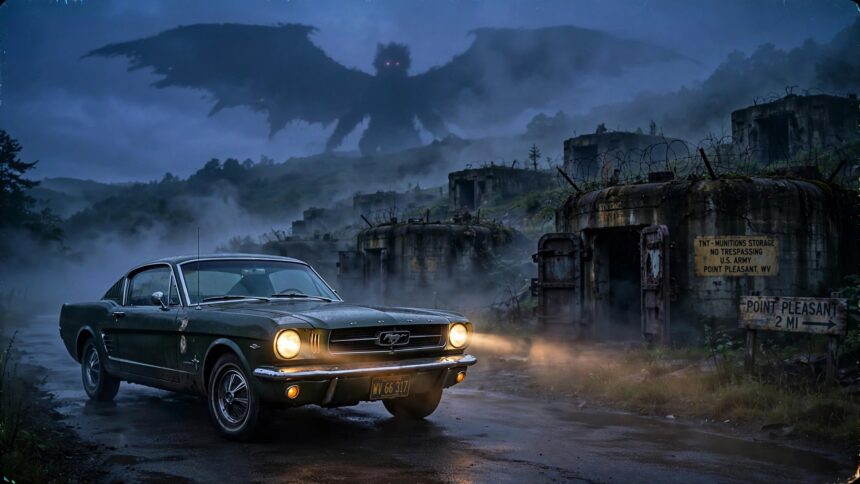
On the night of November 15, 1966, two young couples drove into the abandoned TNT area outside Point Pleasant, West Virginia, and reported seeing something enormous, winged, and human-shaped with striking eyes. They did not wait decades to tell the story. They went to the authorities, and the local newspaper published their account the next day. Thirteen months later, on December 15, 1967, the Silver Bridge spanning the Ohio River collapsed during the evening rush, killing 46 people.
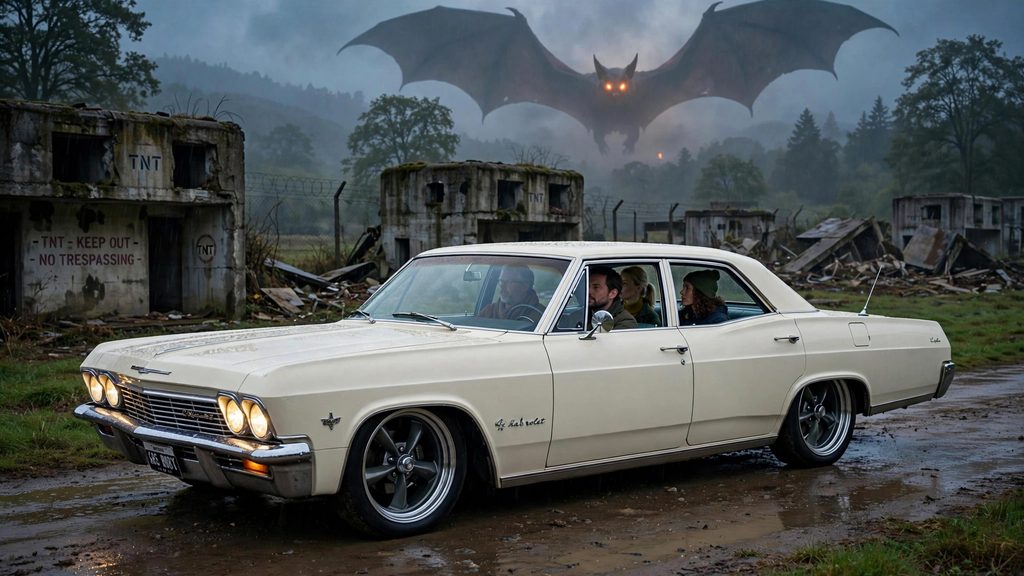
The two events happened in the same small community, close enough in time and place to become permanently fused in American folklore. But the historical record is more precise than the legend. The Mothman sightings are real as a documented series of reports. The Silver Bridge disaster is real as a documented engineering failure. What the evidence does not establish is that one caused, predicted, or somehow announced the other.
The Story Begins With a Newspaper Report, Not a Legend
The most important fact about Mothman is also the one most often buried beneath the mythology: the story entered the historical record almost immediately. Shortly after midnight on November 15, 1966, Roger and Linda Scarberry and Steve and Mary Mallette were driving near the former West Virginia Ordnance Works, a World War II munitions facility that locals called the TNT area. The four reported encountering a large, gray, bird-like or man-like figure near the abandoned North Power Plant. Their descriptions varied in detail, but the basic impression was consistent: the thing was unusually large, appeared to have wings, and seemed to follow their car as they fled toward Point Pleasant.
The witnesses did something that matters enormously to historians of unusual events: they reported the encounter immediately. The following day’s Point Pleasant Register carried the headline “Couples See Man-Sized Bird…Creature…Something,” preserving the uncertainty in the witnesses’ own descriptions rather than presenting the creature as an established fact. The West Virginia Archives still lists the article among its historical Mothman materials. Contemporary coverage followed in other regional newspapers, turning what had initially been a frightening encounter involving four local residents into a rapidly expanding news story.
That distinction is worth making carefully. A newspaper report proves that people made the report and that the report was published. It does not prove that the creature existed in the form later assigned to it. Those are two different historical questions. The first has an unusually strong answer: yes, the reports are documented. The second remains unresolved: the surviving evidence does not establish what the witnesses actually saw.
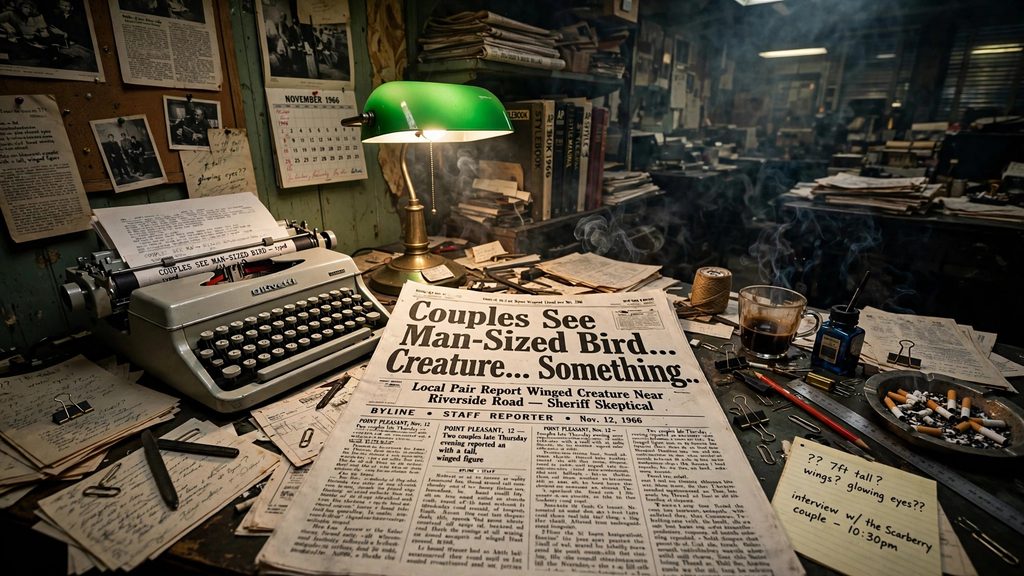
The first descriptions are also revealing because they were less polished than the modern Mothman image. The creature was not initially presented as the familiar red-eyed superhero-shaped monster now seen on statues, T-shirts, posters, and festival merchandise. The contemporary language was uncertain and avian: a “man-sized bird,” something “like a man with wings,” or simply something the witnesses could not identify. That ambiguity is not a weakness in the original record. It is one of the reasons the record is historically interesting. The witnesses themselves were not beginning with the finished legend. They were trying to describe something they believed they had encountered in the dark.
Then the Reports Multiplied
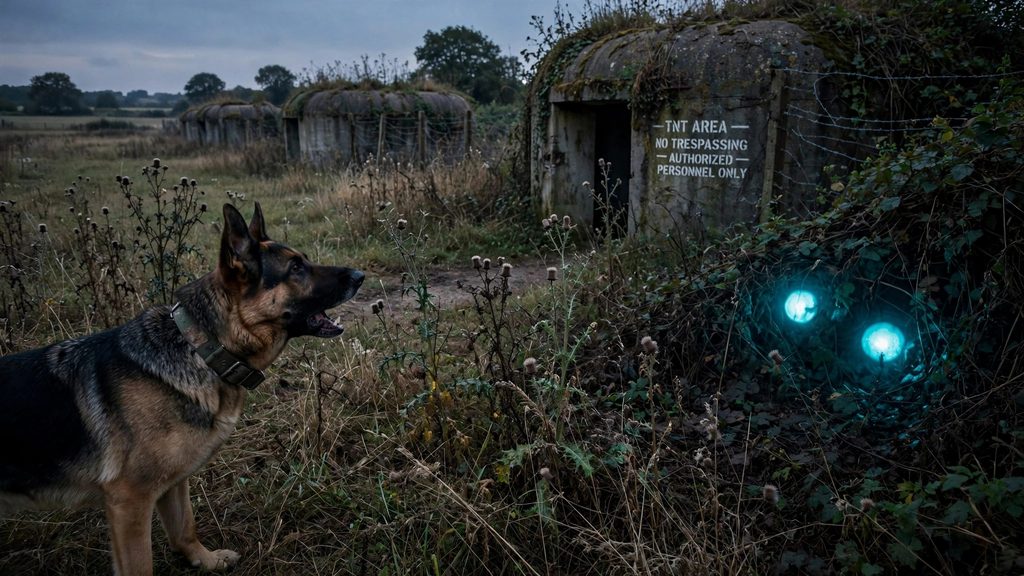
The November 15 encounter was followed by other reports in the Point Pleasant region and beyond. Some involved people who described large birds or winged figures; others incorporated unusual sounds, strange lights, interference, or other details that would later become part of the larger Mothman mythology. Among the better-known stories was that of Newell Partridge, a contractor in Salem, West Virginia, whose German shepherd Bandit reportedly ran toward a pair of strange lights in a field and disappeared. The account later became part of John Keel’s The Mothman Prophecies, published in 1975. The Smithsonian’s account of the legend likewise traces the Partridge story through Keel rather than treating it as an independently established paranormal event.
This is where the evidentiary layers begin to separate. There is a contemporary newspaper record of the original Point Pleasant sighting. There are later interviews with people who said they saw something during the wider flap. There are accounts collected years afterward by investigators and writers. And there is the mythology that eventually grew around those reports. These categories should not be treated as interchangeable. A claim appearing in a book published in 1975 is not equivalent to a statement recorded in a newspaper in November 1966, and a later recollection is not automatically false simply because it is later. It is simply a different kind of evidence.
John Keel Changed the Meaning of the Story
John Keel is central to understanding how Mothman became more than a local creature report. Keel traveled to the Point Pleasant area, interviewed witnesses, worked with local reporter Mary Hyre, and eventually transformed the collection of sightings into a much larger story involving UFOs, mysterious visitors, strange communications, alleged prophetic experiences, and the approaching catastrophe of the Silver Bridge. His 1975 book, The Mothman Prophecies, became the definitive popular source for the modern mythology.
Keel’s importance does not mean that every story in his book should be discarded. It means that his book has to be read as what it is: a later investigation and interpretation of events, rather than a contemporaneous transcript of what Point Pleasant collectively believed in 1966. That distinction becomes critical when the alleged prophecy of the bridge collapse enters the story. The idea that Mothman was somehow warning residents about an impending disaster became one of the legend’s defining features, but the evidentiary status of those alleged warnings is considerably weaker than that of the original sightings.
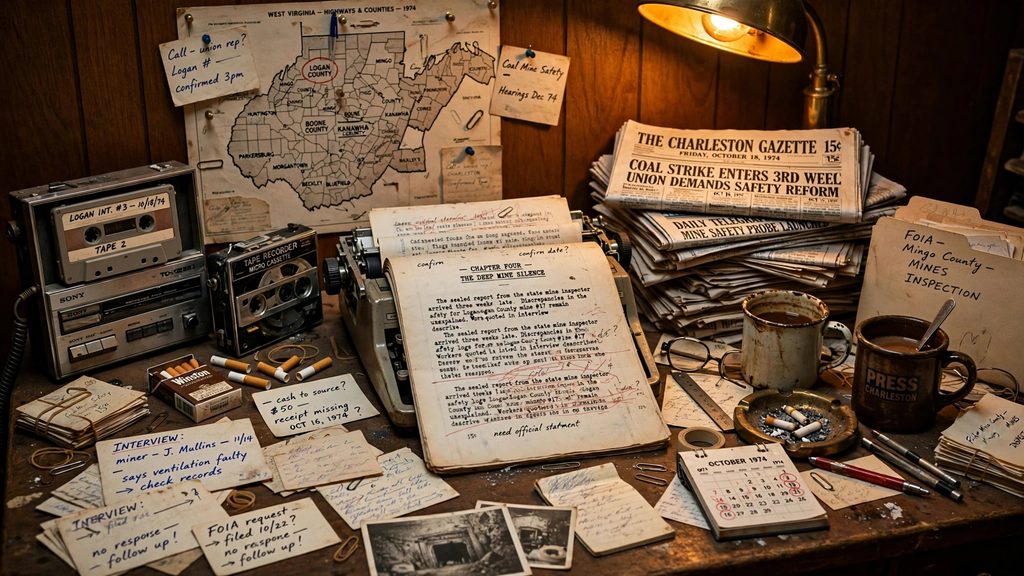
Once the bridge collapse had happened, the earlier sightings acquired a new meaning. That is a powerful feature of human memory and folklore: an ambiguous event can be reinterpreted after a later catastrophe, with the earlier event suddenly appearing to have been a warning. The same process occurs in many forms of prophecy lore. An earlier dream, strange animal, unusual light, or ominous coincidence becomes significant because history has supplied it with an ending. The chronological sequence is real. The predictive relationship is a separate claim.
The Silver Bridge Really Did Collapse
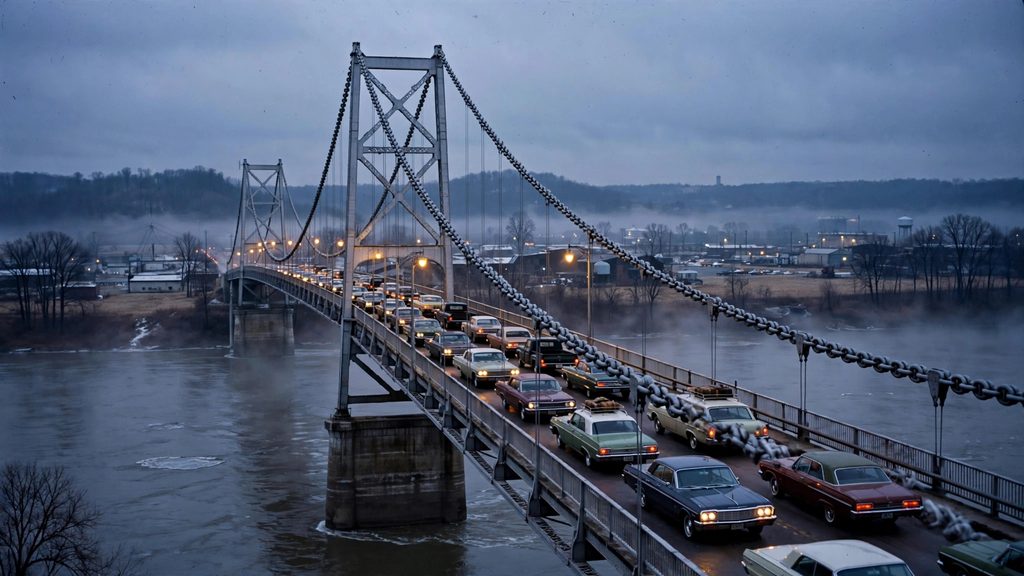
On December 15, 1967, at roughly 5 p.m., the Silver Bridge carrying U.S. 35 between Point Pleasant and Kanauga, Ohio, failed during rush-hour traffic. Forty-six people died, nine were injured, and 31 of the 37 vehicles on the bridge fell with the structure. The disaster was not an unexplained disappearance or a mysterious structural event. Engineers were able to reconstruct the failure in extraordinary detail.
The bridge was an eyebar-chain suspension bridge, an older design in which individual steel eyebars carried enormous loads. The investigation identified the initiating failure at eyebar 330 in the north suspension chain. A cleavage fracture developed in the lower limb of the eyebar’s eye at a critical connection. Once that eyebar separated, its sister eyebar slipped from the joint pin, the chain failed, and the bridge rapidly lost the structural support required to remain standing. The NTSB’s reconstruction found that the collapse propagated through the structure in roughly a minute.
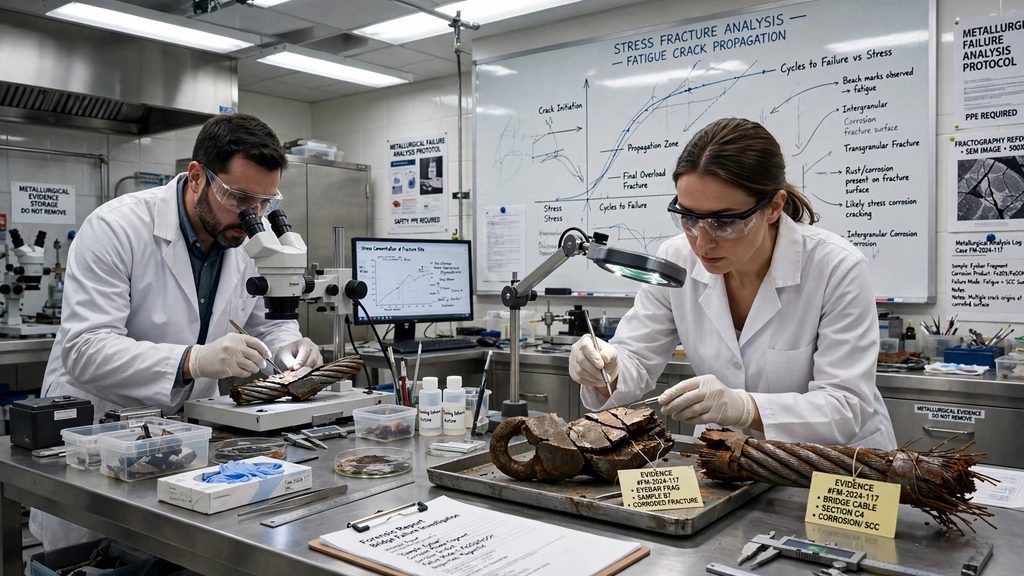
The underlying defect was even smaller than the disaster it caused. Investigators determined that a critical flaw had developed over the bridge’s forty-year life through the combined action of stress corrosion and corrosion fatigue. The flaw occurred in a location that could not be adequately examined by ordinary visual inspection, and the investigation concluded that the inspection methods available at the time could not have detected it without disassembling the eyebar joint. NIST’s historical record likewise identifies the small crack at eyebar 330 and its growth through stress corrosion and corrosion fatigue as the cause of the collapse.
That engineering explanation matters because it removes the need for a supernatural mechanism. The bridge did not collapse because something mysterious happened to it thirteen months after the first Mothman sighting. It collapsed because a specific component failed after a specific deterioration process. The investigation was not vague about the mechanism. It traced the disaster from the fracture to the chain separation to the collapse of the bridge itself.
The Coincidence Was Extraordinary. The Cause Was Not.
And yet the coincidence remains genuinely strange. The first famous Point Pleasant sighting occurred on November 15, 1966. The Silver Bridge collapsed on December 15, 1967. Between those dates lies almost exactly thirteen months of local reports, followed by a catastrophe that killed 46 people and permanently changed the community. The proximity is real. The emotional association is understandable. It is not difficult to see why a frightening creature story became, after the disaster, a story about an omen.
What the evidence does not provide is a mechanism connecting the two. There is no engineering evidence that the Mothman caused the bridge failure. There is no physical evidence that the creature damaged the structure. There is no finding in the bridge investigation that points toward an unexplained external event. The official investigation instead identified a precise metallurgical and structural sequence. The Silver Bridge became part of Mothman’s mythology because of the timing and the stories subsequently assembled around it, not because the engineering investigation discovered anything supernatural.
The bridge disaster did have an enormous historical consequence. The investigation exposed weaknesses in the way American bridges were inspected and evaluated, and the tragedy helped drive the creation of national bridge inspection standards. The Federal Highway Administration explicitly traces the development of the National Bridge Inspection Standards to the aftermath of the Silver Bridge collapse. In other words, the bridge did become a warning—but it was a warning about engineering, inspection, corrosion, structural redundancy, and the consequences of aging infrastructure.
So What Was Mothman?
This is where the story becomes more difficult. It is tempting to replace one certainty with another: if Mothman was not a supernatural harbinger, then it must have been a barred owl. That conclusion goes further than the evidence allows.
The owl hypothesis is nevertheless substantial. Joe Nickell investigated the original area and argued that many of the reports were compatible with owls, particularly barred owls. The former TNT area is heavily wooded habitat, and barred owls are large, nocturnal birds with powerful flight capabilities and conspicuous eyeshine. Nickell also pointed out that some of the descriptions of Mothman were remarkably compatible with a bird seen under difficult nighttime conditions.
The red eyes are especially interesting because “glowing” is an imprecise word. Many nocturnal animals possess reflective structures that return light toward its source. When a vehicle’s headlights or a flashlight strike an animal’s eyes at the right angle, the resulting eyeshine can appear startlingly bright. Benjamin Radford’s investigation found that this phenomenon fits at least some of the Mothman reports, including Linda Scarberry’s description that the eyes did not appear to glow until light struck them. In other words, the reports are compatible with reflected light rather than an animal literally producing red light from its eyes.
But even that explanation has limits. Radford’s research also found that glowing red eyes are not as universal in the original accounts as modern representations suggest. Some witnesses described the creature differently, and later investigators have considered large birds other than owls. Daniel Reed’s 2022 investigation examined the crane hypothesis alongside the owl explanation and concluded that the identity of the animal could not be established with certainty. His conclusion is important because it preserves the distinction between “this is a plausible explanation” and “this is what happened.”
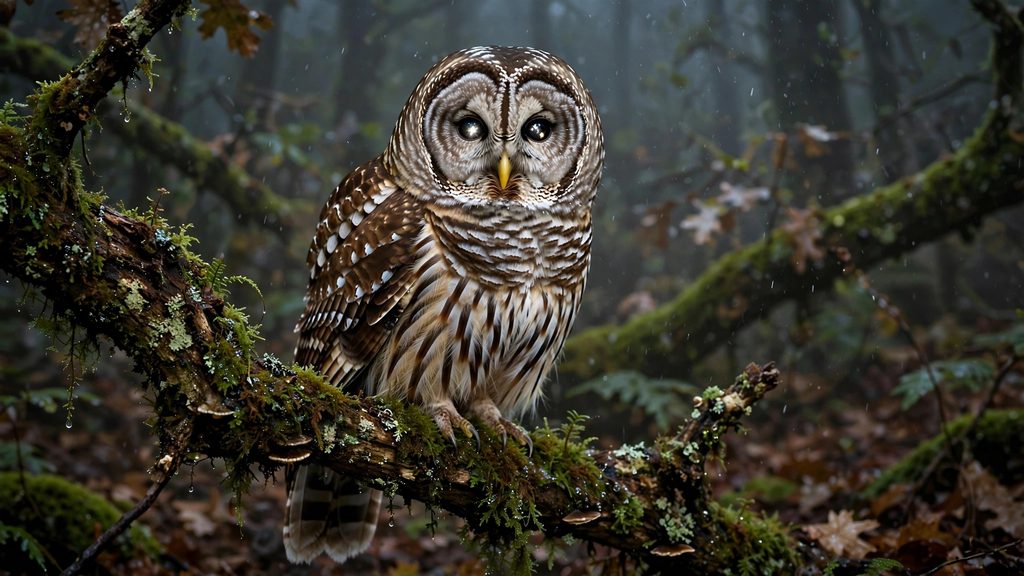
A barred owl therefore belongs in the category of serious explanatory hypotheses, not settled historical fact, a distinction that applies equally to the world’s other enduring regional cryptid traditions. It may account for some of the sightings. Other large birds may account for others. Some reports may have involved exaggeration, misremembering, rumor, or deliberate hoaxes. Once the story became famous, the existence of a local Mothman narrative itself became a new source of expectation, making later ambiguous encounters easier to interpret through the same lens, the same perceptual pressure examined in sleep paralysis and the cross-cultural “Hat Man” figure. The surviving record does not allow every report to be assigned confidently to one cause.
The Legend Grew After the Evidence
There is a fascinating reversal at the center of the Mothman story. The original witnesses were uncertain. The newspaper was uncertain. Even the headline was uncertain. Yet the creature became more definite as the decades passed. A vague “man-sized bird…creature…something” gradually became Mothman: a recognizable character with a standardized appearance, glowing red eyes, enormous wings, supernatural abilities, and a reputation as an omen of disaster.
That transformation is not evidence that the original witnesses were lying. It is evidence of how folklore works. Stories acquire names. Names acquire images. Images acquire standardized characteristics. Later storytellers inherit the accumulated version and unconsciously feed it back into earlier memories. A person who remembers seeing something strange in 1966 may sincerely remember a detail that became prominent in the mythology years later. Sincerity and historical accuracy are not identical things.
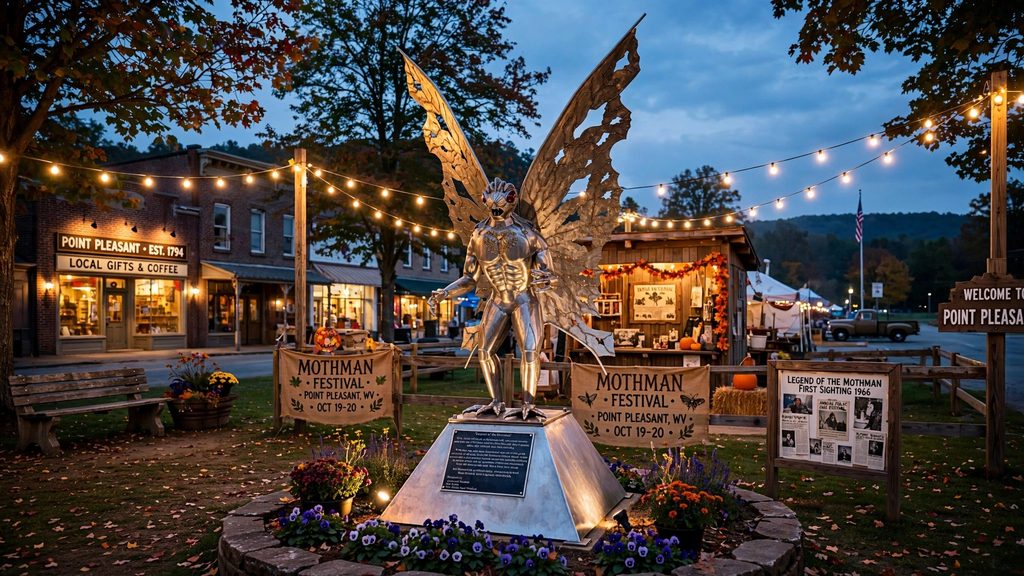
The same process explains why Mothman has survived so effectively. The story contains nearly every ingredient folklore needs: a frightened witness, a mysterious creature, a remote industrial landscape, strange lights, a small community, a year of repeated reports, and finally a devastating catastrophe. Remove any one of those elements and the legend becomes less powerful. Put them together and the result almost writes itself.
That is why Mothman belongs to a particularly interesting category of mystery: cases in which the historical core is stronger than the supernatural interpretation. There really was a cluster of reports. There really was contemporary newspaper coverage. There really was a catastrophic bridge collapse thirteen months later. What remains unproven is the connective tissue that transformed those independent facts into a single paranormal narrative.
What the Evidence Actually Lets Us Say
We can say with confidence that people in and around Point Pleasant reported unusual encounters beginning in November 1966, and that those reports entered newspapers and other records almost immediately. We can say that the reports continued in various forms over the following year. We can say that the Mothman legend subsequently became intertwined with UFO stories, alleged prophetic experiences, and the Silver Bridge disaster. We can say that the bridge collapsed on December 15, 1967, killing 46 people. And we can say that the engineering investigation identified a specific structural failure caused by stress corrosion and corrosion fatigue.
We cannot say with the same confidence what every witness saw. We cannot turn every later recollection into a contemporaneous record. We cannot demonstrate that a single animal explains every sighting. And we cannot infer from the timing of the bridge collapse that the creature predicted it. Those are additional claims requiring additional evidence.
That does not make the story less interesting. In fact, it makes it considerably more interesting. The easy version of Mothman is a monster that appeared before a disaster and vanished afterward. The historical version is stranger: a community encountered something it could not confidently identify, newspapers recorded the uncertainty in real time, competing explanations emerged almost immediately, later investigators built a much larger mythology around the reports, and a catastrophic engineering failure eventually gave the entire story a meaning it had not possessed on the first night.
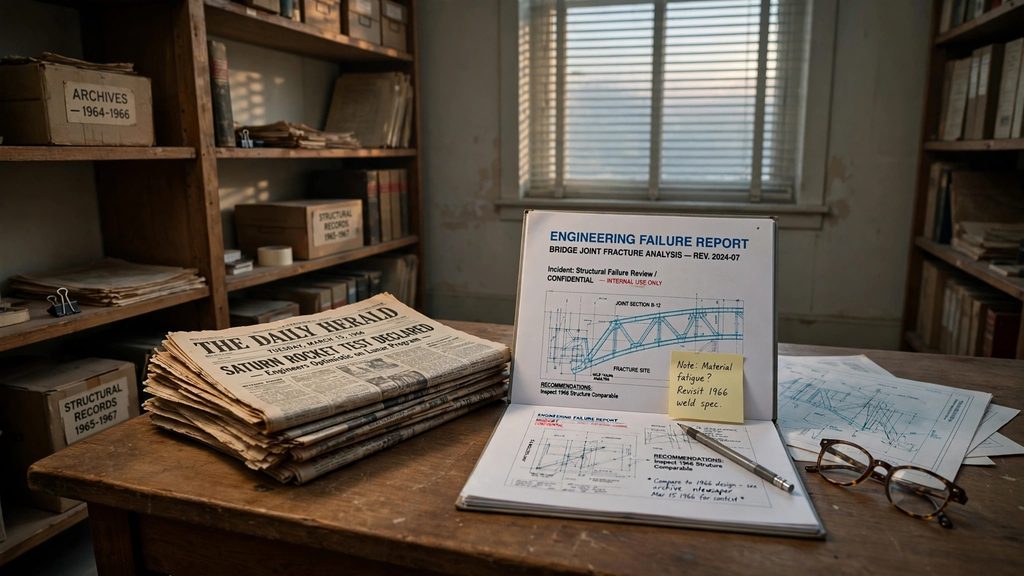
The Silver Bridge did not need Mothman to explain why it fell. Engineers found the reason in the steel. The sightings do not need the bridge collapse to prove that people reported something extraordinary. The newspapers already establish that. What happened afterward was something different: two unrelated historical events became one story in the human imagination.
And perhaps that is the real mystery of Mothman. The evidence does not show a creature predicting the Silver Bridge collapse. It shows something more human and, in its own way, more unsettling: how quickly an unexplained experience can become a legend, how powerfully a tragedy can rewrite the meaning of what came before it, and how a coincidence can survive for generations after the mechanism behind the tragedy has been known for decades.