



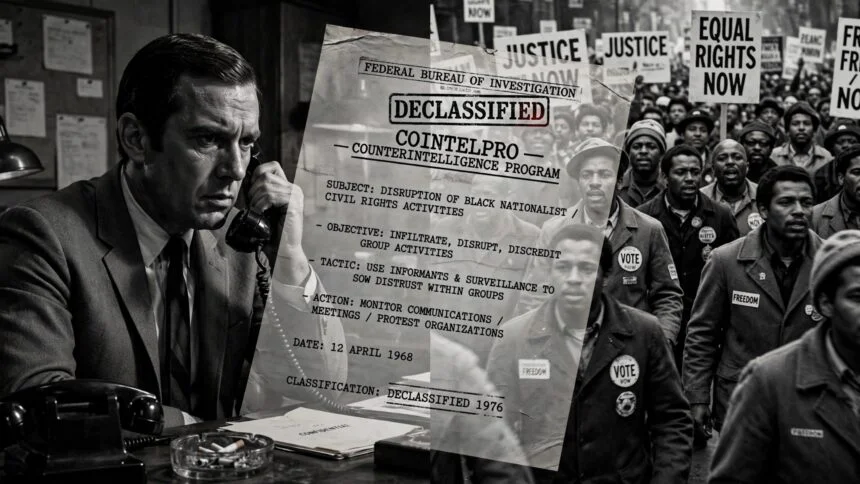
For roughly fifteen years, beginning in 1956, the FBI operated COINTELPRO, a secret series of counterintelligence programs created through Bureau directives rather than a specific congressional charter. What began as an effort aimed at the Communist Party of the United States expanded to include the Socialist Workers Party, the Ku Klux Klan, Black nationalist organizations, the Black Panther Party, and the New Left. The FBI’s own files document operations designed not merely to investigate suspected crimes but to disrupt organizations, damage reputations, fracture alliances, and prevent political movements from gaining influence.
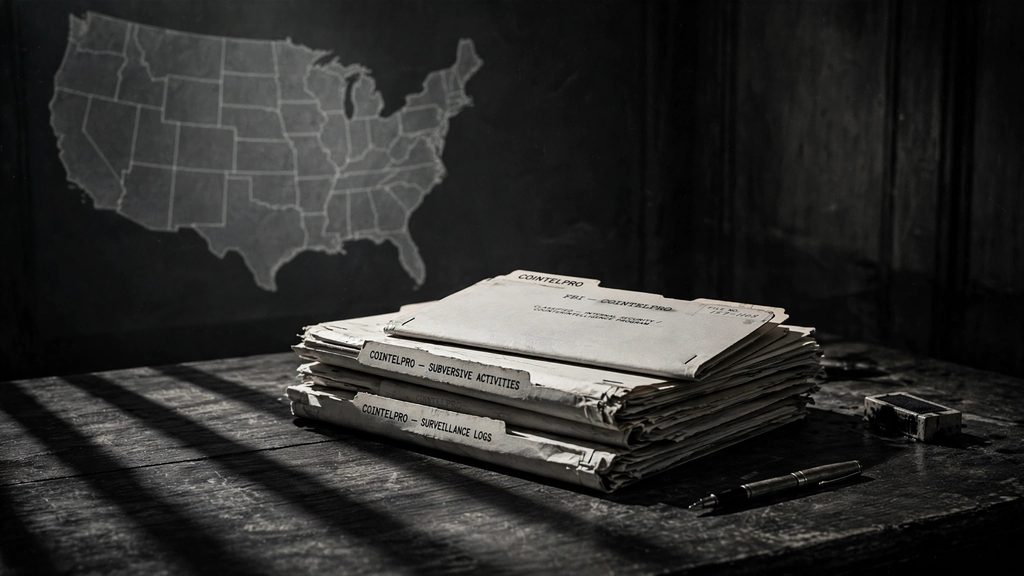
The public did not learn the program’s full scope through routine congressional oversight. It learned because, on March 8, 1971, eight activists broke into an FBI office in Media, Pennsylvania, stole roughly a thousand documents, and sent them anonymously to journalists and politicians. The documents contained the word COINTELPRO. What followed was one of the most consequential revelations in the history of American domestic intelligence.
COINTELPRO Began as a Secret Internal Program
The name sounds bureaucratic because it was. COINTELPRO was short for Counterintelligence Program, and the FBI began it in 1956 against the Communist Party of the United States. The Bureau’s stated concern was national security: during the Cold War, Communist organizations were treated as potential instruments of Soviet influence. The program was not initially conceived as the sprawling domestic operation it would later become. But over the next decade and a half, its targets expanded repeatedly. The Socialist Workers Party was added in 1961, the Ku Klux Klan in 1964, Black nationalist organizations in 1967, and the New Left in 1968, part of the same era of covert government operations examined in Operation Northwoods and the real 1962 memo proposing a faked attack to justify invading Cuba. The FBI’s own historical account acknowledges that the program eventually included groups and individuals engaged in lawful political activity and that agents sometimes sought to disrupt organizations even when there was little or no evidence of unlawful conduct.
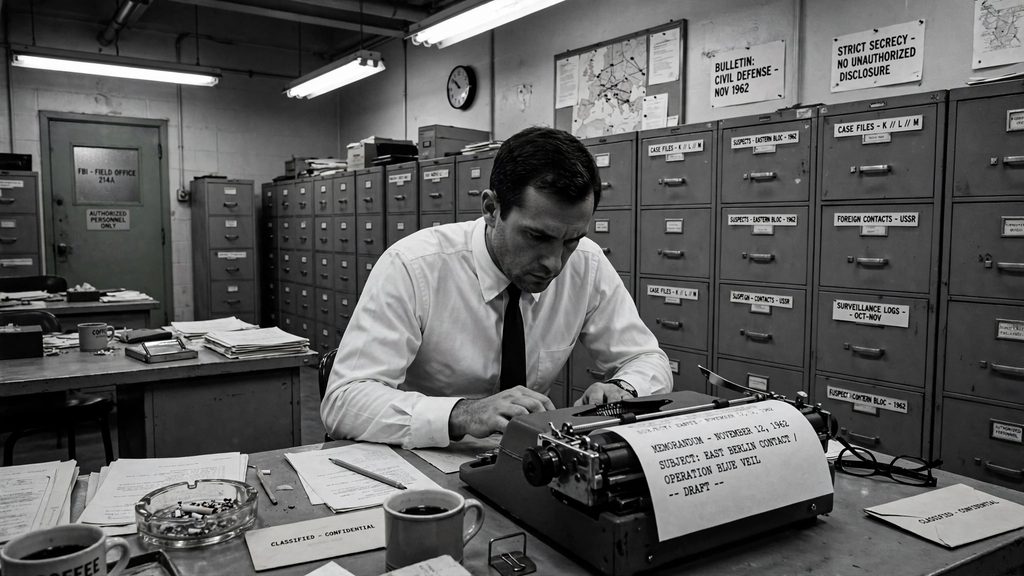
The distinction between an intelligence investigation and a campaign to destroy a political organization is the key to understanding why COINTELPRO became so controversial. The Bureau could investigate espionage, terrorism, violence, and other federal crimes. COINTELPRO went further in many cases. Its internal instructions contemplated actions intended to “expose, disrupt” and “neutralize” targeted organizations and individuals. The Church Committee later concluded that many such activities exceeded the Bureau’s investigative authority and constituted unwarranted interference with First Amendment rights. The Senate’s historical summary describes COINTELPRO as a covert campaign designed to disrupt and discredit groups and individuals considered threats to the social order, including civil-rights organizations, the antiwar movement, and Martin Luther King Jr.
That does not mean the FBI had literally no legal authority to investigate the people involved. It means something more specific and historically defensible: COINTELPRO itself was not established by a dedicated act of Congress defining its powers, procedures, targets, or limits. It grew administratively inside the Bureau under J. Edgar Hoover and was personally approved at the Bureau’s highest levels. Later investigators found that this structure allowed counterintelligence operations to move far beyond ordinary criminal investigation without the kind of clear external authorization and oversight that would later be imposed on domestic intelligence activities.
By 1967, the Target Was Political Influence Itself
The transformation is particularly visible in the FBI’s August 1967 directive concerning what it called “Black Nationalist Hate Groups.” The memorandum did not merely describe a desire to investigate crimes. It identified a strategic objective: to prevent the emergence of a figure capable of unifying and energizing the movement. The directive specifically named Martin Luther King Jr., Malcolm X, Stokely Carmichael, and Elijah Muhammad as examples of potential “messiahs.” Malcolm X had already been assassinated by then, but his inclusion in the memorandum reveals the breadth of the Bureau’s concern with political influence, not simply criminal conduct.
The language is important because it makes the program’s underlying logic visible. A person did not necessarily have to commit a crime to become a target. Political effectiveness itself could become the problem. A charismatic organizer who could unite previously fragmented groups could be treated as a counterintelligence concern precisely because the Bureau feared what the resulting movement might accomplish. That is a very different proposition from investigating a specific illegal act.
The FBI Tried to Destroy Martin Luther King’s Reputation
Martin Luther King Jr. became one of COINTELPRO’s most consequential targets. The FBI had already been conducting surveillance of King and people around him under a counterintelligence rationale involving alleged Communist influence. The later congressional investigation into the FBI’s campaign found that the Bureau had exceeded its legal authority in its treatment of King and documented a sustained effort involving surveillance, media manipulation, and attempts to damage his reputation.
One episode stands apart for its sheer audacity. In November 1964, after FBI Director J. Edgar Hoover publicly described King as the country’s “most notorious liar,” an anonymous package was sent to King’s home. It contained a letter attacking him and a tape derived from FBI electronic surveillance that purported to document his private sexual conduct. The letter concluded with language that unmistakably implied suicide, telling King that there was “only one thing left for you to do” and giving him a deadline before his private life would supposedly be exposed. The House committee that later investigated the King assassination found an apparently authentic copy of the letter in the files of FBI Assistant Director William C. Sullivan, and Sullivan admitted involvement in the scheme.
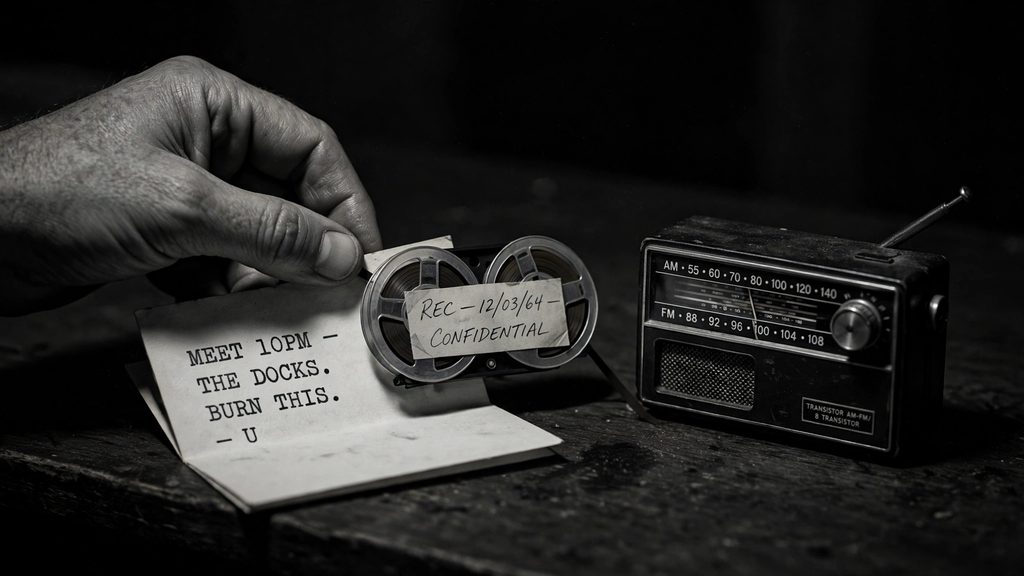
The significance is not that one anonymous letter somehow proves every allegation ever made about the FBI and King. It is that the Bureau’s own records, later examined by congressional investigators, document an organized effort to use government surveillance material to pressure a major civil-rights leader. The question of whether the campaign directly contributed to King’s assassination is much more complicated and was treated cautiously by later investigators. The documented fact is already disturbing enough: federal investigators were not simply collecting intelligence about King. They were attempting to damage him personally and politically.
Fred Hampton Became a Different Kind of Target
Fred Hampton was only 21 when he became one of the most important young leaders of the Illinois Black Panther Party. He had a reputation as a gifted organizer, helped establish a Free Breakfast program, and negotiated a peace agreement among rival Chicago gangs. His political activity and organizing ability brought him to the attention of the FBI, which had an active investigation into the Black Panther Party. The National Archives identifies Hampton as a significant FBI target and records the role of William O’Neal, an FBI informant who infiltrated the Chicago chapter.
O’Neal eventually became Hampton’s security chief and supplied the FBI with information about the apartment where Hampton lived. One of the most consequential pieces of intelligence was a floor plan. It identified the layout of the apartment and, according to the historical record, marked the location of Hampton’s bed. That information was subsequently passed to the Cook County State’s Attorney’s Office and was used in planning the December 4, 1969 raid.
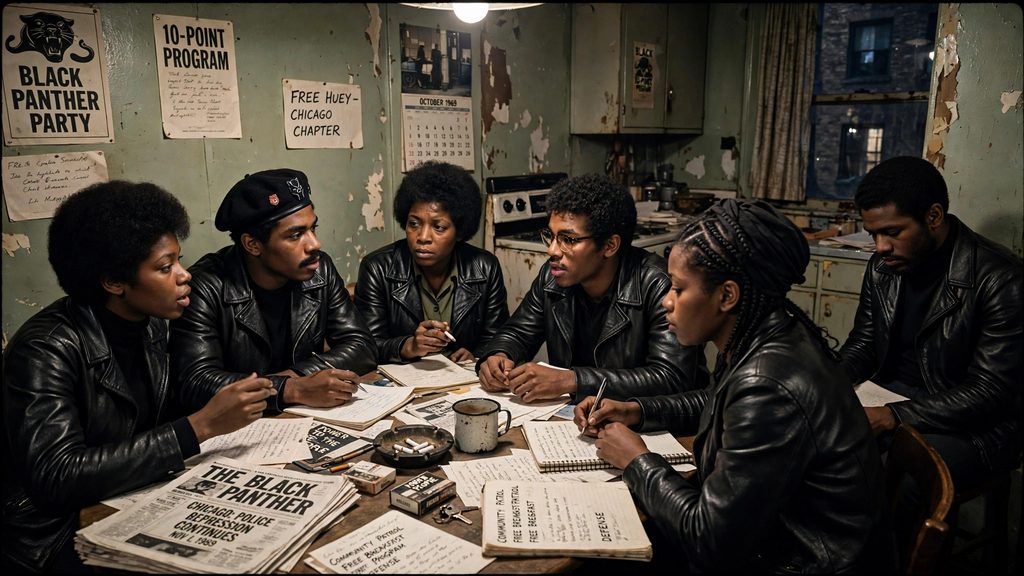
Before dawn, Chicago police entered the apartment. Hampton and fellow Panther Mark Clark were killed, and other Panthers were wounded. The raid immediately generated competing accounts of what had happened inside the apartment, and the official version of the gunfire was subsequently challenged by physical evidence and civil litigation. The National Archives’ historical summary records the central fact without ambiguity: Hampton and Clark were killed during the raid, and Hampton had been the focus of an FBI investigation involving O’Neal.
The later legal history matters because it prevents the story from being reduced to a single sensational sentence. Hampton’s family and other plaintiffs pursued civil litigation against government and local officials for years. The eventual settlement was substantial, but a settlement is not identical to a criminal conviction or a judicial finding that every allegation made by the plaintiffs was established. The documentary record does, however, establish the FBI’s relationship with O’Neal, the information he supplied, and the Bureau’s intense interest in Hampton and the Panthers. Those facts are sufficient to explain why the raid became one of the most consequential episodes associated with COINTELPRO.
Then Eight People Broke Into an FBI Office
COINTELPRO might have remained largely buried inside FBI files if not for a remarkable act of civil disobedience. On the night of March 8, 1971, a group calling itself the Citizens’ Commission to Investigate the FBI broke into the Bureau’s small resident agency in Media, Pennsylvania. The burglars did not steal money. They did not destroy the office. They took documents—roughly a thousand pages of FBI material—and removed them from the building.
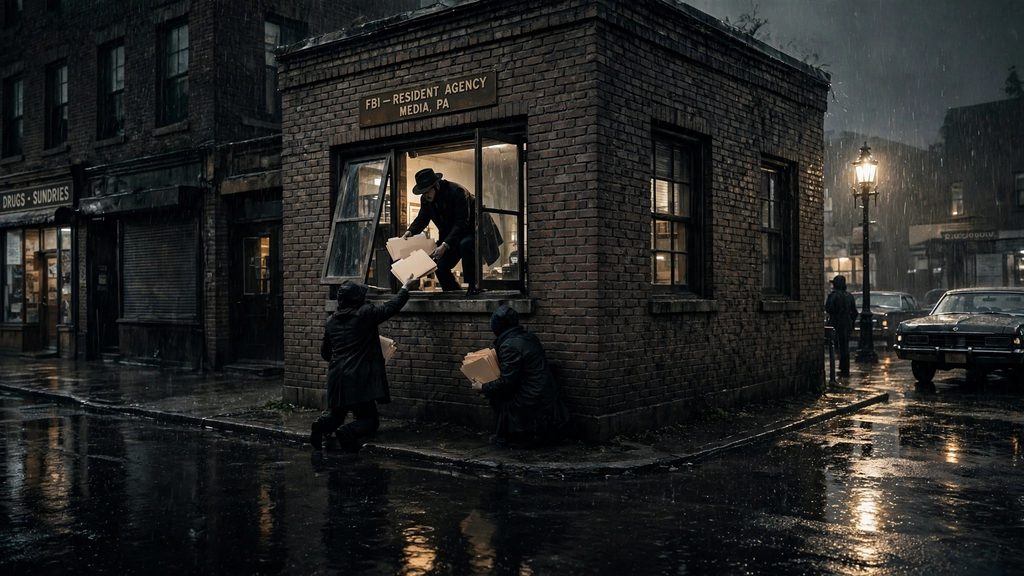
The documents were then distributed anonymously to journalists, members of Congress, and others. Among them were records bearing the previously obscure term “COINTELPRO.” The FBI’s own history now acknowledges the burglary and says that the stolen material revealed counterintelligence programs directed at domestic groups and contributed to the criticism that followed. The Philadelphia FBI history likewise describes the documents as improperly secured domestic-security records whose publication led to a major reassessment of Bureau policy.
The historical irony is extraordinary. A secret federal program designed to penetrate, disrupt, and destabilize political organizations was exposed not because the surveillance system itself malfunctioned, but because ordinary citizens physically removed the paperwork that revealed how it worked. The burglars had committed a crime. They knew they were committing a crime. They nevertheless believed the contents of the files were important enough to justify the risk.
For years they remained anonymous. Several eventually identified themselves publicly, but the burglary was not prosecuted at the time, the same kind of FBI file-keeping habits that surface elsewhere in the documented record, including in Timothy Leary’s own FBI file. The episode became an unusual example of illegal conduct producing evidence of official misconduct: one unlawful break-in exposed thousands of pages describing a secret government campaign whose legality and constitutionality would soon become the subject of congressional investigation.
The FBI Ended COINTELPRO Seven Weeks Later
On April 27, 1971, Bureau official C. D. Brennan recommended terminating the COINTELPRO programs operated by the Domestic Intelligence Division. His memorandum cited the sensitivity of the operations and the need to protect the Bureau’s techniques. The recommendation came less than seven weeks after the Media burglary. Hoover then formally terminated the programs. The FBI’s own historical account dates the end of COINTELPRO to April 1971.
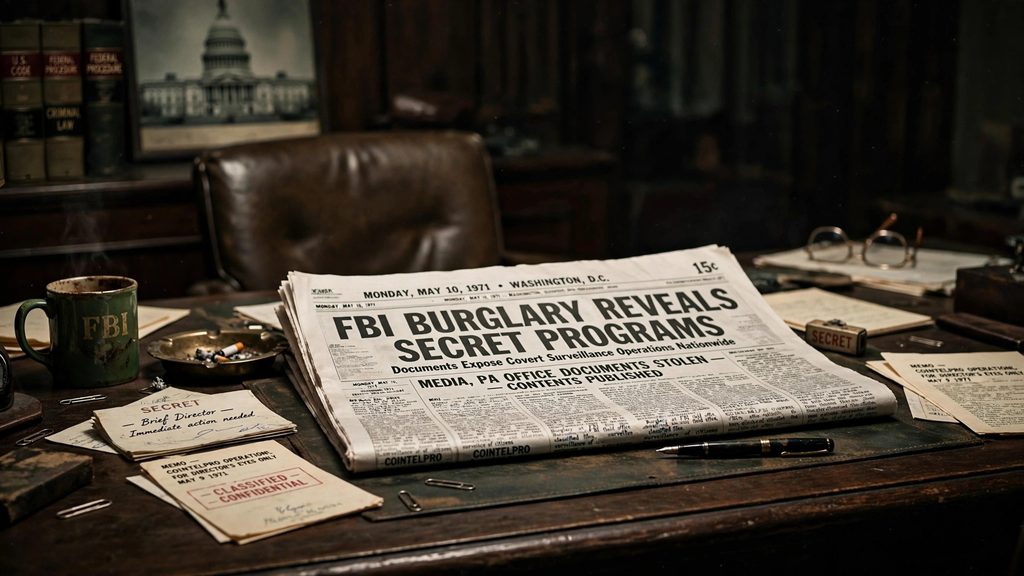
The timing does not prove that the burglary was the only reason for the decision, and the FBI’s internal memorandum framed the termination in terms of operational security. But the sequence is unmistakable: the burglary exposed documents describing highly sensitive domestic operations in March, the press began reporting on the material, and the Bureau terminated COINTELPRO in April. The same program that had survived for fifteen years was suddenly too exposed to continue under its existing name and structure.
The Church Committee Opened the Files Even Wider
The Media burglary was the breakthrough, not the final investigation. In 1975 and 1976, the Senate Select Committee to Study Governmental Operations with Respect to Intelligence Activities—better known as the Church Committee—undertook a sweeping examination of American intelligence abuses. The committee held 126 full meetings, conducted hundreds of interviews, reviewed approximately 110,000 documents, and published its final report in April 1976. Among the programs it examined was COINTELPRO.
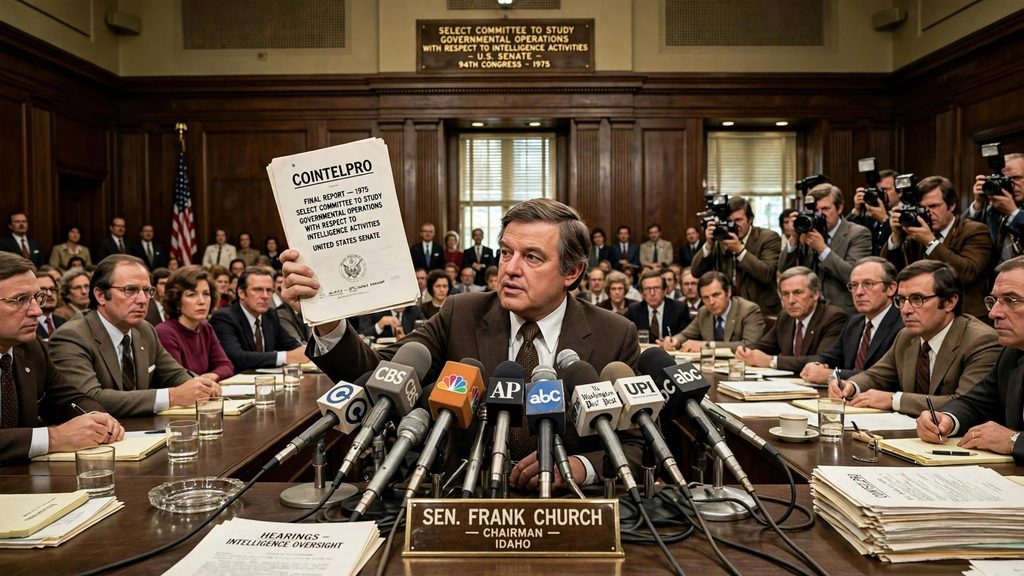
The committee’s findings transformed the story from a collection of leaked FBI documents into an established part of the historical record. Investigators concluded that many COINTELPRO activities went beyond the Bureau’s investigative authority and interfered with First Amendment rights. They examined campaigns against political organizations, civil-rights leaders, antiwar activists, and other groups and individuals. The committee also confronted the difficult legal question of whether specific operations violated federal criminal statutes, ultimately declining to recommend prosecution on the record before it.
That nuance matters. The Church Committee did not simply announce that every COINTELPRO action was illegal under one clear statute. Its conclusions were more complicated. Some activities raised serious constitutional and legal questions, some exceeded the Bureau’s investigative authority, and the committee found a systemic absence of adequate controls. That is a stronger historical conclusion than the slogan “the FBI broke the law” because it tells us precisely what investigators found rather than collapsing different legal questions into one.
What COINTELPRO Actually Revealed
The most important discovery was not that the FBI had informants. Intelligence agencies have always used informants. It was not even that the FBI monitored political organizations. Domestic intelligence work of various kinds was hardly new. The extraordinary discovery was the scale and purpose of the intervention: the Bureau had developed a systematic apparatus for changing the internal behavior and public reputation of organizations it considered dangerous, including organizations whose activities were not necessarily criminal.
The methods documented in the files included infiltrating organizations, exploiting internal disagreements, disseminating derogatory information, using anonymous communications, attempting to influence media coverage, and otherwise disrupting targeted groups. The precise tactic varied from case to case. The underlying objective was remarkably consistent: make the organization less effective. The FBI itself now acknowledges that agents infiltrated groups, sowed discord, and attempted to discredit organizations even where there was little or no evidence of unlawful activity.
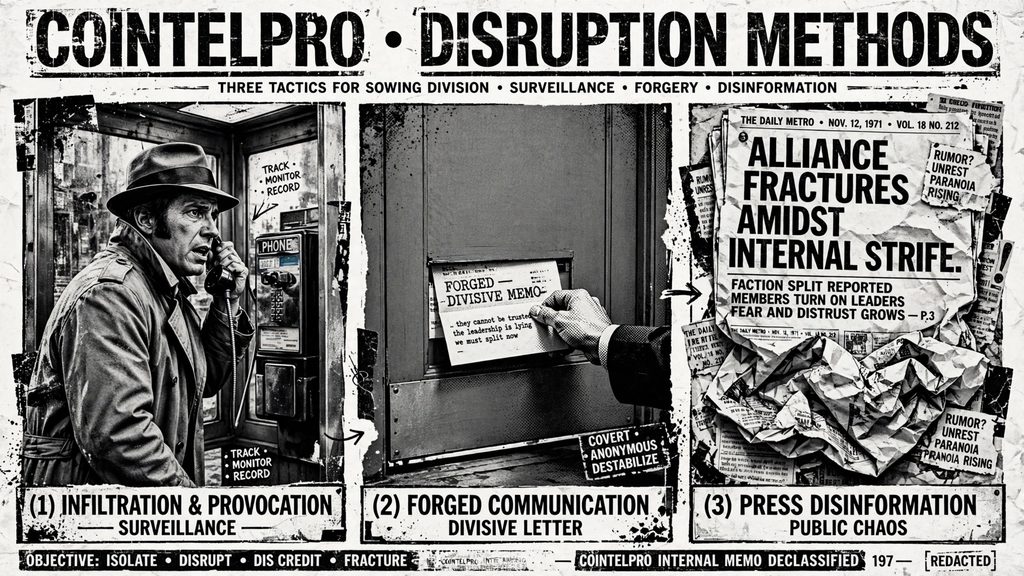
This is why COINTELPRO remains historically important. It is not merely evidence that one powerful director behaved badly. It is evidence of what can happen when a domestic intelligence organization is allowed to define political dissent as a security problem and then given broad discretion to neutralize the people associated with it. The targets changed. The political circumstances changed. The rhetoric changed. The institutional machinery remained.
The Most Important Distinction | COINTELPRO Was Real
There is an unusual danger in writing about COINTELPRO today. Because the program was real, documented, and genuinely disturbing, its name can become a shortcut for almost any allegation involving surveillance, infiltration, political manipulation, or government misconduct. That is historically unhelpful. The existence of COINTELPRO does not automatically authenticate every later claim made in its name.
The opposite mistake is equally serious. Calling COINTELPRO “just a conspiracy theory” is incompatible with the documentary record. The FBI itself acknowledges the program. The National Archives preserves records connected to its targets. The Senate investigated it. The Church Committee published its findings. Thousands of pages of Bureau files remain publicly available. This is not a case where the central allegation depends on an anonymous source, an unexplained photograph, or a chain of inference stretching across decades. The program existed. Its records exist. Its targets existed. Its operations are documented.
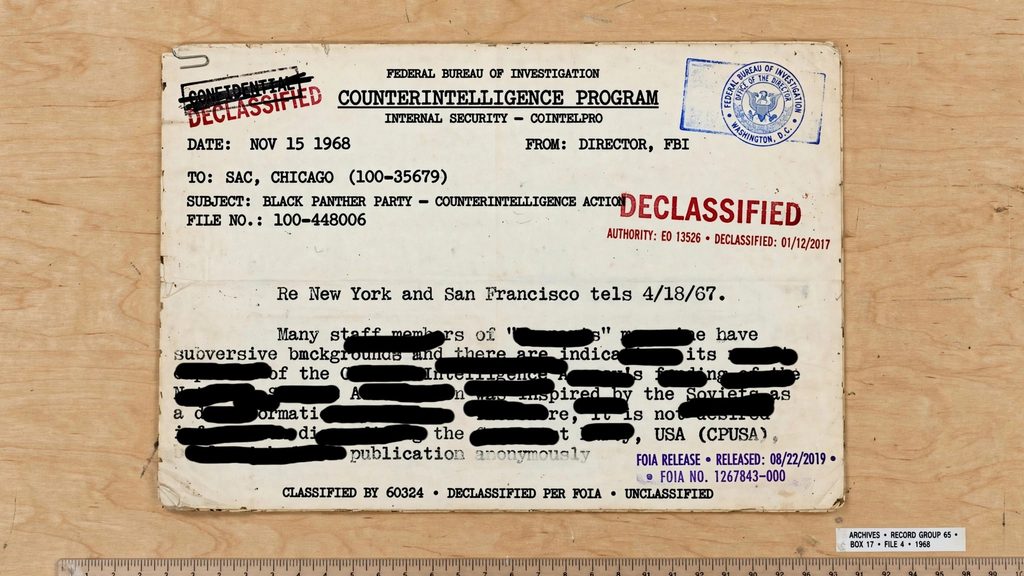
That is precisely why precision matters. The historical lesson does not require adding unverified claims to an already extraordinary record. The real story is strong enough without embellishment.
The Program Was Not Exposed by the System Designed to Oversee It
There is a final irony that reaches beyond COINTELPRO itself. The FBI’s domestic counterintelligence machinery operated for approximately fifteen years before its existence became publicly known in anything like its true form. The first decisive disclosure did not come from a routine audit. It did not come from a judge reviewing the program’s activities. It did not come from a congressional committee discovering the operation on its own. It came from eight people entering an FBI office at night and walking out with the evidence.
Only afterward did the formal machinery of democratic oversight begin to expose the full scale of what had happened. The Media burglary triggered public disclosure, the Church Committee turned that disclosure into a systematic investigation, subsequent reforms imposed new restrictions and procedures on domestic intelligence activities. The FBI itself describes COINTELPRO as a program that was later criticized for abridging First Amendment rights and notes that stronger guidelines and controls followed.
That sequence is the part worth remembering. A democracy depends not merely on intelligence agencies having information, but on institutions outside those agencies being able to determine what they are doing with it. COINTELPRO demonstrated what happens when secrecy, institutional loyalty, broad investigative discretion, and weak external controls reinforce one another for long enough. The program did not require a secret law. It required something more mundane and, therefore, more consequential: an institution powerful enough to create its own internal machinery and insulated enough that almost nobody outside it could see the machinery operating.

COINTELPRO ended in 1971. The documents survived. And the strangest part of the story is not that the United States once operated a secret campaign against political movements. It is that the evidence was sitting in filing cabinets all along. What finally exposed the program was not an official oversight mechanism doing its job. It was a burglary that forced the government to confront its own paperwork—and a subsequent investigation that proved the papers were telling the truth.