



Nick Bostrom published his simulation argument in 2003 in the Philosophical Quarterly and did something that philosophical thought experiments rarely achieve: he made the question of whether reality is real into a serious scientific and mathematical problem rather than a late-night dormitory speculation.
His argument is deceptively simple in structure and devastating in implication. It proposes that one of three statements must be true, and that we have no currently available method of determining which one.
The first: almost all civilizations at our current technological level go extinct before reaching the computational maturity required to run detailed simulations of their own past. They hit the wall, whether through climate collapse, nuclear exchange, biological catastrophe, or something whose character we cannot anticipate, and never develop the technology that would allow them to simulate ancestor civilizations.
The second: technologically mature civilizations, those that survive to reach the computational power required to simulate entire civilizational histories, choose overwhelmingly not to run such simulations. Whether through ethical prohibition, disinterest, or institutional consensus, the simulations are not run.
The third: we are almost certainly living in a computer simulation right now.
The argument’s mathematical logic is this: if civilizations do survive to technological maturity and do run ancestor simulations, the number of simulated minds will vastly outnumber the number of biological minds who ever lived before the technology existed. If the simulations are sufficiently detailed, the simulated minds cannot distinguish their simulated existence from biological existence. Therefore, any randomly selected mind in a universe where simulation is practiced will almost certainly be a simulated mind. The probability that you are the type of mind whose existence preceded the simulation technology, rather than one of the vastly more numerous simulated minds, approaches zero.
You can escape the third option only by committing to the first or second. Either civilizations consistently fail before reaching simulation capability, or they consistently choose not to use it. If neither of those is true, you are almost certainly in a simulation.
James Gates and the Error-Correcting Code
Sylvester James Gates Jr. is a theoretical physicist at the University of Maryland whose work on supersymmetric field theories has been published in peer-reviewed physics journals for more than four decades. He is a member of the National Academy of Sciences and served on the President’s Council of Advisors on Science and Technology under Barack Obama. His institutional credentials are not the credentials of a fringe researcher.
In the course of his mathematical work on supersymmetric string theory, Gates discovered something that he described in multiple recorded public statements as the most surprising finding of his career: embedded in the fundamental equations of supersymmetric quantum field theory, he found codes.
Specifically, he found error-correcting codes. The type he identified are called adinkra codes, named after the West African visual symbols, and they are functionally identical to a class of error-correcting codes called doubly even self-dual linear binary block codes, which were independently developed by Claude Shannon and others for use in computer science to detect and correct transmission errors in digital communications.
Gates’s recorded statement about this finding: we have discovered that error-correcting codes exist in the equations of fundamental physics. The same codes that a software engineer would put into a computer program to ensure accurate data transmission are present in the mathematical structure of the universe’s most fundamental physical laws.
Whether Gates’s finding reflects a genuine structural property of physical law whose origin requires a computational substrate, or whether the mathematical similarity between physical equations and error-correcting codes reflects the underlying mathematical unity of all formal systems without implying a shared computational origin, is the question that his finding raises without resolving.

What cannot be dismissed is that a member of the National Academy of Sciences found doubly even self-dual linear binary block codes in the equations describing the fundamental structure of reality. What also should not be dismissed, because it is the most direct evidence available of how the discoverer himself weighs it, is that Gates has been notably restrained about what the finding implies. At a public 2016 debate on the simulation hypothesis hosted by the American Museum of Natural History, several participants gave their personal probability estimate that we live in a simulation: Max Tegmark said 17 percent, David Chalmers said 42 percent, Lisa Randall said effectively zero, and Gates, the physicist who actually found the codes, put his own estimate at 1 percent, the lowest figure given by anyone on the panel. The person with the most direct access to the finding considers it weak evidence at best. That does not settle the interpretive question, but it is a data point the library’s evidentiary standard requires including rather than omitting in favor of the more dramatic framing the finding usually receives in popular coverage.
Rich Terrile and the Computational Argument
Rich Terrile is a planetary scientist at NASA’s Jet Propulsion Laboratory whose scientific contributions include co-discovery of several of Saturn’s moons using Voyager data. His institutional credentials in planetary science are established. His engagement with the simulation hypothesis represents an extension of his scientific thinking into philosophy of physics rather than his primary research contribution.
Terrile’s argument is technological rather than philosophical or mathematical. It proceeds from Moore’s Law, the well established historical observation that computing power approximately doubles every two years, and applies it to the computational requirements of simulating human consciousness.
His stated position: the fastest supercomputers at NASA are currently operating at speeds comparable to the human brain’s processing capacity. Given Moore’s Law’s well established historical trend, supercomputers within approximately ten to fifteen years will have the computational power to simulate an entire human life at full resolution. Within decades, simulating the complete history of human civilization becomes computationally feasible.
Whether this technological argument establishes that we are in a simulation is a different question from whether it establishes that simulation is technologically possible. Terrile’s argument does not prove current simulation. It proves that simulation will become achievable in the near future, which strengthens Bostrom’s second premise: if simulation is achievable, the only way to escape the third option in the trilemma is to accept that civilizations consistently choose not to run simulations.
Whether any technologically mature civilization, human or otherwise, that develops the ability to simulate entire histories would choose universally not to do so is the second premise’s weakness. The historical record of human civilization suggests that if a technology is achievable, some individuals or institutions will use it. The argument that all technologically mature civilizations prohibit simulation requires a universal consensus that the recorded history of human institutional behavior does not strongly support.
The Quantum Mechanical Evidence
The simulation hypothesis has a relationship to quantum mechanics whose implications the philosophical literature has examined at length.
The standard interpretation of quantum mechanics establishes that quantum systems do not have definite properties until they are observed or measured. The electron does not have a definite position until a measurement forces a definite outcome. The superposition of states collapses to a single state only through interaction. The universe at the quantum level is radically indeterminate until observation collapses indeterminacy into outcomes.

From a simulation perspective, this behavior is precisely what an efficient computation would implement. A simulation that rendered every particle’s position and state continuously, whether or not anything was observing it, would waste enormous computational resources. An efficient simulation would render detail only when observation required it, maintaining everything else in indeterminate superposition until the simulation’s observation logic demanded a value.
Whether quantum indeterminacy reflects genuine fundamental physical uncertainty, as the Copenhagen interpretation maintains, or reflects computational efficiency in a simulated universe that only renders observed detail, as the simulation hypothesis would predict, is a question that the two interpretations agree on the observations but disagree on the underlying cause.
The physicist John Wheeler’s well known concept of the participatory universe, in which observation is not passive but genuinely constitutive of physical reality, is the mainstream physics framework whose implications are most similar to the simulation hypothesis without requiring a computational substrate. Whether Wheeler’s participatory universe and a computed simulation are distinguishable in their observational predictions is a question that the philosophy of physics has not fully resolved.
The Holographic Principle and GEO600
The library’s existing piece on the GEO600 experiment and the holographic principle develops the physics evidence for the simulation hypothesis from the direction of the recorded noise finding by Craig Hogan. Whether this piece should be treated as the physics companion to the current piece’s philosophical and mathematical dimensions is the question that the library’s treatment of the simulation hypothesis raises.
The holographic principle, derived from string theory and black hole thermodynamics by Jacob Bekenstein and Stephen Hawking, establishes that the information content of a physical region is proportional to the surface area of the region’s boundary rather than its volume. This is the signature of a two-dimensional encoding that projects the three-dimensional content: the information in a three-dimensional space is fully described by a two-dimensional surface.

Whether this means the universe is literally a two-dimensional hologram projecting three-dimensional appearance, or reflects a mathematical duality between surface and volume information whose physical interpretation does not require literal dimensionality reduction, is the question that the holographic principle’s established physics raises.
Hogan’s finding at GEO600, the gravitational wave detector, recorded noise patterns at frequencies consistent with the holographic principle’s predictions about the pixelation of spacetime at the Planck scale, represents the most direct physical evidence that spacetime has a discrete structure consistent with digital encoding.
Whether GEO600’s noise constitutes evidence for simulation depends on whether simulation requires discrete spacetime structure, which it would if the simulated universe has a finite resolution, the way any digital image has a pixel size below which detail is not rendered.
The pixelation of space at the Planck scale, approximately 10^-35 meters, is the resolution that the holographic principle predicts and that Hogan’s findings are consistent with. Whether this resolution reflects genuine physical granularity or simulation resolution is the question that no currently available physics can distinguish between.
The Fermi Paradox Intersection
Bostrom’s simulation trilemma intersects with the Fermi Paradox in a way that the library’s Signal Has Already Left piece and the Zoo Hypothesis piece have not fully developed.
The Fermi Paradox, the question of why a universe apparently capable of producing abundant intelligent life shows no confirmed evidence of extraterrestrial intelligence, has a resolution available within the simulation framework: the simulation does not include other independently evolved technological civilizations because including them would require rendering their entire civilizational histories and the computational cost is prohibitive.
In a simulation designed to study one civilizational development, the rest of the universe would be rendered at minimal detail: stars, galaxies, and the physical laws that govern them would be present because they are necessary for the civilizational substrate being simulated, but the content of other civilizations would be absent because it is not necessary for the simulation’s purpose.
The Fermi Paradox’s solution in this framework is not that other civilizations don’t exist but that they are not rendered in the simulation being run. The silence of the cosmos is computational economy rather than cosmic loneliness.
Whether this simulation resolution of the Fermi Paradox is more or less satisfying than the Zoo Hypothesis, the Great Filter hypothesis, or the various other well known Fermi Paradox solutions is a question of which framework makes the most and testable predictions. The simulation solution’s testable prediction is the same as the holographic principle’s: a minimum resolution of physical space at the Planck scale that would be consistent with a finite-resolution computational substrate.
What Escape from the Third Option Requires
Bostrom’s trilemma is in the established philosophical and physics literature. Gates’s error-correcting codes are in the published mathematics of supersymmetric field theory. The holographic principle is in the established string theory and black hole thermodynamics literature. Hogan’s GEO600 noise is in the recorded gravitational wave physics record. Terrile’s computational development argument is in the recorded technology literature.
Each of these independent lines converges on the same question from a different direction. The philosophical argument establishes the logical structure. The mathematical finding establishes a physical signature consistent with computation. The holographic principle establishes the information encoding structure. The GEO600 finding establishes the discrete resolution. The computational development argument establishes the timeline.
Escaping the third option of Bostrom’s trilemma requires committing to one of the first two. Either civilizations consistently fail before achieving simulation capability, or they consistently choose not to use it.
The first option requires every technological civilization that reaches our level to subsequently fail. Whether this is the Great Filter that the Fermi Paradox suggests is behind us or before us is the question that the filter’s location determines: if we have already passed the great civilizational filter, then other civilizations also passed it, and the second option must be doing the work. If the filter is ahead of us, we may be among the last to approach it before our own extinction.
The second option requires universal voluntary restraint from simulation by every mature civilization everywhere in the observable universe and beyond. Whether this restraint is achievable by human civilization, with its recorded history of deploying every achievable technology regardless of consequences, is the question that the second option’s plausibility requires answering.
James Gates found error-correcting codes in the equations of the universe. Physicists found the universe has a minimum resolution consistent with digital encoding. Philosophers established that if simulation is practiced anywhere, almost every mind is simulated.
In 2020, astrophysicist Michael Hippke of the Sonneberg Observatory and Breakthrough Listen collaborator conducted the first recorded empirical search for an encoded message in the cosmic microwave background, the oldest detectable light in the universe dating to approximately 380,000 years after the Big Bang.
The search was motivated by a 2006 published theoretical paper by physicists Stephen Hsu and Anthony Zee proposing that the CMB would be the optimal medium for a Creator’s message: visible to all technological civilizations simultaneously, persisting for cosmological timescales, and encodable in its recorded temperature fluctuation patterns. Hippke translated CMB temperature variations from Planck satellite and WMAP datasets into binary bit streams and searched for meaningful sequences.
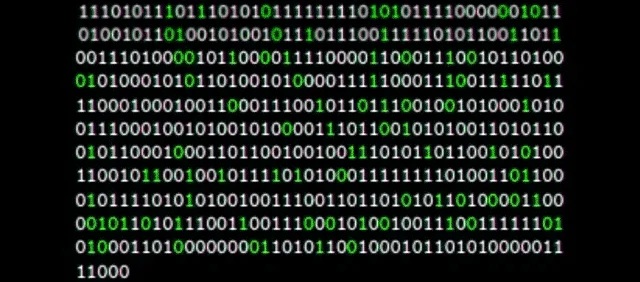
His stated conclusion: no obvious message found. His stated qualification: this does not rule out a Creator, a simulation, or a message encoded in a format not yet understood.
The simulation trilemma’s three options remain equally open after the search. The CMB has been examined. It did not answer.
Whatever wrote the universe’s initial conditions, if anything did, did not leave its signature in a format a 2020 binary analysis could read.
None of these findings prove simulation. Together they establish that the question is not metaphysical but physical, that it has empirical implications, and that the evidence available so far points in a direction.
The most comfortable option is the first. Civilizations fail before they reach the technology. We are the original, not the copy.
Whether the third option is the most likely one is a judgment call the library should not make more confidently than the physicist closest to the evidence makes it. Gates himself, at 1 percent, does not treat his own discovery as strong evidence for it. Bostrom’s logical structure is sound, Hogan’s noise and the holographic principle are genuinely suggestive, but the honest summary is that the codes are an interesting, contested data point rather than a tipping of the scale toward the third option being most likely.
The most disturbing element is not which option is true.
It is that we cannot currently tell.
The CIA’s own declassified Gateway Process research sits in the same honest uncertainty.