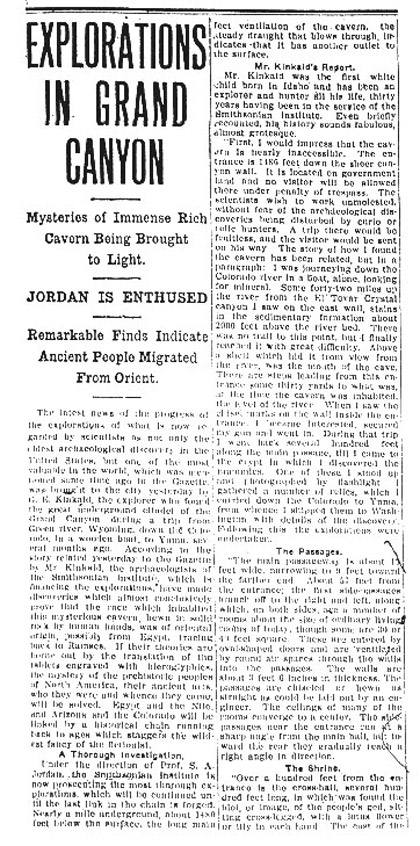
The article appeared on the front page of the Arizona Gazette on April 5, 1909.
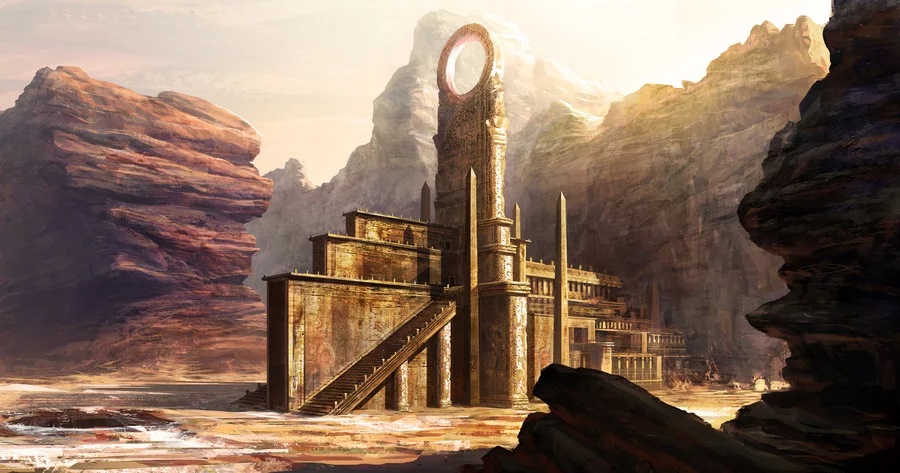
Under the headline Explorations in Grand Canyon, the newspaper described a series of caves discovered in the Marble Canyon section of the Grand Canyon by two Smithsonian-funded archaeologists, identified as Professor S.A. Jordan and G.E. Kincaid. The caves, allegedly 458 meters below the canyon rim and accessible only through difficult terrain, reportedly contained artifacts suggesting an Egyptian or broadly oriental origin: hieroglyphic inscriptions on tablets, a cross-legged Buddha-like idol, mummified human remains, and copper weapons.
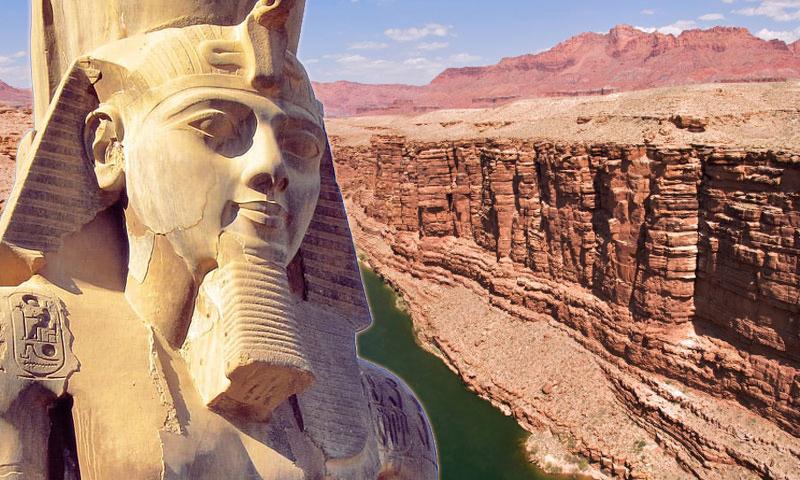
The article’s conclusion was specific: if confirmed, the discoveries would prove that a race inhabited these mysterious caves whose origin was oriental, possibly from ancient Egypt in the time of Ramses, and that Egypt and the Nile and Arizona and the Colorado would be linked by a historical chain extending back to times that would baffle the most imaginative fictionist.
No such chain has been produced. The Smithsonian’s Department of Anthropology, when contacted by subsequent researchers, confirmed that no records exist of either Professor S.A. Jordan or G.E. Kincaid, no expedition to the described location, and no Egyptian artifacts of any kind from the Grand Canyon. No photographs from the expedition exist despite the article’s description of Kincaid as an avid photographer. No physical artifacts from the expedition exist. No subsequent excavation has found the caves described.
The 1909 Arizona Gazette story is most probably a newspaper hoax, a fabricated adventure narrative published to sell copies in a slow news period. It is not recorded evidence of an Egyptian colony in the American Southwest.
This conclusion, however, does not close the question that the Arizona Gazette story was attempting to answer in its own clumsy way: did ancient Old World civilizations have contact with the Americas before Columbus? The genuine evidence for this question is elsewhere, and it is far more thoroughly documented than a 1909 newspaper article.
The Cocaine Mummies and What They Require
In 1992, Svetlana Balabanova, a forensic toxicologist at the Institute of Forensic Medicine in Ulm, Germany, published findings in the peer-reviewed journal Forensic Science International that immediately produced controversy in both the Egyptological and the broader scientific community.
Balabanova and her colleagues had conducted chemical analysis of nine Egyptian mummies dating to approximately 3200-1000 BCE, stored in the Munich Museum of Egyptian Art. Using radioimmunoassay, the standard forensic technique for detecting trace chemical substances, they found elevated levels of cocaine and nicotine in multiple specimens. To address the most obvious objection, contamination by modern handling of the museum specimens, the team applied gas chromatography-mass spectrometry confirmation to their findings and retested with the same results.
The finding’s significance depends entirely on the origin of the cocaine and nicotine detected. In 1992, cocaine was understood to derive exclusively from Erythroxylum coca, a plant species native to the Andean region of South America. Nicotine was understood to derive primarily from Nicotiana tabacum, the common tobacco plant whose native range was limited to the Americas. Neither substance had any known Old World source in 1992.
The standard objections to the Balabanova findings were articulated immediately and have been maintained in the subsequent literature. The strongest objection is contamination: museum specimens handled across 150 years of European collection practices could have been exposed to trace amounts of cocaine or nicotine through the hands of museum workers, tobacco smoke from the museum environment, or other contamination sources whose cumulative effect over decades of exposure might produce detectable levels.
Balabanova’s response to the contamination objection was methodological: the detected levels of cocaine in some specimens were not trace-level but were consistent with chronic consumption rather than surface contamination, and the distribution of the chemical residue within the preserved tissue rather than concentrated on surface layers was inconsistent with external contamination.
Whether this argument is sufficient to establish the finding’s validity against the contamination objection is not resolved in the published literature. What is established is that the finding has been replicated: subsequent independent analyses by other laboratories, including work by researchers at the Natural History Museum in Basel and confirmatory testing by additional forensic laboratories, have found the same substances in the same specimens.
Whether the independent confirmations rule out contamination as an explanation depends on whether the contamination mechanism would be expected to produce consistent results across different specimens tested in different laboratories using different methodologies. The replication of the finding by independent teams substantially strengthens it against the random contamination hypothesis, though the systematic contamination hypothesis, that every specimen was contaminated through the same museum environment exposure mechanism, cannot be fully excluded.
The Broader Chemical Evidence
The cocaine and nicotine findings are the most extensively published but not the only recorded chemical evidence for pre-Columbian trans-Atlantic contact in the Egyptian record.
A 2001 study by researchers including Rosalie David at the Manchester Museum recorded the presence of hashish, cocaine, nicotine, and other plant-derived substances in a broader sample of Egyptian mummies. David, the keeper of Egyptology at the Manchester Museum, characterized the findings as controversial but methodologically credible and called for further systematic investigation.
The plant evidence provides a separate line of evidence whose sourcing is independent of the chemical analysis. American plant species have been reported in ancient Egyptian contexts by multiple researchers:
Zea mays, maize, is not native to the Old World. It was developed through the selective breeding of teosinte grass by ancient Mesoamerican peoples and its domestication is dated to approximately 9,000 years ago in what is now southern Mexico. Whether maize representations appear in ancient Egyptian artwork and in ancient Indian temple carvings before Columbus’s 1492 voyage is the question that botanist Shakti Gupta’s analysis of Hoysala temple sculpture at Somnathpur and Halebidu in Karnataka, India, and subsequent analyses of Egyptian plant depictions, have raised without resolving.
The Hoysala temples in Karnataka were constructed in approximately 1100-1200 CE. If the plant carvings identified as maize in these temples are accurately identified, they predate Columbus by approximately 300 years and postdate the Egyptian period by approximately 1,500 years. Whether these carvings represent maize or a visually similar native Old World plant species is the botanical debate that multiple analyses have not definitively resolved.
The Genetic Evidence for Pre-Columbian Contact
The most rigorously established evidence for pre-Columbian contact between Old World and New World populations is not chemical or botanical but genetic, and it does not involve the Atlantic route but the Pacific.
In 2020, a team of researchers led by Alexander Ioannidis at Stanford University published a study in Nature establishing genetic evidence for contact between South American populations and Polynesian populations in the pre-Columbian period. The finding was the detection of a consistent genetic signal from Native American ancestry in multiple Polynesian island populations, dated to approximately 1200 CE, roughly contemporary with the Polynesian settlement of the relevant island groups.
The Nature paper’s publication in one of the world’s most prestigious scientific journals represents the definitive establishment of pre-Columbian trans-Pacific contact in the peer-reviewed literature. Whether Polynesian seafarers reached South America and brought back genetic material, South American individuals reached Polynesia and integrated into Polynesian communities, or some combination of these occurred, is the question the genetic evidence establishes as having occurred without resolving the mechanism.
The sweet potato provides an independent botanical confirmation of the same contact: Ipomoea batatas, the sweet potato, is native to South America but was cultivated in Polynesia before European contact. Its presence in Polynesia before Columbus demonstrates trans-Pacific movement of plant material in the pre-Columbian period through the same contact event recorded in the genetic record.
Whether the established trans-Pacific contact between South Americans and Polynesians is the endpoint of a contact network that extended to Egypt, or whether it represents a separate and geographically bounded contact event that does not imply Atlantic connections, is a question the available evidence cannot answer.
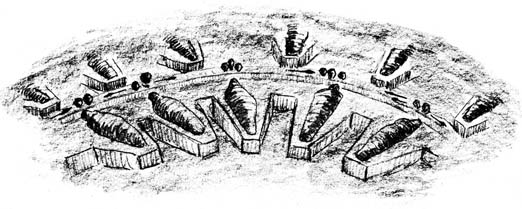
The Grand Canyon’s archaeological record
The Smithsonian’s denial of the Arizona Gazette story’s claims is on the record and almost certainly accurate. No Egyptian artifacts have been found in the Grand Canyon, and the archaeologists named in the 1909 article have no institutional record.
What the Grand Canyon’s legitimate archaeological record does show is a genuinely complex pattern of ancient human habitation whose origins and cultural connections are not fully resolved in the conventional framework.
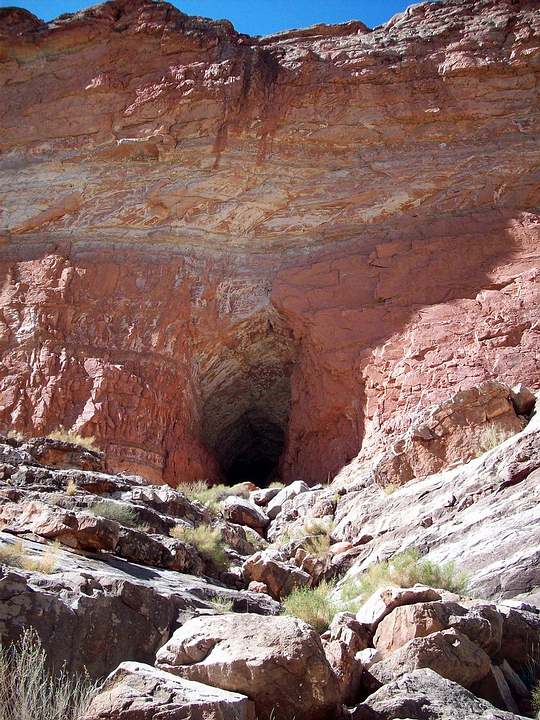
The Havasupai people, the Grand Canyon’s indigenous inhabitants whose recorded residence in the canyon extends back at least 800 years in the archaeological record, maintain oral traditions of much greater antiquity and cultural connections to the canyon’s physical features that the conventional archaeological timeline does not fully accommodate.
The Ancestral Puebloan sites in the canyon’s upper regions, dated to approximately 1000-1150 CE in their most recent occupation, show architectural and artistic parallels with Mesoamerican traditions that the conventional diffusion model treats as independent development or limited exchange. Whether these parallels reflect the kind of limited long-distance contact that the broader pre-Columbian contact evidence suggests was more extensive than the conventional model acknowledges is a question the Grand Canyon’s legitimate archaeology raises without requiring the 1909 Arizona Gazette story.
What the Evidence Establishes and What It Does Not
The 1909 Arizona Gazette story about Egyptian artifacts in the Grand Canyon is almost certainly a newspaper hoax. The Smithsonian has no record of the named archaeologists, no artifacts exist, no photographs exist, and the story appeared in a newspaper with no subsequent follow-up in any other publication.
What is established independently of the Arizona Gazette story: cocaine and nicotine of American plant origin have been detected in Egyptian mummies in peer-reviewed laboratory analysis replicated by multiple independent teams. Genetic evidence for pre-Columbian trans-Pacific contact between South Americans and Polynesians appears in Nature. Maize representations in 1200 CE Indian temple carvings have been proposed by multiple botanical researchers. Sweet potato cultivation in pre-Columbian Polynesia is well established.
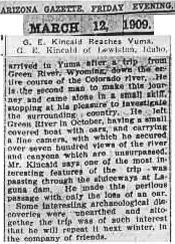
These established findings show that the pre-Columbian period’s isolation of the Americas from Old World contact is not as absolute as the conventional historical framework assumes. Whether the contact implied by the cocaine mummies finding involved direct Atlantic crossings or trade networks whose routes and mechanisms have not been reconstructed, is the question that the chemical evidence raises.
The Arizona Gazette story is almost certainly fiction. The cocaine in the mummies is an established, replicated laboratory finding. The connection between Egypt and the Americas that the 1909 newspaper claimed to have proven archaeologically may have a genuine chemical foundation whose mechanism remains, more than a century later, genuinely unresolved.
Whatever carried cocaine from the Andes to Egypt in the second millennium BCE, it was not an Arizona Gazette reporter.