




The Great Isaiah Scroll is real. The Dead Sea Scrolls are real. Quantum physics is real. What is not established by any of them is the existence of a suppressed “Isaiah Code” revealing a lost science of prayer, human consciousness, or quantum reality. That story comes from Gregg Braden’s modern spiritual interpretation of the biblical Book of Isaiah, not from a newly decoded manuscript, a Vatican archive, or a scientific discovery hidden from the public.
That distinction matters because the ingredients of the story are individually genuine. There really is an ancient Isaiah manuscript discovered at Qumran. There really was a bitter and unusually long controversy over who could study and publish parts of the Dead Sea Scrolls. There really are profound questions in modern physics about measurement, quantum systems, information and the nature of observation. And there really are ancient Jewish traditions surrounding prayer, prophecy and the possibility of divine intervention. But putting those four things together does not transform a modern spiritual interpretation into a lost scientific manuscript.
The more closely the trail is followed, the more revealing the distinction becomes. The ancient document says what its Hebrew text says. Modern physics says what its experiments and mathematics demonstrate. Gregg Braden adds a third layer: a contemporary spiritual interpretation connecting Isaiah, prayer, consciousness and ideas drawn from quantum theory. That third layer may be meaningful to readers as spirituality. It is simply not the same thing as discovering a hidden scientific code in an ancient manuscript.
Start With Gregg Braden, Not the Vatican
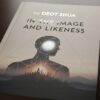
The first question is the simplest one: where did the “Isaiah Code” actually come from? It did not emerge from a Dead Sea Scrolls translation team, a physics laboratory, a Vatican document release, or a peer-reviewed biblical-studies paper. It appears in Gregg Braden’s book The Isaiah Effect: Decoding the Lost Science of Prayer and Prophecy, published around the turn of the millennium and subsequently republished in later editions. The book explicitly presents itself as an interpretation connecting prayer, prophecy and quantum science, with the Isaiah Scroll serving as a central source for that interpretation.
That makes the provenance unusually clear. Braden is not presenting a newly discovered manuscript whose existence was suppressed for centuries and only recently exposed. He is interpreting an ancient text through a modern spiritual framework. His own biography describes a background in geology, computer systems and technology before he became a full-time author and speaker, rather than a career in academic biblical studies or theoretical physics. His professional history is interesting in its own right, but it should not be quietly converted into credentials he does not claim.
The Great Isaiah Scroll Is Not a Secret Manuscript
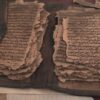
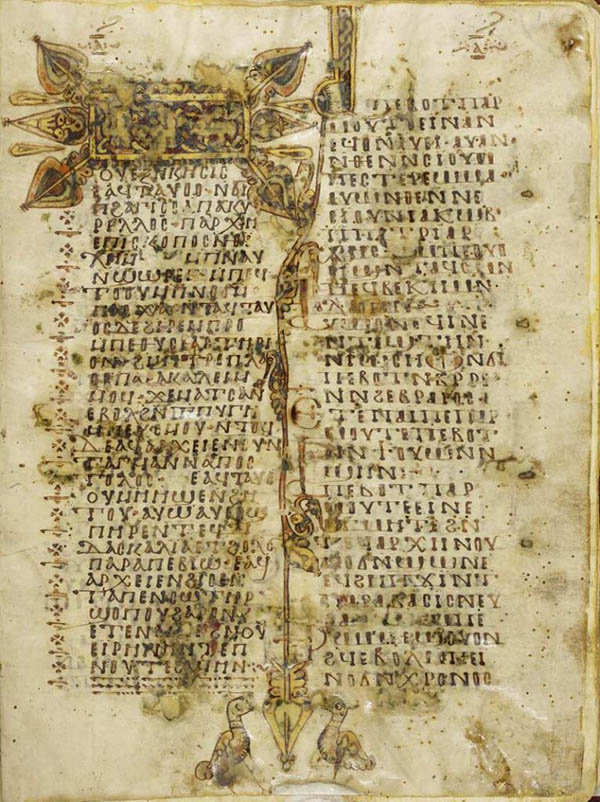
The actual manuscript at the centre of the story is the Great Isaiah Scroll, designated 1QIsaᵃ. It was one of the original seven Dead Sea Scrolls discovered in Qumran Cave 1 in 1947. The Israel Museum dates it to approximately 125 BCE. At 7.34 metres long, it contains all 66 chapters of the Hebrew Book of Isaiah and is one of the most important biblical manuscripts ever discovered.
It is also not hidden. The Israel Museum has digitized the manuscript and made it available for examination online. Scholars can inspect its columns, compare its readings with later Hebrew manuscripts, and study the thousands of textual variations that reveal how the biblical text was transmitted before the medieval Masoretic tradition became authoritative. The scroll is extraordinarily important precisely because it allows researchers to study the history of a biblical text directly rather than relying on speculation about what might have been written.
And what does the manuscript contain? The Book of Isaiah. It contains an ancient Hebrew version of Isaiah, with variant readings, spelling differences, scribal corrections and other features that are extremely valuable to textual scholars. Those differences are genuine discoveries. But they do not amount to a hidden treatise on quantum mechanics.
The Real Dead Sea Scrolls Controversy Was Academic
This is where the real history becomes genuinely fascinating, and where the Vatican theory becomes unnecessary. For decades after the scrolls were discovered, access to some unpublished material was controlled by a relatively small international editorial team. Publication moved slowly, and scholars outside that circle complained that the arrangement had created an intellectual bottleneck. The controversy became so severe that the restricted access itself became a major story in biblical scholarship.
But the historical record does not lead to a Vatican vault containing a secret Isaiah manuscript. It leads to universities, libraries, editors, antiquities authorities, competing scholars and a prolonged argument over who had the right to see and publish photographic copies of ancient texts. Huntington Library director William Moffett’s decision to make the library’s complete photographic collection available without restriction was announced at the top of the Sunday edition of The New York Times on September 21, 1991. A parallel breakthrough happened almost simultaneously: Robert Eisenman of California State University, Long Beach, and James M. Robinson of Claremont Graduate University published their own two-volume Facsimile Edition of the Dead Sea Scrolls through the Biblical Archaeology Society that same year, though Eisenman has never publicly disclosed exactly how he obtained his copies of the unpublished material.
There was resistance, legal controversy and considerable institutional friction. The Israeli Antiquities Authority objected to the Huntington release and considered legal action. The episode has consequently become one of the more dramatic chapters in the history of Dead Sea Scrolls scholarship. But that is a story about academic control over unpublished material being broken open, not evidence that the Vatican possessed a suppressed scientific Isaiah manuscript.
The Vatican Is the Wrong Institution to Blame
The Vatican enters the story because “the Church suppressed ancient knowledge” is a powerful narrative template. But a compelling narrative is not evidence. The Great Isaiah Scroll was discovered in the Judean Desert, passed through a complicated modern chain of archaeological custody and scholarly publication, and is now held and exhibited by the Israel Museum in Jerusalem. The documented publication controversy involved the international editorial team, the Israel Antiquities Authority, researchers, publishers and libraries. That is a messy institutional history, but it is not the same thing as a Vatican conspiracy.
There is another problem with the suppression theory: the supposed secret is not dependent on access to an inaccessible manuscript. The Great Isaiah Scroll has been available for decades in photographs, scholarly editions, translations and now digital form. If it contained a plainly encoded system of quantum physics, the relevant Hebrew text would be available for scholars to examine. A claim that the manuscript secretly says something radically different therefore has to survive contact with the actual words on the manuscript.
What Braden Actually Does With Isaiah
Braden’s argument is more interesting when described accurately. He does not simply translate a previously unknown Hebrew passage and discover the word “quantum.” Instead, he draws connections between biblical descriptions of prayer and prophecy and concepts associated with modern science, particularly ideas about possibility, observation, energy and the relationship between an observer and an observed system. His book presents this as a recovery of an ancient “lost science” of prayer.
That is an interpretive move. It is not the same methodological process used by a biblical philologist reconstructing the meaning of an ancient Hebrew sentence. Nor is it the same process used by a physicist deriving a prediction from a mathematical theory and testing it experimentally. Braden can make the philosophical or spiritual connection; readers can find that connection compelling; but none of those facts turn the connection into a newly discovered property of the ancient manuscript.
And What About Max Planck?
Max Planck is frequently pulled into this story because quotations attributed to the Nobel Prize-winning physicist appear to support the idea that consciousness is fundamental to matter. Some versions claim that Planck said matter itself does not exist and that behind matter lies a conscious and intelligent mind. The problem is not simply that the quotation sounds spiritual. The problem is that quotations of this kind are repeatedly reproduced without the full historical context needed to establish exactly what Planck said, when he said it, and what he meant by the terms involved.
That caution is important because Planck’s actual scientific legacy is not mysterious. He helped establish quantum theory through his work on the quantization of energy, and his scientific writings belong to a precise mathematical and experimental tradition. Even if a historical quotation accurately records Planck expressing philosophical or metaphysical views, it would not establish Braden’s interpretation of Isaiah. A physicist’s personal philosophy is not a scientific experiment, and a philosophical statement about matter is not evidence that prayer can engineer physical reality.
The larger lesson is easy to miss: famous scientists do sometimes hold philosophical, religious or metaphysical opinions. That does not make those opinions part of physics. Invoking Planck’s name cannot substitute for the evidence that a claim about quantum mechanics would actually require.
Quantum Mechanics Does Not Say That Prayer Controls Reality
This is the point at which legitimate science and spiritual metaphor are most easily confused. Quantum mechanics absolutely contains phenomena in which measurement matters. The state of a quantum system can be altered by the physical interaction involved in measurement, and the mathematical theory makes extraordinarily accurate predictions about the outcomes. But the technical meaning of “observation” in quantum mechanics is not equivalent to a human mind staring at an object and willing it to change.
A detector can measure a quantum system without a human consciousness being present at the instant of measurement. Physical interactions between particles and measuring apparatus are enough. That is why the popular statement “the observer changes reality” is potentially misleading: it takes a technical word from physics and silently replaces it with a psychological one.
None of this proves that consciousness is philosophically unimportant. It simply establishes a boundary between two different questions. Physics can investigate what happens when physical systems interact and what mathematical rules describe those interactions. A spiritual tradition can ask whether intention, prayer or consciousness has meaning beyond those measurable interactions. The second question does not become experimentally demonstrated merely because the first one contains the word “observer.”
The Essenes Are Real History, But the Story Is More Complicated
The Essenes provide another genuine historical thread that has been woven into the Isaiah Code narrative. Ancient writers including Josephus and Pliny describe a Jewish group known as the Essenes, and the Qumran settlement has long been associated with them. Many scholars have considered the Qumran-Essene hypothesis persuasive because of apparent similarities between the archaeology, ancient descriptions and certain sectarian texts among the Dead Sea Scrolls.
But this is precisely where a careful account should resist replacing one oversimplification with another. The identification of the Qumran community with the Essenes remains debated. The Library of Congress notes that many scholars accept the Essene interpretation while others have argued for different identifications of the settlement and the people associated with the scrolls, including alternative theories proposing the Sadducees or a group unrelated to Qumran’s own residents entirely. Oxford scholarship likewise documents the continuing debate over how securely the scrolls can be connected with the Essenes.
That uncertainty makes the historical record more interesting, not less. The Qumran community was clearly part of the religious and political world of Second Temple Judaism. Its texts reveal intense concern with scripture, ritual purity, communal identity, law, prophecy and eschatology. Those are profound subjects. But nothing in the archaeological record requires us to transform that community into custodians of a lost quantum technology.
The real Qumran story is already extraordinary: ancient manuscripts survived for roughly two millennia in the Judean Desert, and modern scholars are still arguing about exactly who produced some of them, why they were stored in caves and how they relate to the communities described in ancient sources. That is a real historical mystery. It does not need a supernatural upgrade.

The Difference Between a Code and an Interpretation
There is a simple test that cuts through much of the confusion. If someone claims to have discovered a previously unknown ancient code, ask whether independent researchers can reproduce the translation from the original text. If the answer is yes, the claim can be examined as philology. If independent scholars repeatedly obtain the same meaning from the same Hebrew words, the interpretation has something objective to stand on. If instead the alleged code appears only after modern concepts are mapped onto an ancient text, then what has been produced is an interpretation.
Interpretations can be fascinating. They can even be spiritually transformative. But they are not automatically discoveries. The distinction is particularly important when the interpretation borrows vocabulary from a prestigious scientific field. “Quantum,” “energy,” “frequency,” “observer” and “information” carry precise meanings inside physics. Outside that context, they can become metaphors. A metaphor may be powerful without becoming a scientific mechanism.
What the Evidence Actually Supports
Here is what can be established without embellishment. The Great Isaiah Scroll is an authentic ancient manuscript of the Book of Isaiah, discovered at Qumran and dating to roughly the second century BCE. It is publicly accessible in digitized form and has been studied extensively. The Dead Sea Scrolls did experience decades of restricted scholarly access and delayed publication, creating a real and controversial academic bottleneck that was substantially broken open in 1991.
Gregg Braden’s The Isaiah Effect is a modern book that interprets Isaiah, prayer and prophecy through ideas associated with quantum science. That makes the “Isaiah Code” a modern interpretive framework. It does not make it an ancient scientific manuscript. The available historical record does not establish that the Vatican possessed and suppressed a secret Isaiah document containing quantum physics, nor does the existence of the Dead Sea Scrolls provide evidence for such a document.
And quantum mechanics, for all its genuine strangeness, does not provide a shortcut around that evidentiary problem. If someone claims that prayer changes DNA, consciousness controls physical matter, or an ancient manuscript anticipated modern quantum theory, those claims require evidence specific to those propositions. A quotation from Planck, a biblical metaphor about possibility, or the existence of an observer effect cannot substitute for such evidence.
The Real Mystery Is Better Than the Conspiracy
There is a temptation in stories like this to believe that rejecting the conspiracy means rejecting the mystery. It does not. The real history of the Great Isaiah Scroll is already remarkable: an ancient manuscript survived from the Second Temple period, preserved a remarkably complete form of Isaiah, and provided scholars with direct evidence for how biblical texts were transmitted more than two thousand years ago.
The real history of the Dead Sea Scrolls is stranger still. Thousands of fragments emerged from caves in the Judean Desert and triggered one of the greatest scholarly disputes of the modern era. Researchers fought over access. Libraries possessed photographs. Editors controlled publication. Rival scholars reconstructed unpublished texts. Institutions threatened legal action. Eventually, the barriers began to collapse, and the material became progressively more accessible to the wider scholarly world.
That is not a story about humanity being prevented from discovering its supernatural powers.
It is a story about what happens when ancient knowledge collides with modern institutions, competing interpretations, professional ambition and the enormous human desire to find meaning in the past.
And perhaps that is the most revealing part of the entire “Isaiah Code” story. The ancient text does not need to secretly contain quantum mechanics for people living thousands of years later to see themselves reflected in it. Isaiah has already survived empires, languages, religions, archaeological revolutions and scholarly arguments. Its words have been interpreted, translated, debated and reinterpreted for centuries.
The evidence does not reveal a Vatican-suppressed quantum code.
It reveals something more ordinary, and more human: an ancient text, a modern interpreter, and our enduring tendency to read the deepest questions of our own age back into the words of the past.