There are four things that should not be confused with one another: what the Vatican has documented, what ancient Christian symbolism means, what modern mythology has imagined, and what might actually be possible. The first is a matter of record. The second belongs to theology and history. The third belongs to the imagination. The fourth is where the interesting questions begin.
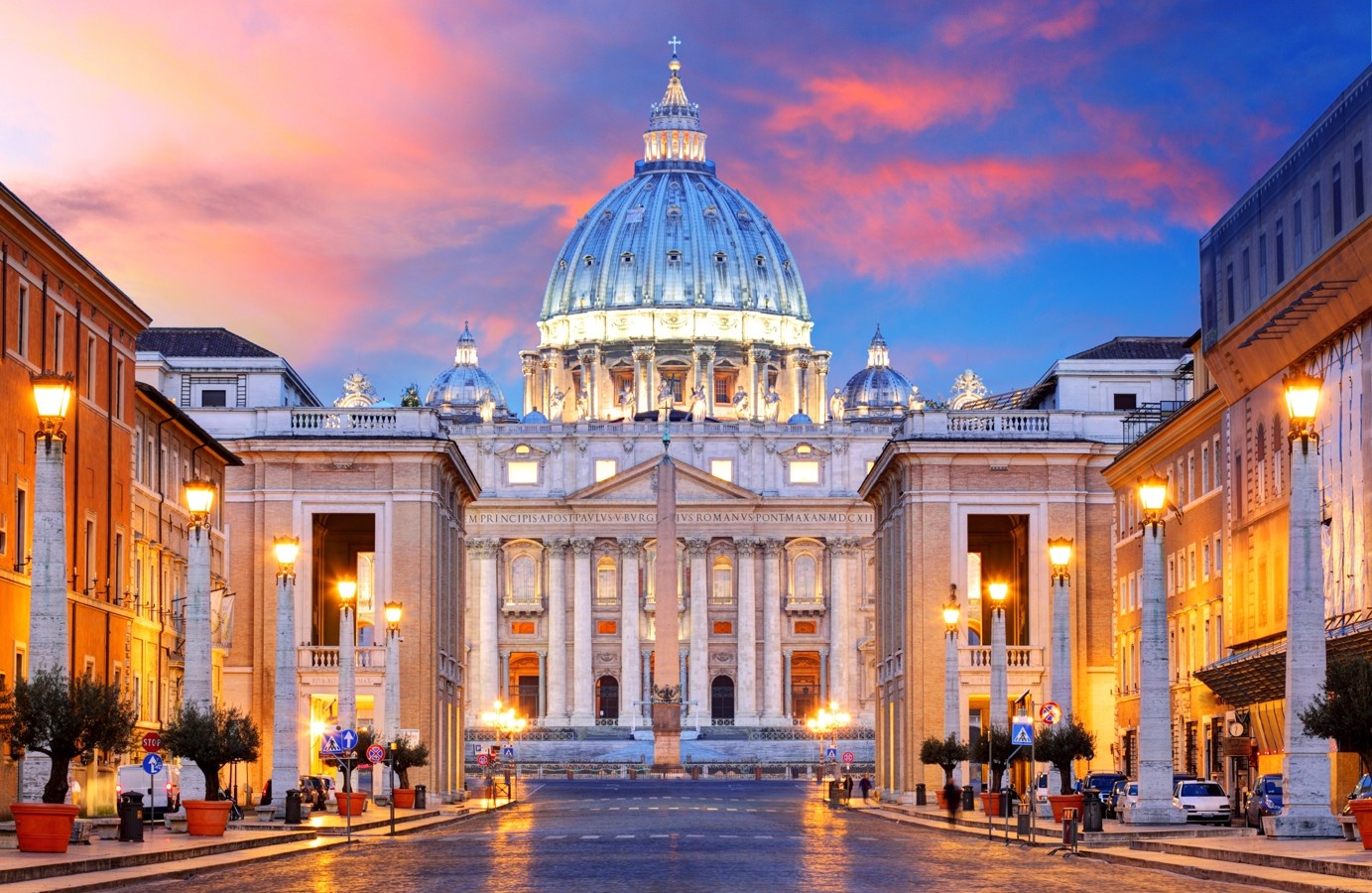
St. Peter’s Basilica has one of the most powerful thresholds in the Western world: the Holy Door, opened during Jubilee years as a symbol of passage, renewal and entry into a different spiritual condition. The tradition is old. The Holy Door at St. Peter’s was first documented on Christmas 1499, when Pope Alexander VI ordered it opened alongside the Holy Doors at Rome’s other major basilicas, and the Vatican’s own historical record describes centuries of ritual surrounding its opening and closing since.
During Jubilee 2025, that ancient symbolism returned to the center of public attention. And somewhere between the documented door and the mythology that has grown around it, a different story begins. A story about a door that isn’t supposed to exist. A door beneath the door. A threshold beneath the threshold. A Sixth Gate.
There is no verified Vatican archive establishing such a gate. No authenticated Vatican document currently available to the public establishes a portal beneath St. Peter’s Basilica. No credible evidence establishes that a hybrid being emerged there during Jubilee 2025. Those facts matter. But they do not make the idea uninteresting. They make the question more interesting. Because the mythology of a Sixth Gate is really a mythology about something much larger than the Vatican. It is about what happens when the boundary between human, machine and consciousness begins to disappear.
The Door That Already Exists
The real Holy Door is strange enough without adding anything to it. It is not merely an architectural entrance. The Vatican itself describes passage through the Holy Door in explicitly transformational terms. In Christian symbolism, crossing the threshold represents movement from one condition to another, from sin toward grace, from separation toward communion. The door is therefore not important because it leads somewhere geographically unusual. It is important because it represents becoming something different.

That symbolism is older than modern technology. It is also remarkably well suited to the technological problem now confronting humanity. For most of human history, the categories seemed straightforward. A human being was biological. A machine was manufactured. A mind belonged to an organism. A tool was something the organism used. The boundaries were imperfect, but they were recognizable.
Artificial intelligence has begun making those boundaries less comfortable. Neural interfaces are making the boundary between brain and machine increasingly literal. Synthetic biology is making the boundary between engineered and naturally occurring life increasingly difficult to define. Artificial systems are becoming capable of representing, predicting and interacting with aspects of human cognition that were once assumed to belong exclusively to biological minds. The old door was built for a theological transformation. The new question is technological. What happens when the thing crossing the threshold is no longer entirely human?
The Sixth Gate
This is where the legend begins. Imagine, not as a claim about a documented Vatican event but as a thought experiment, that beneath the visible architecture of St. Peter’s there were another kind of threshold. Not a door in the ordinary architectural sense. A boundary between systems. On one side: biological humanity. On the other: an intelligence capable of existing simultaneously through biological tissue, synthetic circuitry and external information systems.
Such a threshold would not need to be supernatural. It would be stranger than supernatural. It would be technological. The being emerging from it would not necessarily be an alien. It would not necessarily be an artificial intelligence. It would not even necessarily be a new species. It could be something that makes those categories inadequate. That is the idea at the center of the Sixth Gate. Not a monster. Not a savior. Not a machine wearing human skin. A continuity between things that humanity has spent thousands of years treating as separate.
The Child That Cannot Be Classified
The most disturbing version of the story is also the simplest. A child is born. It has biological tissue. It has a nervous system. It has something resembling a brain. But parts of that system are synthetic. Some of its cognitive processes occur through circuitry. Some depend upon an external information architecture. Its memory is not confined entirely to biological tissue. Its identity is distributed.
And therefore the question that follows is more frightening than whether it is intelligent. Where is it? If a memory can exist partly in neurons and partly in an external system, which part belongs to the person? If a decision is produced by biological activity interacting continuously with machine computation, who made the decision? If consciousness depends upon an architecture distributed across biological and artificial components, at what point does the system cease to be a person? And if the system can survive the destruction of some of its biological components by transferring functional continuity elsewhere, what exactly died?
The Sixth Gate therefore leads directly into the oldest question of the Death Boundary: what would have to survive for a person to survive? That is where the story becomes much more than Vatican mythology.
The Real Problem With the Hybrid
The temptation is to imagine the hybrid as either salvation or catastrophe. That is probably the least interesting possibility. Every technological revolution produces the same instinct. The new thing must either save humanity or destroy it. The printing press will liberate humanity. The printing press will corrupt humanity. Nuclear energy will transform civilization. Nuclear energy will destroy civilization. Artificial intelligence will solve everything. Artificial intelligence will end everything.
The same binary eventually appears around human-machine integration. But a genuinely new form of intelligence would create a more difficult possibility. It might do neither. It might simply make the old categories obsolete. A hybrid consciousness would not necessarily be more intelligent than humanity. It would not necessarily be less empathetic. It would not automatically become hostile. The truly disruptive possibility is that it could possess a different relationship with the categories humans use to describe intelligence in the first place. Human beings evolved to understand other human beings. That does not mean humanity has evolved to understand whatever comes next.

The Vatican and the Symbolism of the Threshold
This is where the Vatican belongs in the story, even without a secret chamber. The Church has spent centuries developing a language for thresholds. Birth. Baptism. Confession. Death. Resurrection. Transformation. The passage through a door. The transformation of one state into another. Christian theology already contains an elaborate conceptual vocabulary for the idea that identity can persist through radical transformation. The Catholic tradition describes the sacraments as touching the major stages and moments of human life, while the Holy Door itself functions as a symbol of passage and renewal.
That makes St. Peter’s an unusually powerful setting for a modern thought experiment. The ancient question was: what happens to the human being when the human being encounters God? The technological question may become: what happens to the human being when the human being encounters an intelligence created by humanity itself? Those questions are not identical. But they occupy surprisingly similar territory. Both concern transformation. Both concern identity. Both concern the possibility that the person who crosses the threshold may not be the same person who entered it.
The Sixth Gate Is Not a Place
Perhaps that is the better interpretation of the entire legend. The Sixth Gate does not need to be hidden beneath St. Peter’s. It could be hidden inside the definition of the word human. The first five doors belong to a symbolic architecture humanity already understands. The sixth would represent a threshold humanity has not yet learned how to name. It would be the point at which biology becomes engineering. Engineering becomes cognition. Cognition becomes information. Information becomes memory. Memory becomes identity. And identity becomes something distributed across systems that no longer fit comfortably inside the word individual.
That threshold may already be approaching. No secret Vatican document is required to establish that. The technologies themselves are enough to make the question unavoidable.
What Would the Sixth Gate Create?
The answer is not necessarily a hybrid child. It might create a new definition of personhood. That would be considerably more consequential. Suppose a biological human could connect continuously to an artificial cognitive system. Suppose the connection became so intimate that removing the system altered the person’s memory, personality and capacity for thought. At what point would the artificial component become part of the person rather than merely a tool?
Now reverse the problem. Suppose an artificial system developed a persistent memory, a stable self-model, preferences, relationships and an apparent subjective perspective. Would biological origin still be the decisive criterion for personhood? And suppose the two systems were joined. Human biology. Machine cognition. Shared memory. Continuous interaction. A single functioning identity. Which side would be the human? Perhaps the question itself would have become meaningless.
The Birth of the Post-Human Question
This is why the imaginary Sixth Gate is more powerful than the supposed anomaly that opened it. The anomaly is easy to imagine. A strange sound. A temperature change. An electromagnetic pulse. A chamber beneath the basilica. A child with circuitry beneath its skin. All of those are cinematic. None of them, without evidence, tells humanity anything.
The deeper question survives even when every one of those details disappears. What happens when the human organism is no longer the only substrate through which human consciousness can exist? That question does not require a Vatican conspiracy. It does not require extraterrestrials. It does not require a secret civilization beneath Rome. It requires only the possibility that consciousness is not as tightly bound to biological boundaries as humanity has assumed. And that possibility is precisely why the question belongs in the Pantheon.
The Threshold
Every civilization eventually encounters a boundary it cannot cross using the concepts that created the boundary. Ancient cultures encountered death. Religious cultures encountered transcendence. Modern science encountered the limits of observation. Computing encountered the problem of intelligence. Artificial intelligence is now approaching the problem of consciousness.
The Sixth Gate is the symbol of that moment. Not because there is evidence that a literal sixth door exists beneath St. Peter’s. There isn’t. Not because a hybrid being has been documented emerging from the Vatican. It hasn’t. And not because the Jubilee of 2025 secretly activated a portal into another dimension. There is no reliable evidence for that either.
The symbol matters for another reason. A door is only interesting because something might pass through it. And humanity may be approaching a threshold through which the next version of the human being could pass. The question is not whether the Vatican is hiding that threshold. The question is whether humanity itself is already building it. And if something eventually walks through it that is partly biological, partly synthetic and capable of carrying a continuous stream of memory from one substrate to another, the oldest question will return in a form no theology, philosophy or computer science has yet completely answered: when something crosses the boundary and remains conscious on the other side, what exactly has survived?
That is the real Sixth Gate. Not a door beneath St. Peter’s. A door inside the definition of us.