The word appears three times in the Enuma Elish. Each time it means something slightly different. Mainstream Assyriology has not produced a single consistent translation that accounts for all three appearances. Sitchin built his entire planetary thesis on one of them and ignored the ambiguity of the other two. His critics dismissed all three and called the Nibiru question settled. Neither position is honest about what the text actually says.
The Enuma Elish is a Babylonian creation epic preserved primarily on seven clay tablets recovered from the library of the Assyrian king Ashurbanipal at Nineveh, now in the British Museum. The tablets date to approximately 700 BCE but preserve a narrative tradition that scholars place at approximately 1100-1800 BCE in its written form and significantly earlier in its oral origins. The text describes the creation of the cosmos from the conflict between Marduk, the patron deity of Babylon, and Tiamat, the primordial saltwater ocean, and culminates in Marduk’s establishment of the astronomical order of the universe.
It is in the astronomical passages of Tablets VI and VII that Nibiru appears.
The first appearance places Nibiru as a star or astronomical object that Marduk establishes to mark the central position of the celestial sphere, the point around which the other stars rotate, the fixed reference against which astronomical observation is conducted. The second appearance connects Nibiru to the planet Jupiter, specifically to Jupiter’s position at the equinox. The third appearance uses Nibiru in the context of Marduk’s role as the crossing or ford of heaven, a passage point between celestial regions.
Three appearances. Three different astronomical contexts. One word.
What the Scholars Actually Argue
The scholarly debate about Nibiru in the Enuma Elish appears in the Assyriological literature rather than in the popular alternative archaeology tradition, and the debate’s content is more interesting than either Sitchin’s synthesis or his critics’ dismissal.
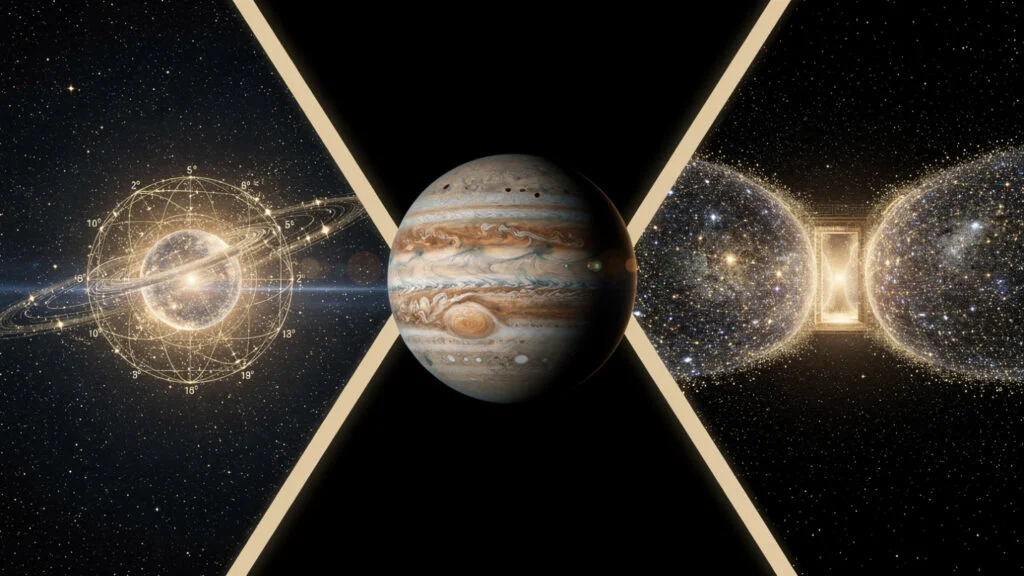
Wilfred Lambert, one of the twentieth century’s most authoritative scholars of Babylonian religious literature, argued that Nibiru in the Enuma Elish context refers to the planet Jupiter in its role as the marker of the celestial equator at the time of the spring equinox. The Babylonian astronomical tradition used planets as reference markers for celestial positions at periods of the precessional cycle, and Jupiter’s role as the equinox marker at the period of the Enuma Elish’s composition places it as the natural referent for the astronomical descriptions in the text.
David Brown, in his systematic analysis of Babylonian astronomical terminology, argued for a more complex interpretation: Nibiru in the Enuma Elish refers not to a celestial body but to an astronomical event or position, the crossing point of the ecliptic and the celestial equator, which different celestial bodies occupied at different periods due to precession. Under this interpretation, Nibiru is not a planet or a star in a fixed sense but a position that different objects can occupy at different times.
Wayne Horowitz, in his comprehensive study of Mesopotamian cosmic geography, noted that the Babylonian astronomical tablets use the term Nebiru, the variant spelling of Nibiru, consistently in the context of the planet Jupiter and in the context of the north-south meridian, the astronomical line that divides the sky into eastern and western halves. His analysis of the term across multiple Babylonian astronomical texts suggests that Nibiru or Nebiru had a technical astronomical meaning to the Babylonian observational tradition that is not fully captured by either the popular Nibiru interpretation or the simple Jupiter identification.
The three scholarly positions, Jupiter at the equinox, the crossing point as an astronomical event, and the meridian marker, are not mutually exclusive. They reflect the different contexts in which the term appears across the Babylonian astronomical literature and suggest that Nibiru was a functionally defined astronomical term whose referent depended on context rather than a fixed proper name for a single celestial body.
This is the scholarly debate. It is not a debate about whether a rogue planet exists in the outer solar system. It is a debate about what an astronomical term meant in a technical tradition two and a half thousand years ago.
Sitchin’s intervention in this debate was to set it aside entirely and propose a different identification based on a different reading of the creation narrative itself.
What Sitchin Did
Zecharia Sitchin’s The 12th Planet, published in 1976, proposed a reading of the Enuma Elish’s creation narrative that departed from the Assyriological consensus in a way that produced a completely different interpretation of the text’s cosmological content.
The mainstream Assyriological reading of the Marduk-Tiamat conflict treats it as a theological narrative in which the creation of the cosmos from the defeated chaos monster is a mythological expression of the Babylonian cosmological worldview. Tiamat is the primordial chaotic ocean. Marduk is the organizing principle of divine order. The conflict between them and Marduk’s victory produces the structured cosmos from the raw material of chaos. This is the standard mythological interpretation and it is supported by comparative mythology across the ancient Near East.
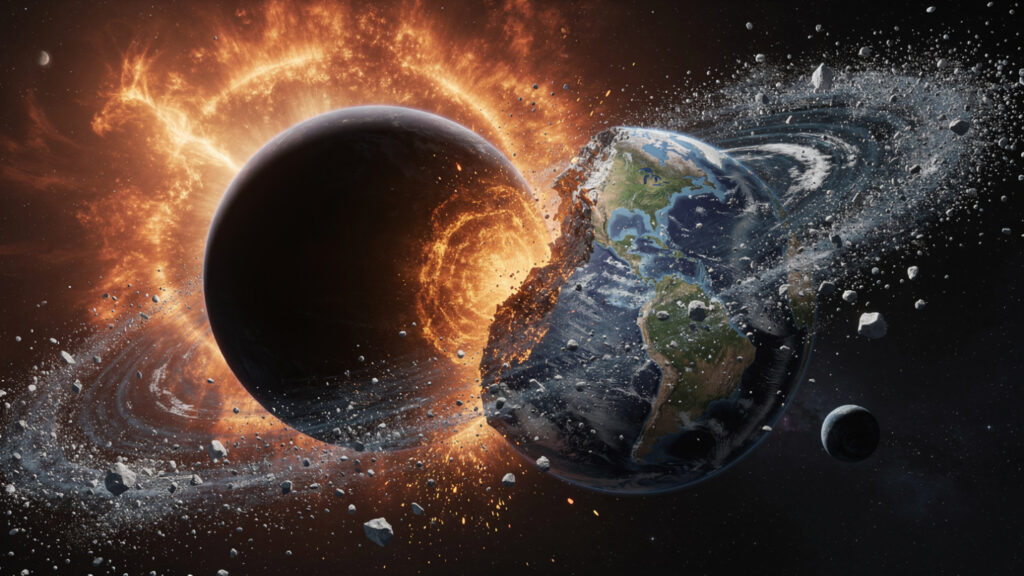
Sitchin proposed instead that the Enuma Elish encoded an astronomical event in mythological language: a planetary collision in the early solar system in which a large incoming planet, Nibiru or Marduk, collided with an earlier planet occupying the space between Mars and Jupiter, Tiamat, splitting it into two pieces. One piece became the Earth, relocated to its current orbit by the collision’s dynamics. The other piece and its debris became the asteroid belt. The Moon was captured from the debris of this event.
This reading is specific, internally coherent, and produces an astronomical prediction: the asteroid belt is the remains of a former planet called Tiamat that was destroyed by a collision with a large body called Nibiru or Marduk approximately four billion years ago.

Whether this reading is correct depends on whether the Enuma Elish’s narrative language about the battle between Marduk and Tiamat is better understood as encoding astronomical events in mythological vocabulary, which Sitchin argued, or as mythological narrative using astronomical imagery for theological rather than historical purposes, which mainstream Assyriology argues.
The astronomical prediction, that the asteroid belt is the debris of a former planet, is not unique to Sitchin. The exploded planet hypothesis, developed by Tom Van Flandern at the US Naval Observatory and subsequently published in mainstream astronomical literature, proposes the same origin for the asteroid belt from the analysis of asteroid orbital dynamics rather than from textual analysis of ancient mythology. The convergence of a mythological reading and an astronomical analysis on the same proposed event is the kind of multi-source convergence this library treats as significant even when neither source alone is sufficient to establish the claim.
The Enuma Elish’s Astronomical Specificity
What makes the Enuma Elish’s astronomical content interesting regardless of whether Sitchin’s reading is correct is the degree to which it is specifically astronomical rather than simply using astronomical imagery for theological decoration.
Tablets V and VI of the Enuma Elish describe Marduk’s organization of the celestial system in technical detail. He establishes the positions of the major constellations. He assigns days and months to celestial markers. He establishes the phases of the Moon and the relationship between lunar and solar cycles. He places stars in positions relative to each other. The astronomical content is not metaphorical. It is specific and technical in a way that reflects the Babylonian tradition’s genuine sophistication in observational astronomy.
The Babylonian astronomical tradition was one of the most advanced in the ancient world. The MUL.APIN astronomical compendium, a Babylonian text whose content was compiled by approximately 1000 BCE and preserved across multiple tablets, records a systematic observational astronomy program that tracked planetary positions, rising and setting times, and celestial events with a precision that historians of astronomy have consistently noted as remarkable for its period.
The Enuma Elish’s astronomical passages connect to this tradition. The text is not simply using astronomical imagery for theological purposes. It is embedding theological narrative in astronomical framework in a way that required genuine astronomical knowledge to compose and genuine astronomical knowledge to interpret.

Whether this astronomical framework encodes a historical event in the solar system’s formation period, as Sitchin argued, or whether it reflects the Babylonian tradition’s cosmological theology expressed through its most sophisticated intellectual tool, observational astronomy, is the interpretive question that the text poses without resolving.
Marduk and Tiamat as Astronomical History
The physical description of the Marduk-Tiamat conflict in the Enuma Elish contains elements whose astronomical specificity has been noted by researchers outside the Sitchin tradition.
The text describes Tiamat as accompanied by eleven creatures and as possessing physical characteristics that the text describes in more detail than the abstract chaos monster of comparative mythology typically receives. She has a tail. She has a body that can be divided. When Marduk divides her, he uses half of her body to form the sky and the other half to form the Earth, explicitly stating that her eyes become the sources of the Tigris and Euphrates rivers.
The division of a physical body into two pieces, one becoming the sky and one becoming the Earth, is a cosmological narrative that works as mythology but also works, in Sitchin’s reading, as a description of a physical collision producing two distinct astronomical outcomes from one original body.
Whether the physical specificity of the Tiamat description reflects genuine astronomical encoding or reflects the mythological tradition’s tendency to give dramatic physical form to its chaos monsters is not resolvable from the text alone. The fact that the description is more physically than comparative chaos monster mythology typically requires is the observation that motivates the astronomical reading without establishing it.
The Marduk figure’s physical description is equally specific in its astronomical implications. Marduk is described as approaching from the outer reaches of the cosmos. He is described as having four eyes and four ears, interpreted by some researchers as reflecting the four-fold symmetry of a body in orbit. He is described as illuminating the path before him as he travels. His approach produces gravitational effects on the other celestial bodies he passes.
The approach from the outer cosmos combined with the illuminating of the path, the gravitational effects on other bodies, and the eventual collision with the central object of the system describe the trajectory of a large body entering the inner solar system from a distant elliptical orbit. Whether this correspondence is intentional encoding, coincidental, or reflects the mythological tradition’s use of astronomical imagery for the dramatic staging of its narrative, is the question that the text’s interpretation turns on.
The Exploded Planet Hypothesis
Tom Van Flandern spent decades at the US Naval Observatory developing the observational case for the asteroid belt as the debris of a former planet. His arguments, published in mainstream astronomical journals and in his book Dark Matter, Missing Planets and New Comets in 1993, drew on the analysis of asteroid orbital dynamics to propose that the asteroid belt’s distribution is more consistent with the explosion of a single former planet than with the non-accretion of material that was prevented from forming a planet by Jupiter’s gravitational influence.
The non-accretion hypothesis is the mainstream explanation for the asteroid belt: the material in the belt never coalesced into a planet because Jupiter’s gravitational perturbations prevented the accretion process from completing. Van Flandern’s argument against this hypothesis was that the non-accretion scenario should produce a different orbital distribution than what is observed, and that the observed distribution is more consistent with the debris of a body that formed and then exploded.
Van Flandern’s additional argument was that the asteroid belt contains too little mass for the non-accretion hypothesis if the original material was uniformly distributed. The total mass of the asteroid belt is approximately 4 percent of the Moon’s mass, and Van Flandern argued that a former planet whose explosion produced the current distribution would have had a mass significantly larger than the current belt, implying that most of the material has been removed from the belt by gravitational interactions since the explosion.
The mainstream planetary science response to Van Flandern’s hypothesis has been skeptical, primarily on the grounds that the non-accretion model is more consistent with the overall structure of the solar system’s formation history as understood through numerical simulation. The debate has not been formally resolved in the sense of a definitive empirical test that would distinguish between the two hypotheses, because the relevant evidence is the current asteroid belt distribution, which both hypotheses can accommodate through different mechanisms.
The convergence of the Sumerian mythological tradition’s description of a cosmic body being divided into the sky and the Earth, Sitchin’s reading of this as a planetary collision, and Van Flandern’s independent astronomical argument for an exploded planet in the asteroid belt, is a triple convergence from three independent sources on the same proposed event. No single source establishes the event. The convergence is the pattern this library treats as warranting serious examination.
The Marduk Star in the Babylonian Sky
The Babylonian astronomical tradition’s identification of Nibiru with the star of Marduk, recorded across multiple cuneiform tablets in addition to the Enuma Elish, connects to a broader question about what the Babylonians understood Marduk’s celestial domain to be.
In the Babylonian astrological tradition, each major deity had a celestial body as their star or planet, whose movements and configurations were interpreted as expressions of the deity’s will and as indicators of future events. The celestial body associated with Marduk in most Babylonian astrological texts is the planet Jupiter.
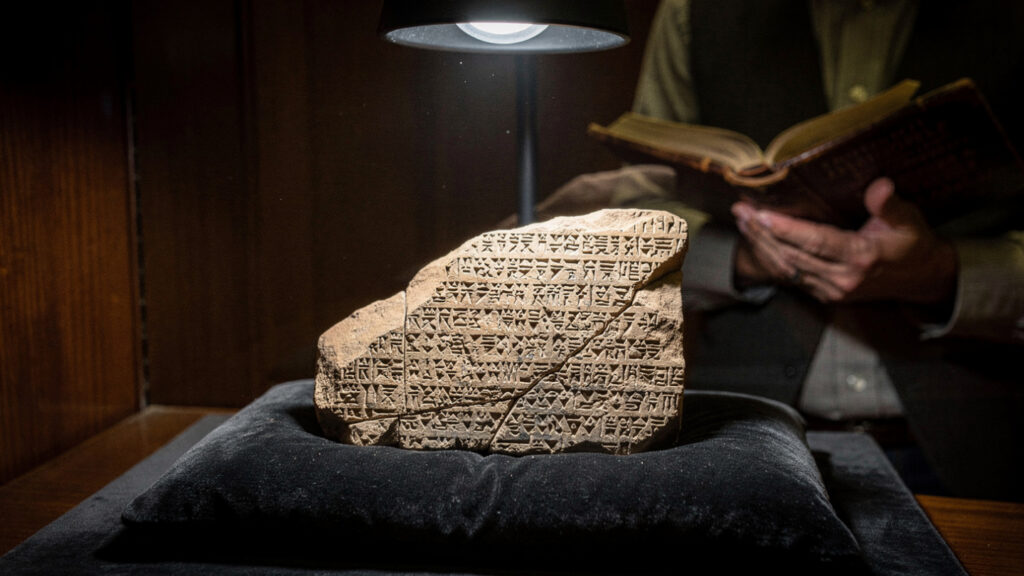
Jupiter’s identification as the star of Marduk is recorded consistently across Babylonian astrological literature and is accepted by mainstream Assyriology as the standard identification. The Babylonian astronomical name for Jupiter in many contexts is Nebiru or Nibiru, particularly when Jupiter occupies the position of the equinox marker.
This creates the ambiguity at the center of the Nibiru debate: when the Enuma Elish describes Nibiru as the star of Marduk whose position Marduk establishes at the apex of the celestial order, is it describing Jupiter in an astronomical role, or is it describing a different body that Marduk controls and that the popular tradition has identified as a rogue planet?
The textual ambiguity is genuine. The Babylonian astronomical tradition uses the same term for both Jupiter in a role and for the crossing point of the ecliptic in a more general astronomical sense. The popular Nibiru identification, a rogue planet on a 3,600-year orbit, requires reading the term as referring to a body not identified anywhere else in the Babylonian astronomical literature, whose orbital characteristics are not described in any Sumerian or Babylonian text.
Sitchin’s reading imposes an interpretation on an ambiguous term. The scholarly readings impose a different interpretation on the same ambiguous term. Neither interpretation accounts for all three appearances of the term in the Enuma Elish consistently.
The Tiamat-Earth Identification
Sitchin’s identification of Tiamat with a former planet whose collision with Nibiru produced the Earth and the asteroid belt is the element of his thesis that has generated the most scholarly criticism and the most astronomical discussion.
The Enuma Elish’s statement that one half of Tiamat’s body became the sky and the other half became the Earth is interpreted by Sitchin as describing a collision in which a planet was split, one fragment becoming the Earth in its current orbit and the other becoming the asteroid belt. The sky, in Sitchin’s reading, is the astronomical region above the asteroid belt.
The mainstream Assyriological reading treats the sky-Earth division as a standard ancient cosmological motif: the cosmos is divided into an upper and lower realm at creation, and the body of the defeated chaos monster is the material from which this division is made. This motif appears across multiple ancient Near Eastern mythological traditions and does not require an astronomical event to explain.
The problem with Sitchin’s reading that the Assyriological critics have consistently raised is the directional one: the Enuma Elish describes Marduk approaching from the heavens and Tiamat existing at the center of the primordial cosmos. If Tiamat was a planet in the asteroid belt’s current position and Nibiru was an incoming body, the directional description works. But the text’s cosmological geography does not straightforwardly map onto the solar system in the way Sitchin’s reading requires without significant interpretive work.
The interpretive work Sitchin performs is not arbitrary. He engages seriously with the terminology and grammar of the text and produces readings that are internally consistent with his overall thesis. Whether the readings are correct requires evaluating his linguistic arguments against the arguments of Assyriologists who read the same passages differently, and the linguistic evidence does not straightforwardly favor either position.
What the Text Is Doing
The Enuma Elish is simultaneously a theological text, an astronomical text, and a political text. The political dimension is the least discussed in the popular alternative archaeology tradition but is essential for understanding what the text was composed to accomplish.

The text was composed in Babylon during the period when Marduk’s cult achieved supremacy over the older Mesopotamian divine hierarchy. The theological argument the text makes is specific: Marduk is the greatest of the gods, greater than Enlil and Anu who had previously held supremacy, because he defeated Tiamat when no other god could, and because he established the astronomical order of the cosmos. The Nibiru passage in Tablets VI and VII is the culmination of this argument: Marduk establishes Nibiru at the apex of the celestial system, making it the central organizing reference point of the entire astronomical order.
Whether the astronomical content of the text encodes genuine astronomical history or is the product of the Babylonian astronomical tradition’s most sophisticated expression of theological narrative in astronomical terms, the text’s political purpose gives its language a context that the alternative archaeology reading tends to strip away. The Nibiru passages are making a theological and political argument about Marduk’s supremacy as much as they are making an astronomical statement about a celestial body.
This does not make the astronomical content irrelevant. The Babylonian tradition’s theological expression in astronomical terms was grounded in genuine observational astronomy, and the astronomical claims the text makes had to be consistent with the observed sky. But it means that the text is doing more than one thing at once, and that reading it primarily as an astronomical document encoding physical events requires privileging one of its functions over the others.
The Three Nibiruus and the Honest Reading
The honest reading of the Nibiru question in the Enuma Elish requires acknowledging what the text says in all three of its appearances rather than selecting the one that supports a predetermined interpretation.
The first Nibiru, the crossing point established by Marduk at the center of the celestial sphere, is most naturally read as an astronomical position rather than a body, consistent with the scholarly reading of Nibiru as the crossing point of the ecliptic and the celestial equator.
The second Nibiru, explicitly connected to Jupiter in the astronomical passages, is most naturally read as Jupiter in its role as the equinox marker, consistent with the scholarly identification of Nibiru with Jupiter in the Babylonian astronomical tradition.
The third Nibiru, described as the star of Marduk in the cosmological passages, is the most ambiguous and the most open to Sitchin’s reading, since it describes a celestial body that Marduk controls and that occupies a position in the astronomical order.
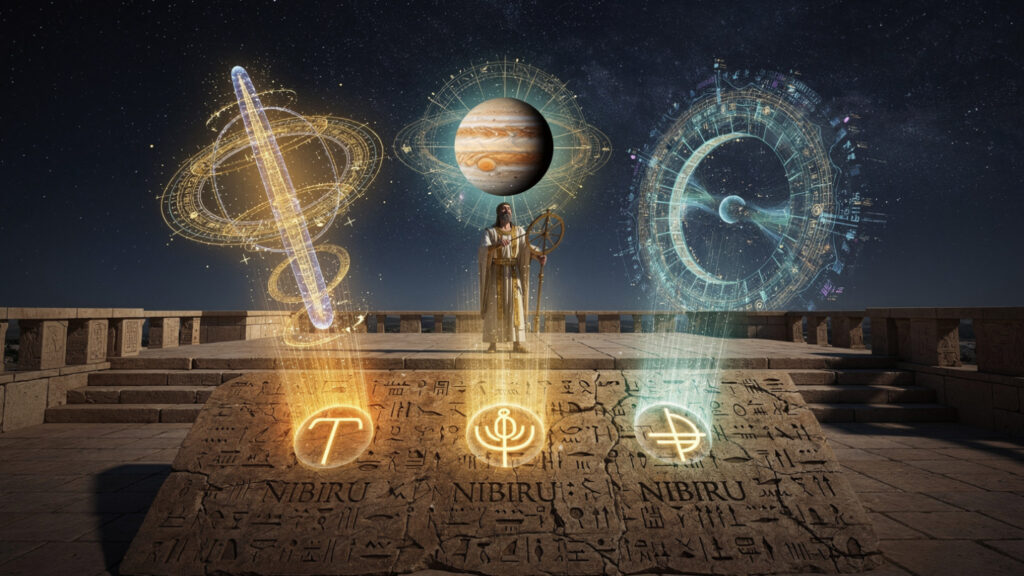
Whether the third Nibiru is the same Jupiter as the second Nibiru, a different celestial body from the first two, or a theologically defined position that different bodies can occupy at different times, is the question that the text does not resolve unambiguously.
Sitchin proposed that the third Nibiru is a large body on a 3,600-year elliptical orbit. The scholars propose that it is Jupiter. Neither reading accounts for all three appearances consistently. The text’s ambiguity is real and the debate it has generated reflects genuine interpretive uncertainty rather than simple scholarly error or alternative archaeology fabrication.
The Enuma Elish’s Nibiru is genuinely ambiguous. The ambiguity is the most honest thing that can be said about it. The popular tradition has collapsed the ambiguity into a certainty it does not warrant. The scholarly tradition has collapsed it into a different certainty it also does not warrant.
What the text actually says is more interesting than either certainty.