
There is an old way of looking at the people who live around the Sudd, one of the world’s great wetlands: as if a landscape this difficult to inhabit must have produced people who somehow never developed the ordinary human desire for something better. That story is not merely condescending. It is contradicted by the historical record. The Dinka, Nuer and Shilluk are modern political peoples with leaders, universities, armies, governments, diasporas and fierce arguments about their own future. And one of the clearest demonstrations of that fact came when they confronted one of the largest engineering projects ever proposed for their homeland and stopped it.
The project was the Jonglei Canal. It was designed to redirect water around the Sudd and reduce evaporation, potentially delivering more Nile water downstream to Egypt and Sudan. To its planners, the wetland could be treated as a hydrological problem: enormous quantities of water entered it, enormous quantities disappeared through evaporation, and a canal could theoretically capture some of what was being lost. To the people whose lives depended on the floodplain, however, the same water was not “lost” at all. It sustained fisheries, grazing, seasonal movement and an entire ecological system. The conflict that followed was therefore not a clash between civilization and a people who did not understand progress. It was a clash over what progress was supposed to mean, and who had the right to decide.
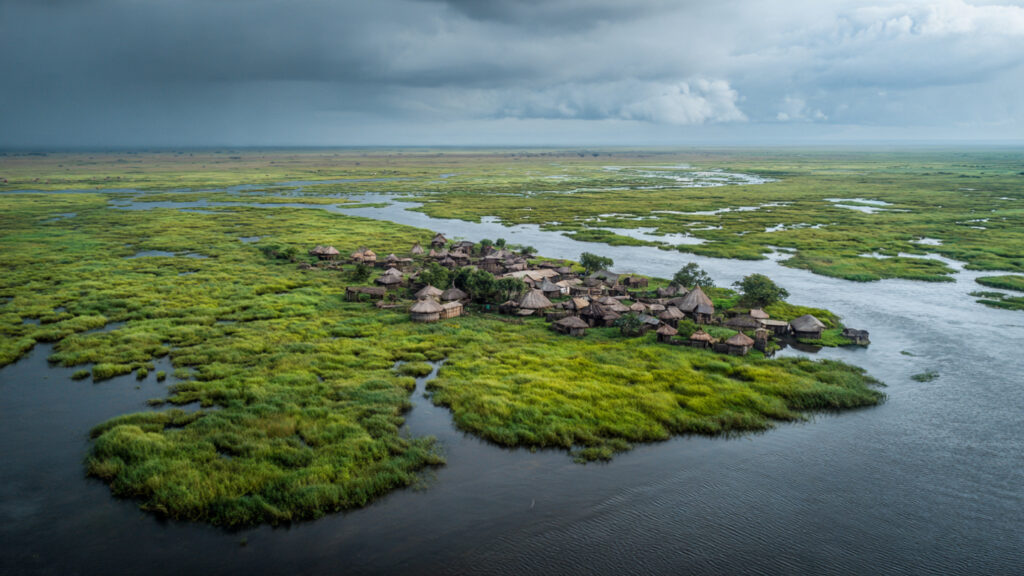
The People Outsiders Kept Mistaking for a Landscape
The first mistake is treating the people of the Sudd as though they are simply another feature of the wetland. The Dinka, Nuer and Shilluk are distinct peoples with related Nilotic linguistic and cultural histories, their societies shaped over generations by the particular environments in which they live. Their economies have included cattle keeping, agriculture, fishing and trade, while their political and social systems have been organized through complicated relationships among families, clans, communities and leaders. They are not an undifferentiated population frozen in some anthropological past. They are societies that have changed, argued, fought, adapted, migrated and built political movements just like societies everywhere else.
The Dinka are the largest ethnic group in South Sudan and have played an enormous role in the country’s modern political history. The Nuer are another major Nilotic population with their own political structures and history, while the Shilluk have long maintained communities along the Nile and combine agriculture and pastoral practices with an especially strong relationship to the riverine environment. Their common linguistic ancestry reaches deep into East African prehistory, but that depth should never be confused with cultural stasis. A five-thousand-year-old linguistic relationship does not mean five thousand years of unchanged social organization. It means exactly what it means: people have been changing for a very long time.
Modern South Sudan itself is evidence of that complexity. Independence came in 2011 after decades of war and political struggle. The country has a government, universities, an enormous global diaspora and political rivalries that can become extraordinarily bitter. Dinka, Nuer and Shilluk communities have not simply been acted upon by history. They have acted upon it themselves, sometimes cooperatively, sometimes violently, and often in ways that have determined the fate of the country around them.
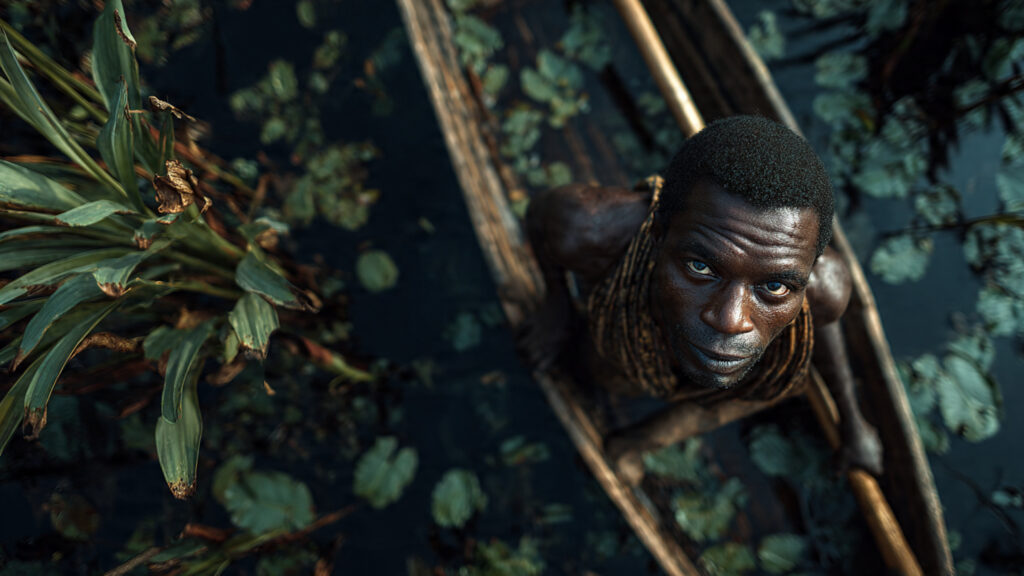
The Canal That Was Supposed to Make the Sudd More Efficient
The Jonglei Canal emerged from a very different way of seeing the wetland. Egypt had studied the idea as early as the 1940s, and more formal planning followed in the 1950s. The logic was straightforward on paper: the Sudd’s vast wetlands consume enormous quantities of Nile water through evaporation and plant transpiration, so why not excavate a canal that would carry the river around the swamp and deliver more water downstream?
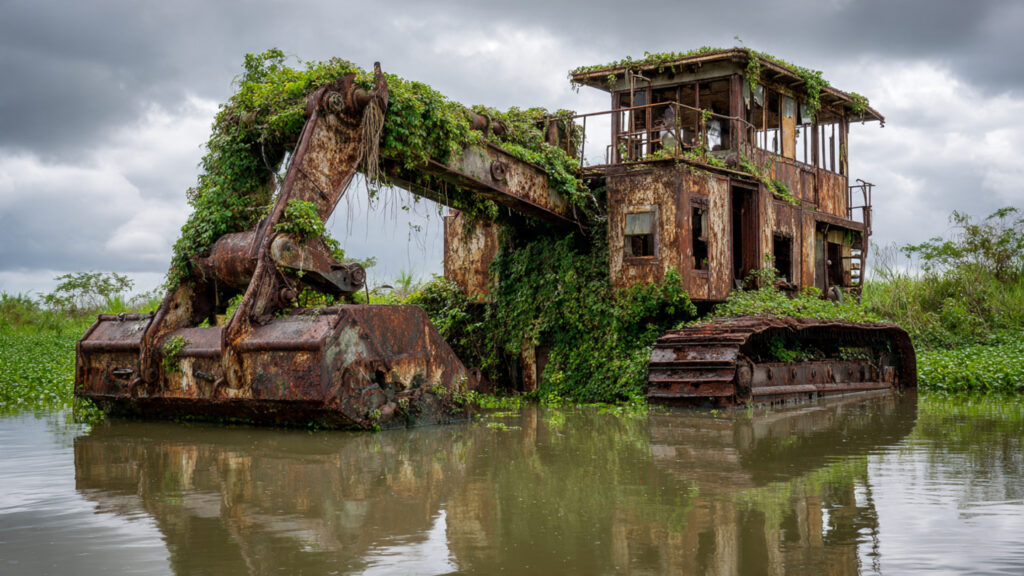
Construction finally began in 1978. The proposed canal would stretch roughly 360 kilometers between the Bor area and Malakal, cutting through a landscape that was not empty and had never been empty. A gigantic French-built excavator, nicknamed “Sarah,” was brought in to carve the channel. The machine weighed thousands of tons and worked for years. By 1984, roughly two-thirds of the planned canal had reportedly been excavated.
From an engineering perspective, it was an extraordinary undertaking. From the perspective of the communities living around the Sudd, it represented something else: an enormous intervention in the ecological system on which their livelihoods depended. The water that planners described as evaporative waste was also water feeding fish, grasses, floodplain agriculture and seasonal pasture. Changing the movement of that water could therefore change the entire economic landscape.
And then the political landscape changed.
John Garang Did Not Just Object. He Studied the Problem.
John Garang is the detail that destroys the stereotype most completely.
Garang was a Dinka man from what is now South Sudan, but his biography does not fit the image of an isolated pastoral society incapable of engaging with modern institutions. He studied at Grinnell College in Iowa, later earned a doctorate in agricultural economics from Iowa State University, and received military training in the United States. He returned to Sudan and eventually became one of the most important figures in the country’s modern history, founding and leading the Sudan People’s Liberation Army during the Second Sudanese Civil War.
Most revealingly, his academic work addressed the Jonglei Canal itself. The project was not simply something outsiders did to a population that failed to understand what was happening. Garang had examined its consequences in academic terms, including the threat it posed to Nilotic communities and their economic relationship with the Sudd.
That detail matters enormously. The familiar stereotype imagines a pastoral society seeing a gigantic machine arrive and somehow failing to understand what it meant. The historical picture is almost the reverse. A member of the community went into a modern university, studied economics, examined the proposed transformation of his homeland and then became a political and military leader of a movement that opposed the project.
In 1984, construction stopped when the SPLA attacked the project and the enormous excavator was abandoned. The canal was never completed.
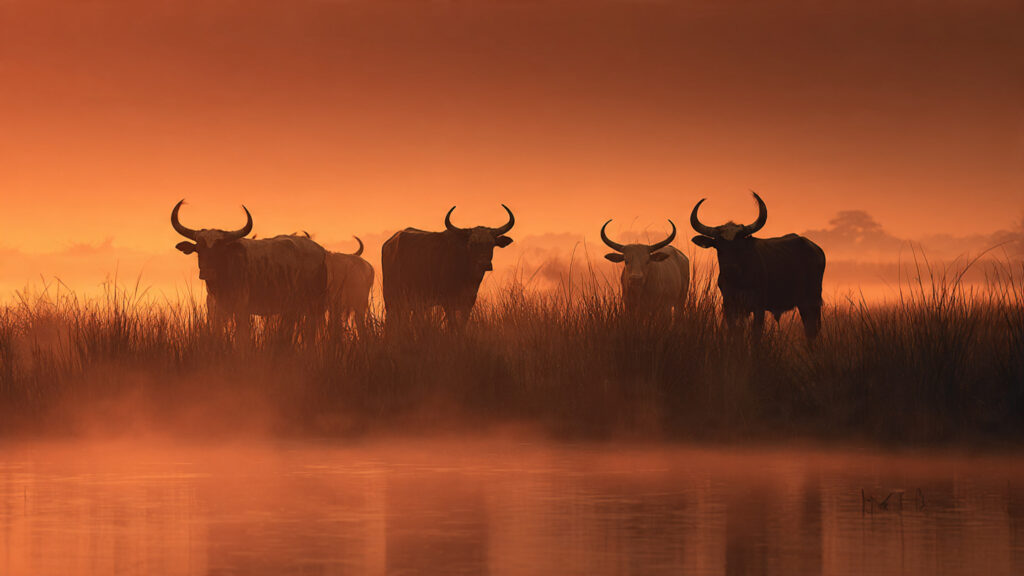
A Doctor, a Guerrilla Commander and a Vice President
Garang’s later life makes the point even harder to ignore. He was not simply an academic who wrote a dissertation and disappeared into obscurity. He became the principal leader of the SPLA and one of the central political figures in Sudan’s long civil war. The 2005 Comprehensive Peace Agreement transformed his position again. After decades of conflict, Garang became First Vice President of Sudan and head of the autonomous Government of Southern Sudan.
He remained in that position for only a few weeks.
On July 30, 2005, the helicopter carrying Garang back from Uganda crashed in bad weather, killing everyone aboard. The official explanation attributed the disaster to weather and pilot error. Yet suspicions about the crash never entirely disappeared. Questions have been raised about the circumstances of the journey, the absence of his normal security arrangements and later allegations concerning the investigation itself.
None of those facts establishes assassination. There is no basis for turning suspicion into a historical certainty. But the opposite mistake is just as unnecessary: pretending that every question surrounding the crash was conclusively answered. The responsible position is narrower. Garang died in an officially attributed helicopter accident, while some circumstances surrounding the crash have continued to generate allegations and doubt. The evidence does not allow those allegations to be upgraded into fact.
What is beyond dispute is the larger trajectory of his life. A boy from a rural Dinka community became a university graduate, a scholar, a soldier, a rebel commander and a national political leader. The man who helped stop the Jonglei Canal was not rejecting modernity. He was using some of its most powerful institutions, higher education, economics, military organization and political mobilization, to fight over what modernization should look like.

Why Cattle Are Not a Failure to Understand Wealth
The same misunderstanding appears in descriptions of Dinka and Nuer cattle culture. To an outsider accustomed to measuring wealth through bank accounts, property deeds, factories or financial markets, a society in which cattle occupy the center of economic and social life can look irrationally attached to animals. Anthropologists have documented something much more complicated.
Cattle can function as stores of wealth, sources of food and milk, objects of exchange, markers of social relationships and important components of marriage arrangements and religious life. Their value is not reducible to their meat or their market price. An animal can carry relationships between families across generations. It can be involved in marriage payments, inheritance, prestige and ritual. In that sense, cattle are not merely livestock. They are embedded inside a larger social economy.
That does not make the system uniquely mysterious. Human societies have repeatedly organized wealth and social obligations around whatever resources their environments make valuable: cattle, horses, land, rice, salt, sheep, camels, grain or currency. The interesting question is not why the Dinka and Nuer “do not understand” modern wealth. It is how effectively a particular economic system fits the ecological conditions in which it developed.
The Sudd makes that question especially important. Seasonal flooding changes where people and animals can move. Dry-season cattle camps and wet-season settlements are not evidence of an inability to build permanent lives. They are adaptations to a landscape whose most important feature is that it refuses to remain physically stable throughout the year.
To live successfully in such an environment requires memory. It requires knowing where pasture will emerge, where water will remain, how the flood cycle changes movement, where fish can be found and when particular routes become usable. That knowledge may not look like a concrete city or an industrial machine, but it is still infrastructure. It simply exists inside people rather than being poured into steel and concrete.
Even the Sudd’s Methane Gets Misunderstood
The ecological story has its own version of the same problem. The Sudd is a huge tropical wetland, and waterlogged soils create ideal conditions for microbes that produce methane as organic material decomposes without oxygen. Wetlands are therefore important natural sources of methane, and the Sudd is part of that global carbon cycle.
Methane is also a powerful greenhouse gas. Its warming effect per molecule is substantially greater than carbon dioxide over the commonly used hundred-year comparison period. But there is an important distinction between saying that a wetland naturally emits methane and saying that those natural emissions somehow make industrial emissions unimportant. They do not.
Natural and human-caused methane emissions belong to the same atmospheric system, but they are not interchangeable explanations for the recent rise in greenhouse-gas concentrations. Wetlands are part of the natural carbon cycle. Fossil-fuel extraction, agriculture, waste and other human activities add additional methane to the atmosphere. The existence of a natural source does not cancel the effect of an anthropogenic one.
Once again, the Sudd does not need a sensational claim to become interesting. Its actual ecology is strange enough.
The Canal Reveals the Real Story
There is a deeper irony running through the entire history.
For decades, the Sudd could be described from the outside as an obstacle: too wet, too remote, too difficult to traverse, too inefficient for the water requirements of countries downstream. The proposed Jonglei Canal represented the opposite philosophy. Straighten the water. Accelerate the flow. Reduce evaporation. Make the landscape produce more.
But the people living there already knew that the water was producing something.
It produced fish. It produced pasture. It produced seasonal agricultural possibilities. It shaped migration routes and settlements. It supported cattle economies and the social systems built around them. It created an ecological environment to which generations of people had adapted. What appeared on an engineering balance sheet as “lost water” could therefore be a resource on somebody else’s balance sheet.
That does not mean every traditional practice is automatically sustainable, every Nilotic political movement is morally justified, or every argument against development is correct. It means something much more basic: development always has winners and losers, and the people living on the landscape are not automatically irrational because they calculate those costs differently from an engineer, a government ministry or a downstream state.
The Sudd Does Not Need to Be Romanticized Either
There is an equal and opposite mistake worth avoiding. Once the stereotype of the “primitive” Nilotic people is rejected, it is tempting to replace it with another fantasy: the noble pastoralist living in perfect harmony with nature, untouched by modernity and somehow wiser than everyone outside the wetland.
That story is just another form of exoticization.
The Dinka, Nuer and Shilluk are human societies, which means they contain ambition, generosity, conflict, political calculation, religious conviction, economic competition, cooperation and violence. Their histories include civil war and displacement as well as extraordinary resilience. Their leaders have made consequential mistakes as well as consequential decisions. Their communities are connected to global politics, international institutions and diaspora networks. They do not need to be portrayed as either primitive victims or ecological saints.
They are more interesting than either stereotype allows.
What the Sudd Actually Teaches
The most revealing fact about the Sudd may therefore be the one that sounds least mysterious. People adapted to it.
They developed economies around cattle, fish and agriculture. They learned the rhythms of a wetland that changes dramatically with the seasons. They built political institutions and social networks capable of surviving enormous upheavals. They produced scholars and soldiers, politicians and intellectuals. And when an enormous foreign-backed engineering project threatened to transform the environment on which their communities depended, they did not sit helplessly beside the excavator and wonder what progress meant.
One of them studied the project.
Then he helped stop it.
That is why John Garang matters to this story. Not because he represents some romantic triumph of an ancient culture over modern technology, but because he destroys the premise that the people of the Sudd somehow stand outside history. Garang understood universities. He understood economics. He understood military organization. He understood the state. He understood the politics of water. And he understood that what looked like an empty wetland to someone drawing a canal on a map was somebody else’s homeland.
The Sudd is extraordinary. Its ecology is extraordinary. Its methane cycle is worth measuring. Its floating vegetation, fisheries and seasonal landscapes deserve serious scientific study.
But the people living there are not extraordinary because they somehow escaped modernity.
They are extraordinary for the much more ordinary reason that they are human beings who have spent generations figuring out how to live in a difficult place, and who, when outsiders tried to decide what their future should look like, proved capable of deciding for themselves.