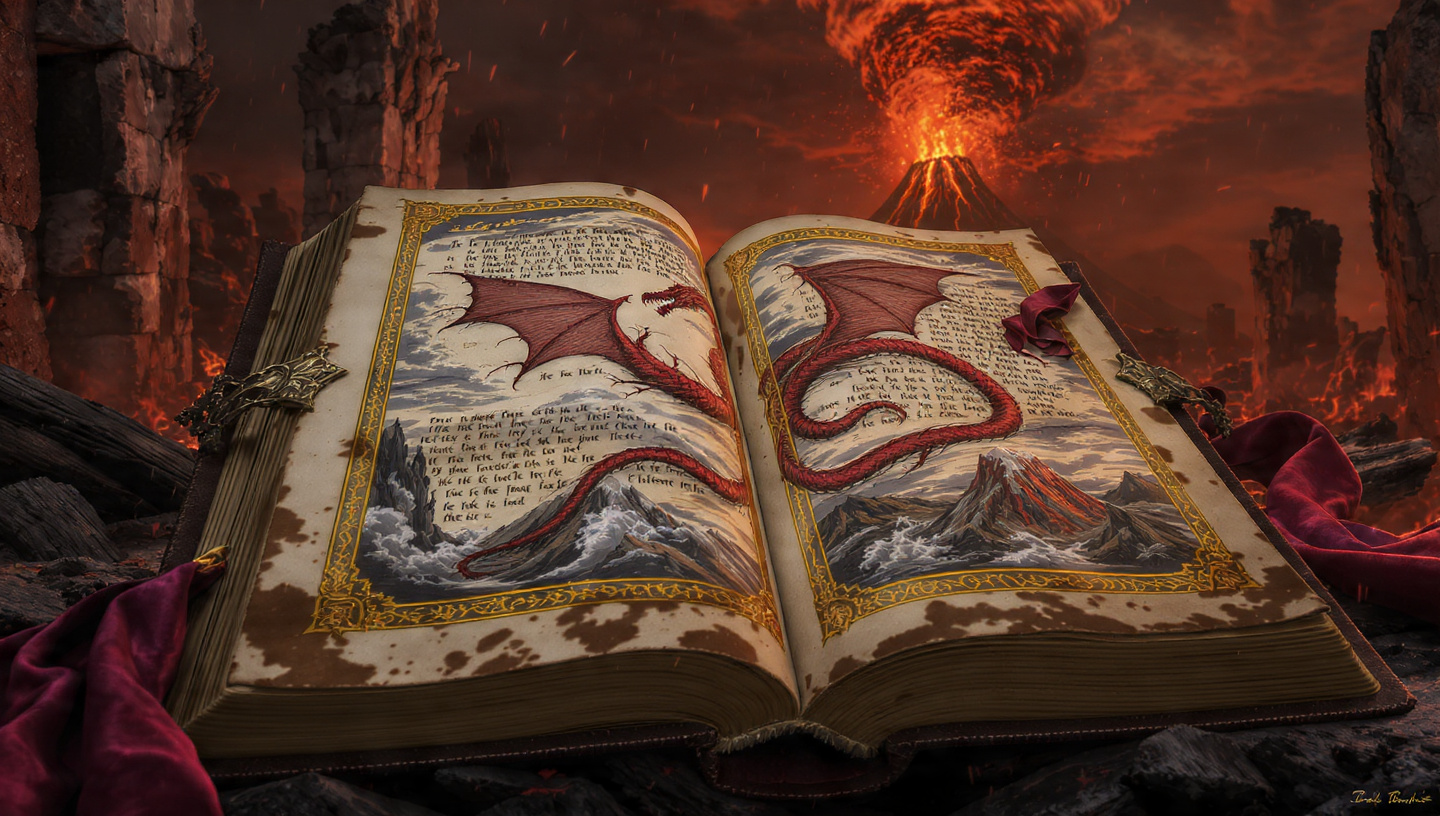
Glastonbury Abbey really did burn in 1184. Books really were destroyed. Henry II really was king. What has never been established is the part of the story that came afterward: that an ancient Egyptian-Celtic manuscript survived the fire, was secretly carried to Scotland, transcribed onto bronze, passed through hidden religious custodians and eventually became the modern Kolbrin Bible. One version of the legend even blames Edward I for the 1184 destruction, a chronological impossibility, since Edward was not born until 1239. But that mistake is not actually the deepest problem. The deeper problem is that, once you follow the manuscript backward, the documentary trail disappears.
That distinction matters. The Kolbrin is not interesting because someone made up a fire that never happened. The fire happened. Glastonbury was a real medieval monastery with a real library and a genuinely catastrophic blaze. What is missing is evidence that the particular ancient text now marketed as the Kolbrin was there, survived, and continued through the centuries in anything resembling the form claimed for it. The result is stranger than a simple hoax story: a real historical disaster became the anchor point for a much later manuscript tradition whose ancient provenance cannot be independently demonstrated.
- The Date That Exposes One Version of the Legend
- The Fire Really Happened
- What the Modern Kolbrin Actually Tells Us
- The Earliest Modern Trail Is Much Easier to Follow
- The Catastrophe Stories Are Real. That Doesn’t Authenticate the Kolbrin.
- Why the “Sea Nation” Can Mean Almost Anything
- A Modern Text Reaching for Ancient Authority
- The Fire Is Not the Proof. It Is the Missing Link.
The Date That Exposes One Version of the Legend
Some modern retellings attribute the 1184 destruction of the Kolbrin to Edward I, sometimes identified as Longshanks. That cannot be correct. Edward I was born in 1239, fifty-five years after the Glastonbury fire. He could not have ordered an event that occurred before his birth. There is no interpretive controversy here and no obscure chronology to resolve. The dates simply do not overlap.
But there is an important complication that makes the investigation more interesting. The current Kolbrin publishing tradition, including the publisher’s own official website, consistently attributes the 1184 attack to Henry II, who actually was king at the time. The publisher’s own modern account says that Henry II ordered an attack on Glastonbury after accusing its priests of heresy, and that surviving priests escaped with the remaining texts. In other words, the Edward I error is useful evidence against a particular retelling of the legend, but it should not be presented as though the Kolbrin’s current publishers universally make that mistake, because they don’t. The more serious question is what evidence exists for the underlying manuscript story after we correct the king’s name.
The Fire Really Happened
This is where the investigation has to resist the temptation to make the story easier than it really is. Glastonbury Abbey was not invented to give the Kolbrin a medieval pedigree. A devastating fire swept through the abbey in 1184 and destroyed much of the church and monastic complex. Archaeological work has identified extensive evidence of burning, while historical sources record the destruction. The abbey’s own archaeological history states that the fire destroyed the Old Church, and Cambridge scholarship notes that later Glastonbury chroniclers reported books being lost in the disaster.
There is therefore a genuine historical event sitting at the center of the legend. That makes the provenance question more difficult, not less. Medieval monasteries contained books. Glastonbury possessed a substantial literary tradition. A major fire could destroy manuscripts, relics and records. It is entirely reasonable that some material was lost. But “books were destroyed at Glastonbury” is not the same proposition as “the Kolbrin was one of the books destroyed there and its surviving contents were secretly transmitted for centuries.” The second claim requires its own evidence.
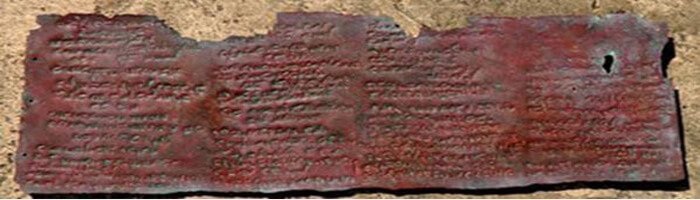
And that evidence is where the story becomes thin. There is no securely documented medieval catalogue identifying a manuscript called the Kolbrin, no authenticated 12th-century copy available for examination, no independently verified bronze manuscript surviving from the supposed post-fire transcription, and no continuous chain of custody carrying the text from Glastonbury through medieval Scotland into the modern period. A historical fire can establish the possibility that manuscripts were lost. It cannot establish the identity of a manuscript that has no independently documented trail through the intervening centuries.

What the Modern Kolbrin Actually Tells Us
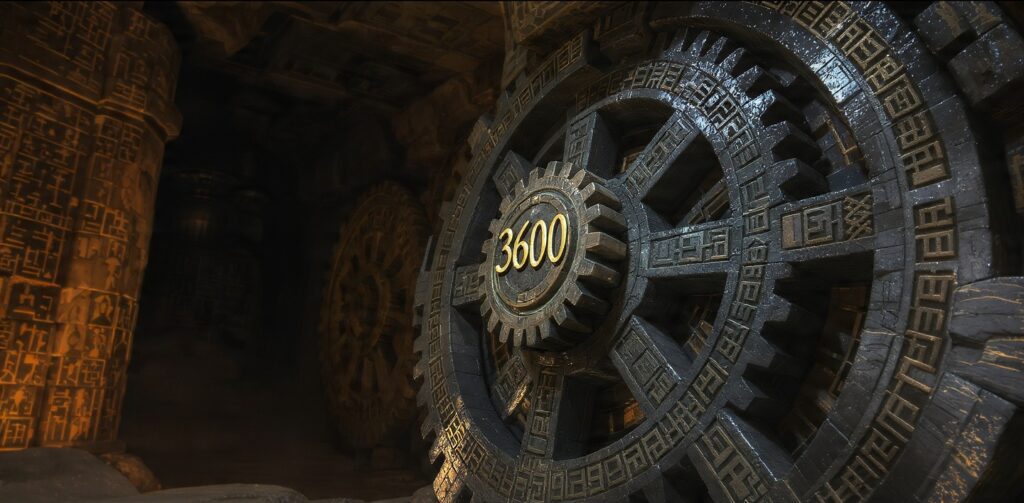
The surviving publication record is considerably more recent than the 3,600-year chronology often attached to the work. The Kolbrin Bible: 21st Century Master Edition was published by Your Own World Books in 2005, with a second edition in 2006. Its own bibliographic material identifies the final compilation as nineteenth-century Britain and identifies the Kolbrin citation system with Marshall Masters in 2005-2006. That does not mean the publishers are claiming the ideas themselves were invented in the nineteenth century. They are explicitly presenting the modern book as the latest stage in a much older textual history. But it does establish something important: the physical and editorial object that readers can actually examine today is a modern compilation.
The publisher’s own account goes much further. It describes the work as an 11-book anthology divided into Egyptian and Celtic sections and assigns enormous antiquity to its constituent material. It says the Egyptian texts originated thousands of years ago, passed through Phoenician intermediaries and eventually reached Celtic priests in Britain. It then describes the 1184 Glastonbury fire, the flight to Scotland, the transcription onto bronze, an eventual merging of texts in the 18th century and modernization in later centuries. That is an elaborate provenance story. The problem is that most of the crucial links in that chain are claims made by the modern tradition itself rather than independently authenticated documents from the periods in question.
There is an especially revealing qualification in the material surrounding the modern text. The tradition acknowledges that considerable reconstruction occurred, stating directly that “additional material has been incorporated with good intent, to fill gaps and elaborate on the original,” and explicitly making “no claim regarding historical accuracy.” That admission does not automatically prove that every underlying tradition is fictional. It does, however, make the popular image of an untouched 3,600-year-old manuscript misleading. What exists today is a reconstructed, edited and modernly published corpus whose relationship to any alleged ancient originals remains unverified.
The Earliest Modern Trail Is Much Easier to Follow
There is another chronological detail worth following because it changes the shape of the mystery. In 2003, physicist and author James McCanney self-published Atlantis to Tesla: The Kolbrin Connection, and appeared that year on Coast to Coast AM describing the Kolbrin as a source concerning catastrophic devastation caused by comets and connecting its warnings to an approaching threat. This is important not because McCanney necessarily created the tradition, but because it places the modern apocalyptic use of the Kolbrin in a clearly documented early-21st-century context, one already associated with McCanney’s broader work promoting Planet X and cometary catastrophe theories.
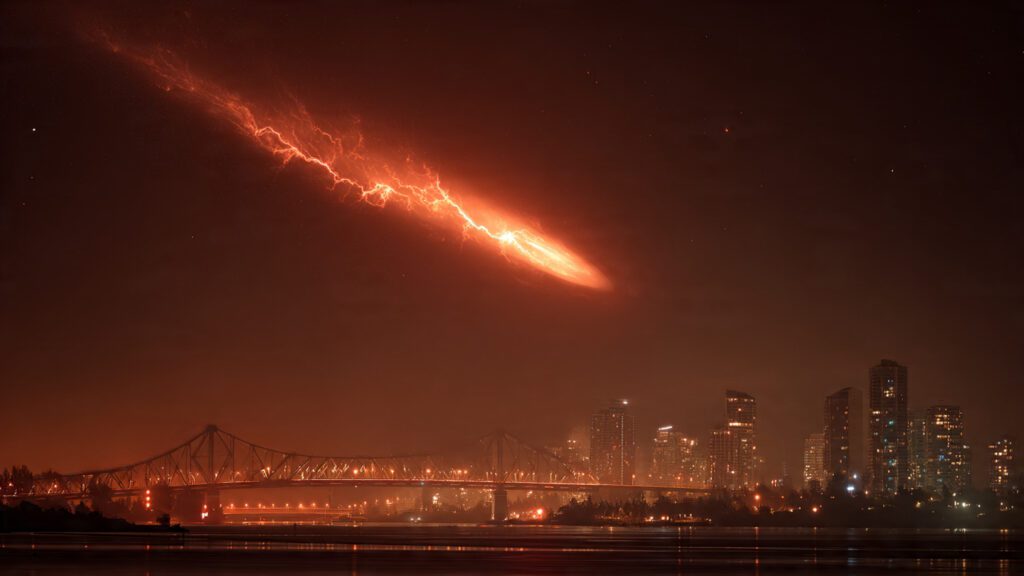
That matters because the Kolbrin’s modern reputation is inseparable from its catastrophe narrative. The book has been promoted as containing warnings about a recurring celestial “Destroyer,” sometimes connected in modern interpretations with Nibiru, Planet X, cometary catastrophes and the end of civilization. By the years surrounding 2012, the text had become part of a wider apocalyptic ecosystem in which ancient prophecy, planetary cycles and modern astronomy were repeatedly blended together. Whatever the deeper history of the manuscript tradition might be, this modern layer is comparatively easy to document.
The Catastrophe Stories Are Real. That Doesn’t Authenticate the Kolbrin.
This is where the investigation becomes genuinely interesting, because the Kolbrin’s apocalyptic imagery did not emerge from nowhere. Ancient cultures really did tell stories about destruction by fire, flood, celestial phenomena and the collapse of previous worlds. The biblical Book of Revelation contains the famous image of a great burning star called Wormwood falling upon the waters. Greek tradition preserves the story of Phaethon, who loses control of the sun’s chariot and scorches the earth. Plato’s Timaeus and Critias discuss destruction by fire and flood as part of a broader account of civilizations rising and falling. Vedic literature contains ancient traditions involving cosmic conflict, drought, water and the restoration of order.
These traditions are worth studying because they reveal something real about human attempts to understand catastrophe. Civilizations have always watched the sky. They have watched rivers rise, volcanoes erupt, crops fail and kingdoms disappear. They have experienced eclipses, comets, meteor events, floods, earthquakes and droughts without possessing modern geology or astronomy to explain them. It is therefore unsurprising that celestial and environmental catastrophe became powerful mythological language.
But a recurring human motif is not evidence that a particular modern book preserves a lost prehistoric document. The fact that Plato, biblical authors, Indian traditions and other cultures contain stories about catastrophe tells us something about the antiquity of catastrophe mythology. It does not independently authenticate the Kolbrin’s alleged Egyptian source material. The distinction is crucial: a text can participate in an ancient tradition without itself being an ancient text.

Why the “Sea Nation” Can Mean Almost Anything
The same problem appears when modern readers turn the Kolbrin’s vague political imagery into prophecy. Descriptions involving a “sea nation,” a corrupt power or a “merchant nation” can sound astonishingly specific when presented after the reader has already been told what they supposedly predict. But remove the proposed target and the language becomes much more flexible. A maritime empire, a trading civilization, a colonial power, Britain, the United States, Rome or another dominant commercial state can potentially be fitted into broad descriptions of wealth, corruption, expansion and conflict.
This is the same interpretive problem that repeatedly appears in prophetic literature. The less precise the original statement, the more historical events can later be mapped onto it. A prophecy that names a city, ruler, date and event leaves relatively little room for adjustment. A prophecy about a powerful nation becoming corrupt and suffering catastrophe has an enormous number of possible destinations. The match feels remarkable only after the interpreter has selected the target.
That does not make every prophetic tradition meaningless. It means that prophecy has to be evaluated before the outcome is known, not after the interpreter has chosen the historical event that best fits the language. Otherwise almost any sufficiently dramatic passage can become “accurate” eventually.

A Modern Text Reaching for Ancient Authority
The most defensible conclusion is therefore narrower than either extreme. There is no need to declare that every idea in the Kolbrin was consciously fabricated by a single modern author. Nor is there evidence sufficient to treat the surviving book as a securely authenticated 3,600-year-old manuscript. What can be demonstrated is that the modern textual object has a recent publication history, that its surviving form has undergone substantial reconstruction and editing, that its ancient provenance rests primarily on a tradition supplied by modern publishers and custodians, and that the documentary chain needed to independently establish that provenance is missing.
That distinction also explains why the story is so difficult to kill with a single debunking fact. Correct the Edward I error and the defenders can substitute Henry II, correctly. Point out the absence of an ancient manuscript and the answer can be that the original was destroyed. Ask for the chain of custody and the answer can be that the custodians were secretive. Ask why no medieval scholar cited the text and the explanation can be that the manuscript was deliberately hidden. Each missing piece can be converted into another reason the evidence supposedly cannot exist.
But historical authentication works in the opposite direction. A claim becomes stronger when independent evidence converges on it. A manuscript has provenance. A catalogue records it. Earlier writers quote it. Paleography and material analysis place it in the claimed period. Copies can be compared. Ownership records connect one generation to another. Variants can be traced. The older the claimed document, the more valuable those independent lines of evidence become.
The Fire Is Not the Proof. It Is the Missing Link.
The most fascinating part of the Kolbrin story is therefore not that one edition once blamed the wrong king. It is that a completely real historical event provides the perfect setting for a manuscript whose earlier existence cannot be independently demonstrated. Glastonbury burned. Books were lost. Medieval England really did contain manuscripts that vanished forever. Henry II really did rule when the fire occurred. All of those facts are solid enough to make the story sound plausible.
What is not solid is the bridge between those facts and the modern Kolbrin. There is no independently authenticated 3,600-year-old manuscript sitting at the end of the chain. There is no securely documented medieval copy establishing continuity from ancient Egypt or Celtic Britain. There is no surviving provenance that carries the text through the centuries independently of the modern tradition that asserts the provenance. And there is no scientific or historical authentication that transforms the modern compilation into the ancient artifact it is often presented as.
That leaves a much more interesting mystery than the one the marketing offers. The question is no longer, “What secret did the ancients hide about the Destroyer?” It is, “When did the story of the Kolbrin become the story we know today, who assembled its surviving form, and how did a modern catastrophe text acquire an ancient biography?”
The Glastonbury fire was real. The books were real. The medieval world really did lose texts that can never be recovered. But a real fire cannot authenticate a manuscript simply because a later tradition says that manuscript was there.
The decisive evidence is not hidden behind a secret monastery door. It is the provenance, and for the 3,600-year-old Kolbrin, that chain still has a very large gap where the evidence should be.