

The unsettling part of the Mandela Effect isn’t that reality may have changed. It’s that human memory can produce the same wrong answer in different minds, sometimes with enough confidence that the error feels like evidence. A logo acquires an object that was never there. A movie line becomes more familiar in a form nobody actually said. A children’s book acquires a spelling that seems so obviously correct that the real one looks wrong. And in 2022, psychologists demonstrated experimentally that certain visual images really can trigger the same specific false memory across different people.
That doesn’t prove parallel universes, timeline shifts, government manipulation, or a hidden alteration of history. It establishes something stranger in a quieter way: memory is not a recording of the past. It is a reconstruction of the past, and under the right conditions, different brains exposed to the same cultural material can reconstruct the same mistake.
The Name Came From a False Memory About Nelson Mandela
The phenomenon has a remarkably traceable origin. Fiona Broome says the conversation that gave the phenomenon its name began at Dragon Con in 2009, when she mentioned her vivid memory that Nelson Mandela had died in prison during the 1980s. She remembered news coverage, mourning, and other details surrounding an event that had never happened. Mandela was released from prison in 1990, became president of South Africa in 1994, and died in 2013. What caught Broome’s attention was not merely discovering that her own memory was wrong. Another person told her that they remembered Mandela dying in prison too, prompting her to investigate whether other people shared the same memory. She subsequently created MandelaEffect.com and began collecting similar reports. The name therefore began as a description of a curious cultural phenomenon, not as a scientific theory about alternate realities.
That distinction matters because the original community quickly developed explanations far beyond psychology. Broome herself has described parallel realities as one speculative possibility, while explicitly acknowledging that it was a theory rather than an established explanation. The existence of the Mandela Effect as a phenomenon therefore does not settle the question of what causes individual cases. The interesting scientific question is narrower and much more testable: can people who have never coordinated with one another independently produce the same specific false memory?
Memory Was Never a Video Recording
Long before anyone called this the Mandela Effect, psychologists were already discovering that remembering is an active reconstruction rather than a literal playback. In Remembering, published in 1932, British psychologist Frederic Bartlett argued that recollection depends heavily on schemas, organized expectations and knowledge that help the mind make sense of incomplete information. His central insight has survived even though individual details of his experiments have been debated: when people remember, they do not simply retrieve an untouched recording of the past. They reconstruct it using what remains available and what the mind considers plausible.
That makes intuitive sense once you notice what memory is actually being asked to do. The brain does not need to preserve every pixel, syllable, and peripheral detail of every experience. It needs to extract what matters, connect it to existing knowledge, and retrieve something useful later. That system is extraordinarily powerful, but it creates a predictable vulnerability: a detail that fits the surrounding pattern can sometimes feel as though it was actually experienced, the same gap between vivid subjective certainty and objective accuracy that shows up whenever altered states of consciousness are examined against what actually happened.
The Laboratory Can Make People Remember Words That Were Never Said
One of the clearest demonstrations comes from the Deese-Roediger-McDermott paradigm. James Deese showed in 1959 that people could falsely recall a related word that had never appeared in a studied list. Henry Roediger III and Kathleen McDermott revived and expanded the method in their landmark 1995 experiments. Participants studied lists of strongly related words and were later asked what they remembered. A critical word that had never appeared could nevertheless be recalled and recognized with striking frequency and confidence. In the original experiments, false recall of the critical nonpresented words was substantial, and later work showed that the effect can persist across delays.
The important point is not that the brain is simply malfunctioning. The false word is usually related to the entire structure of what the person actually encountered. The mind has extracted the semantic pattern and then, during retrieval, produced an item that belongs to that pattern even though it was never presented. In other words, the error is generated by the same machinery that normally makes memory useful.
Then Scientists Tested the Mandela Effect Itself
This is where the story becomes substantially more interesting than the usual internet argument. In 2022, Deepasri Prasad and Wilma Bainbridge published a study in Psychological Science specifically investigating what they called the Visual Mandela Effect. They showed that certain familiar cultural images reliably produced particular false-memory errors across participants. The Monopoly Man, for example, is frequently remembered with a monocle even though the canonical character does not have one. Across a series of experiments, participants produced consistent, specific errors rather than simply making random mistakes. The researchers also found that the effect could occur spontaneously during recall and did not appear to be explained simply by people paying more attention to one visual feature than another.
That finding deserves careful wording. It does not demonstrate that every famous Mandela Effect has one universal psychological cause. The researchers themselves argue that different images may produce the effect for different reasons, including schema-based associations, visual experience, or other properties of the images. What the experiment establishes is more modest and more powerful: shared, specific false memories are experimentally observable. You do not need millions of people secretly communicating with one another to make identical mistakes possible.
Why the Famous Examples Work So Well
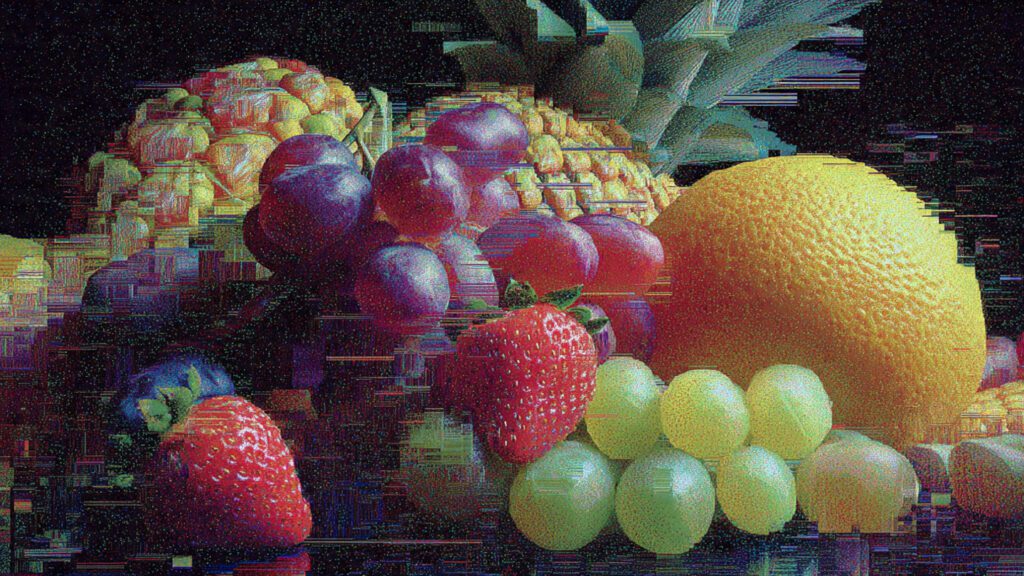
Consider the Fruit of the Loom cornucopia. Large numbers of people remember the fruit spilling out of a horn-shaped basket that was never part of the company’s logo. Fruit of the Loom itself explicitly states that the cornucopia was never part of its registered logo and has addressed the recurring claim as a classic Mandela Effect example. The error is nevertheless psychologically coherent: fruit and cornucopias are strongly associated cultural images, so the invented object does not feel absurd when inserted into the logo. It feels obvious.
The same principle appears in the Berenstain Bears, whose spelling many people remember as Berenstein. In Darth Vader’s famous line from The Empire Strikes Back, commonly quoted as “Luke, I am your father” even though the actual line begins “No, I am your father”, and in the Monopoly mascot, frequently remembered with a monocle despite the canonical character lacking one. These examples should not all be treated as though science has conclusively demonstrated one mechanism for each. Some may be strengthened by linguistic expectations, cultural associations, repeated misquotation, exposure to unofficial images, or schema-driven reconstruction. The common thread is that the wrong version is usually not random. It is plausible.
The Missing Ingredient Is Often Social
There is another piece of the puzzle that matters enormously in the age of the internet: memories do not develop in isolation. People compare recollections, hear other people’s versions, encounter photographs and fan art, absorb quotations, and repeatedly encounter the same descriptions. Memory can therefore become socially synchronized without anyone deliberately conspiring to synchronize it.
A 2022 Scientific Reports study demonstrated that social interaction can contribute to false memories even without one person deliberately supplying misinformation to another. Participants exposed to information through a partner subsequently showed more false memories for related material, including memories experienced with substantial subjective richness. Other research has long documented social contagion and memory conformity. This does not mean that every Mandela Effect was created by an internet meme. It means that the boundary between individual memory and shared cultural memory is much less rigid than intuition suggests.
And once a mistaken version becomes culturally available, the mechanism can become self-reinforcing. Someone misremembers a logo. Someone else recognizes the same error. A website lists it. A video repeats it. A meme turns it into a question. People who already possess the same expectation suddenly receive confirmation that others “remember it too.” The shared memory now has a social history of its own, even though the underlying event never occurred in the form remembered.
This Is Where the Conspiracy Explanation Loses Its Advantage
Parallel universes are an entertaining hypothesis. Timeline manipulation is a powerful science-fiction premise. Deliberate institutional rewriting of history would be an extraordinary discovery if evidence for it existed. But none of those explanations is required to account for the phenomenon demonstrated in the laboratory. Cognitive science already contains mechanisms capable of producing false memories, high confidence, schema-consistent errors, and socially shared recollections. That does not logically prove that no other explanation could ever exist. It means the extraordinary explanation carries an evidentiary burden that the ordinary mechanisms do not.
There is also an important distinction between a shared false memory and a false claim about the historical record. The fact that many people remember something does not make the remembered event more historically probable. If anything, the Mandela Effect demonstrates why independent documentation matters. The stronger the memory feels, the more valuable it becomes to compare that feeling against photographs, recordings, contemporaneous newspapers, corporate archives, published texts, and other records created independently of the recollection being tested.
The Real Mystery Is Not That We Remember Wrong
The real mystery is why the wrong memory can feel so much like the right one.
That question is now considerably less mysterious than it once was. Human memory is constructive. Semantic associations can generate details that never occurred. Visual schemas can bias what familiar objects look like in recollection. Social interaction can reshape remembering. And controlled experiments show that particular cultural images can trigger the same specific false memory in different people. None of this makes the experience meaningless. Quite the opposite. It reveals something profound about how a human mind turns incomplete information into a coherent past.
The Mandela Effect therefore does not show that reality has been secretly rewritten. It shows something more uncomfortable: millions of human beings can share a feeling of certainty without sharing the truth of what happened. The past does not become true because we remember it vividly. A memory can be sincere, detailed, emotionally powerful, and wrong. And when enough minds make the same mistake, the strangest part isn’t that reality changed. It’s that the human brain was capable of making the same alternative reality feel real in the first place.