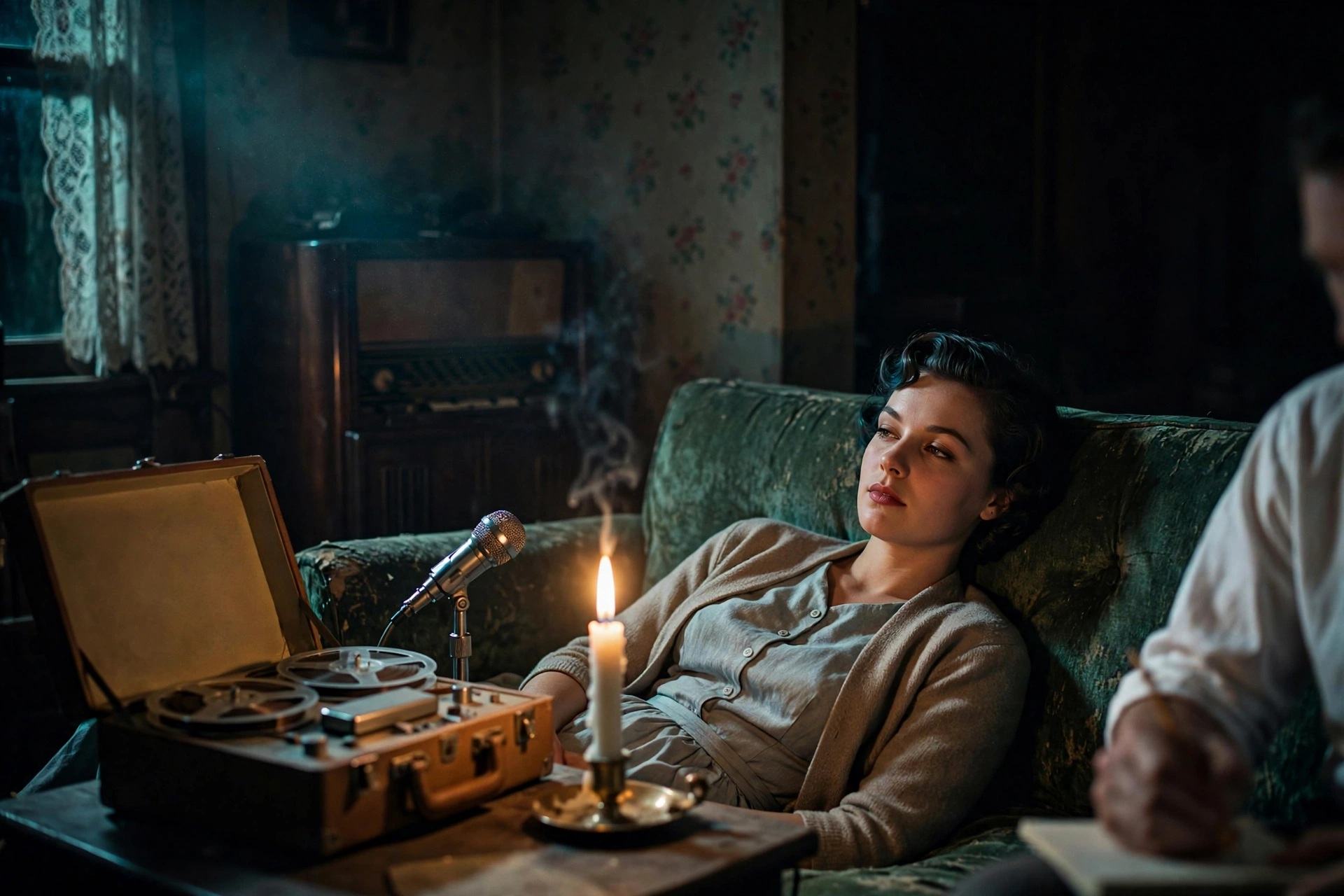
On the evening of Saturday, November 29, 1952, in Pueblo, Colorado, a young woman lay back on a couch and watched a candle flame until her eyes grew heavy. Her name was Virginia Tighe. Her friends called her Ginni. She was 29, married, a housewife, and as ordinary a resident of a steel town on the high plains as anyone could be. Beside her sat Morey Bernstein, a local businessman with a reel-to-reel tape recorder and a hobby that could turn any evening strange. He hypnotized people.
He took her back first to her childhood, year by year, until she was a small girl again. Then he did something he had been wanting to try for months. “I want you to keep on going back and back and back in your mind,” he told her. He asked her to go further than memory should allow, past her own birth, to some other place and some other time.
The voice that answered him had changed. It carried a lilt that nobody in the room had heard from Ginni Tighe before. Asked her name, she said “Friday,” then “Friday Murphy,” and then corrected herself. Bridey. Short for Bridget. She was four years old. She lived in Cork, in Ireland. She had been naughty, she said. She had “scratched the paint off all my bed,” and she had been given “an awful spanking” for it.
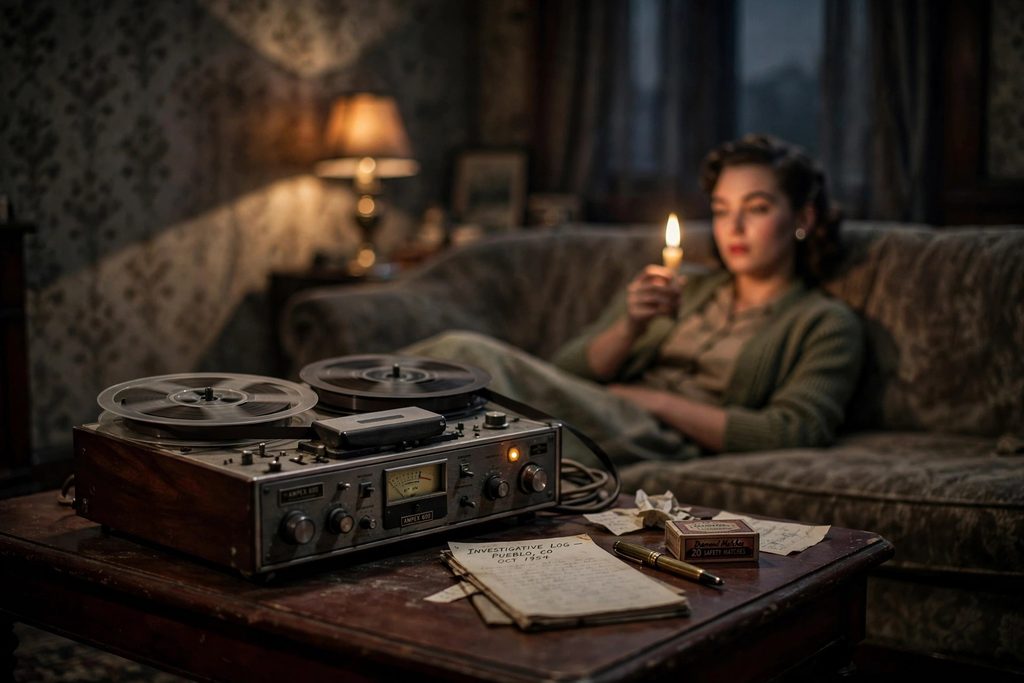
Over the next ten months that small voice grew up, married, moved north, grew old and died, and then it climbed onto the bestseller lists and into the bloodstream of an entire country. For a few strange months in 1956, Americans held parties dressed as the people they believed they used to be. Ireland was searched for her. So, in the end, was a quiet street in Chicago. The question underneath the craze has never been fully put to rest. Where did Bridey Murphy come from?
The Hypnotist Who Kept Going Back
Morey Bernstein was not a stage performer. He came from a Pueblo business family, and he treated hypnosis as a serious study rather than a party trick. By his own later account, his interest in reincarnation began when he learned about Edgar Cayce, the Virginia Beach “sleeping prophet” whose trance readings had spoken of his clients’ former lives. If a man could describe past lives while asleep, Bernstein wondered, could an ordinary person remember one while hypnotized?
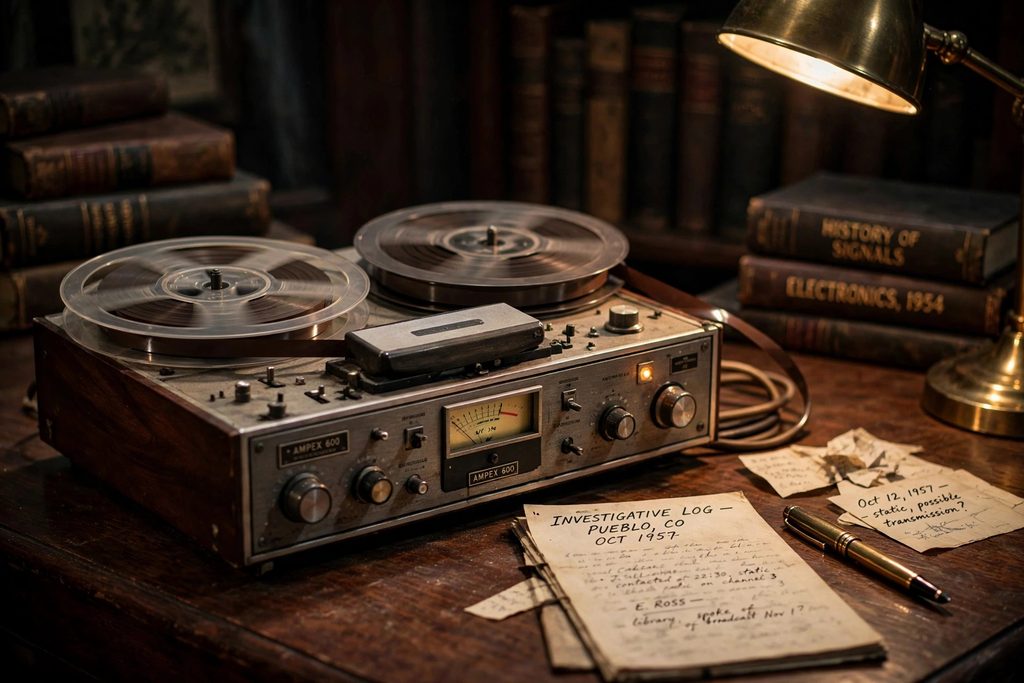
Ginni Tighe was a good subject. She went under quickly and deeply. Between November 1952 and the following autumn, Bernstein hypnotized her six times. Each session was recorded on tape and transcribed, and each was witnessed by around half a dozen people, who sat in the lamplight and listened to a Colorado housewife talk about another century.
None of it was an experiment in any scientific sense. Bernstein was not testing an idea against its rivals. He was a man already half persuaded, asking a willing subject questions that told her what kind of answer he hoped for. That does not make either of them dishonest. It means the tapes record a conversation, not a test, and the hypnotist’s hopes are part of what is on them.
A Life Lived in Cork
The story the sessions assembled was not the story of a queen or a priestess or a doomed lover. That was part of its power. Bridey Murphy, she said, was born on December 20, 1798, in Cork. Her father was Duncan Murphy, a Protestant barrister, and her mother was Kathleen. They lived in a wooden house in a place called the Meadows. She married Sean Brian Joseph MacCarthy, and she said his first name the old way, “See-an.” At the wedding, coins were tucked into the bride’s pockets for luck.
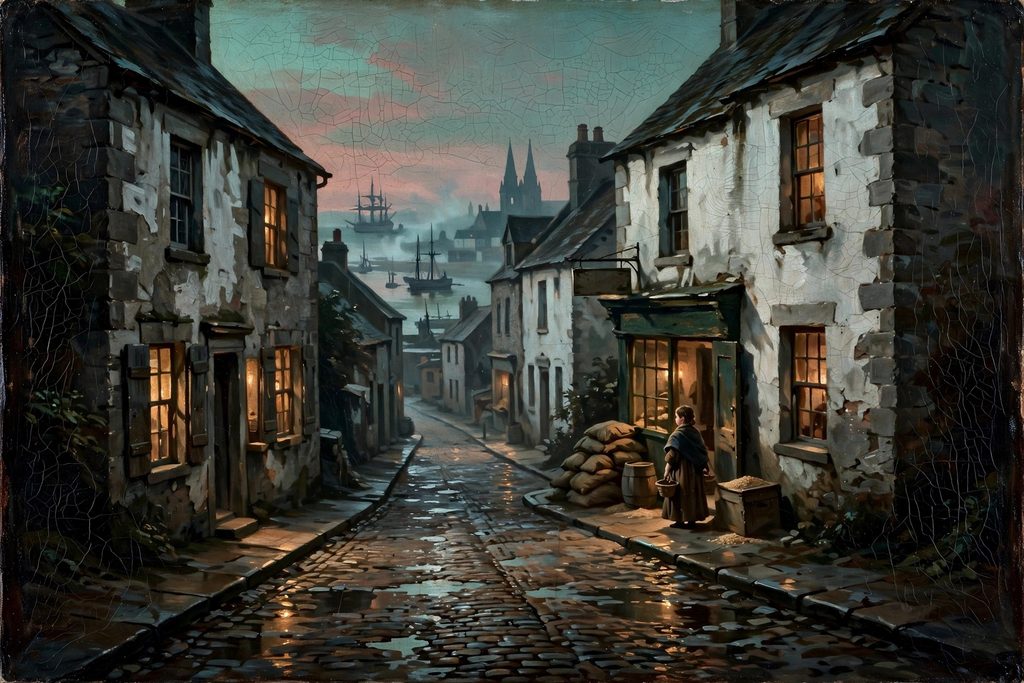
The couple moved north to Belfast, where she said Brian later taught law at Queen’s. She named the church they attended, St Theresa’s. She named two grocers she bought food from, John Carrigan and William Farr. She described a dance she called the Morning Jig, and Bernstein later wrote of the moment she seemed to perform it. “Suddenly her whole expression changed,” he recalled. “Her body became vibrantly alive. Her feet were flying in a cute little dance.”
She grew old in Belfast. In 1864, at the age of 66, she said, she fell down a flight of stairs, broke her hip and died. Afterwards, she said, she watched her own funeral.
It was a modest, drab, entirely unremarkable life, and that was exactly why so many people found it convincing. A woman inventing a past life for attention, the reasoning went, would surely have chosen something more exciting than the life of a barrister’s wife who died from a fall on the stairs. Bernstein, writing privately, put his own conviction plainly. “She just can’t be making these things up.”
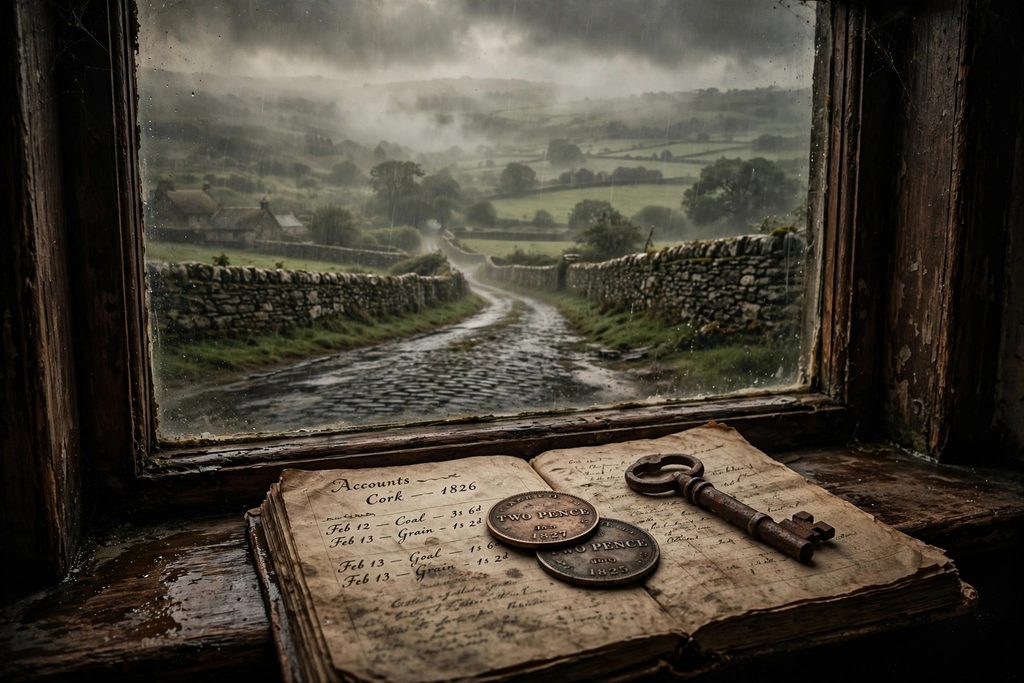
But a life can feel real in every detail and still be impossible to trace. The question was never whether coins, grocers and churches like these existed in Ireland. It was whether this particular woman did.
The Year America Asked Who It Used to Be
The story reached the public slowly, then all at once. In September 1954, the Denver Post’s Sunday magazine, Empire, ran a three-part series by the reporter William J. Barker called “The Strange Search for Bridey Murphy.” To protect the family, Ginni Tighe appeared under the name Ruth Mills Simmons. Doubleday published Bernstein’s book, The Search for Bridey Murphy, in January 1956, and it went off like a firework. By the middle of March more than 200,000 copies were in print. The paperback that followed sold in the millions.
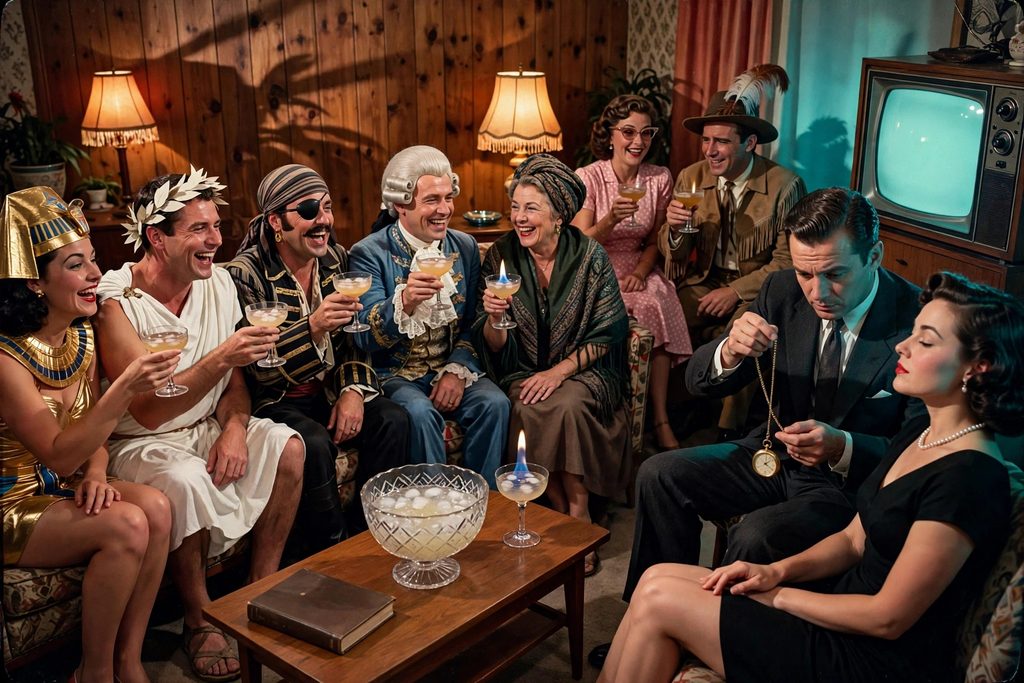
What followed has no real equivalent in American publishing. Paramount bought the film rights, reportedly for $50,000, of which Ginni Tighe received $2,500, and released The Search for Bridey Murphy that same year with Teresa Wright as the hypnotized housewife and Louis Hayward as the hypnotist. A long playing record of the sessions went on sale. Fran Allison sang “The Ballad of Bridey Murphy.” Stan Freberg recorded a parody called “The Quest for Bridey Hammerschlaugen.” In Houston, someone mixed a Reincarnation cocktail, finished with flaming rum. All over the country, hosts threw “come as you were” parties, and guests arrived costumed as their former selves. Amateur hypnotists across the country tried the experiment in their own living rooms.
Not all of it was a game. In Shawnee, Oklahoma, a teenage boy took his own life and left a note saying he was curious about the Bridey Murphy story and was going to investigate the theory in person. His mother later mailed Ginni Tighe a newspaper clipping about his death and asked whether she was proud of herself.
In Pueblo, the woman at the centre of it all stopped being able to live an ordinary life. Her husband had never liked her being hypnotized. Her religious relatives were offended. Reporters knocked on the door, strangers telephoned, cars slowed and honked as they passed the house, and preachers arrived unannounced to save her soul. She turned down the commercial offers that followed. Before long, both she and her husband were saying they wished they had never heard the name Bridey Murphy.
Three Weeks in Ireland
If Bridey had lived, she had left traces, and the Denver Post sent William Barker to look for them. He spent three weeks in Ireland in early 1956, working through old maps, directories and libraries, and on March 11, 1956, the paper published his findings as a twelve page supplement, “The Truth About Bridey Murphy.”
Some of what he found fit, and fit surprisingly well. The grocers John Carrigan and William Farr had both been real. Bridey’s descriptions of the coast of Antrim and of the journey north from Cork to Belfast matched the ground. She had talked about tuppence coins, and tuppence coins were in use in Ireland between 1797 and 1850, a narrow window that closed long before Ginni Tighe was born. A map of Cork from 1801 showed an area called Mardike Meadows, a handful of houses at the edge of the city. She used a handful of period words and expressions, the kind that sent investigators back to the dictionaries.
Some of the details that critics first held up as proof of fraud later turned the other way. Life magazine scoffed at the idea of a child in early nineteenth century Ireland scratching paint off a metal bed, but an 1830 advertisement from a Cork ironworks turned up, offering iron beds for sale. Critics said a book she mentioned, The Sorrows of Deirdre, dated only from 1905, but an edition from 1808 was found. They said Queen’s in Belfast could not have employed her husband, but its founding had been decreed in 1845, nearly twenty years before Bridey said she died.
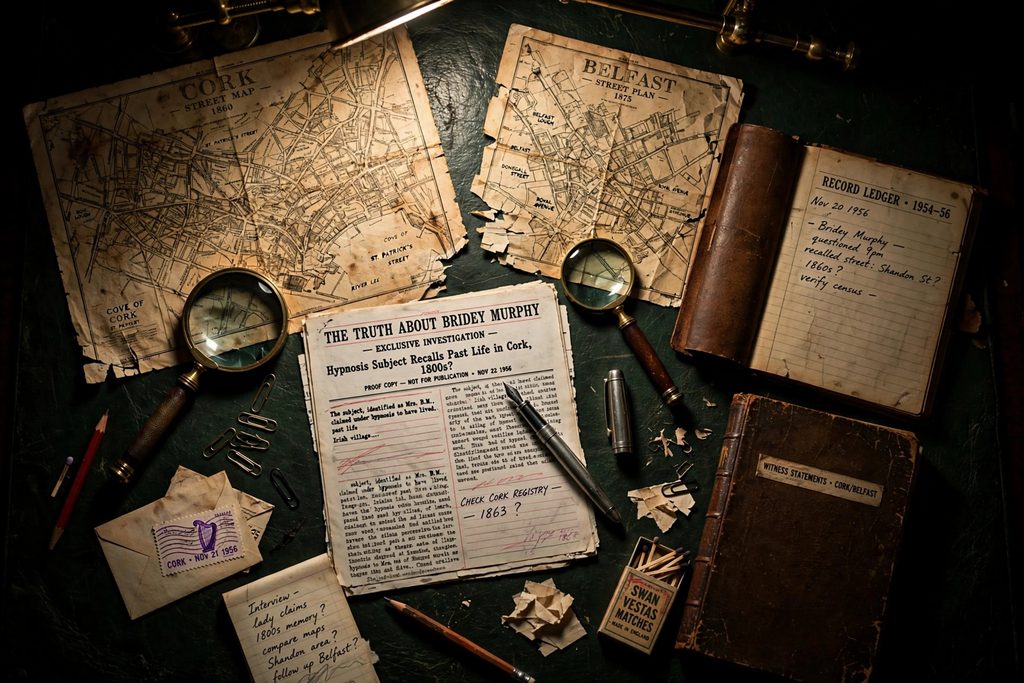
None of it found Bridey. A real grocer does not prove that she bought bread from him, and a coin that circulated in 1820 can be read about in 1940. What the finds showed was narrower, and still strange. A housewife in Colorado had produced period details that her critics confidently called impossible, and on several of them the critics were wrong.
What Ireland Could Not Find
What Barker could not find was Bridey herself. There was no record of her birth in 1798, no record of her marriage, no Duncan Murphy at the Cork bar and no Brian MacCarthy teaching law at Queen’s. Some of that silence is easy to explain. Ireland only began registering births and deaths on January 1, 1864, the year Bridey said she died, and many older records were later lost. Even so, there was no death certificate for a woman of her name and age who had fallen on the stairs in Belfast that year.
Other gaps were harder to forgive. The only St Theresa’s church that investigators could find in Belfast stands on the Glen Road. Its foundation stone was laid in 1909 and it opened in October 1911, decades after the wedding Bridey described. The wooden house in the Meadows was odd for a time when most houses were built of brick or stone. Most striking of all was what the voice never said. Bridey claimed to have lived through the Great Famine of the 1840s, when roughly a million people died and another million left the country. She never mentioned it once.
The pattern was strange. The small, checkable texture of the life seemed right, the coins, the grocers, the beds, the meadows. The names that would have made it a life, her own and her family’s, could not be found anywhere.
The Woman Across the Street
In 1956, with the book still selling, the Chicago American published the counterstrike. Its reporters had gone looking for Bridey Murphy not in Cork but in Chicago, where Ginni Tighe had spent her childhood, and they believed they had found her.
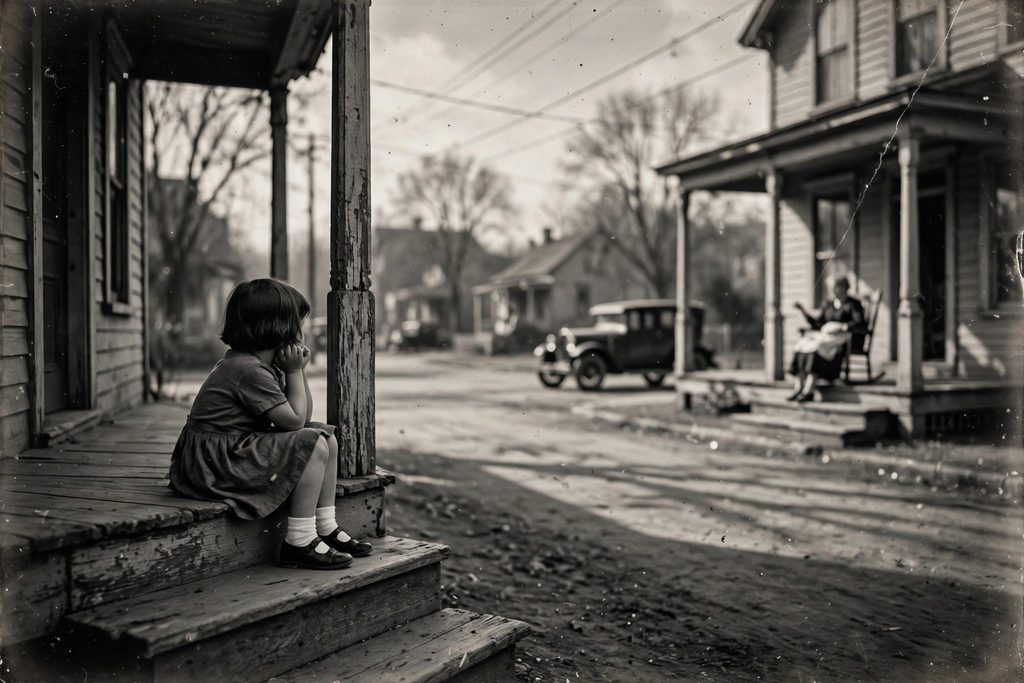
The facts they turned up were these. Virginia Tighe had been adopted. She lived with her birth parents, who were partly of Irish descent, until she was three, and was then raised by an uncle and his wife. As a teenager she had performed in school plays, and she had a talent for an Irish brogue. Most remarkable of all, directly across the street from the house where she grew up lived an Irish immigrant named Mrs Bridie Murphy Corkell, who had come over from Ireland in 1908. In the 1930 census, her sister Margaret Murphy was living in the Corkell household.
For most of the country, that was the end of it. A little girl had sat on a neighbour’s porch, heard stories of the old country from a woman named Bridie Murphy, and buried them so deep that they only resurfaced decades later under hypnosis. Life magazine declared the case debunked and closed.
The exposé had problems of its own, though, and they are rarely mentioned. Ginni Tighe said she had never known Mrs Corkell’s maiden name, and nobody showed that she had. Mrs Corkell refused to speak to the Denver Post. She was also the mother of the Chicago American’s own Sunday editor. The paper said an Irish aunt had filled young Ginni’s head with tales of Ireland, but the aunt, Mrs Marie Burns, had been born in New York, and Tighe said she first met her at the age of eighteen. The paper described a dead brother whose memory had supposedly shaped one of Bridey’s stories, but there was no such brother. Barker and the philosopher C.J. Ducasse each went through the critics’ claims point by point and found many of them as unsupported as anything Bridey had said.
The woman across the street is a plausible source for the name and for an Irish atmosphere. She is not a transcript of what a small girl in Chicago actually heard, or kept, or lost. A possible source is not a proven one, and the newspaper that found her treated the first as if it were the second.
The Library Inside the Mind
None of that rescued Bridey. The explanation that most psychologists reached for, then and now, has a name: cryptomnesia, or hidden memory. The mind keeps far more than it knows it keeps, and under the right conditions it can return a fragment without the label that says where it came from. The remembered thing feels like a discovery, not a memory. None of this requires anyone to have lied. Cryptomnesia is an honest mistake about where something came from, and the person making it is the last to know.
The idea was not new in 1956. Nearly half a century earlier, in 1911, the Society for Psychical Research published a case in which a young woman under hypnosis began receiving communications from Blanche Poynings, a lady of the fourteenth century English court. The messages were full of names and period details, and they seemed far beyond anything the subject could know. They came almost entirely from a historical novel, Countess Maud, which she had read, apparently once, around a dozen years before. The book had sat in the dark of her memory the whole time, waiting.
Writers from Martin Gardner in 1957 to Michael Shermer in our own century have placed Bridey in the same category, and so did a group of psychologists who published a scientific report on the case in 1956. Hypnosis does not unlock a perfect recording of the past. It makes people relaxed, suggestible and eager to answer, and the mind fills gaps fluently, with whatever is lying nearby. The same machinery lets crowds remember together things that never happened. It also explains why a modern psychology lab, testing the Ouija board with blindfolds, found people’s hands answering questions their owners could not consciously answer at all.

Bridey also sits in a family of voices that seemed to step out of another century and speak through an ordinary woman. Forty years before Pueblo, a St. Louis housewife named Pearl Curran began writing down the words of Patience Worth, a seventeenth century Englishwoman with a vocabulary that experts struggled to account for. And the sessions in Bernstein’s living room opened a door that hypnotists kept walking through. Within a generation, regression therapists were sending clients not only back to former lives but forward into the future, with results no more verifiable than Bridey’s.
The Holdouts
And yet the case never closed as neatly as Life announced. In 1961, Ducasse concluded that Bridey proved nothing about reincarnation, because Bridey herself could not be shown to have existed. But he also argued that the sessions had produced obscure, accurate details of early nineteenth century Ireland that nobody had shown Ginni Tighe could have learned in any ordinary way. The psychiatrists, he complained, had simply assumed that she must have, which he said was not scientific procedure at all.
Ian Stevenson, the University of Virginia psychiatrist who spent his career collecting children’s past life memories, was blunter. The critics, he wrote, had offered “suppositions of possible sources,” not “evidence that these had been the sources.” In a 1983 paper on cryptomnesia for the Society’s journal, he went further. “The Bridey Murphy case is almost certainly not one of cryptomnesia,” he wrote, “and certainly not a proven one.”
The holdouts had a fair point about method. A debunking also needs evidence. But the same rule cuts the other way. A gap in the skeptics’ case is not evidence of a previous life, and nobody ever tied a single word Bridey spoke to a woman who could be shown to have lived and died as she described.
Decades later, the researcher James Matlock gave the case’s strangest feature a name of its own. In past life regression after past life regression, he noticed, subjects described a place and a period with surprising accuracy, yet could not produce a verifiable name, not their own and not anyone else’s. He called it the Bridey Murphy effect. Whether it points to something genuinely remembered, or to the way the mind builds a convincing world out of borrowed bricks, is precisely the argument that has never ended.
What Remained of Bridey
Morey Bernstein gave up hypnotism. He went back into business, did very well, sold the family firm and gave land and money to his town, including land for the University of Southern Colorado. He threatened critics with lawsuits. In old age he withdrew from public life so completely that people in Pueblo called him the Howard Hughes of Pueblo. He died there in 1999.
Ginni Tighe guarded her family’s privacy for the rest of her life. She divorced, remarried, moved to Littleton and became the matriarch of a large family. Now and then she surfaced, once on the television game show To Tell the Truth, where the panel had to work out which of three women was really her. She never claimed to be anything more than the woman who had answered Bernstein’s questions. “I’m not convinced I was Bridey Murphy or anyone else,” she said. Yet late in life she admitted something else as well. “The older I get the more I want to believe.” For most of the country she had been a puzzle. For her it was a life, and the argument over it went on long after she had stopped wanting to hear it. She died in Denver on July 12, 1995.
The Greeks told a story about this. Before a soul returned to the world for another life, it drank from Lethe, the river of forgetting in the underworld, so that it arrived new and unburdened. Bridey Murphy may be the story of a soul that did not drink quite enough. Or she may be the story of a child on a Chicago street who heard more than anyone noticed, and kept it for twenty years in a place even she could not reach. Either way, something in Ginni Tighe remembered. The tapes are still there, a small voice saying “Cork,” saying “Bridey,” saying it had scratched the paint off its bed. The voice sounds certain. But a memory is never proved by its own conviction. A woman who may have given Ginni Tighe the name lived across the street. The life the voice described has never been found. Somewhere between those two facts is the real story of Bridey Murphy, and nobody has ever proved whose memory it was.