




Deep caves really do produce well established psychological effects in explorers, and “orb” photographs really are common phenomena. Neither requires an invented planetary defense system to explain.
What follows covers the actual psychology of deep cave exploration and the well-established photographic explanation for orbs, correcting the unverified claims built on top of both.
The 2017 Son Doong Account
Son Doong Cave, located in Vietnam’s Phong Nha-Ke Bang National Park, is the largest known cave passage on Earth by measured volume, extensively studied by credentialed expeditions since its first full survey by the British Cave Research Association in 2009. No traceable source could verify the claim of a 2017 speleology team halted by any unspecified “psychological force,” and the attributed field note quote couldn’t be traced to any named, credentialed researcher or published expedition report. Expedition teams that have explored Son Doong in depth, including its 2009 discovery survey and subsequent scientific expeditions, have published detailed accounts of their work, none of which describe the specific event some retellings attribute to 2017. This claim should be treated as unverified.
The Real Psychology of Deep Cave Exploration
What deserves to be taken seriously on its own accurate terms is the documented psychological effect of deep cave environments on the human body and mind. Research into extreme, sunlight-deprived environments, including studies of caving expeditions and comparable isolation research, has recorded real effects on circadian rhythm, sleep architecture, and mood regulation, driven by measurable physiological responses to total darkness, disrupted time perception, and the absence of natural light cycles. Caving communities have long recognized a named phenomenon sometimes called “cave fever” or “black fatigue,” involving symptoms of anxiety, disorientation, and psychological distress during extended time underground, studied by occupational and environmental psychologists working with caving and mining populations. This body of psychological science offers a considerably more evidence-grounded explanation for the unease explorers actually report than any invented energetic barrier could provide.
The Amygdala Response, Taken Seriously
The neuroscience behind fear responses deserves more careful treatment than a quick dismissal. The amygdala’s role in processing threat signals and triggering the body’s fight-or-flight response is well-documented, extensively studied neuroscience. The claim that experienced cave explorers should be immune to this response doesn’t hold up against psychological research: fear conditioning and threat response are substantially influenced by specific environmental factors, including sensory deprivation, echo distortion affecting spatial awareness, and the physiologically documented effects of prolonged darkness on the brain’s threat-detection systems, which can remain active and even intensify regardless of an individual’s prior experience or expertise. Expertise reduces panic and improves decision-making under acute fear. It doesn’t eliminate the underlying neurological response to a genuinely disorienting sensory environment.
Why Orb Photography Became So Widespread
Why orb photographs proliferated so dramatically starting in the late 1990s and early 2000s has a straightforward, instructive technological explanation. Photographic historians and technology writers have traced this surge directly to the widespread adoption of consumer digital cameras during this period, which typically featured small, compact flash units positioned very close to the lens, a design difference from most film cameras of previous decades. This physical proximity between flash and lens dramatically increased the likelihood of capturing exactly the close-particle reflection effect that produces orb images, meaning the rise in orb photograph frequency tracks closely with a verified shift in consumer camera technology rather than any corresponding rise in paranormal activity. Photography enthusiasts and skeptical investigators have directly, repeatedly replicated orb photographs on demand under controlled conditions simply by photographing dusty rooms with a close-mounted flash, an easily reproducible demonstration available to anyone with a basic camera.
The Science of Sensory Deprivation
Expanding on the broader scientific field this cave psychology draws from matters, since sensory deprivation research is well established well beyond caving alone. Controlled sensory deprivation studies, dating back to research first conducted in the 1950s, have consistently found that extended time in dark, silent, or otherwise sensory-limited environments produces measurable psychological effects, including altered time perception, increased anxiety, and in some recorded cases, hallucinatory experiences, all occurring in psychologically healthy, experienced research subjects without requiring any external threat or entity. Astronauts and polar researchers, studied extensively by space agencies and Antarctic research programs precisely because of the parallels between isolated extreme environments, show comparable, well established psychological patterns. This broad scientific literature situates the specific unease deep cave explorers report within a considerably larger body of research into how the human mind responds to extreme sensory environments generally, not a phenomenon unique or mysterious to caves alone.
What “Orbs” Actually Are
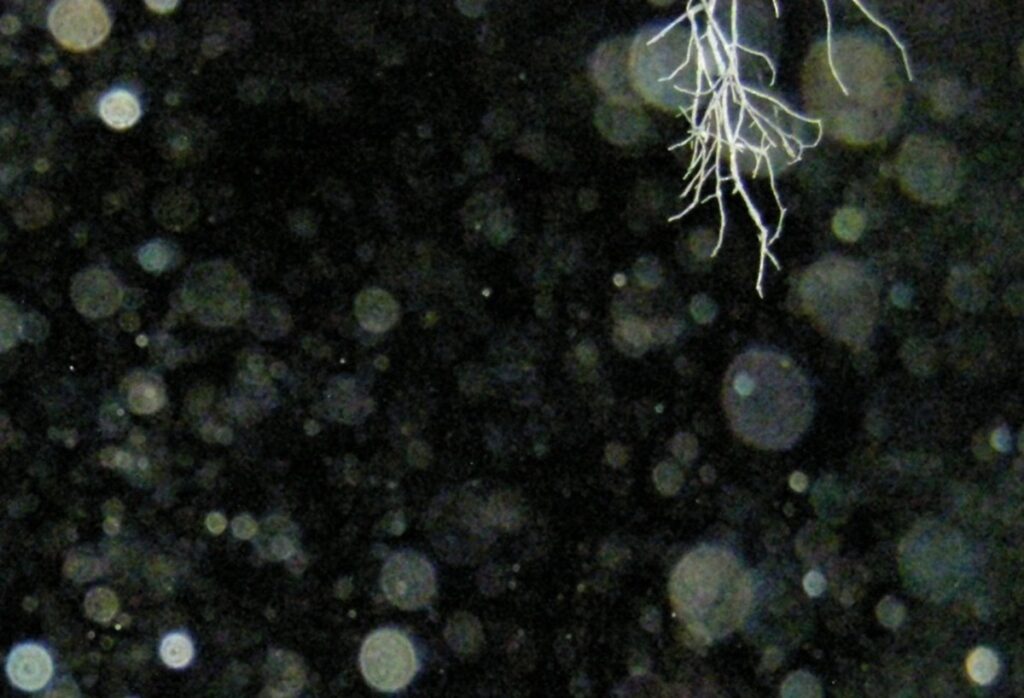
This is the most important correction here. “Orb” photographs are real and common, and photographic science has a well-established, thoroughly tested explanation for them. When a camera flash fires near the lens, light reflects off small particles suspended in the air directly in front of the camera, dust, pollen, moisture droplets, or tiny insects, close enough to the lens to appear as bright, out-of-focus circular shapes in the resulting photograph, a well established optical phenomenon extensively explained by professional photographers and, notably, directly demonstrated and explained by NASA’s own outreach materials addressing exactly this kind of photographic artifact. This effect appears more frequently in exactly the conditions typically described in orb photography claims, damp, dusty, particle-rich environments like caves, cemeteries, and old buildings, not because these locations host more spiritual activity, but because they contain more airborne particles for a close flash to illuminate. This is a replicable, testable photographic phenomenon, not an unexplained paranormal entity.
The Complicated History of Agharta and Shambhala
The mythology referenced in claims like this deserves accurate, respectful sourcing rather than being lumped together as a single ancient tradition. Shambhala is a Tibetan Buddhist religious and cosmological concept with deep roots in Kalachakra Buddhist teaching, worth understanding accurately on its own terms as a sacred concept within an actual living religious tradition. Agharta, by contrast, is a considerably more recent construct, real but substantially shaped by 19th-century Western esoteric writers including French author Louis Jacolliot, who popularized the term in 1873, and later elaborated by other Theosophical and occult writers, blending fragments of Asian religious concepts with entirely Western invention. Lemuria has a separate, interesting origin: it was first proposed in 1864 by British zoologist Philip Sclater as a legitimate, if since-abandoned, scientific hypothesis explaining lemur distribution patterns across the Indian Ocean, only later adopted by occultist writers including Madame Blavatsky and repurposed into an entirely different, mystical narrative about a lost continent and vanished civilization. This layered history, one ancient religious tradition and two comparatively modern Western esoteric constructs, deserves accurate, separate treatment rather than being folded into a single undifferentiated “ancient myth.”
Geological Radiation, Correctly Explained
The claim about geological radiation affecting human neural frequencies deserves accurate scientific grounding. Geological formations do emit measurable radiation, most significantly radon gas, a naturally occurring radioactive gas that can accumulate in enclosed underground spaces including caves and mines, extensively studied by geologists and public health researchers. Radon exposure is a real, recognized health concern, linked by epidemiological research to increased lung cancer risk with prolonged exposure, a serious hazard cave explorers and mining professionals actually monitor for using radiation detection equipment. What science does not support is any claim that this radiation directly “interferes with human neural frequencies” in any specific, mind-altering sense. Radon’s established health effects operate through cellular damage from ionizing radiation exposure over time, not through any acute psychic or neurological interference mechanism. This distinction, between a measurable physical hazard and an invented psychic effect, matters for anyone actually planning to explore caves, since the real precaution, radon testing equipment, is available and effective, while the invented one offers no protective value at all.
The Relationship Between Megalithic Sites and Caves
The claim about megalithic sites aligning with underground cave systems deserves direct address, since archaeology does have something real to say here, just considerably more grounded than versions of this claim typically suggest. Archaeologists have documented cases of ancient sites deliberately built near or incorporating natural cave features, examples including sites across the Mediterranean and British Isles where Neolithic builders did choose locations with existing caves or rock shelters, likely for practical reasons, natural shelter, defensible terrain, or existing significance to earlier populations, alongside religious and ceremonial considerations well documented in the archaeological record. This pattern reflects credentialed archaeological understanding of how ancient builders made deliberate, practical site-selection choices, worth appreciating on its own terms rather than reframed as evidence of hidden underground networks the actual archaeological excavation record has never produced any supporting evidence for.
What Cave Science Actually Says
Speleology, the scientific study of caves, is an active field worth exploring on its own terms. Cave systems host uniquely significant ecosystems, including specialized troglobitic species that have evolved without eyes or pigmentation across generations of complete darkness, extensively studied by biologists. Cave formations, stalactites and stalagmites, provide valuable climate records scientists use to reconstruct historical rainfall and temperature patterns extending back tens of thousands of years. This scientific field offers substantive material for anyone curious about what makes deep cave environments remarkable, without needing an invented planetary defense system layered on top.
Deep Cave Microbiology, Genuinely Strange on Its Own
One more remarkable finding from actual cave science is worth closing on, since it demonstrates that research keeps producing findings stranger and more interesting than most invented ones. Microbiologists studying deep cave environments have discovered microorganisms living in complete isolation from surface ecosystems for extraordinarily long periods, including published research on cave systems where microbial communities appear to have been genetically isolated for potentially millions of years, developing entirely independent evolutionary paths. Some of these isolated cave microbes have proven genuinely useful to medical researchers, including documented cases of novel antibiotic-resistant bacterial strains studied for insights into antibiotic resistance mechanisms, and other cave organisms studied for entirely new categories of natural compounds with potential pharmaceutical applications. This actively published scientific frontier, ancient, isolated life forms discovered through legitimate microbiological research rather than psychic investigation, offers real wonder about what caves actually contain, wonder that doesn’t require an invented planetary defense system to feel worth the deep, careful, genuinely difficult work of scientific exploration.

The Honest Answer
The unease experienced cave explorers report is real, and the explanation is genuinely interesting: a well established combination of neuroscience, sensory deprivation’s measurable effects on the threat-detection systems built into every human brain, and the physiological toll of prolonged isolation from natural light. The orbs captured in photographs near caves and cemeteries are real too, dust, moisture, flash reflection, a thoroughly explained photographic phenomenon rather than evidence of sentient guardians. Cambodia’s caves follow a related arc from the opposite direction, real newly documented species discovered underground that a separate lunar earthlings story never actually had anything to do with.
Cambodia’s caves follow a related arc from the opposite direction, real newly documented species discovered underground that a separate lunar earthlings story never actually had anything to do with.
Both explanations are grounded in solid science, and both are, honestly, more interesting than an invented defense system, because they’re actually true, and because anyone with a camera, a dusty room, and a close-mounted flash can verify the second explanation for themselves this afternoon.
Cave fear has a real neurological basis, and it has nothing to do with a planetary defense system.