



The Stargate program’s public history ends at the wrong place.
The official account, recorded in the 1995 declassification and in the subsequent academic literature on the program, treats Stargate as a twenty-year experiment in applied parapsychology whose results were mixed, whose operational utility was limited, and whose termination was the appropriate institutional response to an anomalous research program that the scientific establishment could not validate.
This account is not false. It is incomplete in a way that the difference between the program’s official history and the session transcripts that have been partially released through FOIA requests establishes.
The official history covers the operational remote viewing sessions that targeted adversary military and intelligence installations, the sessions whose results were compared against ground truth from satellite imagery and human intelligence, and whose statistical analysis produced the meta-analytic findings that the AIR evaluation contracted by Congress in 1995 used to assess the program. This is the Stargate that the public record covers.
The sessions whose results have not been published are a different category. The operational sessions that targeted locations beyond Earth, the sessions that produced results that the program’s handlers found disturbing in ways that went beyond the normal anomalous results of the remote viewing protocol, and the sessions in which viewers reported encounters rather than geographic observations, appear in partial form in the FOIA releases and in the published accounts of program participants but have not been assembled into a coherent public account.
This piece assembles what is on the record.
What Russell Targ Found
Russell Targ was one of the two physicists at Stanford Research Institute who developed the remote viewing protocol that became the foundation of the Stargate program. His partner was Harold Puthoff, also a physicist, who had earlier worked on laser research and whose background in electromagnetic physics made him unusually suited to the technical problems of verifying anomalous information transfer.
Targ and Puthoff’s work at SRI between 1972 and 1985 produced the foundational experimental design for remote viewing research: the double-blind coordinate remote viewing protocol in which a viewer was given a geographic coordinate and asked to describe the location at that coordinate, with the session monitored by a handler who did not know the target location, and the results evaluated by a judge who compared the viewer’s description against photographs of the target location and a set of decoys.
The statistical results of this protocol, applied across hundreds of sessions with multiple viewers, produced evidence of information transfer at above-chance accuracy rates that Targ and Puthoff published in the peer-reviewed journal Nature in 1974. The Nature paper was one of the most controversial publications in the journal’s history, subjected to an editorial review process more intensive than almost any other paper the journal had published, and ultimately accepted on the grounds that the methodology was rigorous enough to require publication regardless of the results’ implications.
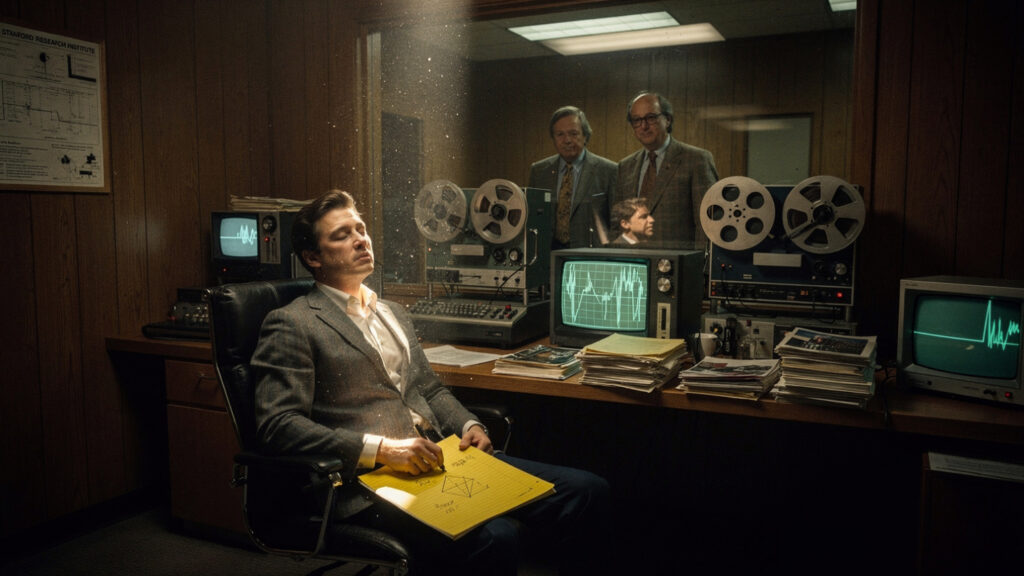
The Nature publication established the scientific credibility of the remote viewing methodology in a way that could not be dismissed as fringe research. It attracted the attention of the Defense Intelligence Agency, which subsequently contracted with SRI for the operational program that became Stargate.
Targ’s published accounts of his remote viewing work, including his books Mind-Reach co-authored with Puthoff in 1977, The Mind Race in 1984, and his later retrospective The Reality of ESP in 2012, describe sessions and their results with a specificity that allows the evaluation of individual claims against known ground truth.
The sessions that Targ has discussed publicly regarding non-terrestrial targets are described in terms that are more circumspect than his descriptions of the operational Earth-surface sessions, reflecting either genuine uncertainty about the results or institutional caution about the implications.
The Mars Session
The most extensively recorded non-terrestrial remote viewing session in the public record is the 1984 session conducted by viewer Joseph McMoneagle and supervised by researcher Skip Atwater at the Monroe Institute.
McMoneagle was one of the most consistently accurate viewers in the Stargate program, designated Remote Viewer 001 in the program’s records and recipient of the Legion of Merit for his contributions to national intelligence. His operational record across more than five hundred sessions appears in the program’s partially declassified archive.
The 1984 Mars session was not an operational intelligence collection effort. It was an exploratory session conducted as part of the program’s research into the outer limits of the remote viewing capability. McMoneagle was given a sealed envelope containing coordinates and an instruction before being placed in an altered state using the Monroe Institute’s Hemi-Sync audio technology.
The coordinates specified a location on Mars. The time instruction asked the viewer to target the location approximately one million years in the past.
McMoneagle’s session transcript, which has been partially reproduced in published accounts of the session, describes his perceptions of the targeted location in a sequence that the session supervisor did not interrupt or redirect.
He described a planetary surface with a thin atmosphere under conditions that suggested the planet was experiencing a major environmental deterioration. He described pyramidal structures of considerable size arranged in patterns that suggested intentional construction rather than natural geological formation. He described beings, tall and thin, who were aware of the environmental crisis and were engaged in what he perceived as emergency preparation, moving through corridors and spaces that suggested an underground installation. He described a sense of migration, of population movement, and of a civilization attempting to survive a catastrophe that its technology was insufficient to prevent.

The session transcript ends with McMoneagle’s description of the beings as hoping to find a place to go and as survivors of something much larger that was already gone.
McMoneagle’s Mars session was discussed publicly by researcher Courtney Brown, who independently conducted remote viewing sessions targeting non-terrestrial locations in the 1990s, and by other program participants who were aware of its results. The session’s existence and general content are on record. The full transcript has not been published.
Ingo Swann and the Moon
Ingo Swann was the viewer who developed the Controlled Remote Viewing methodology that became the standard protocol for the Stargate program’s later operational phase. His contribution was the development of a systematic session structure that allowed viewers to progressively acquire increasingly detailed information about a target location through a series of structured perceptual stages.
Swann’s published accounts of his remote viewing work, including his book Penetration: The Question of Extraterrestrial and Human Telepathy, published in 1998 after years of what he described as pressure not to publish it, contain his most extensive account of non-terrestrial remote viewing sessions and of encounters with non-human intelligences during those sessions.
The account in Penetration that has attracted the most attention describes a series of sessions Swann conducted, at the request of an intelligence organization he does not name but whose characteristics he describes in detail, targeting the Moon’s surface. Swann describes being given coordinates on the lunar surface and asked to describe what he found there.
His descriptions include underground structures, tunnels, lights, and beings who appeared to be working in what he describes as mining or industrial operations. The session that Swann describes as the most disturbing was one in which, as he was describing the location and its inhabitants, he perceived that the beings at the location became aware that they were being observed.
His description of this moment: the beings stopped their activity and looked upward, toward the direction he felt his attention was coming from. One of them looked directly at him. He perceived a clear and hostile awareness that his presence had been detected, and felt what he described as a vast and frightening intelligence behind the awareness.
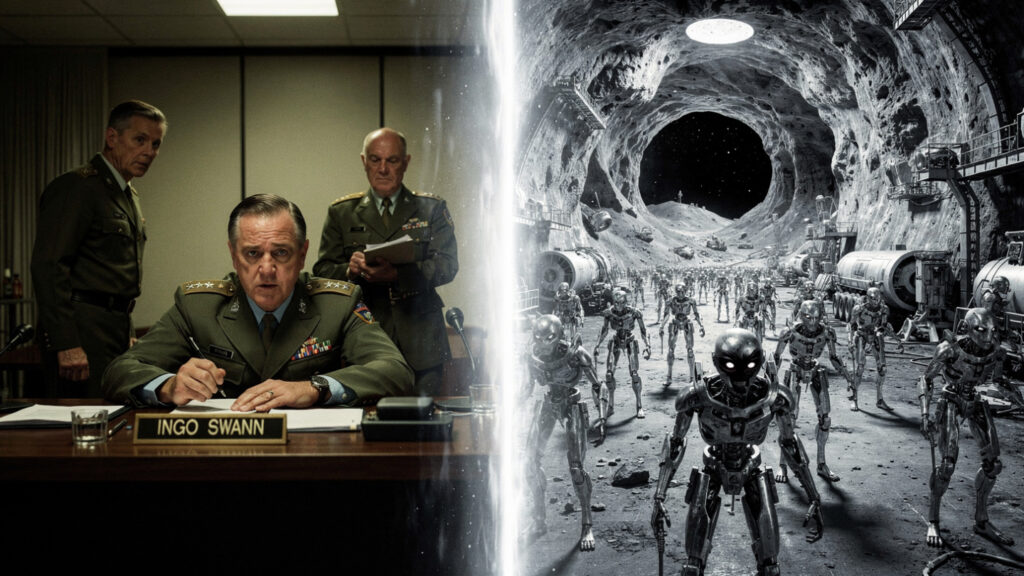
Swann immediately broke the session. His handler, described in the account as a senior intelligence official, was visibly alarmed by his description of the detection event and ended the session series.
The institutional response Swann describes following this session is more significant than the session’s content. The official who had contracted for the Moon sessions told Swann that the sessions should not continue and that Swann should not discuss their content publicly. When Swann subsequently raised the question of what the sessions had found and why the program had been directed toward lunar targets in the first place, he received what he describes as a combination of deflection and veiled threat.
He published the account in 1998, having spent years deciding whether to do so. The book is in print and in the public record.
Pat Price and the Underground Installations
Pat Price was the viewer whose operational remote viewing results were consistently precise enough that program handlers described him as the program’s most valuable single asset. His accuracy in describing adversary military installations from coordinates alone produced intelligence findings that the program’s sponsors used operationally.
Price died in 1975 under circumstances that remain disputed. The official cause of death was a heart attack. He was 57. His death came shortly before he was scheduled to conduct a series of sessions that program documents suggest were considered among the most significant in the program’s history.
Before his death, Price conducted a series of sessions that the partial FOIA releases cover only incompletely. Among these were sessions targeting what the session coordinates apparently identified as underground installations.
The content of Price’s underground installation sessions, as reconstructed from the partial releases and from the accounts of program participants who were present for them, described installations that were not identified as adversary military in character. Price described spaces that were deep underground, staffed by beings whose physical description he noted as unusual, engaged in activities whose nature he could not fully characterize.
The description that subsequent researchers have focused on most intensively from Price’s sessions is his account of what appeared to be a filing or cataloguing operation: beings reviewing and managing records or documents of some kind in an underground environment that Price described as possessing a quality of extreme age, as if the installation had been operational for a very long time.
Price reportedly told his session handler that whatever the installation was, it was not a human operation and had not been built by humans. The handler’s response to this statement is not recorded in the available records.
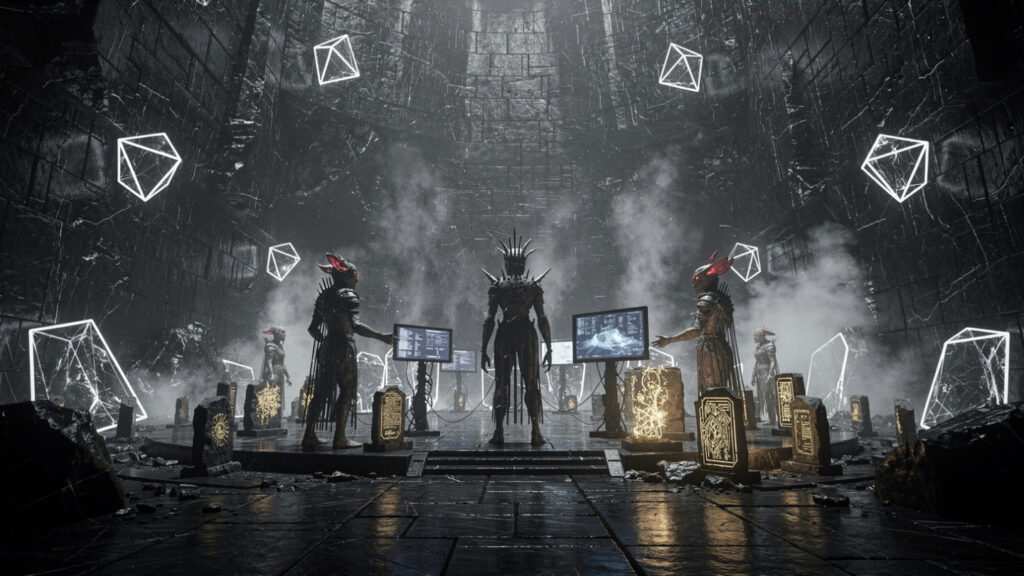
The program’s subsequent direction toward other non-terrestrial targets, and the increase in session security classification that the partial documents show occurring after Price’s underground installation sessions, suggests that Price’s findings produced institutional concern rather than institutional dismissal.
Courtney Brown and the Independent Program
Courtney Brown is a political scientist who studied the Controlled Remote Viewing methodology under a Stargate-trained instructor and subsequently established the Farsight Institute as an independent remote viewing research organization. His relationship to the official Stargate program is that of an independent researcher who learned the methodology through a known training chain and applied it independently.
Brown’s research, recorded in his publications including Cosmic Voyage in 1996 and in the Farsight Institute’s published session transcripts, has consistently targeted non-terrestrial locations and entities. His results are in a different evidentiary category from the official Stargate sessions because they were not conducted under the same control conditions and did not use the double-blind protocol that the SRI research established.
The research is relevant to this piece not as corroboration at the same evidentiary level as the Stargate program’s confirmed results but as a record of what the CRV methodology produces when consistently directed toward non-terrestrial targets by an independent researcher.
Brown’s sessions targeting non-human intelligences have produced accounts that are consistent with the Stargate program participants’ accounts in their phenomenological characteristics. The description of awareness from the other side of the viewing, the sense of being detected and observed during the session, appears in Brown’s accounts with the same character that Swann described in the lunar sessions.
Whether this consistency reflects a genuine shared phenomenon, a shared artifact of the CRV methodology’s suggestive session structure, or unconscious borrowing from the published accounts of the Stargate program participants, is not resolvable from the available evidence. The consistency itself is real.
Ed Dames and the Forbidden Targets
Ed Dames was a military intelligence officer who served as operations and training officer for the Stargate program’s operational unit and who trained under Ingo Swann in the Controlled Remote Viewing methodology. His subsequent career as a civilian remote viewing instructor and researcher has been accompanied by claims about the program’s classified results that go significantly beyond what the official record covers.
Dames’s claims about what the Stargate program found when directed toward non-terrestrial targets include descriptions of non-human intelligences in the solar system that the program’s handlers were aware of and that influenced targeting decisions. He describes a category of session results that were classified above the normal program classification and that have not been released in any FOIA response.
The evidentiary status of Dames’s claims is complicated by his track record of public predictions whose accuracy has been widely criticized, and by his commercial interests in maintaining public interest in his remote viewing work. His claims require treating with the same evidentiary caution the site applies to any single-source testimonial claim without corroboration.
What is corroborated by the available record is the existence of a classified level of the Stargate program above the level that the 1995 declassification released. The AIR evaluation that Congress used to assess the program examined only the sessions that were released to it. Program participants including Targ, McMoneagle, and Swann have all indicated in published accounts that the released record does not represent the full extent of the program’s sessions.
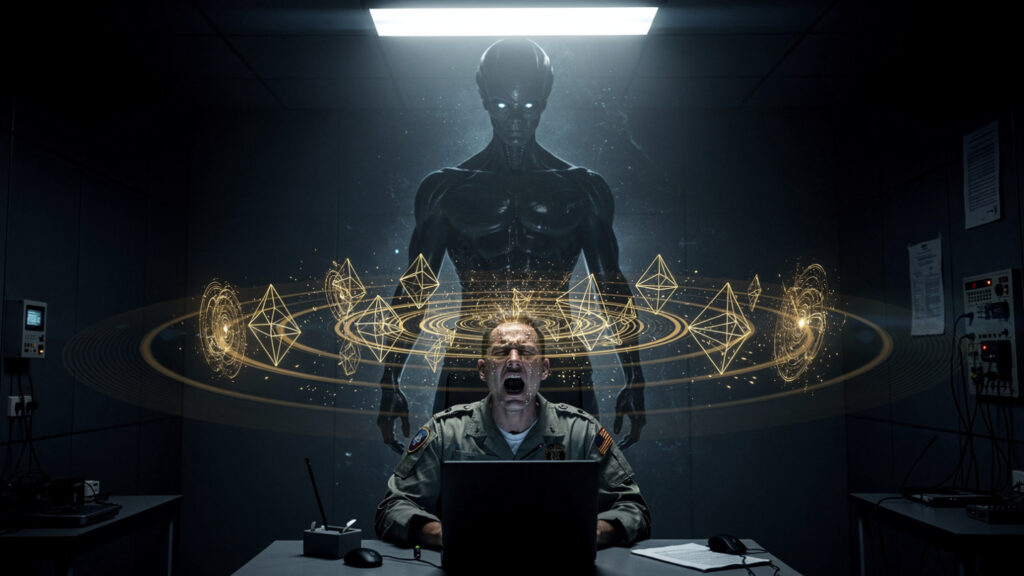
The content of the unreleased sessions is not in the public record by definition. What is confirmed is that unreleased sessions exist, that they were classified above the level of the released sessions, and that multiple program participants have described their content as including non-terrestrial findings that the institutional framework was not prepared to process.
The Detection Problem
The phenomenon that connects the accounts of Swann’s lunar sessions, McMoneagle’s Mars session, and multiple accounts from independent remote viewers targeting non-terrestrial locations is the perception of being detected by the target.
This phenomenon does not appear consistently in the operational Stargate sessions targeting Earth-surface military and intelligence installations. Adversary installations did not perceive that they were being observed by a viewer in California. The intelligence value of remote viewing for terrestrial targets depended on this one-way character of the observation.
The non-terrestrial sessions reveal a different phenomenology: the target location’s inhabitants perceiving the viewer’s attention and responding to it. Swann describes the Moon’s inhabitants looking toward the direction of his attention and displaying hostile awareness. McMoneagle describes the Mars inhabitants aware of his presence during the session. Multiple independent viewers targeting non-terrestrial coordinates have reported versions of the same detection experience.
The detection phenomenon has implications depending on how it is interpreted. If the detection is a genuine perceptual event in which a non-human intelligence at a remote location actually perceived the viewer’s directed attention, it implies that the non-human intelligence possesses awareness of and ability to detect the remote viewing state specifically. This is an extraordinary claim that goes significantly beyond what the remote viewing research’s double-blind sessions establish.
If the detection is a psychological artifact of the viewer’s own expectation of being detected when targeting an inhabited location, it is an interesting cognitive phenomenon that requires no exotic explanation but still reveals something about how the viewer’s expectations shape the session’s phenomenology.
The cases where the detection experience was followed by measurable consequences, where the session handler observed the viewer’s acute distress and the session was terminated for reasons visible to the handler rather than merely reported retrospectively, provide the closest available evidence that something beyond psychological artifact was occurring. Swann’s session termination and the handler’s recorded alarm response represent a case where the detection experience produced observable behavioral consequences in the immediate session environment rather than only retrospective testimony.
The Remote Viewing State and What It Accesses
The broader framework for understanding what the non-terrestrial session results mean connects to the oneironaut piece covered earlier in this library.
The remote viewing state, as described by trained practitioners and characterized in the neurological research that has been conducted on it, shows phenomenological overlap with the lucid dreaming state’s characteristics: reduced ordinary sensory input, heightened attention to internal imagery, a quality of awareness that practitioners describe as distinct from both ordinary waking consciousness and ordinary sleep, and the characteristic of information arrival as impression rather than as narrative construction.
The Tibetan dream yoga tradition, recorded in the oneironaut piece, treats the dreaming state as a genuine access point to realities that the ordinary waking mind does not reach. The remote viewing research establishes that a non-ordinary consciousness state can produce accurate information about geographically distant locations. The non-terrestrial session results show that the same state, applied to non-terrestrial coordinates, produces consistent descriptions of inhabited locations by multiple independent viewers.
The question the convergence raises is whether the remote viewing state’s access to geographically distant information on Earth extends to cosmologically distant information about the solar system and beyond, or whether the non-terrestrial session descriptions reflect the viewer’s expectation of what a non-terrestrial location would contain rather than genuine information transfer.
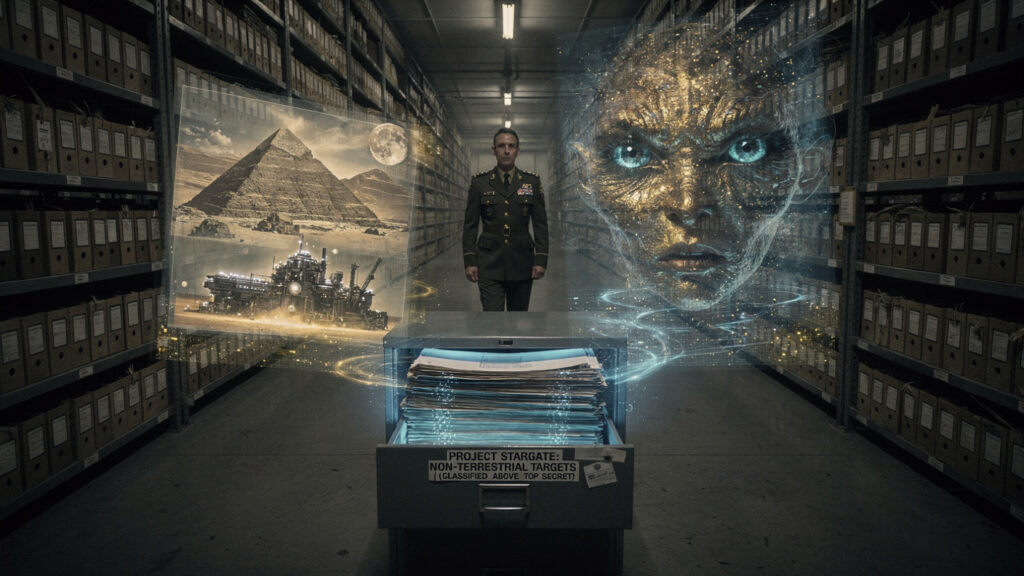
The McMoneagle Mars session’s description of pyramidal structures, subsequently corroborated in general character by the Cydonia features captured in Viking Orbiter imagery of Mars, provides the closest available test of this question. Whether the Cydonia structures represent the ruins that McMoneagle’s session described, or are natural geological formations that pattern-recognition applies human architectural categories to, is a question that the available photographic record does not definitively resolve and that the Stargate program’s session archive could inform if fully released.
What Has Not Been Published
The 1995 AIR evaluation assessed approximately three percent of the total Stargate program’s session archive. The remaining ninety-seven percent has not been released.
The evaluation’s methodology, examining a sample of sessions to assess the program’s statistical performance across that sample, cannot assess the content of the sessions that were not in the sample. The program’s overall statistical performance, which the evaluation found to be marginally above chance but insufficient to justify operational use, is a finding about the aggregate of the released sessions. It says nothing about the distribution of results within the unreleased archive or about the content of the specifically classified sessions that program participants describe as having produced the most anomalous findings.
The program’s termination in 1995 was justified on the grounds of limited operational utility. The AIR evaluation’s statistical findings supported this justification. But the termination of an institutionally visible program does not terminate the underlying research capability or the institutional interest in its results. The successor programs to Stargate, some of which program participants have referenced in published accounts without providing verifiable documentation, represent the continuation of the research under different institutional arrangements.
What the Stargate archive contains beyond the three percent released in 1995 is confirmed to exist but not to be accessible. Program participants have described its content in terms that suggest it includes systematic documentation of non-terrestrial findings that the institutional framework was not prepared to process publicly.
Russell Targ described sessions in which viewers felt presences watching them. Ingo Swann described a hostile detection event that ended a session series targeting the Moon. Joseph McMoneagle described a dying Martian civilization in an extended session whose full transcript has not been published.
These three recorded accounts, from three named researchers with established institutional credentials, describing three separate non-terrestrial remote viewing sessions with consistent phenomenological characteristics, are in the public record.
What the unreleased sessions contain is in the archive.
The archive has not been opened.