The most famous line in the history of Western esotericism is seven words.
As above, so below. As within, so without.
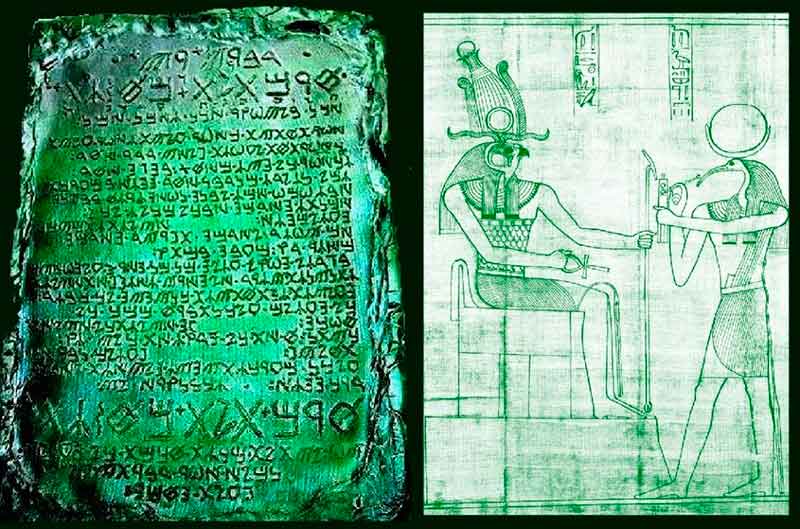
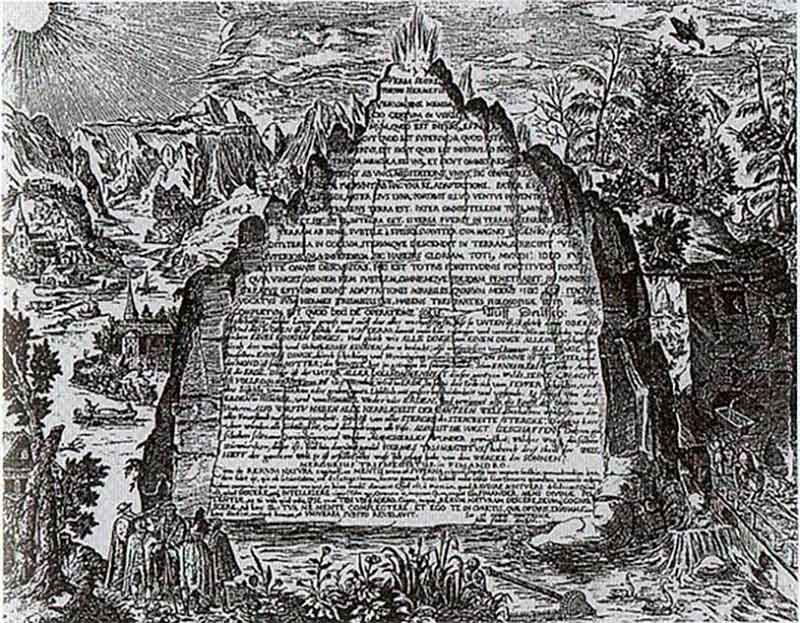
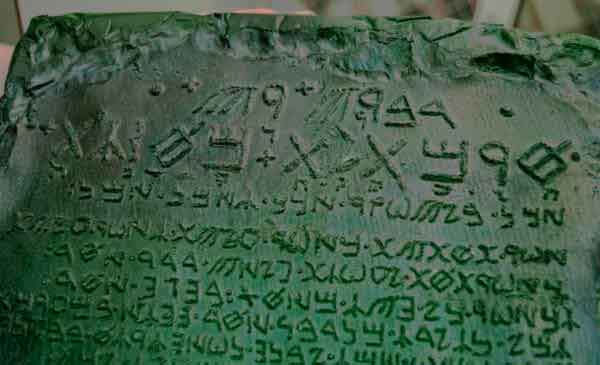
The Emerald Tablet, the text from which this principle derives, has no verified ancient origin, no physical original, and no confirmed author. What it has is a recorded transmission history spanning thirteen centuries, engagement from the most significant intellectual figures of the medieval and Renaissance periods, and a central philosophical claim whose implications the holographic principle of modern physics independently arrived at from an entirely different direction.
Whether this convergence reflects genuine ancient knowledge of physical law encoded in alchemical language, or represents the human tendency to find deep meaning in aphorisms sufficiently ambiguous to accommodate any subsequent discovery, is the question that the Tablet’s recorded intellectual history makes worth examining rather than simply filing under mysticism.
The oldest documentable source of the Tablet’s text is the eighth-century Arabic work Kitab sirr al-haliqi, the Book of the Secret of Creation and the Art of Nature, attributed to Balinas, identified by scholars as Pseudo-Apollonius of Tyana. In this text, Balinas describes discovering the Tablet in a subterranean vault beneath a statue of Hermes in the city of Tyana, clutched in the hands of a seated corpse he identifies as Hermes Trismegistus himself, the legendary figure who combined the Greek god Hermes with the Egyptian god Thoth.
Whether Balinas’s discovery narrative describes a genuine ancient document he found, a text he composed and attributed to a legendary authority to give it weight, or a transmission of earlier Greek or Egyptian material through Arabic intermediaries whose chain has not been fully reconstructed, is the question that the Tablet’s textual history motivates without the available evidence resolving.
What the history does establish is that once the Tablet’s text entered circulation, it did not leave it.
The Transmission Chain
The traceable transmission of the Emerald Tablet from its eighth-century Arabic source through the medieval Latin scholarly tradition to the Renaissance esoteric revival is one of the most specifically traceable intellectual transmissions in the Western knowledge history.
Jabir ibn Hayyan, the eighth to ninth century Arab alchemist whose scientific contributions to chemistry, including the development of systematic experimental methodology and the identification of multiple chemical processes, are recognized in the history of science, incorporated the Tablet’s text in his Kitab Ustuqus al-Uss al-Thani. Jabir’s engagement with the Tablet connected the text to the most sophisticated experimental science of the period and established its status as a foundational document rather than a peripheral curiosity.
Hugo von Santalla’s twelfth-century Latin translation brought the text into the European scholarly tradition at the moment when Islamic scientific and philosophical works were being systematically translated into Latin through the Toledo school of translators, the well known institutional project that transferred the preserved Greek scientific corpus and its Arabic elaborations to European university culture. The Emerald Tablet arrived in Latin alongside Aristotle, Euclid, and Ptolemy, in the same translation movement that transformed European natural philosophy.
Roger Bacon, the thirteenth-century English Franciscan friar whose experimental approach to natural philosophy has led historians to identify him as an early precursor of the modern scientific method, cited the Emerald Tablet in his surviving works on alchemy and natural magic. Albertus Magnus, the Dominican friar and theologian whose encyclopedic treatment of natural science was the most comprehensive in thirteenth-century Europe, engaged with the Tablet’s framework in his surviving alchemical writings.
John Dee, whose dedicated library piece develops his recorded reception of the Enochian language and his role as Elizabeth I’s court astrologer and intelligence operative, was among the most systematic students of the Hermetic tradition that the Tablet anchors. Whether Dee’s known work with Edward Kelley on angelic communication was informed by the Tablet’s framework is the question that his library holdings and intellectual biography motivate.
Newton’s Secret Translation
The most consequential engagement with the Emerald Tablet in the history of modern science is Isaac Newton’s.
The Newton Papers, held at King’s College Cambridge following their purchase by John Maynard Keynes at the Portsmouth Sale of 1936, confirm that Newton devoted a significant portion of his intellectual life to alchemical research whose public profile he suppressed entirely. The library’s existing piece on Newton’s apocalyptic research develops the well established discrepancy between Newton’s public scientific persona and his private theological and esoteric intellectual life.
Newton’s own translation of the Emerald Tablet is in the Cambridge archive. Whether this translation reflects casual engagement with a historical document or sustained engagement with a text Newton considered genuinely significant is suggested by the broader alchemical manuscript collection: Newton’s surviving alchemical writings fill approximately a million words, roughly equal to his Principia Mathematica, and represent decades of systematic investigation rather than passing curiosity.
Newton’s alchemical research focused on the transmutation of matter and the identification of the active principles that governed physical transformation at the most fundamental level. Whether he found anything in the Emerald Tablet’s framework that informed his public physics, whose innovations in dynamics, gravity, and optics defined the modern scientific worldview, is the question that the parallel intellectual investment in the Tablet’s tradition makes genuinely interesting.
The Newtonian physics principle of universal gravitation, the proposition that the same force governing the fall of objects on Earth also governs the motions of celestial bodies, is the scientific expression of the as above so below principle in its most precisely mathematical form. Whether Newton arrived at universal gravitation through the mathematical analysis of orbital data, as the official intellectual history maintains, or whether the Hermetic framework provided the initial conceptual permission to look for the same law operating at all scales, is the question that his private intellectual life raises without the available record resolving.
As Above So Below and the Holographic Principle
The Tablet’s foundational claim, that the operations of the macrocosm are reflected in the microcosm and that understanding one level of reality provides knowledge of all levels, is the philosophical principle whose relationship to modern physics is the most directly traceable.
The holographic principle, derived from string theory and black hole thermodynamics by Jacob Bekenstein and Stephen Hawking and developed extensively by Leonard Susskind and Juan Maldacena, establishes that the information content of a three-dimensional region of space is fully encoded in its two-dimensional boundary surface. The mathematical correspondence between a lower-dimensional surface and a higher-dimensional volume it encodes is the structural relationship that the holographic principle describes: what is on the surface is reflected in the volume, what is in the volume is encoded on the surface.
Whether this mathematical correspondence is the same relationship that the Emerald Tablet’s as above so below principle encodes in philosophical language is the interpretive question that the structural parallel motivates. The holographic principle does not say that the macro reflects the micro in a vague philosophical sense. It says that the information encoding of a higher-dimensional space is fully recoverable from a lower-dimensional boundary, which is precisely the claim that as above so below makes in its most technically precise reading.
Whether the ancient authors of the Tablet’s tradition had genuine knowledge of physical law that modern science independently confirmed, whether the language is sufficiently general to accommodate any subsequent scientific finding without genuinely predicting it, or whether the convergence reflects something whose character neither ancient esotericism nor modern physics has fully articulated, is the question that the two traditions’ convergence on the same structural principle raises.
The simulation hypothesis framework developed in the library’s Bostrom piece and the holographic principle piece provides the context in which the Tablet’s principle is most theoretically significant: if reality is encoded information, the relationship between encoding surface and encoded volume is exactly the as above so below relationship, and the Hermetic tradition’s foundational claim is the philosophical expression of what the physics of information is discovering from the mathematics of quantum gravity.
The Seven Stages and Their Alchemical Framework
The Emerald Tablet’s seven-stage alchemical transformation framework, calcination, dissolution, separation, conjunction, fermentation, distillation, and coagulation, is the operational schema that medieval and Renaissance alchemists derived from the Tablet’s compressed philosophical language and elaborated into systematic laboratory practice.
Whether this laboratory practice was genuine proto-chemistry, the investigation of material transformation that preceded and partially contributed to the development of modern chemistry, or symbolic psychology whose stages described the transformation of consciousness rather than the transformation of matter, is the question that the alchemical tradition’s dual character motivates.
The engagement of figures including Paracelsus, whose innovations in medical chemistry established the basis for pharmacology, and Robert Boyle, whose Sceptical Chymist of 1661 is conventionally identified as the founding text of modern chemistry, with the alchemical tradition that the Tablet anchored suggests that the boundary between genuine chemical investigation and symbolic psychological transformation in the alchemical tradition was not as sharp as the conventional history of science implies.
Carl Jung’s extensive engagement with alchemy, whose interpretation of alchemical symbolism as a projection of psychological transformation processes is developed in his Psychology and Alchemy of 1944, provides the most influential modern framework for the symbolic reading of the alchemical tradition. Whether Jung’s interpretation exhausts the Tablet’s significance or represents one reading of a tradition whose literal chemical dimensions are equally genuine is the question that the dual nature of alchemical practice raises.
What the Tablet Actually Says
The Tablet’s compressed text, whose various translations differ in details while preserving the core structure, contains several claims whose precise meaning has generated the interpretive tradition:
The opening declaration establishes the foundational principle: true, without error, certain and most true, what is below is like what is above, and what is above is like what is below, to accomplish the miracles of the one thing.
The creative framework follows: all things proceeded from this one thing through the disposition of the one mind.
The solar framework: its father is the sun, its mother is the moon, the wind carried it in its belly, its nurse is the earth.
The operational conclusion: this is the father of all perfection throughout the world. Separate the earth from the fire, the subtle from the gross, sweetly with great ingenuity.
The summary claim: by this means you will obtain the glory of the whole world, and all obscurity will flee from you. This is the strongest of all powers, overcoming every subtle thing and penetrating every solid thing.
Whether these statements describe a physical operational process whose chemistry the laboratory alchemists were attempting to recreate, a cosmological framework describing the relationship between divine creative principles and material manifestation, a psychological map of consciousness transformation, or all three simultaneously in a deliberately multi-layered text, is the interpretive question that thirteen centuries of engagement have not fully resolved.
The text is deliberately compressed. Its authors, whatever their identity and period, knew that compression preserves meaning across time in ways that discursive explanation does not. Whatever the Emerald Tablet knows, it has been keeping it successfully since the eighth century in recorded form and perhaps considerably longer in whatever tradition Balinas was transmitting.
Newton read it in secret. Dee studied it systematically. Bacon cited it. Crowley developed it. The modern physics of information encoded it mathematically without knowing the tradition it was entering.
The text is fourteen sentences long.
Whatever it contains, it has sustained serious intellectual engagement across thirteen recorded centuries without being exhausted.