


In the 1970s, Uri Geller became the most famous psychic in the world by doing things that looked impossible: bending metal, reproducing drawings he supposedly could not see, guessing hidden information and apparently affecting scientific instruments without touching them.
James Randi, a professional magician who understood exactly how such effects could be manufactured, came to a very different conclusion. Geller’s powers, Randi argued, were not paranormal at all. They were magic, misdirection and opportunities to exploit weaknesses in experimental controls.
Then something extraordinary entered the documentary record. A nine-page document now preserved in the CIA’s declassified Stargate collection takes Randi’s 1975 book, The Magic of Uri Geller, point by point and answers it in twenty-four numbered sections. The document defends the Stanford Research Institute experiments, disputes Randi’s descriptions of what happened in the laboratory and argues that several of his proposed methods of cheating depended on conditions that, according to the SRI researchers, never existed. It looks at first like the document should settle the argument.
It does nothing of the sort. And that is what makes the document so revealing.
The first correction is essential: this was not a CIA scientific report proving that Uri Geller possessed psychic powers. The declassified file is a rebuttal of Randi’s book preserved in the CIA’s records. Its contents defend the SRI researchers’ work. They do not constitute an independent CIA determination that Geller was paranormal. More importantly, the rebuttal itself contains admissions that make the historical record considerably more complicated than either the “psychic genius” story or the “CIA proved it was fake” story.
Before Geller, There Was a Laboratory Looking for Something Impossible
The story began at Stanford Research Institute, then an independent research organization in Menlo Park, California. Physicists Harold Puthoff and Russell Targ, whose professional backgrounds included laser research, became interested in whether claims associated with extrasensory perception and psychokinesis could be subjected to laboratory testing.
One of the early subjects was Ingo Swann, who became associated with experiments that eventually helped establish the terminology and procedures of what would later be called remote viewing. Another was Uri Geller, an Israeli performer whose reputation had already been built on apparently impossible feats.
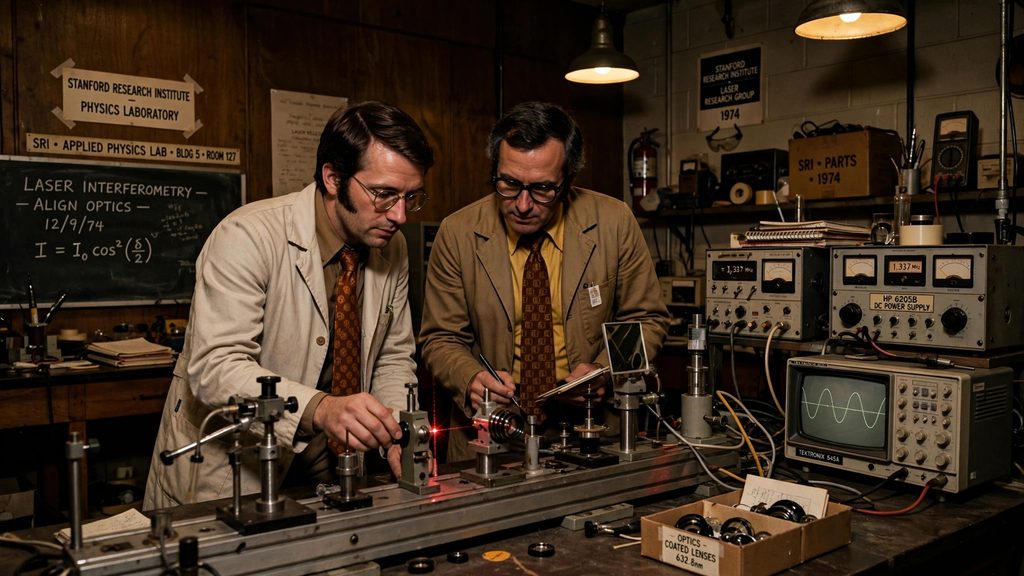
Geller was not brought into the laboratory as an anonymous volunteer. He arrived with an extraordinary public reputation. He claimed abilities that, if genuine, would have consequences far beyond stage magic: bending metal without ordinary physical force, obtaining information without access to it and influencing physical systems through intention. The obvious scientific question was therefore not whether Geller could impress an audience. It was whether the apparent effects survived conditions designed to eliminate ordinary ways of producing them.
The SRI Researchers Published Something Much More Cautious Than the Legend Suggests
The later mythology surrounding Geller often compresses the SRI work into a simple proposition: scientists tested him and confirmed his powers. The actual published position was much more qualified.
In their 1974 Nature paper, Puthoff and Targ reported experiments involving Geller and other subjects. The paper attracted enormous attention because it claimed evidence for information transfer that appeared to fall outside known sensory mechanisms. But the paper did not establish that every feat Geller performed was paranormal, nor did it claim that metal bending had been demonstrated under sufficiently controlled conditions.
In fact, the SRI researchers explicitly said that although they had observed Geller bending metal in the laboratory, they had not been able to combine those observations with adequately controlled experiments that produced enough evidence to support the paranormal hypothesis. That sentence becomes extremely important when the later Randi-SRI dispute is reconstructed from the documents rather than from the mythology surrounding it.
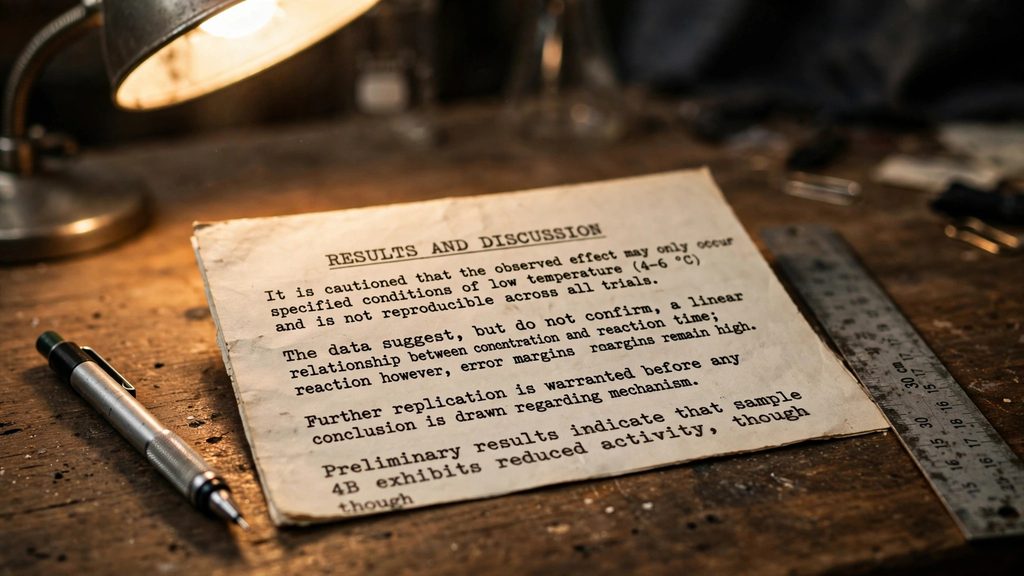
The declassified rebuttal quotes that position almost verbatim. It is therefore impossible to read the document responsibly and conclude that SRI had claimed to have scientifically established Geller’s ability to bend metal by psychic means. The researchers were defending their experiments while simultaneously acknowledging that at least one of Geller’s most famous abilities had not been demonstrated to their own required standard.
Then James Randi Entered the Story
Randi possessed an advantage that many conventional scientists did not: he knew how magicians created impossible-looking effects. A physicist might see a sealed container, a hidden drawing or a bent spoon and ask what physical mechanism could produce the result. A magician asks a different question first: Where is the audience’s attention being directed, and what does the performer need the observer not to notice?
Randi’s investigation of Geller eventually became The Magic of Uri Geller, published in 1975. The book did not merely say that Geller was a fraud. It attempted to reconstruct how specific effects could have been accomplished through familiar techniques of mentalism and stage magic, and it attacked the experimental procedures used at SRI.

That distinction matters. Randi’s strongest contribution was not that he possessed an alternative belief about Geller. It was that he understood the practical pathways by which apparently paranormal results could occur without paranormal abilities. In experimental science, identifying a plausible ordinary mechanism is not automatically the same as proving that mechanism occurred in a particular trial. But it is a serious reason to demand stronger controls.
The Famous Television Failure Was Real, but It Wasn’t the Whole Case
Geller’s public reputation suffered a spectacular blow when he appeared on The Tonight Show Starring Johnny Carson in 1973. Carson had been a professional magician before becoming a television host, and Randi helped advise the production on how to avoid giving Geller uncontrolled access to the objects used in the demonstrations.
Geller struggled with the prepared tests and did not reproduce the effortless feats for which he was famous. The episode became one of the defining moments in the modern skeptical movement because it demonstrated something that laboratory arguments often obscure: extraordinary performance can disappear when a performer no longer controls the conditions.
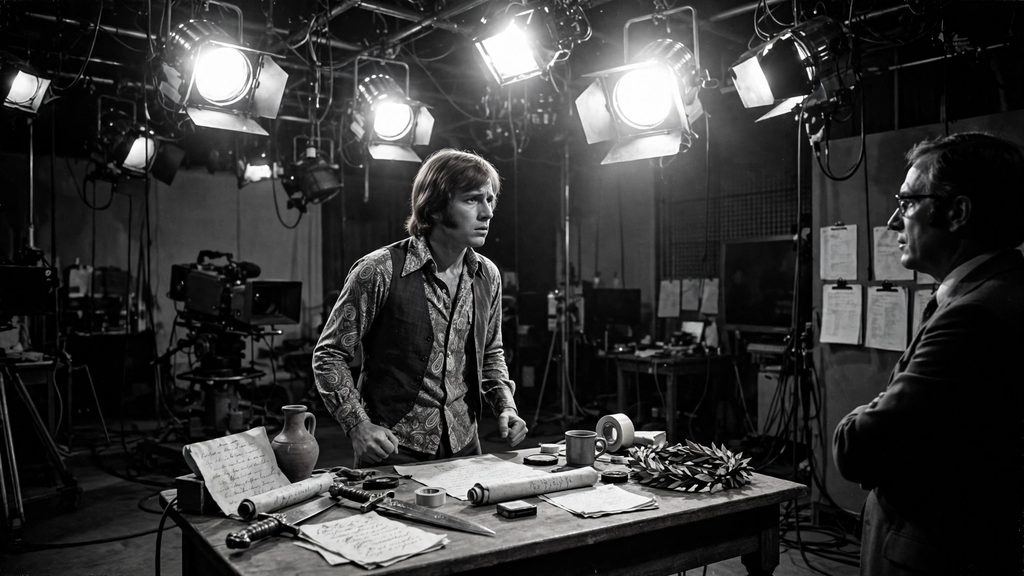
But the television failure does not logically prove that every SRI observation was fraudulent. A magician can fail under one set of conditions and succeed under another. A failed demonstration establishes that the claimed ability was not reliably reproduced under those particular circumstances. It does not, by itself, reconstruct every earlier experiment.
That is exactly why the documents matter.
The Declassified Document That Looks Like a CIA Rebuttal
The document preserved in the CIA collection is titled The Magic of Uri Geller and consists of twenty-four numbered objections to Randi’s book followed by “Fact” responses. The archival location can make the discovery sound more dramatic than it actually is: a CIA file containing a rebuttal to James Randi naturally invites the headline that the CIA itself took Geller’s side.
That is not what the document establishes. Its contents identify the defense as coming from the SRI side of the dispute. The CIA archive preserves the document because the Geller/SRI work became part of the broader government-funded parapsychology and remote-viewing research record. The agency’s possession of a document is not the same thing as the agency independently endorsing every proposition contained in it.
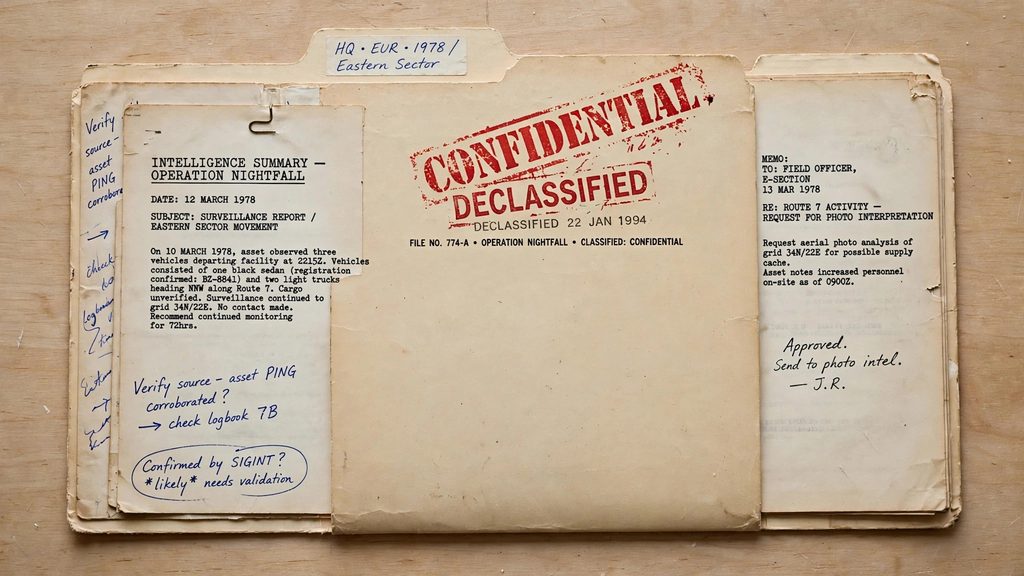
That correction actually makes the document more interesting. Instead of being a secret CIA declaration that Randi was wrong, it becomes a surviving piece of the scientific argument itself: the researchers answering a hostile magician point by point, explaining what they believed Randi had misunderstood, while also defending the limitations they had publicly acknowledged.
Point One | Did Shipi Shtrang Have Access to the Targets?
One of Randi’s central concerns involved Shipi Shtrang, Geller’s manager and brother-in-law. If a confederate could see the target information and transmit clues to Geller, an apparently impossible drawing or identification could potentially be produced without any paranormal information transfer at all.
The rebuttal’s answer is unequivocal: during the SRI experiments at issue, neither Shtrang nor another potential confederate was permitted into the target area. The document says this precaution had been adopted partly on the advice of consulting magicians. It also argues that Geller was not permitted to change his position during an experiment in ways that would have created the opportunity Randi proposed.
That is a legitimate correction if the historical question is whether Randi accurately described the formal protocol. And this is one of the places where the original article’s framing was too strong: a proposed cheating mechanism is not evidence that the mechanism actually occurred, particularly if the documented protocol really excluded it.
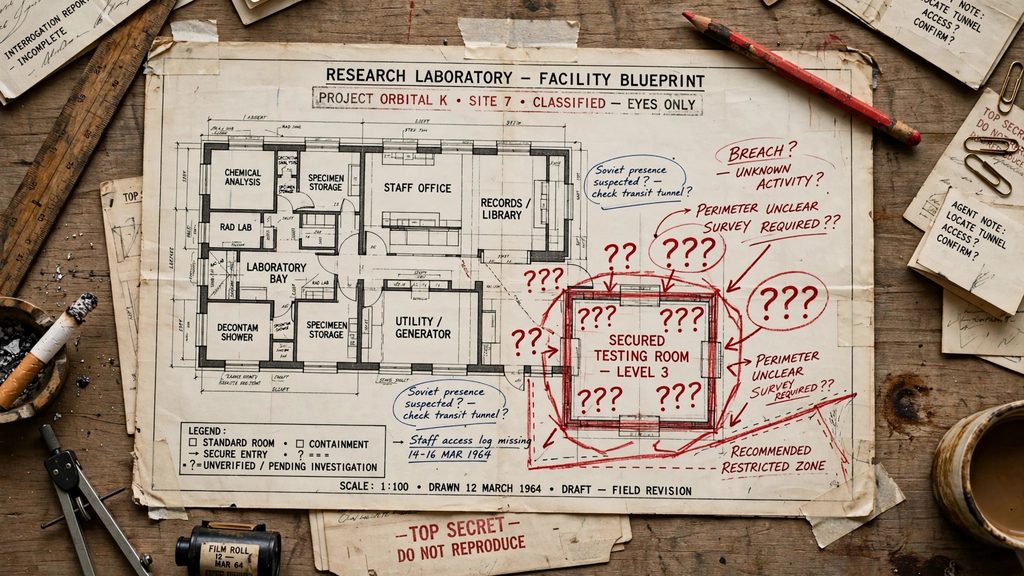
But there is an equally important second question: was the documented protocol actually sufficient to eliminate every plausible route of information leakage or manipulation? The rebuttal can answer the first question without automatically answering the second. Experimental security is not established simply because researchers state that a loophole was closed. It is established when the controls are independently examined and shown to prevent the relevant pathways.
Point Nine Is Where the Document Starts Giving Away the Game
Randi discussed a film sequence involving compass deflection and spoon bending as examples of effects that he believed could have been produced by ordinary means. The rebuttal responds with something more complicated than a declaration of victory.
It quotes the SRI film’s own narration acknowledging that the compass experiment was unsatisfactory because it did not meet the laboratory’s protocol standards. The researchers later discovered that similar compass deflections could be produced with a small piece of metal. Even though they did not have evidence that this was what Geller had done, they classified the experiment as inconclusive.
That is not a trivial detail. It means the researchers themselves were willing to throw out a dramatic-looking result when they discovered an ordinary mechanism capable of producing the same effect.
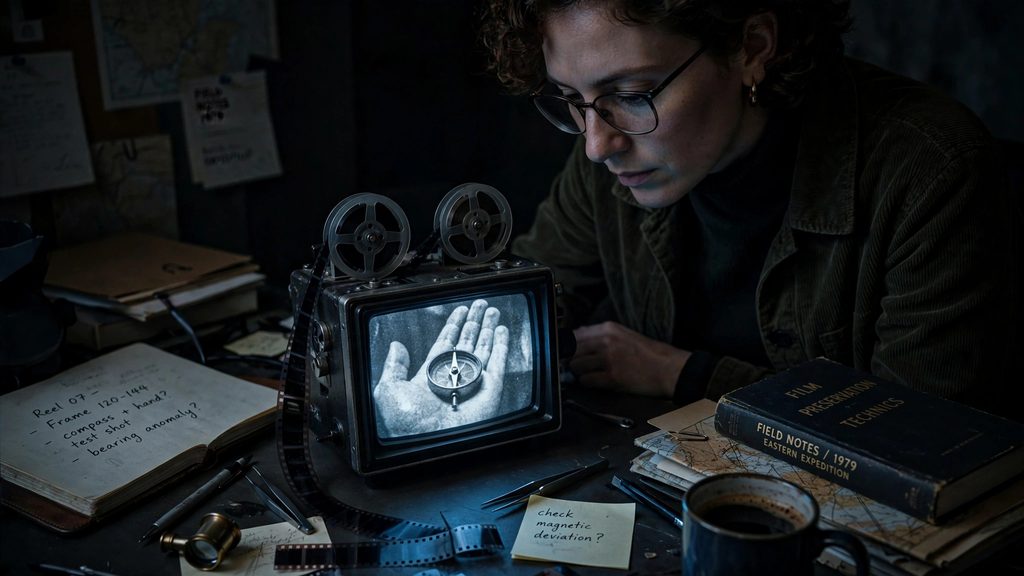
The spoon-bending discussion is similarly revealing. The SRI film acknowledged that the laboratory had not demonstrated Geller bending metal under conditions that distinguished ordinary manipulation from paranormal action. The film itself raised the possibility that the effect could involve extraordinary manual control rather than an unexplained physical transformation.
So the declassified rebuttal does not reveal a laboratory that blindly declared every strange event psychic. It reveals something more nuanced: researchers who believed some of their results deserved further investigation while explicitly rejecting some experiments as inadequate.
The Failed Test the Rebuttal Had to Admit
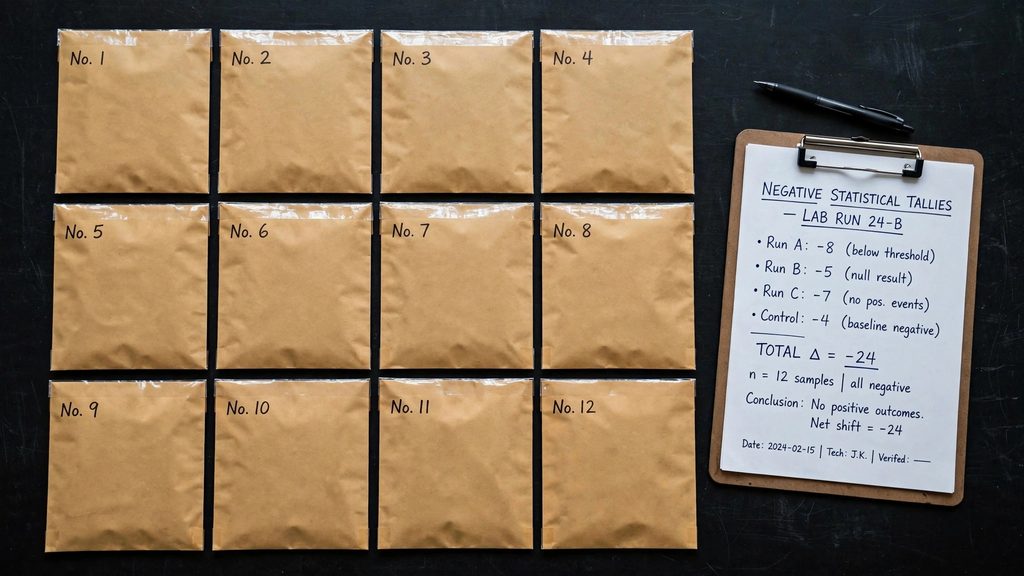
Randi also criticized SRI for allegedly ignoring negative results. The rebuttal’s response is particularly important because it points directly to a failed 100-envelope clairvoyance experiment.
The document states that the negative result was not hidden from the published record. It says the test appeared in the Nature paper itself, and it also points to negative results involving compass deflection and metal bending in the SRI film and publication.
This substantially weakens one of the easiest versions of the skeptical accusation: that the researchers simply reported successes and concealed failures. The documentary record shows that at least some negative results were reported.
But it does not solve the deeper problem. Reporting failures is necessary. It is not sufficient. The scientific question is whether the positive findings survive independent replication under controls strong enough to exclude ordinary explanations. A study can be completely honest and still produce an incorrect conclusion.
Ray Hyman Saw Something Very Different
One of the most important outsiders was psychologist Ray Hyman, a prominent skeptic who was asked to observe the SRI work. Hyman’s assessment was devastating. He argued that the demonstrations he witnessed contained obvious opportunities for ordinary information leakage and that the experimental records were insufficiently controlled.
A contemporaneous account preserved in the declassified record describes Hyman observing Geller apparently reproduce information while, according to Hyman, leaving open opportunities to see the movement of a person’s arm. In another incident involving a compass, Hyman demonstrated that ordinary movement could produce a deflection. He subsequently described the SRI tests as extraordinarily sloppy and criticized the earlier data as poorly controlled.

There is an important qualification here: Hyman’s observations were not necessarily conducted under the formal conditions of the later SRI protocols. The rebuttal makes exactly that point. It distinguishes the informal demonstrations Hyman witnessed from the controlled experiments the researchers considered their actual evidence.
That disagreement cannot be settled simply by asking which man sounded more confident. The correct historical question is which experiments were actually conducted under what conditions, who knew what information, how the targets were selected, what was recorded, and whether an independent investigator could reproduce the results.
And Then There Was the CIA
The reason this story became part of the intelligence archive was not because American intelligence agencies suddenly became convinced that people could bend spoons with their minds. During the Cold War, U.S. officials became interested in reports that the Soviet Union and other countries were investigating parapsychology and anomalous cognition. The strategic question was straightforward: if an adversary were developing a genuinely useful capability, ignoring it could carry a cost.
That created an unusual institutional environment. Intelligence agencies did not necessarily need to believe that psychic phenomena were real before investigating them. They needed to decide whether the possibility was important enough to test.
The CIA later acknowledged that the government funded remote-viewing research for years, eventually transferring the programme to the Defense Intelligence Agency. The programme became associated with the name Stargate. In the mid-1990s, the CIA commissioned the American Institutes for Research to evaluate the accumulated research and its usefulness to intelligence.
The final evaluation did not simply declare that every reported anomaly was imaginary. It concluded that some experimental results appeared unusual enough to merit consideration, but that the information generated by remote viewing was too unreliable and inconsistent to be useful for intelligence operations. The CIA subsequently ended the programme. That distinction is essential: an intelligence agency can conclude that a phenomenon is worth investigating without concluding that it has been demonstrated as a useful paranormal capability.
What the CIA Record Does, and Does Not, Prove
The declassified record proves that American intelligence institutions took these claims seriously enough to fund and preserve research into them. It proves that SRI researchers defended their work vigorously against Randi’s criticisms. It proves that Randi’s book contained specific claims that the researchers considered factually wrong. And it proves that the researchers themselves distinguished between observations they found intriguing and experiments they regarded as inconclusive.
It does not prove that Uri Geller possessed paranormal powers.

It does not prove that Randi’s proposed methods of cheating were all correct. It does not prove that they were all wrong. It does not transform the CIA’s possession of a document into an independent scientific endorsement. And it certainly does not turn an intelligence-funded research programme into experimental confirmation merely because the government was willing to spend money investigating the possibility.
The Part Both Sides Had Trouble Admitting
Randi was right about something fundamental: extraordinary claims require controls capable of defeating the ordinary methods by which extraordinary-looking effects can be produced. A magician’s criticism of an experiment is not automatically decisive, but it can expose weaknesses that a conventional laboratory researcher might never think to test.
The SRI researchers were right about something else: Randi’s proposed loopholes were not automatically established facts simply because they were technically possible. If a particular confederate was excluded from the target area, then saying that confederate could have signalled the answer does not prove that signalling occurred. If an experiment was conducted under a protocol that prevented the proposed manoeuvre, the criticism has to address the protocol actually used rather than an imagined version of it.
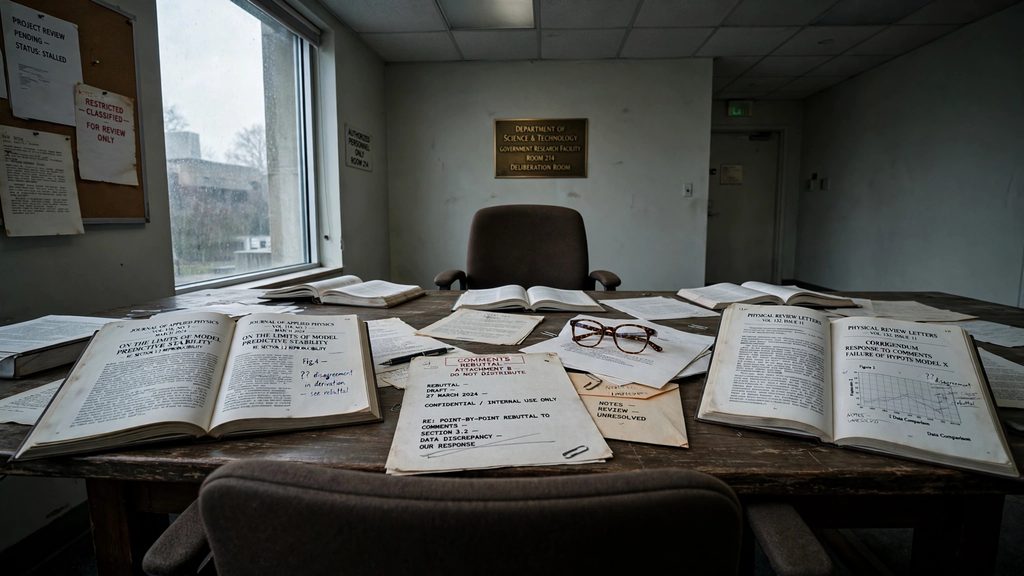
And both sides could still be wrong about the ultimate conclusion.
A badly controlled experiment does not prove fraud. An experiment that survives one proposed loophole does not prove psychic ability. A statistically unusual result does not automatically identify its mechanism. A failed demonstration does not reconstruct every previous demonstration. And a government agency’s decision to investigate an extraordinary claim is not the same thing as a government agency confirming it.
The Most Damaging Sentence Is Not the One You Expect
The strangest thing about the declassified rebuttal is that its most important evidence is not one of its attacks on Randi. It is the concession buried inside its defense.
The SRI position, as reproduced in the document, was that Geller had been observed bending metal, but that the researchers had not obtained adequately controlled data sufficient to support the paranormal hypothesis. Their compass experiment had been declared unsatisfactory. Their negative 100-envelope result had been reported. Their film acknowledged that ordinary explanations remained possible for some of the most visually dramatic demonstrations.
That is not the record of a scientific institution secretly discovering that psychic powers were real and then being silenced.
It is the record of something much more human: researchers who thought they had encountered phenomena worth investigating, skeptics who believed the controls were inadequate, magicians who understood deception from the inside, and an intelligence establishment willing to spend money finding out whether any of it could become useful.
Decades later, the answer was not the one either camp wanted. The research did not produce a reliable intelligence capability. The remote-viewing programme was eventually closed because the information was too inconsistent and ambiguous for operational use. The historical record therefore does not end with a psychic victory or a skeptic’s perfect knockout.
It ends with a document.
Twenty-four objections. Twenty-four replies. A magician attacking the experiment. Researchers defending it. A government archive preserving the argument. And, buried inside the defense, the admission that the most spectacular claims had never been demonstrated under controls strong enough to establish the paranormal explanation.
That is the real lesson of the Geller files. The CIA did not secretly prove that Uri Geller was psychic. James Randi did not automatically prove that every SRI result was a trick. What the surviving record shows is more uncomfortable than either conclusion: once extraordinary claims enter a laboratory, the decisive question is not who has the more impressive story, the more famous critic, or the more powerful institution behind them. It is whether the experiment has been built so carefully that neither belief nor disbelief gets to decide what happened.