




Geologists really don’t fully agree on what caused the Great Unconformity, the genuine, well-documented gap where Grand Canyon rock a billion years old sits directly beneath rock five hundred million years younger. That’s genuine, active, published scientific debate, argued at conferences and in peer-reviewed journals under researchers’ own names, not a mystery the parks service is forbidden to discuss. G.E. Kincaid never explored any tunnel system, because he never existed, a documented 1909 newspaper hoax this site has traced elsewhere
The Hopi migration to Palatkwapi is real, sacred oral tradition, worth far more respect than a “star technician” gloss gives it. And the Phoenix Lights were two separate events, one with a name and a confirmed pilot attached, one still genuinely, honestly unresolved.
Geologists Argue About This Openly, in Public
John Wesley Powell first identified the gap during his documented 1869 Grand Canyon expedition, and geologist Clarence Dutton formally named it the Great Unconformity in 1882. That’s the opposite of a suppressed finding, it’s one of North America’s oldest, most publicly discussed geological features, taught in every introductory earth science course. Grand Canyon’s longtime park naturalist Eddie McKee described it in detail in 1969 as a composite erosion surface built from multiple missing intervals, not one clean cut. Two genuinely competing scientific hypotheses have dominated recent research: one holds that Snowball Earth glaciations, between roughly 720 and 635 million years ago, scraped away kilometers of rock as ice sheets ground across the continent. The other, developed through thermochronology work published by researchers including Rebecca Flowers and William McDannell, points instead to the breakup of the ancient supercontinent Rodinia, whose rifting exposed and eroded deep basement rock through ordinary tectonic uplift. A 2024 Harvard colloquium led by Francis Macdonald went further, presenting evidence that Snowball Earth wasn’t actually the primary driver at all. That’s a live, unresolved scientific argument, conducted by named geologists publishing under their own credentials, precisely the opposite of a phenomenon “geologists cannot explain without lying to the public.”
The Kincaid Tunnels Trace to a Named Hoaxer, Not a Cover-Up
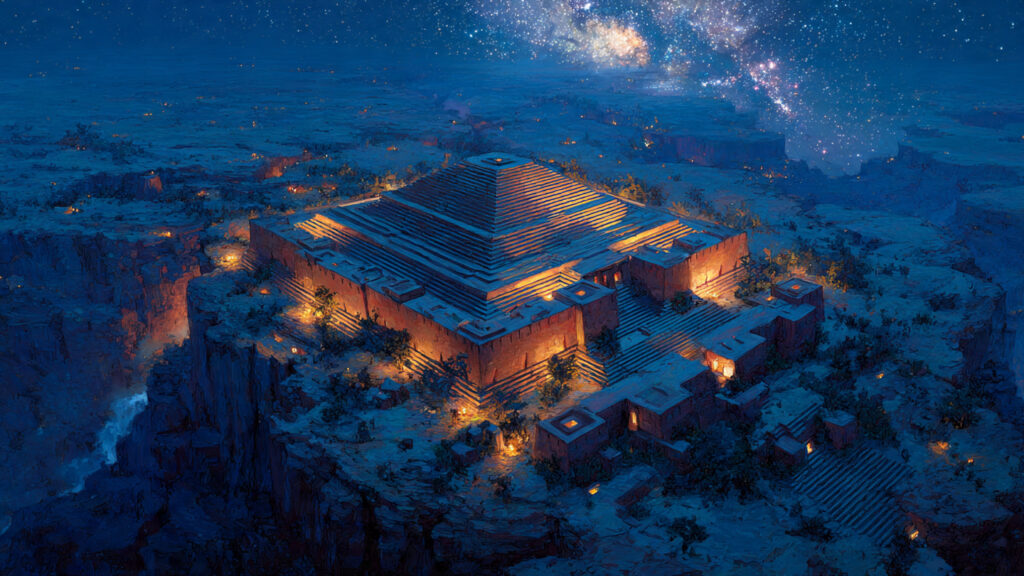
This site has documented the actual paper trail behind this specific legend in detail elsewhere: it originates entirely from a single April 5, 1909 article in the Arizona Gazette, describing an explorer named G.E. Kincaid and a Smithsonian archaeologist named Professor S.A. Jordan. More than a century of inquiry by historians, librarians, and the Smithsonian Institution itself has found no record that either man existed, no funded expedition matching the description, and no artifacts entering any Smithsonian collection. The most credible research traces the article’s actual authorship to Joe Mulhatton, a documented local tall-tale writer of the era nicknamed “the Liar Laureate of the World” for exactly this kind of fabricated news story. No scrubbed ledger or protected coordinates were ever required, because there was never an actual expedition to protect.

Palatkwapi Deserves Its Actual Tradition, Not an Invented Overlay
The Hopi migration narrative involving Palatkwapi, the Red City, is genuine, sacred oral history, carrying real cultural and spiritual weight within Hopi tradition, and it deserves to be treated with the seriousness that living religious tradition warrants rather than dressed in borrowed science-fiction vocabulary. Hopi oral accounts describe a migration south to a city that was ultimately lost, generally understood within the tradition as a consequence of the community straying from the guidance and values it had been given, followed by a long return migration north toward the Hopi mesas of northern Arizona, where their descendants live today. Terms like kopavi do appear in genuine Hopi spiritual vocabulary, referring to the crown of the head in a ceremonial and symbolic sense, documented religious concepts belonging to a living faith, not a “biological portal” requiring outside verification. Presenting Hopi religious tradition as literal engineering documentation from extraterrestrial visitors isn’t a respectful expansion of the story. It replaces an actual living tradition, still meaningful to Hopi people today, with an invented one that has nothing to do with what Hopi elders and scholars of Hopi culture actually describe.
The Phoenix Lights Were Two Distinct Events
The honest record here is more interesting than either a confident debunking or a confident cover-up claim. On March 13, 1997, Arizona witnesses reported two distinct phenomena. A later sequence, stationary lights hovering over the Estrella Mountains beginning around 10 p.m., has a specific, confirmed explanation: Maryland Air National Guard A-10 aircraft, flying out of Davis-Monthan Air Force Base as part of a documented winter training program called Operation Snowbird, dropped LUU-2B/B illumination flares over the Barry M. Goldwater Range, and Lieutenant Colonel Ed Jones publicly confirmed in 2007 that he was one of the pilots who did it. That part of the case is genuinely, credibly resolved.
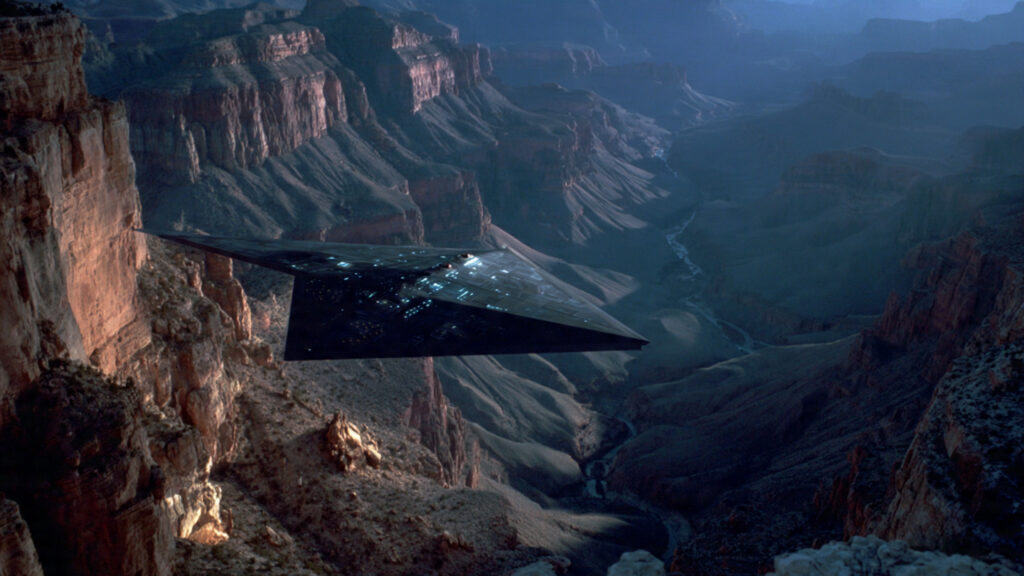
The earlier event, a silent, V-shaped formation observed between roughly 7:55 and 8:40 p.m., including by then-Governor Fife Symington, remains more honestly contested. Witness descriptions of a dark, solid mass blocking stars don’t fully match the standard explanation of aircraft flying in formation, and no completely satisfying account has settled that specific portion of the night. That’s a genuinely worthwhile distinction, one part of the story resolved by a named pilot’s own admission, one part still honestly open, rather than a single uniform mystery covering an entire evening.
Four Threads, Verified in Four Different Ways

None of these four threads needed to be merged into one conspiracy to remain worth exploring. The Great Unconformity is a documented, actively contested geological question with named researchers arguing competing hypotheses in public. The Kincaid tunnels trace to a documented newspaper hoax with a likely named author. Palatkwapi is a living piece of Hopi sacred tradition, deserving respect on its own terms rather than an invented technological gloss. And the Phoenix Lights split cleanly into one resolved event and one that honestly isn’t, a distinction worth preserving rather than flattening into a single unbroken mystery. Separated back into their actual, documented shapes, each one holds up as something worth knowing on its own terms.