



The taximeters recorded the routes.
This is the evidentiary innovation that separates the Ishinomaki taxi ghost accounts from the standard pattern of post-disaster anomalous experience reports and that brought Yuka Kudo’s sociology research to the attention of her supervisor, Dr. Kiyoshi Kanebishi at Tohoku Gakuin University.
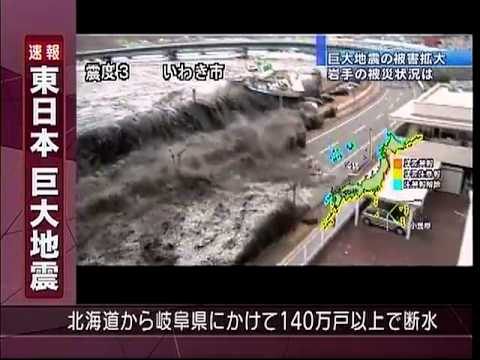
On March 11, 2011, a magnitude 9.1 earthquake struck the Japanese coast and generated a tsunami whose walls of water struck the coastline approximately an hour after the initial tremors. The Japan Fire and Disaster Management Agency recorded more than 15,000 deaths and 2,500 missing persons in the subsequent accounting. The coastal city of Ishinomaki in Miyagi Prefecture was among the most severely affected communities: entire neighborhoods were destroyed, thousands of residents were killed, and the survivors faced the combination of physical destruction and mass sudden bereavement that consciousness researchers have repeatedly identified as the conditions most associated with anomalous post-death encounter reports.
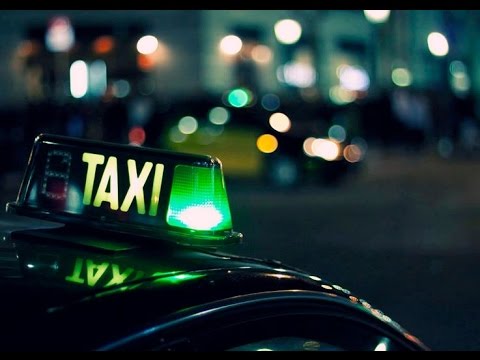
In the months following the tsunami, taxi drivers in Ishinomaki began reporting a type of encounter: passengers who boarded their vehicles, gave destinations in areas destroyed by the tsunami, and disappeared from the back seat before the journey was completed or when the driver turned to address them. These accounts would have remained in the category of standard ghost story anecdote without the intervention that Kudo’s research methodology introduced.
Kudo, conducting sociological research on the post-tsunami community’s psychological and spiritual responses, identified the taxi driver accounts as the most verifiable category of ghost encounter reports in the region. Her reasoning, recorded in Kanebishi’s description of her methodology, was that taxi drivers maintain physical records of their routes through the meter system whose data is preserved independently of the driver’s testimony.
Whether a taxi drove a route on a date can be verified against the taximeter record. Whether the route corresponds to a journey that would only make sense if a passenger had requested it, to a destination in a destroyed neighborhood that a driver navigating solo at random would not typically choose, is the evidentiary question that the taximeter records allow to be addressed rather than simply asserted.
Kanebishi’s own assessment of Kudo’s research is the institutional validation that makes the taxi driver accounts most significant: in all these cases, the taximeters corroborated the routes made.
The Passenger Who Asked if She Was Dead
The accounts that Kudo recorded are the evidentiary core of the Ishinomaki ghost accounts, whose detail distinguishes them from the standard ghost encounter report.
One recorded account describes a woman who boarded a taxi in the months following the tsunami and asked the driver to take her to the Miyagi district, one of the areas whose destruction by the tsunami was total and confirmed. When the driver informed her that the area had been destroyed, the passenger asked him: am I dead? Before the driver could respond, the back seat was empty.
The information structure of this account is the element that consciousness researchers find most significant: the passenger’s question implies awareness of her own death’s possibility combined with continued orientation toward the physical world she had inhabited before the tsunami. Whether this psychological profile, partial awareness of death combined with continued attachment to physical locations, corresponds to the framework that the NDE research and the consciousness-survival literature describes as characteristic of the immediate post-death period, is the question that the account’s detail raises.
A second recorded account describes a young man in his twenties who boarded a taxi in August wearing a thick winter coat, an unusual detail the driver noted at the time. The destination was reached. When the driver looked toward the back seat at journey’s end, the seat was empty. The detail of inappropriate seasonal clothing is recorded across multiple ghost encounter accounts globally as a characteristic feature of encounters with recently deceased individuals who are dressed as they were at the moment of death: the tsunami struck in March, when thick winter clothing would have been appropriate.
Whether the thick coat’s inappropriate seasonality in August reflects a genuine observed detail that supports the ghost interpretation, a psychological projection by the driver who had been primed by the broader Ishinomaki ghost narrative to interpret an ordinary passenger who left quickly as a supernatural encounter, or something whose character the available account does not fully resolve, is the question that the seasonal clothing detail raises.
Reverend Kaneda and the Possession Accounts
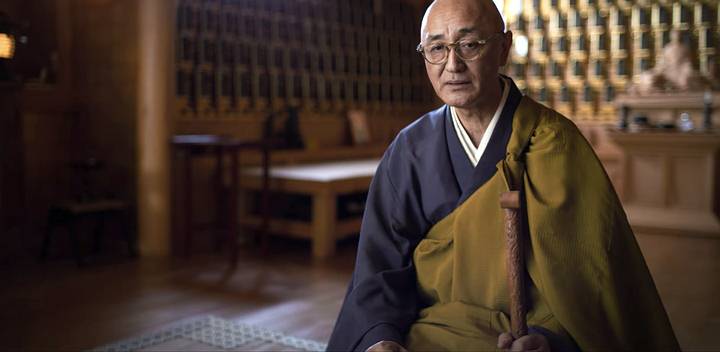
Reverend Taio Kaneda, a Buddhist monk working in the Ishinomaki region following the tsunami, became one of the primary institutional resources for survivors experiencing what they described as possession by the spirits of tsunami victims.
His case work represents the institutional engagement that Japanese Buddhist practice has developed for managing the relationship between the living and the recently dead: not denial, not psychiatric referral, but the established traditional framework of sutra recitation and spirit guidance whose function is to assist spirits in completing their transition rather than to suppress the experience of those who encounter them.
The possession account recorded in both the Unsolved Mysteries episode and in Richard Lloyd Parry’s 2017 book Ghosts of the Tsunami involves a young woman named Ami who experienced possession by multiple spirits. The most detailed account from Ami’s possession involves a girl who communicated through Ami a message: she was looking for her mother to apologize for letting go of her younger brother’s hand during the tsunami, which had resulted in the brother being swept away.
The information structure of this possession account is the element that distinguishes it from the standard possession narrative. The communication contains verifiable information: a relationship, an event, emotional content, and a purpose. Whether this information corresponds to an actual confirmed event from the tsunami, a family whose records show a daughter who survived and a son who drowned while the daughter held his hand, is the evidentiary question that the account’s verification would address.
Whether Kaneda’s research includes records of such verification attempts, whether any of the possession accounts in his case files have been matched against the official casualty records of the tsunami, is the evidentiary question that this body of case material raises without the available sources fully addressing.
Richard Lloyd Parry’s Recorded Account
Parry’s Ghosts of the Tsunami, published in 2017 by MacLehose Press, is the most extensively recorded mainstream engagement with the Ishinomaki ghost accounts from a credentialed journalist whose methodology involved sustained field research in the affected communities over multiple years.
His account of the man identified by the pseudonym Takashi Ono in the book provides the most specifically detailed possession account in the available literature. Ono lived miles from the tsunami’s impact zone but drove to the coast to observe the devastation. That night he experienced what his family described as a complete behavioral change: he collapsed to the floor, rolled from side to side, made guttural noises, and spoke about death for three consecutive episodes over three days, with complete amnesia for the episodes on waking.
The behavioral sequence Parry describes corresponds to the known symptom profile of dissociative episodes whose relationship to possession experiences across multiple cultures and religions appears in the cross-cultural psychology literature. Whether these episodes represent genuine spirit possession in the theological sense, dissociative psychological responses to the traumatic visual experience of the tsunami’s destruction, or something whose character the available medical and consciousness research literature motivates examining without establishing, is the question that the behavioral profile raises.
Ono’s response to Buddhist monk intervention, the recitation of sutras producing immediate resolution of the episodes and reported subjective liberation, is the treatment outcome that Buddhist institutional practice’s established efficacy in possession cases produces across multiple recorded Japanese examples. Whether this outcome reflects the genuine departure of spirits facilitated by the ritual framework, a placebo response whose effectiveness is mediated by the cultural context that makes the ritual meaningful, or something whose character the clinical psychology of ritual healing addresses without fully resolving, is the question that the treatment outcome raises.
The Cultural Framework and Its Evidentiary Implications
Japan’s cultural and religious framework for the relationship between the living and the recently dead is the recorded context whose implications for the Ishinomaki ghost accounts’ evidentiary weight deserve explicit treatment.
The Obon festival, recognized as one of Japan’s most important annual ceremonies, is a Buddhist observance of welcoming ancestral spirits back to their home communities for a brief period each summer and then ceremonially seeing them off again. The institutional infrastructure this observance represents, including the well established family grave-tending practices, the bon odori dances, and the tōrō nagashi floating lantern ceremonies that guide spirits back to the other world, establishes that Japanese communities have cultural tools for acknowledging and managing spirit presence that most Western communities lack.
Whether this cultural framework produces more accurate reporting of genuine anomalous phenomena because it provides a non-stigmatized framework for disclosure, or produces more spirit encounter reports because the cultural expectation of spirit presence shapes the interpretation of ambiguous experiences toward the supernatural explanation, is the cross-cultural psychology question that the comparison of post-disaster ghost account rates across different cultural contexts would address.
The comparison is instructive: in the United States, where the dominant cultural framework for post-death experience is either theological survival in a separated realm or complete cessation, the survivors of comparable mass disasters including Hurricane Katrina and the 9/11 attacks produced recorded anomalous encounter reports whose rate and character have not been as extensively studied or as openly discussed as the Ishinomaki accounts.
Whether the difference in reporting reflects a genuine difference in the frequency of the phenomena, a difference in the cultural willingness to report and discuss them, or a difference in the institutional frameworks that exist to receive, validate, and record such reports, is the question that the cross-cultural comparison raises.
What the Taximeter Records Establish
The evidentiary contribution of the taximeter records is worth restating with precision, because the difference between what the records can and cannot establish determines their weight in the broader consciousness research framework.
What the taximeter records can establish: that taxis traveled routes on dates, and that those routes correspond to the destinations that the drivers reported their ghost passengers requesting.
What the taximeter records cannot establish: that there was no physical passenger in the vehicle, that the driver’s account of the passenger’s disappearance is accurate, or that the route was taken because a spirit directed it rather than because the driver, expecting ghost passengers in the Ishinomaki cultural context, drove toward destroyed neighborhoods that such passengers would request.
The taximeter records are physical evidence of routes taken. They are not physical evidence of supernatural passengers. Their value is in corroborating the drivers’ accounts of having driven toward destroyed areas, which establishes that the drivers were at least telling the truth about the routes, and whose character makes the alternative explanation, that drivers invented passenger accounts to explain routes they took for their own reasons, require a motivation that the available record does not establish.
Kanebishi’s own assessment that the taximeter records corroborate the accounts is the institutional validation that moves the taxi ghost accounts from uncorroborated witness testimony to partially corroborated physical evidence, which is the evidentiary distinction that makes the Ishinomaki case meaningfully different from the majority of ghost encounter reports in the global literature.
The Consciousness Research Parallel
The Ishinomaki ghost accounts connect to the library’s consciousness research framework through the recurring pattern of post-sudden-death anomalous encounter reports whose cross-cultural distribution the NDE piece, the Greek Underworld piece, and the Protection Traditions piece develop from different evidential directions.
The consciousness research framework most relevant to these tsunami ghost accounts is the recorded NDE literature’s finding that consciousness appears to persist through the period immediately following biological death, as recorded in the veridical perception cases where patients accurately describe events occurring in the room during verified cardiac arrest. Whether this recorded post-death persistence extends to the period recorded in the Ishinomaki accounts, months after the physical death of the individuals whose spirits are being reported, is the question that the NDE literature’s temporal claims and these accounts’ own temporal distribution together raise.
The recorded concentration of Ishinomaki ghost reports in the months immediately following the tsunami, rather than in the years or decades that followed, is the temporal pattern that corresponds to the transition period that multiple religious and consciousness research frameworks identify as the critical post-death phase during which the deceased’s relationship to the physical world is not yet resolved.
Whether the taxi drivers were genuinely carrying the spirits of tsunami victims through the streets of Ishinomaki in the months following March 2011, whether they were carrying their own grief and projection through those streets in the form of experiences their cultural framework encoded as spirit encounters, or whether some combination of genuine anomalous phenomenon and culturally shaped interpretation produced these accounts, is the question that the taximeter records, Kudo’s research, Kaneda’s case files, and Parry’s book together raise without the available evidence definitively resolving.
The taximeters recorded the routes. Something got into those taxis and asked to go home.
Those Tohoku ghost taxis are the detail that keeps the case documented rather than dismissed.