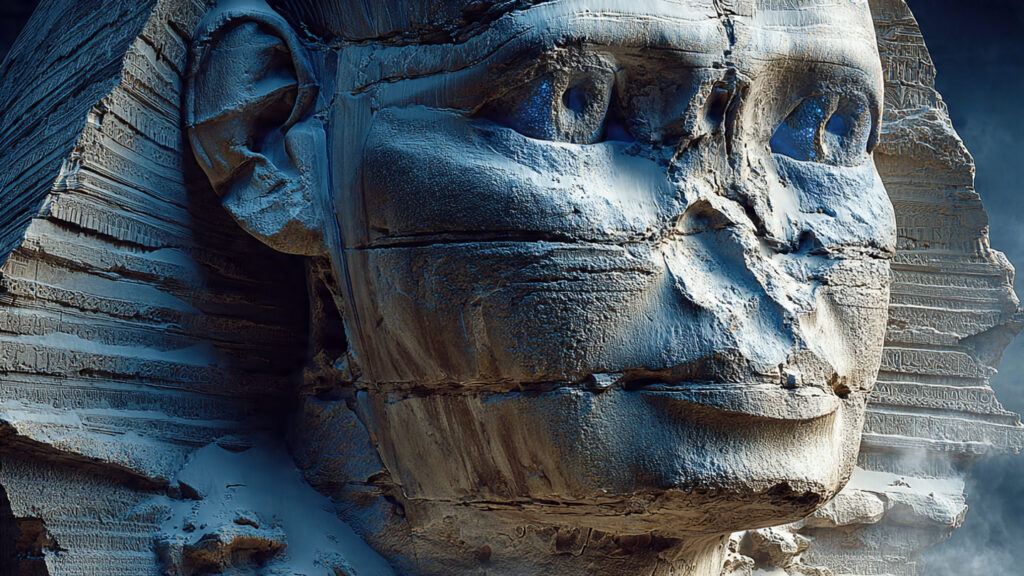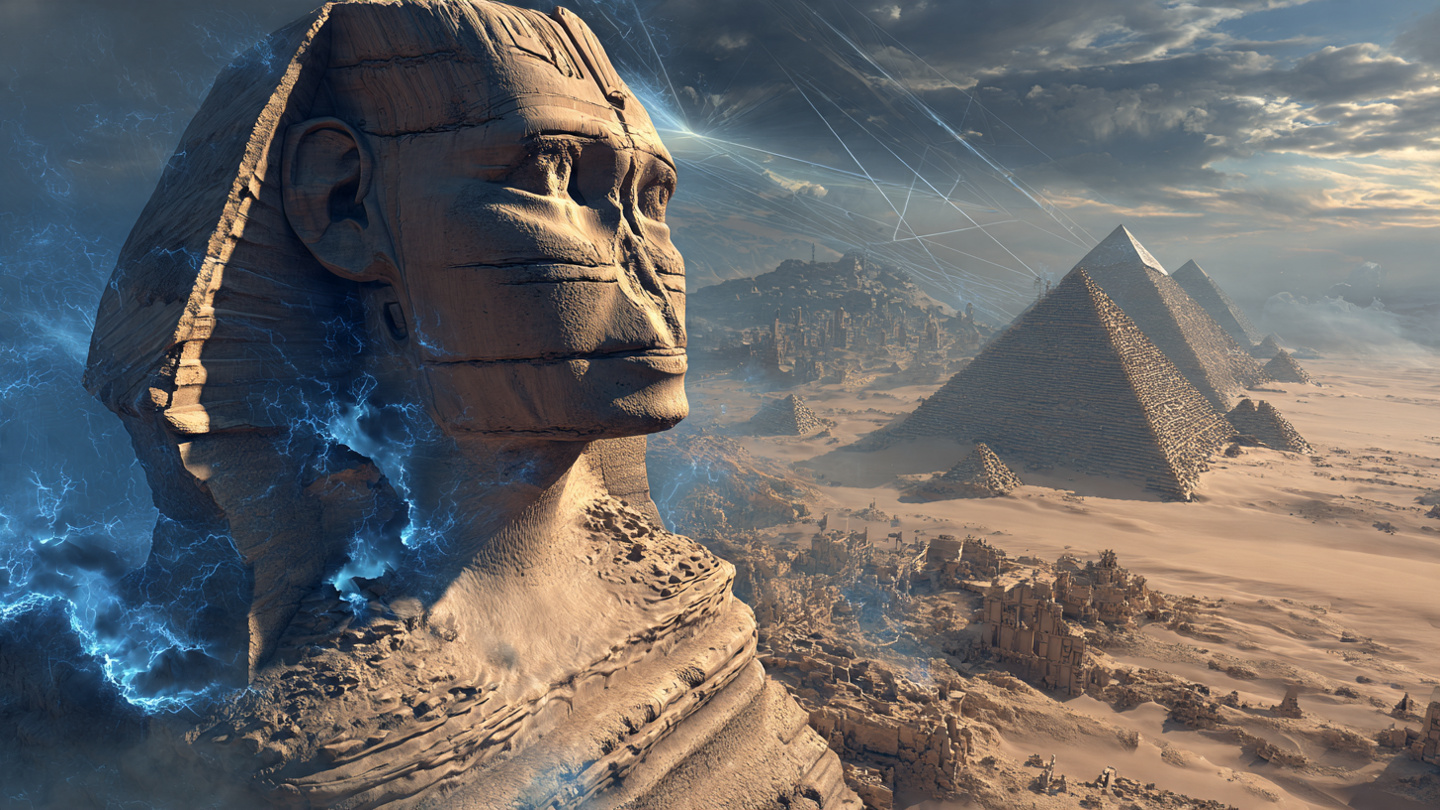
Tunnels run through the Great Sphinx: Perring’s Hole, drilled in 1837 by Howard Vyse’s engineer. A rump passage Egyptian workers saw during Émile Baraize’s 1926 excavation. A shaft atop the head. Egyptologists Mark Lehner and Zahi Hawass mapped all three between 1978 and 1998. The 1979 American involvement traces to the ARCE Sphinx Project, an architectural survey, not a military engineering mission.
Edgar Cayce’s 1933 trance readings named an exact predicted discovery window, 1996 to 1998, tied to what he called the second coming of Christ. That window came and went. Lehner’s own team searched precisely where Cayce said to look and found natural caves and dead ends, the same archaeologist whose own education Cayce’s foundation once funded.
The Named Tunnels Inside the Sphinx
Perring’s Hole, named for Howard Vyse’s engineer, was drilled into the Sphinx’s back in 1837 while searching for chambers, reaching 27 feet before the drill rod stuck. Zahi Hawass cleared it in 1978 and found a fragment of the Sphinx’s own headdress inside. A separate rump passage came to light when three elderly men employed by Egypt’s Antiquities Organization told Lehner and Hawass they’d personally seen it opened during Émile Baraize’s 1925-1936 excavation of the Sphinx, a passage that descends to the water table. A third shaft sits atop the head.
Lehner and Hawass’s joint excavations between 1978 and 1998 concluded these were most likely later additions, treasure-hunter tunnels and maintenance access carved long after the Sphinx’s original construction, not sealed entrances to a hidden lower city. That’s the published archaeological consensus, reached through direct excavation, not suppressed from public record.
What the 1979 American Involvement Was
The American Research Center in Egypt ran the ARCE Sphinx Project from 1979 to 1983, an architectural and geological documentation effort producing the first complete scale drawings, elevations, and structural geology maps the monument had ever received, alongside detailed records of prior restoration masonry. It was credentialed, published scholarly work aimed at understanding the Sphinx’s deteriorating limestone and its structural history, not technical extraction disguised as art conservation. American expertise was involved because ARCE has long coordinated US-Egyptian archaeological collaboration, not because NASA needed a reconnaissance mission.
Cayce’s Prediction, and What Happened to It
Between October and December 1933, Edgar Cayce described a “Hall of Records” containing 32 stone tablets, its entrance located between the Sphinx’s right front paw and the Nile, part of the same Atlantis mythology naming Bimini and the Yucatan alongside Egypt. Cayce predicted the Hall would be found and opened between 1996 and 1998, tied to what he described as the second coming of Christ. That window is three decades past. In 1998, Zahi Hawass explored the specific areas seismic surveys had flagged as anomalous and found, in his own words, only natural caves and dead-end tunnels.
Mark Lehner’s own history adds a detail most retellings leave out: Lehner began as a believer, his early education partly funded by Cayce’s foundation, and became an archaeologist specifically to search for the Hall. He concluded, after his own excavation, that the site held “thousands of tombs of real people, statues of real people with real names,” and nothing resembling Cayce’s Atlantean library.
Why the Cracks Don’t Need a Hidden Signal
The Sphinx’s deterioration has an unglamorous explanation. Built from soft Eocene limestone with naturally varying hardness between its layers, the monument has weathered for over 4,500 years under wind-driven sand abrasion, temperature-cycle expansion and contraction, groundwater salt crystallization, and, more recently, industrial air pollution from nearby Cairo, the combination of stresses that prompted the 1979 to 1998 restoration and documentation efforts in the first place.
Structural engineers and geologists have published detailed accounts of exactly which limestone strata degrade fastest and why. That’s an ongoing conservation challenge, not evidence of energy pulsed upward from a subterranean level.
What the Excavation Record Shows
None of this needs an invented twin. The tunnels themselves, Perring’s Hole, the rump passage, the head shaft, are named, dated, and explored by credentialed Egyptologists working in the open. The 1979 American involvement is published architectural scholarship.
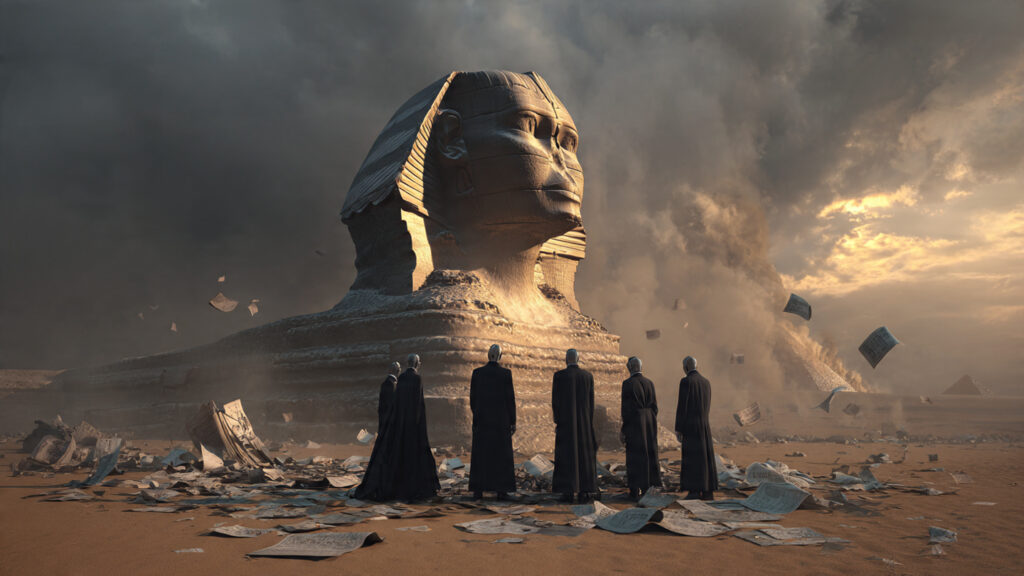
Cayce’s prediction, a named date range tied to a named religious event, came and went unconfirmed, and the archaeologist who searched hardest for it, funded in his own education by Cayce’s foundation, found what any excavation finds: tombs, names, limestone wearing down the way limestone does. The record is complete and available to anyone willing to read the excavation reports instead of the legend built on top of them.