
Since 1998, a network of computers distributed across the world has been doing something almost comically simple: generating random numbers, continuously, day and night. The data are collected centrally and analyzed for one extraordinary possibility, that when millions of people become intensely focused on the same event, the machines might become slightly less random together.
The events are not obscure. The project has examined moments such as the September 11 attacks, major royal ceremonies, New Year’s celebrations, and other occasions expected to produce unusually concentrated global attention.
The machines have no idea what is happening. They simply generate numbers. The question is whether something about human attention itself leaves a detectable statistical trace.

After years of data collection and hundreds of formal analyses, the researchers behind the project say the answer is yes. Critics say the apparent signal can emerge from the enormous flexibility involved in deciding which events matter, which time windows count, and which statistical patterns deserve interpretation.
Both sides agree on something important: the experiment actually happened. The disagreement is over what the numbers mean.
It Started With a Funeral
The Global Consciousness Project did not begin as a decades-long worldwide network. Its immediate predecessor was a much smaller experiment conducted during the televised funeral of Princess Diana on September 6, 1997.
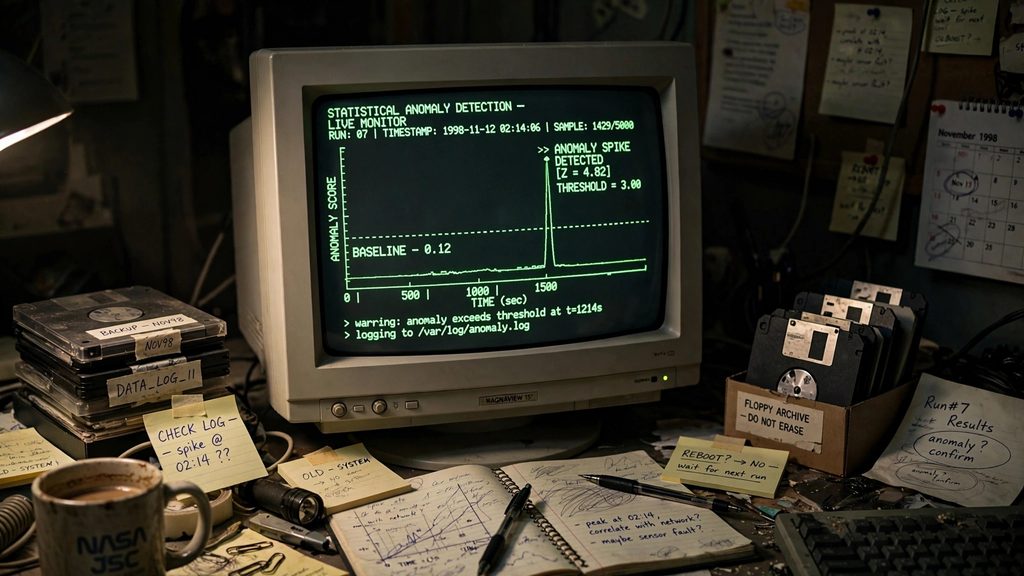
Researchers collected data from random-number generators during the event and later reported a deviation from the statistical expectation of randomness. Roger Nelson, the psychologist who would go on to establish the Global Consciousness Project, calculated that the result would occur by chance only about once in a hundred comparable tests.
That sounds dramatic. It isn’t, by itself. A one-in-a-hundred result is unusual, but unusual results are exactly what sufficiently large numbers of experiments inevitably produce. One anomalous observation cannot establish a new physical effect.
What it did provide was a hypothesis. Perhaps enormous concentrations of human attention could somehow correspond with small deviations in otherwise random physical systems. The only way to test that idea seriously was to stop looking at one funeral. So Nelson built a network.
The “Eggs” Are Real Random-Number Generators
The machines used by the project, informally called “eggs,” aren’t mystical devices. Their conceptual ancestry goes back to physicist Helmut Schmidt’s experiments with quantum-based random-number generators in the late 1960s. Schmidt was interested in whether human intention could influence genuinely random physical processes.
That line of research later intersected with Princeton’s Princeton Engineering Anomalies Research laboratory, or PEAR, where Nelson worked before establishing the Global Consciousness Project.
The GCP changed the scale of the experiment. Instead of asking whether one person could influence one machine, the project distributed generators around the world and allowed them to operate continuously. Each node independently produces streams of random data. The computers do not know whether a war has begun, a monarch has died, a sporting event is taking place, or millions of people are watching television. They simply keep producing numbers.

The hypothesis is that when human attention becomes unusually synchronized, the collective output might show an unusual degree of order. That is the entire premise. No machine reads minds. No computer measures consciousness directly. The experiment looks only for a statistical relationship between predefined periods of intense global attention and deviations in random-number behavior.
Seventeen Years. Five Hundred Events. One Extraordinary Number.
The project’s formal analysis eventually accumulated 500 event studies conducted over 17 years. According to Roger Nelson and physicist Peter Bancel, the combined result across those pre-registered analyses produced a Stouffer Z score of 7.31.
Taken at face value, that is enormous. It corresponds to a probability under a simple chance model so small that ordinary statistical language starts to become almost misleading: this is not merely an unusually good result. It is the sort of aggregate deviation that, if the assumptions behind the analysis are correct, demands an explanation.
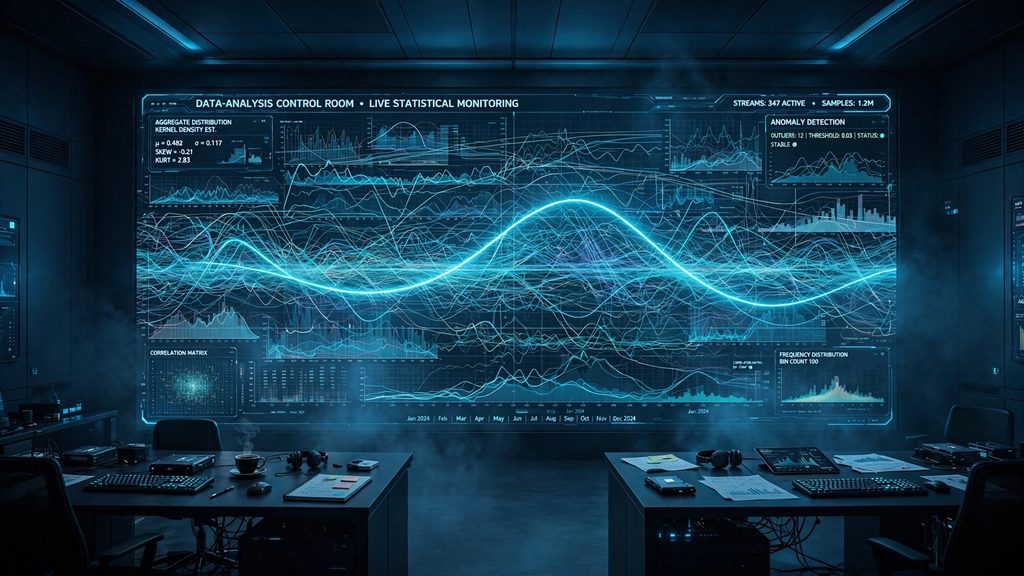
For the Global Consciousness Project, the obvious explanation is that something about globally shared human attention is associated with changes in the behavior of the network. That conclusion is where the real controversy begins. Because a very small p-value does not tell anyone why a pattern occurred. It only says that the pattern would be unusual under the statistical model being used. And the statistical model is where the fight lives.
Then Came September 11
No event has become more closely associated with the Global Consciousness Project than September 11, 2001. The attacks generated exactly the kind of worldwide attention the hypothesis was designed to investigate. Millions of people watched the same images. Millions experienced the same unfolding event. And the GCP data appeared to show an unusual departure from randomness.
It became the project’s signature result. But it also became the perfect target for methodological criticism. Because there was a deceptively simple question: when exactly did the event begin?
Should the analysis start when the first plane struck? When the second plane struck? When television networks began broadcasting the attacks? When the first reports reached the public? Should the window end after the towers fell? At midnight? After two days?

The answer matters enormously when the phenomenon being measured is a statistical fluctuation.
The Problem of the Clock
In a 2002 analysis, researchers Edwin May and James Spottiswoode examined the statistical treatment of the September 11 data and argued that the celebrated result was highly sensitive to the chosen analysis window. Move the boundaries. Extend the period. Change the exact interval being counted. The apparent anomaly can weaken dramatically, in some formulations becoming consistent with ordinary chance.
This is a serious problem. It doesn’t mean the data were fabricated. It means that a result can become much less impressive when the researcher is allowed to decide exactly which minutes belong to the phenomenon after seeing where the unusual numbers occurred.

Nelson rejected that criticism, arguing that the alternative treatment amounted to post-hoc selection and pointing to a separately specified two-day window around the attacks that produced an even stronger statistical result.
The dispute therefore became larger than September 11 itself. It became a question about experimental design. How much freedom can researchers have to define an event, its duration, its onset, and its relevant statistical test before the freedom itself becomes part of the explanation for the result?
One Alternative Doesn’t Require a Global Mind
May and Spottiswoode proposed an explanation that is particularly uncomfortable for the paranormal interpretation because it doesn’t require anyone to manipulate the data consciously. Their Decision Augmentation Theory suggests that experimenters themselves may somehow influence which data, time periods, or analytical decisions become associated with apparent anomalies.
The idea is subtle. Researchers do not have to cheat. They do not even have to realize they are selecting. If the research process contains enough opportunities for judgment, tiny unconscious preferences could potentially accumulate into apparently extraordinary statistical patterns. That would mean the anomaly originates not in the world’s random-number generators, but somewhere in the relationship between researchers, hypotheses, data, and analytical decisions.
Other reanalyses have challenged aspects of the September 11 interpretation as well. Dean Radin, working from a different analytical approach, reported that the strongest earlier-reported deviation did not correspond neatly to the attacks themselves, instead identifying an earlier local deviation.
The result is not a single clean statistical story. It is a methodological argument about how much structure can legitimately be extracted from a very large dataset.
Pre-Registration Was the Project’s Answer
The Global Consciousness Project anticipated this objection. Its most important methodological defense is the project’s hypothesis registry. For its formal event analyses, hypotheses and analytical parameters were recorded before the corresponding data were examined. That matters because one of the easiest ways to manufacture an impressive statistical result without deliberately falsifying anything is to look through a dataset first and decide afterward what counts as the interesting test.
Pre-registration restricts that freedom. It says, in effect: here is the question, here is the time window, here is the statistical procedure, now let’s see what the machines say.

Nelson and his collaborators argue that this makes the project’s formal dataset substantially more difficult to dismiss as ordinary post-hoc pattern hunting. Peter Bancel has likewise defended the methodological structure of the project while acknowledging unresolved questions concerning how events should be defined and how their duration should be assessed.
That distinction matters. Pre-registration can protect a particular analysis from some forms of hindsight bias. It does not automatically settle every question about how the broader collection of events was assembled, how the hypothesis evolved over time, or whether other analytical choices remain consequential. And that is precisely where critics continue to concentrate their attention.
The Problem of Having a Huge Amount of Random Data
A random-number network running continuously for decades produces an enormous quantity of observations. That is both the project’s strength and its vulnerability. With enough data, enough events, enough possible windows, enough statistical measures, and enough potential comparisons, unusual patterns will inevitably appear somewhere.
The challenge is determining whether the reported anomaly was specified strongly enough in advance that the probability attached to it remains meaningful.
Skeptics such as Robert Todd Carroll’s Skeptic’s Dictionary and the Skeptoid podcast have argued that the GCP’s event-selection process and analytical flexibility leave substantial room for researchers to find significance in what may ultimately be random fluctuations.

The objection is not necessarily “the machines aren’t random.” It is: even genuinely random machines can produce extraordinary-looking patterns when humans are given enough opportunities to decide which patterns matter. That is a much harder objection to answer.
So What Does the Project Actually Prove?
Not a global consciousness. Not telepathy. Not a collective human mind. Not that the September 11 attacks altered physical reality. The project’s statistical results cannot, by themselves, establish any particular mechanism connecting consciousness to random-number generators.
But the opposite conclusion is also too strong. The existence of methodological criticism does not make the experiment imaginary, nor does it erase the project’s formal statistical record.
What exists is something considerably more interesting than either extreme. A group of researchers built a worldwide network of physical random-number generators. They ran it continuously for decades. They established formal event analyses. They registered hypotheses. They accumulated hundreds of tests. They obtained an aggregate statistical result that the researchers consider extraordinarily significant. And then other researchers subjected the most famous results to detailed criticism, including disputes over something as apparently mundane as where the clock should start.
That is the real story.
The Signal Is Not the Same Thing as the Explanation
There is a temptation, whenever a statistical anomaly survives initial scrutiny, to jump immediately to the most dramatic explanation. If random machines change during moments of global attention, perhaps consciousness is doing something physical.
But that conclusion contains several separate steps. First, the statistical anomaly has to be real. Then it has to survive independent analysis. Then alternative statistical explanations have to be eliminated. Then the effect has to replicate under conditions designed by researchers who did not expect to find it. Only after all of that would a physical mechanism become the next question.
The Global Consciousness Project has spent decades working on the first part. The argument over whether it has successfully completed that part is still alive.

And that may be why the project remains interesting after all these years. The machines are not the strangest thing about it. The strangest thing is how difficult it is to distinguish a genuine signal from the patterns that human beings are extraordinarily good at finding inside noise.
The Global Consciousness Project has spent decades asking whether millions of minds can leave a trace in randomness. The unresolved question may be even more fundamental: when humans discover a pattern in random data, how can they prove that the pattern came from the universe rather than from the way they asked the question?