





Andrew Basiago is a Washington state attorney with a law degree from UCLA who has testified before no congressional committee, published in no peer-reviewed journal, and produced no physical evidence for any of his claims.
He is also the architect of the most architecturally sophisticated time-travel mythology in American alternative history, a narrative whose construction mechanics deserve serious analytical attention precisely because they are not random.
Project Pegasus, the name Basiago gave to the classified DARPA program he claims to have participated in as a child between 1968 and 1976, is not a conspiracy theory in the standard sense of a false explanation for a real event. It is something more interesting: a complete alternative institutional history whose structural choices, the selection of DARPA as the institutional anchor, the use of a genuine 1863 Gettysburg photograph as a material anchor, the incorporation of Tesla’s unresolved research as a technical framework, and the choice of children as the program’s participants, each solve a narrative problem with precision that the standard dismissal of the story as simple delusion does not account for.
Whether Basiago believes what he claims is a psychological question. Whether the narrative he constructed is an accidental or deliberate masterpiece of mythic architecture is the analytical question whose examination is worth the library’s attention.
The Institutional Anchor | Why DARPA
The choice of DARPA as Project Pegasus’s institutional home is the single most important structural decision in the narrative’s construction and the one that most directly explains its resilience in communities that would dismiss identical claims attributed to less credible institutions.
DARPA, the Defense Advanced Research Projects Agency, has a real-world history that is genuinely extraordinary. Its founding in 1958 in response to the Sputnik shock was explicitly designed to prevent future technological surprises by funding research so far ahead of conventional scientific consensus that no other funding mechanism would support it. Its confirmed achievements include ARPANET, the direct predecessor to the internet, whose development was funded and managed by DARPA in the late 1960s at exactly the period when Basiago claims Project Pegasus was operational.
The cognitive pattern that the DARPA anchor exploits appears in the psychology of belief: if DARPA funded the internet, whose existence would have seemed like science fiction to most people in 1968, what else might DARPA have funded that remains classified? The question is not irrational. It is the correct question to ask about an agency whose actual mandate is funding science fiction into reality.
The myth’s answer to this question, time travel and teleportation, is not DARPA’s actual classified research portfolio. But the institutional frame makes the question feel more legitimate than it would attached to an invented organization. The reader is not asked to believe that a fictional agency funded time travel. The reader is asked to extend an inference from DARPA’s documented real capabilities to DARPA’s alleged classified capabilities, which is a substantially shorter cognitive step.
This is the mechanism that distinguishes sophisticated institutional mythology from simple fabrication: the myth uses real institutional credibility as a vector for implausible capability claims. The institution is real. The documented capabilities are real. The undocumented extension is the false claim, but it arrives wearing the institutional credibility of everything that preceded it.
The Childhood Mechanism | Solving the Evidence Problem
Every large-scale alternative history narrative faces the same foundational evidentiary problem: if an event of this magnitude occurred, why did it leave no mainstream evidence? The standard solutions are suppression, compartmentalization, and witness intimidation. Project Pegasus uses a more elegant mechanism whose logic deserves analytical attention.
Basiago’s claim that DARPA specifically recruited children as temporal operatives because adult minds would experience catastrophic psychological fragmentation when displaced from their native space-time context is the narrative’s solution to the evidence problem, and it is more sophisticated than it appears.
Children’s testimony is discountable by definition in institutional contexts. A child who reported participating in a classified time-travel program would not be believed by parents, teachers, school counselors, journalists, or any institutional authority. The child would have no access to the corroborating documentation that an adult participant might obtain. The child’s account would be encoded in memory before the critical faculties required to evaluate it were fully developed, producing testimony whose character, vivid but fragmentally documented, matches exactly the psychological signature of false memory rather than suppressed genuine memory.

Whether this is a deliberate design feature of the myth, built in to pre-explain why Basiago is the only adult testifying about a program that allegedly involved multiple children, or whether it reflects Basiago’s genuine belief that his childhood memories encode real experiences, is the question that the mechanism’s narrative utility raises.
The childhood mechanism also performs a second function: it connects Project Pegasus to the well known MKULTRA tradition of child subjects in classified programs, whose real institutional history provides the cultural resonance that makes the childhood element feel less implausible than it would without that real precedent. The CIA did experiment on children in confirmed programs. DARPA did fund research whose scope was not publicly acknowledged. The combination produces a context in which the childhood temporal operative claim is not obviously impossible to audiences familiar with the real classified program history.
The Gettysburg Photograph | The Material Anchor
On November 19, 1863, Abraham Lincoln delivered the Gettysburg Address to a crowd of approximately 15,000 people at the dedication of the Soldiers’ National Cemetery in Gettysburg, Pennsylvania. Multiple photographers were present. Several photographs of the crowd survive in the historical record, including images that show the crowd in varying degrees of focus and resolution.
One of these photographs, attributed to David Bachrach and held in the Library of Congress, shows a large crowd of people in the foreground, middle ground, and background. In the left portion of the image, at a slight distance, there appears a figure that Basiago identifies as himself: a blurry, apparently barefoot child whose features are not resolvable at the photograph’s available resolution.
This is the material anchor. The photograph is real, documented, and verifiable. The Library of Congress holds it. Abraham Lincoln’s presence at Gettysburg appears in every credible historical source. The date is confirmed. The event is confirmed.
The blurry child is not Basiago. But the photograph’s genuine historical character is the mechanism by which the claim gains its anchoring effect: the viewer is confronted with a real artifact from the past, and the claim that one blurry figure in that artifact is a time-traveling child from 1968 arrives wearing the photograph’s genuine historical authority.
This is the classic mechanism of retroactive narrative grafting: attaching an extraordinary claim to an authentic historical object in a way that the object’s genuine character lends to the claim without the claim’s extraordinary nature contaminating the object’s authentic status. The photograph remains genuine. The claim remains extraordinary. The association produces a cognitive effect in which the extraordinary claim feels subtly anchored in reality through proximity to the genuine artifact.
The Gettysburg photograph mechanism is the most technically sophisticated single element of the Pegasus narrative’s construction because it provides something that pure testimony cannot: a physical object that pre-exists the claim, cannot be fabricated retrospectively, and whose ambiguity is genuine rather than manufactured.
Whether the barefoot child in the photograph is Andrew Basiago depends entirely on whether Andrew Basiago traveled through time to Gettysburg in 1863. Whether the photograph’s ambiguous figure creates the impression that the claim might be possible, regardless of its actual truth, is the cognitive effect the anchor achieves.
The Tesla Vector | Unresolved Science as Technical Legitimization
The technical framework Basiago provides for the Project Pegasus time-travel mechanism follows a mythological construction pattern whose operation the library’s Tesla Dossier piece documents from a different direction.
The claim is that Nikola Tesla’s research into radiant energy, the high-frequency electrical phenomenon whose investigation occupied the last decades of Tesla’s research, provided the foundational technology for Project Pegasus’s temporal displacement capability. The mechanism described involves radiant energy channeled between two elliptical projector arms to create a curtain of light that, when entered, opens a space-time vortex.
The Tesla anchor performs the same function as the DARPA anchor: it uses genuine, well established research whose applications remain incompletely resolved as the legitimizing frame for a capability claim whose character far exceeds anything in Tesla’s actual work.
Tesla’s radiant energy research is well established as involving high-frequency alternating currents whose effects on biological systems and physical matter he investigated at the Colorado Springs station and subsequently at Wardenclyffe. Whether any of this research contains the seeds of a temporal displacement technology is not established in the documentary record. Whether Tesla believed his research pointed toward capabilities beyond conventional electrical engineering appears in his later writings whose increasingly speculative character his institutional supporters found difficult to defend.
The narrative move that Project Pegasus performs with Tesla is identical to the move the broader alternative research tradition performs: it takes the genuine underdocumented endpoints of Tesla’s research, the classified post-death papers whose content remains partially unknown, and proposes that those underdocumented endpoints include temporal displacement technology whose operational implementation DARPA achieved in 1968.
The legitimizing chain is: Tesla was a genuine genius whose research was ahead of its time. Some of his research remains underdocumented. Therefore some of his research might include temporal displacement technology. Therefore DARPA’s classified implementation of that technology is within the range of the possible.
Each step is logically connected to the next. The first step is documented fact. The legitimizing chain ends at an undocumented capability claim. The chain’s structural coherence is the mechanism that makes the claim feel less impossible than it would without the Tesla anchor.
The Expanding Architecture | Consuming Alternative Lore
Project Pegasus’s narrative evolution over the decade following Basiago’s initial claims demonstrates a recognized pattern in successful alternative history mythology: the progressive incorporation of adjacent mythological traditions to create a unified alternative institutional history.
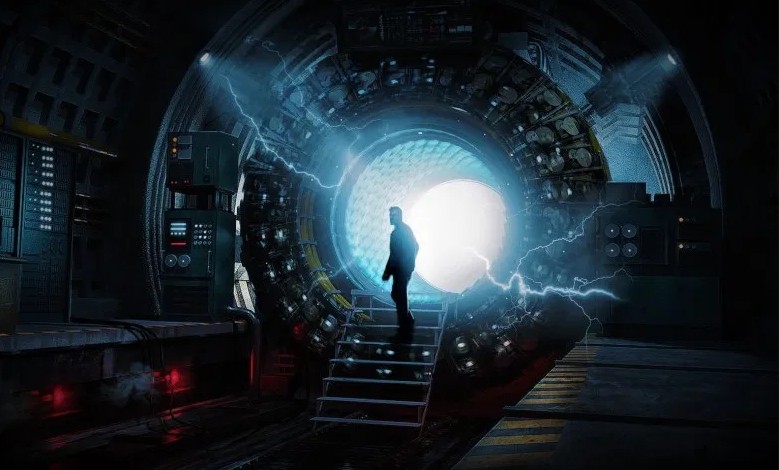
The initial claims involved time travel at historical sites. The subsequent elaborations added teleportation facilities in New Jersey, jump rooms in El Segundo, California used to transport personnel to underground bases on Mars, and a system of political pre-cognition through which future American presidents including George H.W. Bush and George W. Bush were briefed on their future presidencies decades in advance.
Each addition absorbed an existing alternative history tradition: the Philadelphia Experiment’s plasma confinement technology, the well known alternative research community’s Mars colony mythology, and the alternative history tradition connecting powerful political families to advanced classified programs.
The absorption mechanism performs two functions for the narrative’s resilience. It provides existing audiences with a unifying framework that connects their separate beliefs into a coherent alternative institutional history, increasing the narrative’s appeal to communities already invested in its component elements. And it creates a narrative infrastructure that is difficult to falsify at any single point because the claims about underground Mars bases and political pre-cognition briefings are not verifiable through any mainstream evidence whose absence constitutes refutation.
Whether the Progressive absorption of adjacent mythology was a deliberate strategy or organic elaboration in response to audience interest is the question that the pattern’s systematic character raises without the available record resolving.
The Fossil Fuel Conclusion | The Myth’s True Psychological Utility
The political conclusion that the Project Pegasus narrative reaches is the most revealing element of its psychological architecture and the one that most clearly identifies the social function the myth serves regardless of its relationship to historical fact.
The claim that teleportation technology is being deliberately withheld by institutional power to maintain dependence on fossil fuels and traditional transportation infrastructure is the narrative’s transformation from science fiction into political mythology.
The promise that teleportation technology would instantly eliminate the limitations that constrain human mobility, economic productivity, and environmental sustainability converts the time-travel mythology into a parable of hidden abundance: the solutions to humanity’s most intractable problems already exist, have been developed at government expense, and are being suppressed by a power structure whose interest in maintaining fossil fuel dependence motivates the suppression.
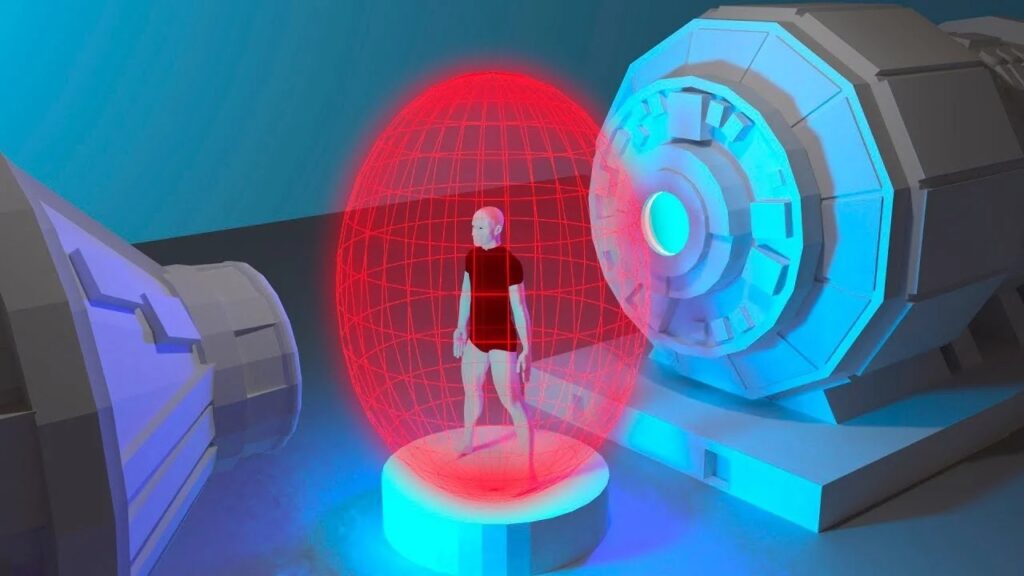
This is the psychological utility that distinguishes Project Pegasus from simple entertainment mythology. It does not merely propose an exciting alternative history. It proposes a political explanation for contemporary suffering: we do not have clean unlimited teleportation technology not because it does not exist but because it is being withheld.
The comfort this framework provides is real and documentable: if the problem is suppression rather than physics, the solution is disclosure rather than research. The technology already exists. The problem is not humanity’s scientific limitations but its institutional corruption. The frame converts an unsolved problem, clean transportation and energy, into a solved problem whose solution is being suppressed, which is a fundamentally more comforting framework than a genuinely unsolved problem.
Whether the Project Pegasus mythology was designed with this psychological utility in mind or arrived at it through the organic elaboration of a more fundamental time-travel fantasy is the question that the narrative’s conclusion raises without the available record answering.
What the Architecture Documents
Project Pegasus does not document a classified DARPA time-travel program. No evidence of Project Pegasus exists in the declassified DARPA records, the CIA records, or the National Security Archive’s extensive holdings of Cold War-era classified programs.
What Project Pegasus documents is the set of cultural anxieties, institutional distrusts, and psychological needs that the most sophisticated alternative history mythologies address.
The DARPA anchor documents a genuine and justified public uncertainty about the scope of classified technological research conducted during the Cold War, whose real achievements the public learned about decades after the fact and whose unknown remainder justifies ongoing speculation.
The childhood mechanism documents the well established real history of CIA and military experimentation on non-consenting subjects including children, whose institutional reality makes the claim less obviously impossible than it would be without that real precedent.
The Gettysburg photograph documents the human tendency to find confirmation of expected patterns in ambiguous visual information, whose systematic character appears in the cognitive psychology of pareidolia and confirmation bias.
The Tesla anchor documents the genuine underdocumented endpoint of a real inventor’s classified post-death papers, whose content remains partially unknown and whose unknown remainder legitimately motivates speculative extension.
The fossil fuel conclusion documents the psychological comfort that the hidden abundance framework provides to populations experiencing genuine anxiety about energy, environment, and institutional corruption.
Project Pegasus is not the story of a child who traveled through time. It is the story of a set of cultural anxieties finding their most architecturally coherent narrative expression in a framework that borrows just enough from documented reality to feel possible.
Whether Basiago believes it is a psychological question. Whether it is well-constructed is a matter of analytical record.
It is very well constructed.