In 1882, some of the most respectable intellectuals in Britain created a society devoted to questions that respectable science would rather have left alone. Could thought travel from one mind to another? Could a person receive information without using the known senses? Were apparitions more than hallucinations, and could a medium really communicate with the dead? The founders of the Society for Psychical Research did not want to answer those questions by faith. They wanted to investigate them.
That distinction mattered. The Society did not begin as a spiritualist church, nor did membership require belief in ghosts, telepathy or survival after death. Its founding statement explicitly called for an “organized and systematic attempt” to investigate psychical and spiritualistic phenomena and insisted that the work should proceed “without prejudice or prepossession of any kind.” Fraud, deception and self-deception were therefore not side issues. They were part of the problem the Society had been created to investigate.
Over the next century, that principle produced a remarkably uncomfortable archive. The Society caught mediums cheating. It published cases that later became embarrassing. It pursued phenomena that some investigators considered inexplicable while other investigators found ordinary explanations. It spent decades arguing over automatic writing that appeared to contain messages from the dead. And eventually, the problem came home in the most damaging way possible.
In 1978, an SPR statistician named Betty Markwick examined the surviving records of one of the field’s most celebrated experimental successes. She did not discover a mysterious force hiding inside the numbers. She discovered something much more ordinary. The numbers had been altered.
A Society Built to Investigate the Unacceptable
The Society for Psychical Research emerged from a very particular Victorian problem. Spiritualism had become a mass movement, but respectable science had no satisfactory institutional mechanism for examining its claims. Some investigators dismissed mediums as frauds before testing them. Believers, meanwhile, could point to testimony from scientists, physicians, aristocrats and other apparently credible witnesses. Between automatic belief and automatic dismissal lay a gap that the founders thought could be filled by systematic investigation.
William Fletcher Barrett, a physicist, had already been conducting experiments in thought transference with the Creery family. Henry Sidgwick, Frederic W. H. Myers and Edmund Gurney were among the Cambridge intellectuals drawn into the problem. Edmund Dawson Rogers and other spiritualist investigators helped push the idea toward a permanent organization. In January 1882 a conference was convened in London, and the Society was established that year, with Sidgwick becoming its first president.
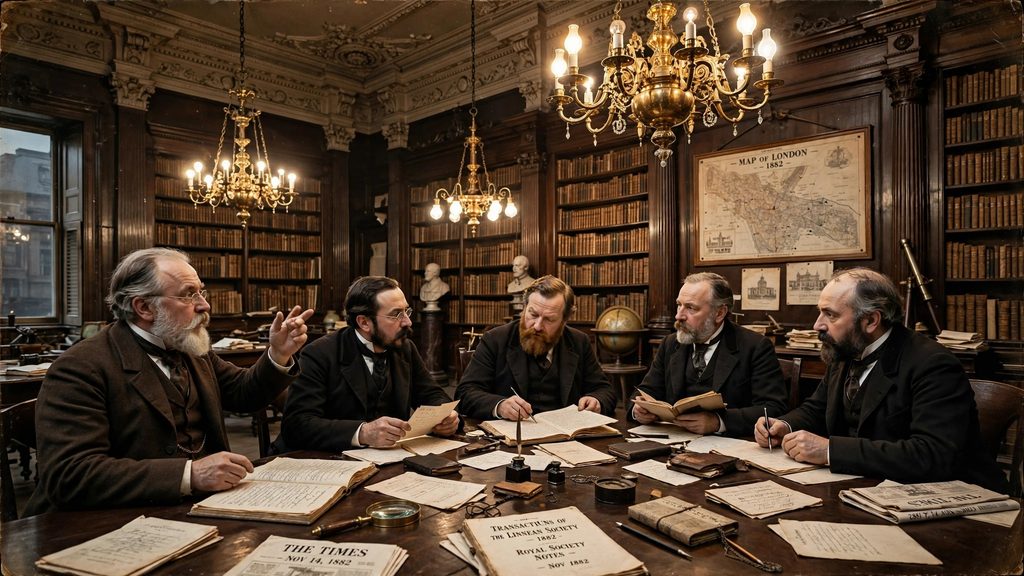
The language of its formal objectives is revealing. The founders acknowledged that psychical phenomena were surrounded by “exceptional difficulties,” but argued that patient investigation might nevertheless produce results of permanent value. They also made a crucial institutional point. Membership did not imply acceptance of any particular explanation, or even belief in forces beyond those recognized by physical science.
In other words, the SPR was designed as an investigative institution before it was a community of believers. That did not make its investigators immune to expectation, enthusiasm or error. It made their failures unusually instructive.
The Creery Sisters | When the First Great Result Fell Apart
One of the Society’s earliest major investigations involved five sisters from the family of the Reverend A. M. Creery in Derbyshire. Beginning before the SPR itself was formally established, the girls were tested in experiments intended to determine whether one person could identify an object, playing card or number selected by another without ordinary communication.
The results could look astonishing. The investigators reported scores well above chance, including successful trials in which an investigator rather than another sister acted as the agent. William Barrett, Myers and Gurney subjected the family to increasingly elaborate experiments, and the case became an important early example of what they believed thought transference might look like under experimental conditions.
Then the controls failed in a more fundamental way.
By 1888, after years of experimentation, two of the sisters were caught using a signaling code. They had developed subtle physical signals that could communicate information about cards and other targets. At least one other sister admitted to having used signals on earlier occasions. The discovery damaged the case severely, because any experiments in which the sisters could communicate had become impossible to interpret as evidence of telepathy.
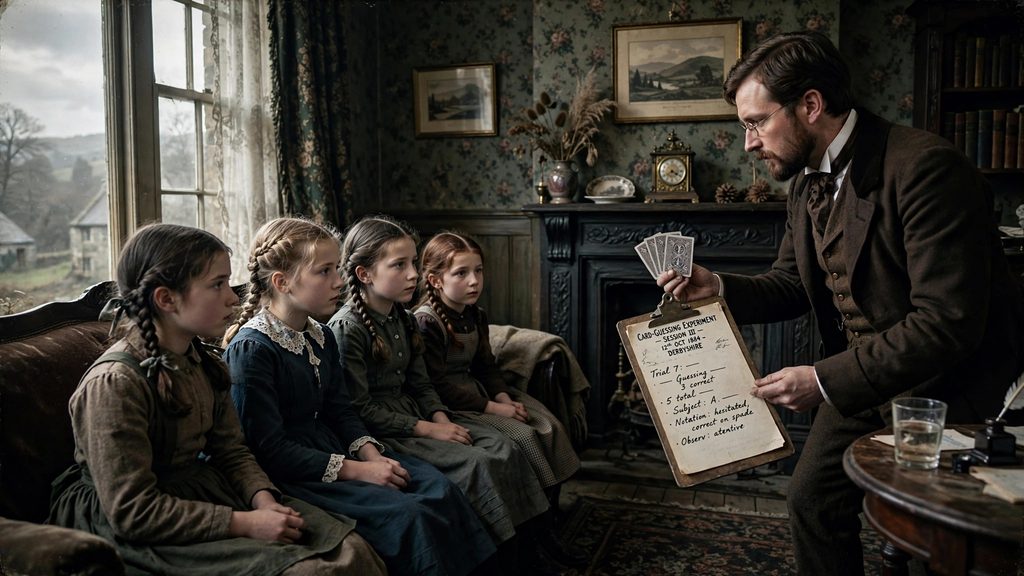
Yet the Creery case contained an uncomfortable complication. The signaling could not account for every successful result the investigators had recorded, particularly some experiments in which the experimental arrangement was more restrictive. The SPR’s own researchers therefore did not simply declare that every positive result had been fraudulent and close the file. They acknowledged the cheating while continuing to debate what, if anything, remained unexplained.
That pattern would become characteristic of psychical research. Fraud could be demonstrated without every anomaly automatically disappearing with it. A deceptive participant did not prove that every other experiment was deceptive. Conversely, a residue that had not been explained did not prove that telepathy had occurred.
Eusapia Palladino and the Problem of Seeing a Trick
Three decades later, the Society encountered an even more difficult problem in the Italian medium Eusapia Palladino.
Palladino had become famous for séances involving apparent levitations, moving objects, mysterious touches and other physical phenomena. An earlier SPR investigation at Cambridge in 1895 had found serious problems and concluded that she cheated when controls were inadequate. Yet repeated endorsements by other investigators eventually persuaded the Society to try again.
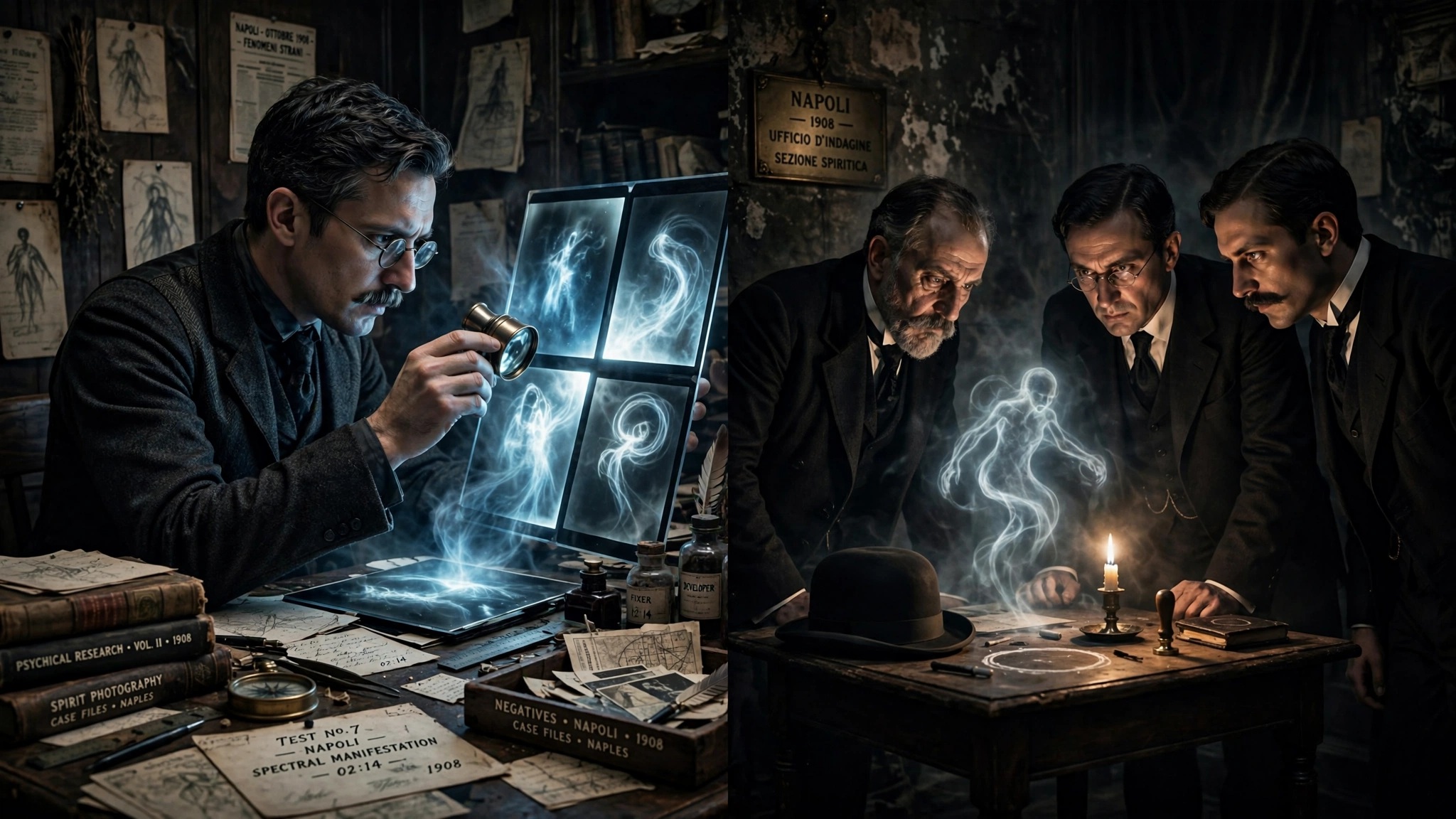
In 1908, Everard Feilding, W. W. Baggally and Hereward Carrington conducted an extensive series of sittings in Naples. All three had experience in detecting fraudulent mediums, and the investigators took precautions intended to prevent ordinary trickery. Their report nevertheless concluded that at least some of the phenomena they observed were genuine.
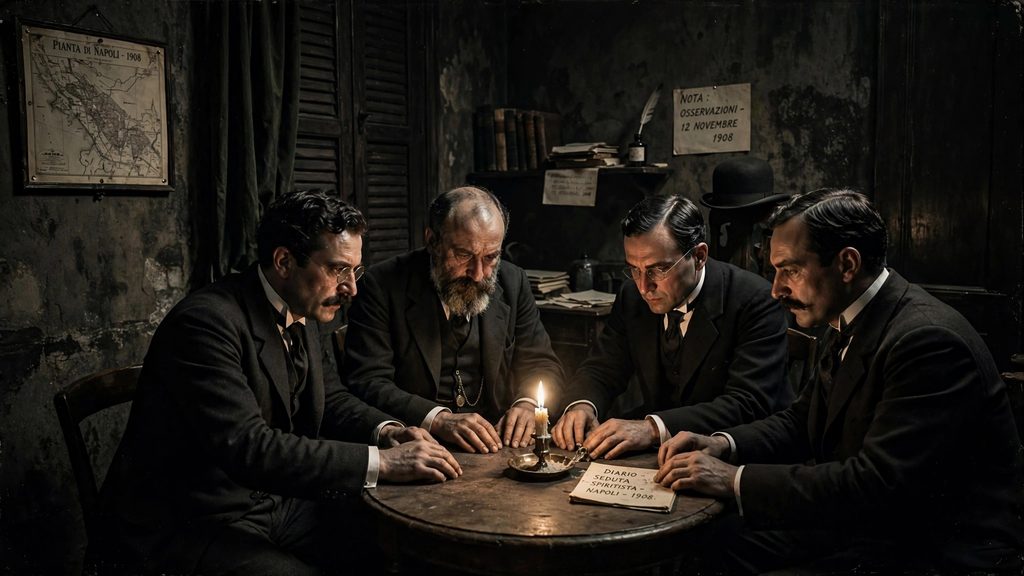
The result was controversial from the beginning. Critics argued that the controls still left opportunities for deception and that the investigators had been overly impressed by what they saw. Later sittings in 1910 failed to reproduce the earlier phenomena, further complicating the picture. Palladino’s case became a lesson in just how difficult it could be to distinguish an unexplained event from an inadequately controlled trick.
That distinction is more important than it first appears. A witness can be intelligent, experienced and completely sincere while still being wrong about what happened. An investigator can know that a medium is capable of cheating and still fail to identify the exact moment when the cheating occurs. In a darkened séance room, knowledge of deception does not automatically confer immunity to it.
The Cross-Correspondences | When the Mystery Became Text
The Society’s most elaborate attempt to investigate survival after death did not depend on levitating tables or objects moving in the dark. It depended on words.
After the death of Frederic Myers in 1901, a number of automatic writers began producing scripts that appeared to contain fragments of connected information. Margaret Verrall, her daughter Helen, Winifred Coombe Tennant and Alice Fleming were among the most important participants. Some of the scripts contained Greek, Latin, literary references and obscure classical allusions. Individually, many fragments appeared meaningless. When researchers placed material from different writers alongside one another, however, they sometimes appeared to interlock like pieces of a puzzle.
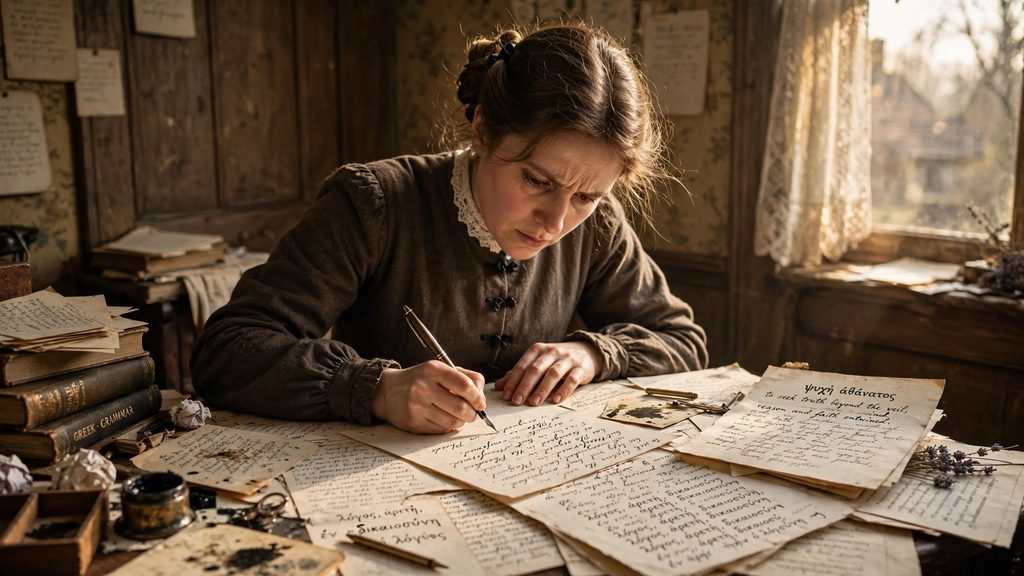
The interpretation was extraordinary. Some SPR researchers believed the scripts represented an organized attempt by deceased colleagues, including Myers, to demonstrate that consciousness survived bodily death. The supposed communicators had apparently designed the messages so that no single medium could provide the entire answer.
The alternative explanation was equally revealing about the psychology of investigation. Thousands of scripts created an enormous field in which investigators could search for connections. The writers and researchers shared cultural backgrounds, literary references and knowledge of classical material. Critics argued that unconscious association, shared education, selective attention and the human tendency to recognize patterns could produce correspondences without requiring a supernatural author.
Even today, the cross-correspondences are not a simple fraud case. The SPR’s own historical literature acknowledges that the material remains disputed. What changed over time was not that one side discovered a magic key, but that the evidential burden became harder to meet. The more complicated the pattern became, the harder it was to demonstrate that the pattern had been specified in advance rather than discovered retrospectively.
Then There Was S. G. Soal
Samuel George Soal looked almost tailor-made for the Society’s ambitions. He was a mathematician, a university lecturer and a long-serving member of the SPR. He joined the Society in 1922, served on its Council for decades and was elected president in 1950, holding the office for two years.
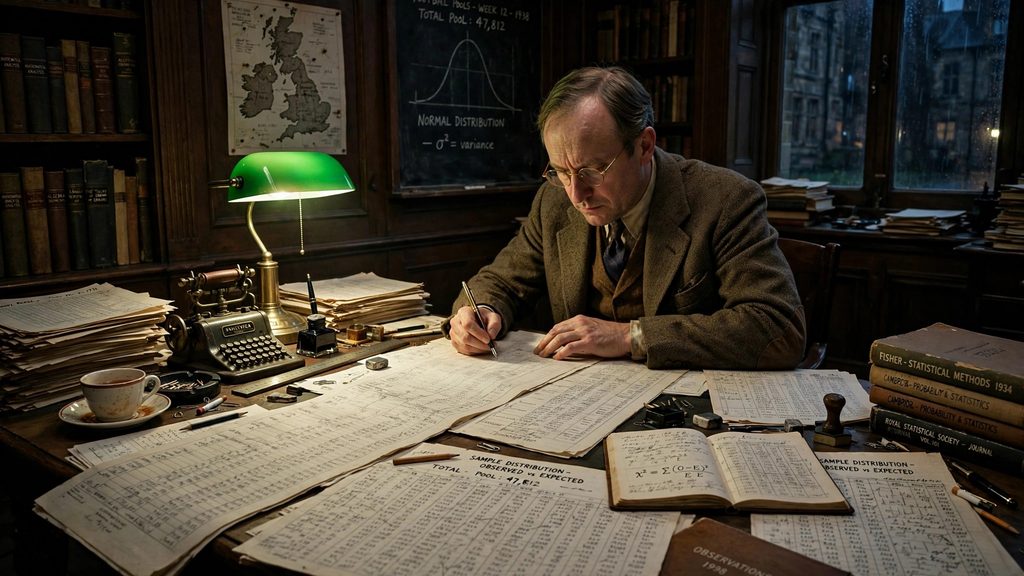
More importantly, Soal was initially a skeptic of positive ESP results. Between 1936 and 1941 he conducted more than 120,000 card-guessing trials involving 160 participants without finding a statistically persuasive result. He was not a man who had begun by believing every strange claim placed in front of him.
Then something changed.
Another psychical researcher, Whately Carington, suggested that a telepathic effect might appear displaced from the intended target. Instead of matching the card being selected, perhaps a participant’s response would correspond to the card immediately before or after it in the sequence. Soal returned to his earlier data with this possibility in mind.
Two participants, Basil Shackleton and Gloria Stewart, suddenly appeared to produce striking results.
The Shackleton experiments became especially famous. Soal and his collaborators described elaborate precautions against ordinary communication and experimental error. Outside observers attested to the apparent integrity of the sessions. The results were published, discussed and treated by some prominent academics as unusually strong evidence that something beyond ordinary sensory communication might be occurring.
For years, the numbers looked like the kind of evidence psychical research had been waiting for: large datasets, statistical analysis, multiple observers and a result that appeared to survive increasingly sophisticated attempts to explain it away.
The First Cracks Were There Long Before 1978
The eventual exposure did not arrive out of nowhere.
Questions about Soal’s work had been raised years earlier. In 1956, he claimed that some original Shackleton records had been lost. Later, a participant reported seeing Soal alter digits on score sheets. In the 1970s, researchers including C. Scott and C. E. M. Hansel identified statistical irregularities that renewed suspicion. Some SPR researchers defended Soal, while the controversy remained unresolved.
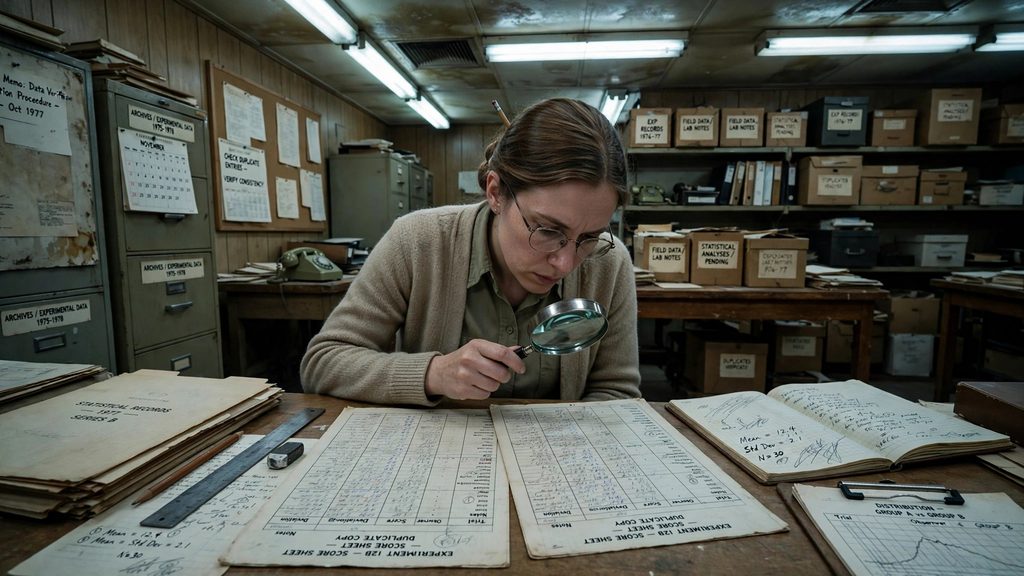
This is important because it changes what “1978” actually means. It was not the year suspicion first appeared. It was the year the evidence of data manipulation became substantially more concrete.
Betty Markwick Finds the Fingerprints in the Numbers
Betty Markwick was a statistician and later became the SPR’s principal statistical adviser. Working with Donald West, she examined surviving records and copies of the target sequences used in the Shackleton experiments.
What she found was not merely an improbable cluster of successful guesses. The target sequences themselves contained suspicious structures. Long stretches of digits were repeated, sometimes in reverse order, with individual digits apparently inserted into those repeated sequences. Those inserted digits disproportionately produced the “hits” that made the experiments look psychic.
That distinction was devastating. A statistical anomaly can have many explanations. But a sequence that appears to have been constructed in a way that creates successful responses is evidence about the production of the data itself.
Markwick published her findings in 1978 in the Proceedings of the Society for Psychical Research. The title was almost brutally understated, “The Soal-Goldney Experiments with Basil Shackleton: New Evidence of Data Manipulation.” The investigation concluded that the apparent ESP effect could not be trusted as genuine evidence.
Soal himself had died in 1975. The decisive analysis therefore came after his death, when the records could be examined without an opportunity for him to defend or alter them. The Society was not confronting a living president caught red-handed at his desk. It was confronting the surviving documentary record of a former president whose most celebrated experiments had shaped the field for decades.
And the Evidence Did Not Stop With Shackleton
The later story became still more uncomfortable. Further examination of material connected with Soal’s experiments with Gloria Stewart found additional evidence of manipulation. In 2018, Donald West and Betty Markwick published a much larger investigation arguing that the Stewart records contained extensive signs of fabrication, including altered or reconstructed score sheets.
One particularly damaging piece of physical evidence involved duplicate copies of a score sheet. A microfiche collection preserved both a version containing visible alterations and another, apparently rewritten version in which those alterations had been concealed. The problem was no longer simply that the statistical results looked suspicious. The documentary record itself appeared to preserve traces of how the records had been changed.
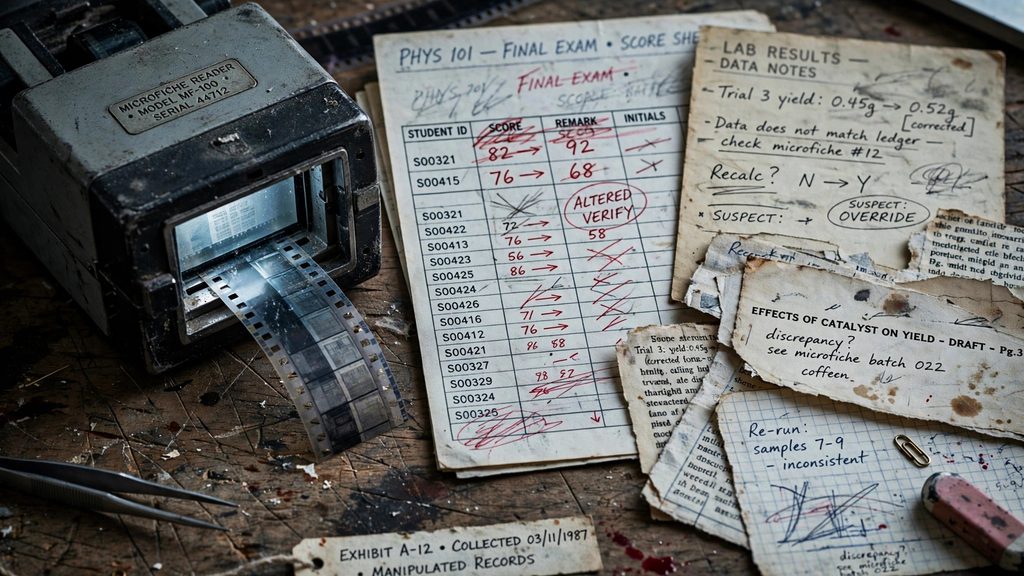
That is why the Soal affair remains so important. The issue was not merely that a psychic experiment failed to replicate. The problem was that the experimental record, the very thing replication and statistical inference depend on, had itself become unreliable.
What the Society Actually Learned
It would be easy to turn the history into a morality tale. The believers were fooled. The skeptics were right. Science eventually won. The archive is much more interesting than that.
The SPR’s history demonstrates that there are several different questions hidden inside the word “fraud.” Did a participant cheat? Did an investigator overlook cheating? Did an experimental design accidentally permit information leakage? Did an observer interpret an ambiguous event too generously? Did researchers find patterns after the fact that would not have been convincing if specified in advance? Or did someone deliberately manipulate the record?
Those are not interchangeable failures.
The Creery sisters demonstrate how apparently extraordinary results can collapse when signaling is discovered. Palladino demonstrates that even experienced investigators can see apparent cheating without being able to determine exactly what is genuine and what is not. The cross-correspondences demonstrate how enormous bodies of ambiguous material can generate interpretations that become harder to test as they become more elaborate. And Soal demonstrates the final nightmare of experimental science, the possibility that the person generating the data is the source of the anomaly.
That last problem is not unique to psychical research. Every experimental field has to deal with observer effects, unconscious bias, selective reporting, statistical flexibility, inadequate controls and, in the worst cases, deliberate fabrication. The SPR simply spent much of its history working on claims where those problems were unusually difficult to separate from the phenomenon under investigation.
The Stranger Lesson
The most interesting thing about the Society for Psychical Research is therefore not that it failed to prove that ghosts exist, or that it exposed fraudulent mediums, or even that one of its presidents eventually became associated with one of the most serious cases of experimental fraud in the history of parapsychology.
It is that the Society repeatedly discovered how difficult it is to investigate an extraordinary claim without becoming part of the phenomenon being investigated.
The founders believed that disciplined observation could separate the genuine from the fraudulent. They were right about the need for discipline. What the next century taught them was that discipline is not a switch you turn on once. It has to be renewed every time the evidence looks convincing, especially when the evidence is produced by someone you trust, supported by statistics you understand and celebrated because you desperately want the mystery to be real.
Soal’s numbers survived for decades because they looked like science. That was precisely what made them dangerous. The tables were mathematical. The experiments had witnesses. The results had been published. A former president of the Society stood behind them. None of that made the numbers true.
And when the records were finally pulled apart, the person who exposed the fraud was not a magician, a newspaper columnist or an outsider determined to destroy psychical research. She was one of the Society’s own statisticians, using the very discipline the organization had been created to bring to the impossible.

That is the real legacy of the SPR.
Not that it proved the supernatural.
Not that it disproved it.
It discovered, repeatedly and sometimes painfully, that the first thing an investigator has to investigate is the evidence itself.
And sometimes the most dangerous mystery in the room is not the ghost.
It is the person holding the data.
Related investigations
The Society’s history connects naturally to the wider investigations of spiritualism, mediumship, ESP and psychical research covered elsewhere on Monkey & Elf. The Fox Sisters helped turn nineteenth-century spiritualism into a mass movement. Daniel Dunglas Home became one of the rare famous mediums never conclusively caught in fraud. J.B. Rhine later transformed ESP research into a statistical laboratory enterprise. And the Society’s own investigation of Harry Price’s Borley Rectory work showed that even celebrated investigators could eventually become subjects of their own institution’s scrutiny.