
At 9:30 on the night of August 31, 1977, something began moving inside a council house at 284 Green Street in Enfield, North London. Peggy Hodgson called her children together after a heavy chest of drawers appeared to move across a bedroom floor. The disturbances continued after midnight. Police were called. One officer later reported seeing a chair move several feet across the kitchen without anyone touching it. The family said they had also been hearing unexplained knocking. The officer checked neighboring houses for an ordinary source. Nothing obvious accounted for it.
Within days, objects were reportedly flying through rooms. Furniture moved. Reporters arrived. A Daily Mirror photographer was struck by a piece of Lego during an investigation. Neighbors and other visitors described things they believed they had seen for themselves. Within weeks, the Society for Psychical Research had become involved, and two investigators, Maurice Grosse and Guy Lyon Playfair, would spend more than a year returning to the house, conducting vigils, interviewing witnesses and filling more than 180 hours of recordings with noises, voices and arguments about what they meant.
Then came the voice.
It emerged from eleven-year-old Janet Hodgson and sounded, according to witnesses, like a harsh elderly man. It called itself Bill. It swore. It claimed to have lived in the house. When questioned, it described dying blind after suffering a haemorrhage and falling asleep in a chair downstairs.
Years later, Janet gave the case its most damaging and most intriguing admission. She said that she and her sister Margaret had faked “about two percent” of what happened.
Two percent.
That number has become one of the most seductive facts in the entire Enfield story because it appears to solve the problem while actually making it harder. If the girls admitted to cheating, perhaps the haunting was simply a sustained hoax. If they admitted to only two percent, perhaps everything else remains unexplained.
Neither conclusion follows.
The real Enfield mystery lies in the uncomfortable territory between them: a case containing documented acts of deception, disputed observations, investigators who disagreed sharply with one another, a disturbing voice that resisted easy explanation, and a 1978 Society for Psychical Research committee that stopped short of either declaring the case genuine or dismissing it as a fraud.
The Night the Furniture Moved
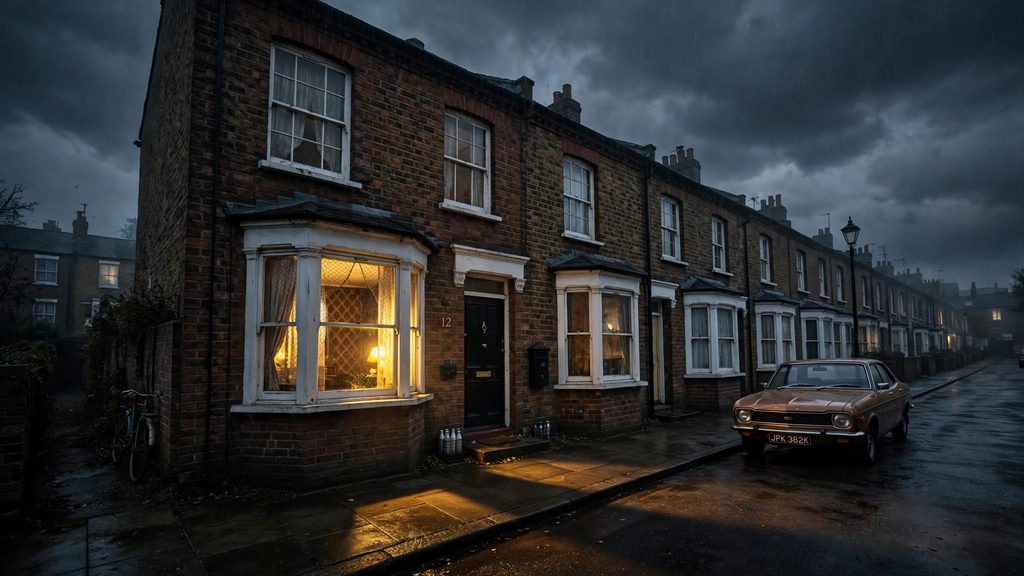
The Hodgson family were not living in a haunted mansion or an isolated country house. They occupied a three-bedroom council house in Enfield. Peggy Hodgson was a divorced mother of four. Margaret was thirteen, Janet twelve, John eleven and Billy seven. The disturbances began suddenly in late August 1977.
The first reports involved knocking and furniture. The family said a heavy chest of drawers moved in the girls’ bedroom. Police were eventually called, and the incident that became central to the early history of the case was witnessed by WPC Caroline Heeps, who reported seeing a chair move across the kitchen.
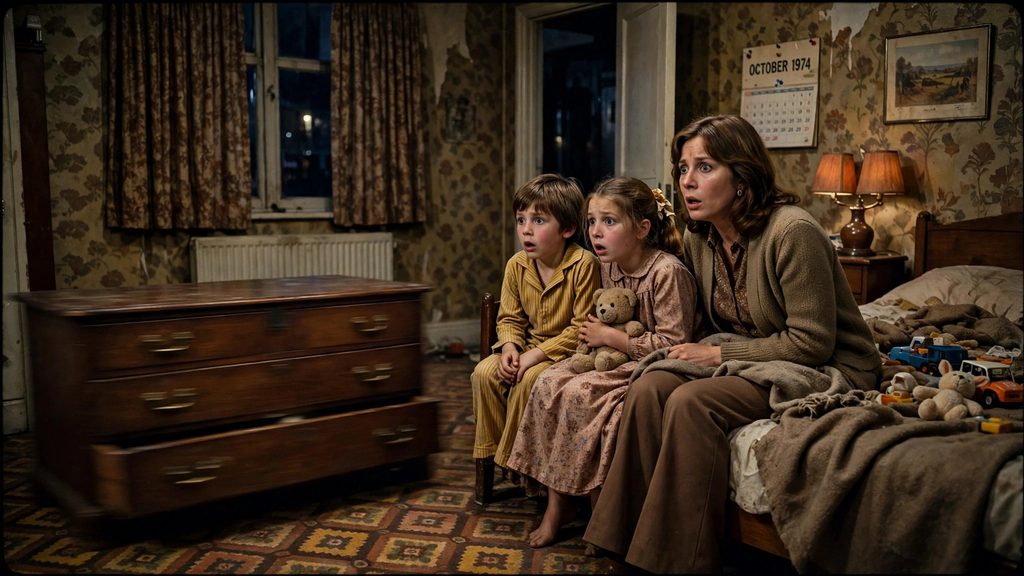
The case then expanded rapidly. Marbles and pieces of Lego were reportedly thrown. Doors and drawers opened without apparent human intervention. Objects seemed to jump or move. The number of witnesses grew to include neighbors, journalists, police officers and people with no obvious connection to the family.
That last point matters, but it does not prove a paranormal cause. A witness establishes that someone experienced or observed something. It does not automatically establish the mechanism responsible for it. The distinction would become the central problem of Enfield.
Maurice Grosse Had a Personal Reason to Take It Seriously
When the Daily Mirror contacted the Society for Psychical Research, the organization turned to Maurice Grosse. He was not a career parapsychologist. He was an inventor and engineer who had only recently joined the SPR after the death of his daughter Janet in a motorcycle accident in 1976.
Grosse had experienced a series of coincidences after his daughter’s death that he interpreted as possible evidence of survival after death. His interest in psychical research grew from that experience, and less than a year later he found himself investigating another Janet, an eleven-year-old girl at the center of the strangest case the Society had encountered in years.
That coincidence does not prove that Grosse was biased. Nor does it prove that he was objective. It is simply part of the history of the investigation, and it is worth knowing because Grosse would eventually become the case’s most persistent defender.
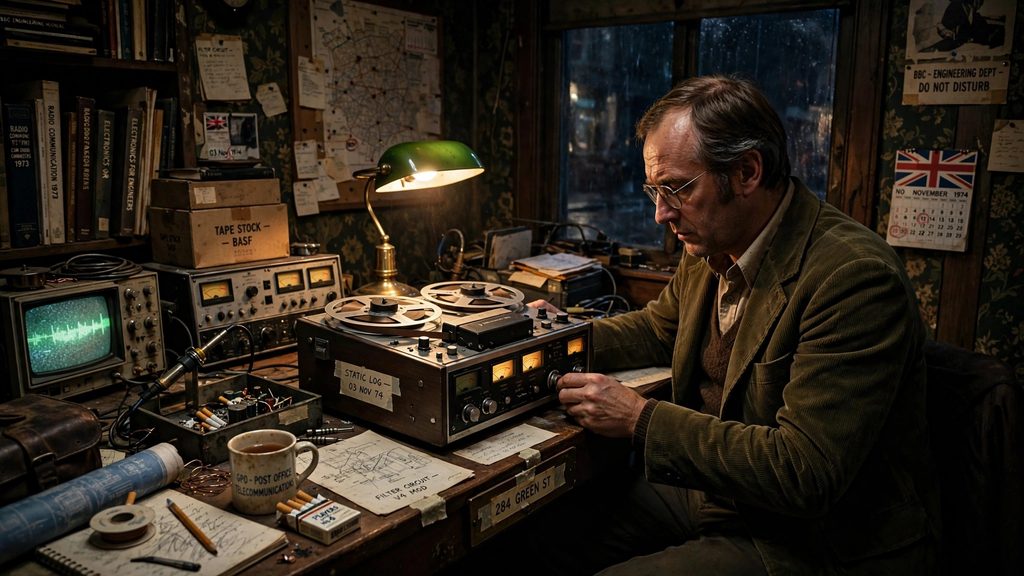
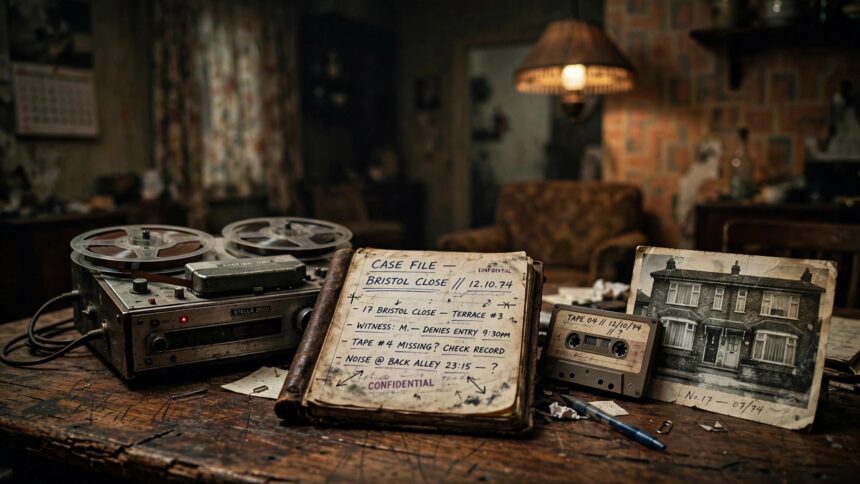
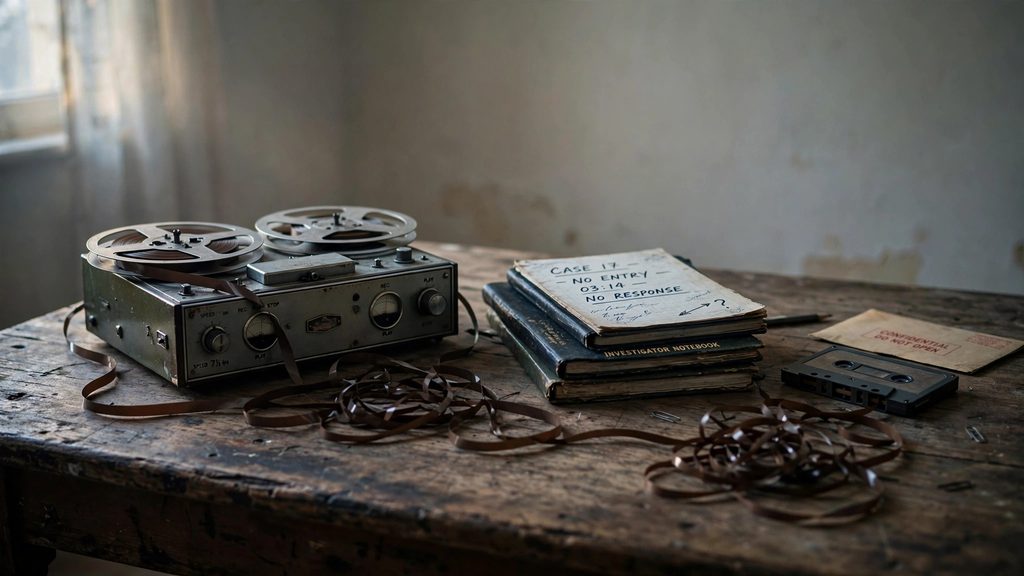
Guy Lyon Playfair joined him. Playfair was an experienced journalist and had previously investigated alleged paranormal phenomena in Brazil. Together they returned to 284 Green Street again and again. According to the SPR’s later account, the pair made around 180 visits and conducted 25 all-night vigils, accumulating more than 180 hours of tape recordings.
The Girls Were Caught Cheating
This is the fact that any serious account of Enfield has to confront before discussing ghosts, poltergeists or paranormal forces.
Janet and Margaret did fake things.
They were caught attempting to create phenomena themselves. Janet was observed bending spoons and attempting to bend an iron bar. Grosse caught her making knocking sounds with a broom handle. The investigators knew that the children were capable of play-acting and deception because they had seen them do it.
This is not a minor footnote. It means that any individual event in the case has to be considered against a demonstrated ability and willingness to fake at least some phenomena.
And yet Grosse and Playfair did not conclude that everything was therefore fraudulent. They believed they had witnessed events that the girls could not have produced themselves, and they continued the investigation. Critics saw precisely the opposite lesson. Once investigators had become convinced that something extraordinary was happening, they were too willing to interpret ambiguous events in its favor.
That disagreement never really went away.
Then the House Found a Voice
In December 1977, roughly three months after the disturbances began, the case changed character. Janet began producing whistles and strange noises that developed into what witnesses described as an elderly male voice.
The voice called itself Bill Wilkins.
It claimed to have lived in the house. It spoke in a coarse, guttural voice. It swore. It complained about the investigators. And when Richard Grosse, Maurice’s son, questioned it, the voice gave a description of its death:
“I went blind, and I had a haemorrhage, and I fell asleep and I died on a chair in the corner downstairs.”
That sentence became the most famous piece of evidence in the entire case because the details appeared to be specific enough to be testable.
Grosse tried to establish whether Janet was simply producing the voice herself. At various times investigators attempted to restrict her ability to speak normally. Physicist John Hasted and phonetics researcher Adrian Fourcin became involved in examining the voice. Their work was interpreted by the investigators as evidence that Janet’s ordinary vocal mechanism did not adequately explain what they were hearing.
But that was not a scientific demonstration that a dead man was speaking.
Magician Ray Alan argued that Janet could have produced the voice by conventional means. Other skeptics regarded the entire vocal performance as within the capabilities of an imaginative child. The voice was extraordinary as an observation. The explanation remained disputed.
The Skeptic Inside the Society
One of the most important facts about Enfield is that the Society for Psychical Research did not speak with one voice.
Psychologist Anita Gregory visited the house with former SPR president John Beloff in December 1977. She was deeply skeptical of Grosse and Playfair’s investigation and later criticized their methods as insufficiently systematic. Gregory believed the girls were capable of play-acting and deception and questioned whether the investigators had adequately controlled for it.
That disagreement prevents the case from being reduced to a simple story where the SPR investigated and confirmed the haunting. It did not. The organization contained investigators who thought the evidence was compelling and investigators who thought the principal researchers had been fooled.
The division became formal enough that the SPR eventually commissioned a committee to examine the case.
What the SPR Committee Actually Said
In May 1978, Mary Rose Barrington, Hugh Pincott, Peter Hallson and John Stiles undertook a detailed review. They interviewed witnesses and examined the available evidence. Their conclusion is one of the most important documents in the entire Enfield story because it refuses to deliver the dramatic verdict that later retellings often imply.
The committee concluded that there was “good evidence for paranormal phenomena described by credible informants.” But it immediately imposed limits. It reserved judgment on incidents that had not been clearly observed and on testimony where the witnesses were not entirely convincing.
Even Barrington, who became one of the case’s strongest defenders within the Society, was cautious about the famous voice. She was personally persuaded that paranormal events had occurred at Enfield and regarded the fireplace incident as “poltergeistery of the first order,” but the committee did not transform that personal conviction into a blanket declaration that every event had a supernatural explanation.
This is the crucial distinction the legend tends to erase: the SPR did not prove that the Hodgson house was haunted. It concluded that there was credible evidence for some phenomena that the investigators could not adequately explain.
Then Came the Two Percent
Decades after the events, Janet Hodgson finally supplied the sentence that would become almost impossible to resist.
In a 2011 interview, she said that she and Margaret had faked “about two percent” of what happened.
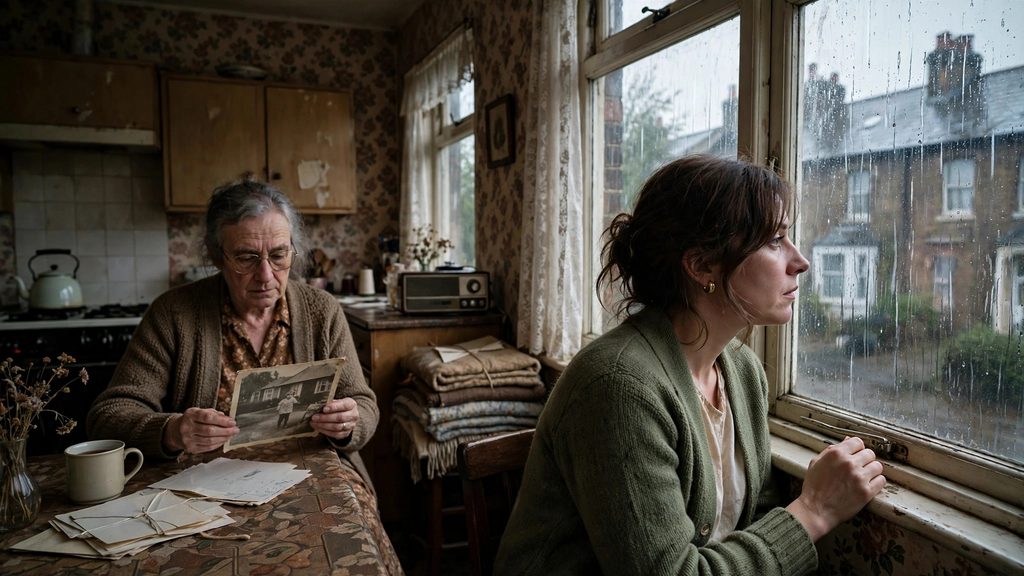
She was not claiming that nothing happened. Quite the opposite. Janet continued to say that many of the phenomena had frightened her and that the voice felt as though something was behind her. She described the levitation episodes as terrifying rather than entertaining. She also said she and Margaret had experimented with a homemade Ouija board before the disturbances began and that she had sometimes entered trance-like states without realizing it until she later saw photographs of herself.
Her testimony therefore creates two competing possibilities without conclusively selecting either one.
One possibility is that the two percent admission represents a modest confession embedded inside a much larger hoax. The girls faked some incidents when they could get away with it, while adults and investigators supplied interpretations that allowed the story to grow.
The other is that Janet genuinely experienced some events she did not understand, while also discovering that she could manipulate the attention around her. The two things are not mutually exclusive. A child can fake a phenomenon and sincerely experience another as inexplicable.
The number two therefore does not mathematically prove that ninety-eight percent was genuine. It simply tells us that Janet herself regarded the case as more complicated than either “we made it all up” or “none of it was us.”
The Dead Man in the Chair
Then came the detail that refuses to disappear.
The voice had identified itself as Bill Wilkins and described dying blind after a haemorrhage while sitting in a chair downstairs. At the time, there was no obvious reason for Janet to know that history.
In 1996, a Japanese television crew investigating the case located Terry Wilkins, the son of a previous occupant of 284 Green Street. Terry confirmed that his father had lived in the house and had died there years earlier. The circumstances of his death, including blindness, haemorrhage and dying in a downstairs chair, corresponded with what the voice had said almost twenty years earlier.
The coincidence is genuinely striking.
But this is where a careful investigation has to resist its own temptation. The later confirmation establishes that the details about Wilkins were real. It does not by itself establish how the information reached Janet, nor does it establish that a deceased Bill Wilkins was communicating through her.
Several possibilities remain logically available. Janet could have obtained information without investigators realizing it. Someone in the household could have known more about the previous occupant than later accounts remembered. The information could have entered the family’s environment through ordinary conversation. Or the coincidence could represent something more difficult to account for. The surviving record does not settle which explanation is correct.
That is not a weakness in the story. It is exactly where the story becomes interesting.
The Fireplace, the Voice and the Problem of Evidence
Among the incidents that impressed sympathetic investigators was the fireplace, which was reportedly torn or wrenched from the wall while witnesses were present. Barrington regarded it as one of the strongest incidents in the case. Other reported events included flying objects, moving furniture, doors and drawers opening, unexplained noises, and equipment failures.
But the evidential quality of these incidents varied enormously.
Some were witnessed by several people. Some were reported by only one person. Some were recorded. Some were reconstructed later from memory. Some occurred when investigators were present. Others were reported after the fact. And some took place in a household where at least two children had already demonstrated a willingness to manufacture phenomena.
That means the Enfield poltergeist is not really one piece of evidence. It is a collection of hundreds of claims of wildly different evidential strength.
The mistake is to ask whether the entire case was real or fake, as though those were the only two possibilities. The more useful question is much narrower: which individual events were independently observed, under what conditions, by whom, with what opportunity for deception, and what explanation remains after those possibilities have been removed?
The Movie Changed the Cast
When The Conjuring 2 brought Enfield to cinemas in 2016, the story was transformed into something much cleaner. Ed and Lorraine Warren became central characters. The haunting acquired the structure of a conventional supernatural thriller. The real investigation was messier.
The Warrens did visit the Hodgson house, but their involvement was brief and they played no meaningful role in the long investigation conducted by Grosse and Playfair. The people who actually spent months and months at 284 Green Street were the two British investigators whose names now sit behind most of the surviving evidence, Maurice Grosse and Guy Lyon Playfair.
The real story is therefore less cinematic than the film, and for that reason considerably more interesting. There was no single confrontation in which an exorcist defeated a demon. There were years of arguments about witnesses, recordings, methodology, children’s behavior and the meaning of events that refused to fit neatly into either category.
So What Happened at 284 Green Street?
The evidence does not justify saying that the Hodgson family fabricated the entire affair. Too many people reported disturbances, and some of the incidents impressed investigators who were actively looking for ordinary explanations.
Nor does the evidence justify saying that the case was proven paranormal. Janet and Margaret demonstrably faked some events. The investigators disagreed. Some witnesses were criticized. The most extraordinary interpretation of the voice rests on evidence that remains difficult to evaluate independently. And the SPR committee itself stopped short of claiming that every reported incident had been established.
The fairest description is therefore also the strangest. Enfield was a prolonged episode containing both demonstrated human deception and phenomena that some experienced investigators regarded as unexplained.
Those two facts can exist in the same case. They can even exist in the same child.
That possibility is much harder to turn into a horror movie, because it removes the clean boundary between victim and trickster, witness and participant, genuine experience and performance. Janet did not have to be either a completely innocent girl possessed by something supernatural or a completely calculating fraud for the story to become what it became.
The Two Percent Is the Wrong Number to Obsess Over
The enduring fascination of Janet’s confession is that it seems to offer a percentage where the evidence does not.
Two percent sounds measurable. Ninety-eight percent sounds like a remainder. But there was never an experiment in which investigators measured the total Enfield phenomenon, subtracted the incidents Janet admitted faking and certified the rest as genuine.
There is no evidential ledger with two columns marked hoax and paranormal. There is testimony, recordings, photographs, investigator notes, retrospective memories, demonstrations of cheating, competing interpretations and a handful of incidents that remain genuinely difficult to reconstruct from the surviving evidence.
That is why the phrase “the other ninety-eight percent” should not mean the other ninety-eight percent was paranormal. It should mean something much more precise. What happened during the remaining incidents has never been completely established.
And that is a much stronger mystery.
Because once you admit the girls really did fake some of it, the case should become easier to explain. Instead, the surviving record leaves a stubborn residue of events that investigators, skeptics and believers have interpreted in radically different ways for nearly fifty years.
The Society for Psychical Research never solved that residue.
Neither did the skeptics.
And Janet Hodgson’s two percent confession did not solve it either.
It only made the question sharper.
At 284 Green Street, somebody was definitely capable of making things happen.
The unsettling question is how much of what happened they actually made.
And after nearly half a century, the surviving evidence still does not give us a number.
Related investigations
The Enfield case belongs to a much longer history of investigators trying to separate genuine anomaly from human performance. That history runs through the Fox Sisters and the birth of modern spiritualism, Daniel Dunglas Home and the medium nobody conclusively caught cheating, J. B. Rhine’s statistical ESP experiments at Duke, and the Society for Psychical Research’s later reassessment of Harry Price’s Borley Rectory investigation.