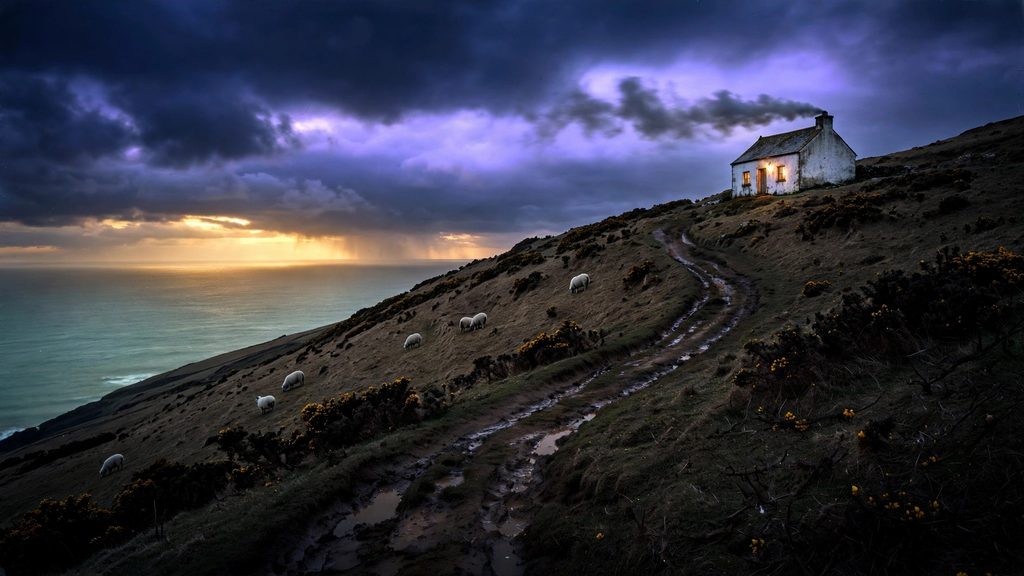
High on the bare western slope of the Isle of Man, above the hamlet of Dalby, a lonely farmhouse faced the sea. To reach it, visitors climbed for an hour up a slippery track through turf and gorse, with the wind coming in off the Irish Sea and nothing between the house and the horizon but sheep. There was no telephone, no radio and hardly a book. In the autumn of 1931 the family who lived there began to hear something moving inside their walls.
At first it scratched and rustled behind the wooden panelling, like a rat or a ferret. Then it began to make noises of its own, barking, spitting and growling. Then it began to talk. Within a few months it was telling the family that it was a mongoose, born in India in 1852, and that it was extra extra clever. It sang hymns. It swore. It threatened to kill the poultry, and the poultry went missing. It reported on the neighbours, and laughed at the reporters who climbed the hill to hear it.
- Doarlish Cashen
- The Voice Behind the Panels
- The Dalby Spook
- Harry Price Climbs the Hill
- What London Made of the Evidence
- The Mongoose Case
- A Week With Nandor Fodor
- The Girl Who Threw Her Voice
- After the Voice Stopped
- The Voice That Outlived Them
- The Verdict | Debunked
- Quick Answers About Gef the Talking Mongoose
Its name was Gef, and for the next decade it drew newspapermen, spiritualists, a famous ghost hunter and a BBC editor to that windswept hill, sent samples of its fur to the Natural History Museum, and ended up at the centre of one of the strangest libel trials in British history. Nobody from outside the family ever saw it clearly. Almost everybody who went there came away sure that something had happened.
Doarlish Cashen
James Irving had not always been a farmer. Before the First World War he was a salesman of pianos and organs in Liverpool, where in 1897 he married Margaret Heavyside, a dressmaker. The business failed during the war, and in 1916 he spent £310 of his savings on a run-down farm of about forty-five acres near Dalby, at a place called Cashen’s Gap. The house was known as Doarlish Cashen. It stood about seven hundred and fifty feet up, four miles from Peel, on a treeless shoulder of hill looking out towards Ireland.
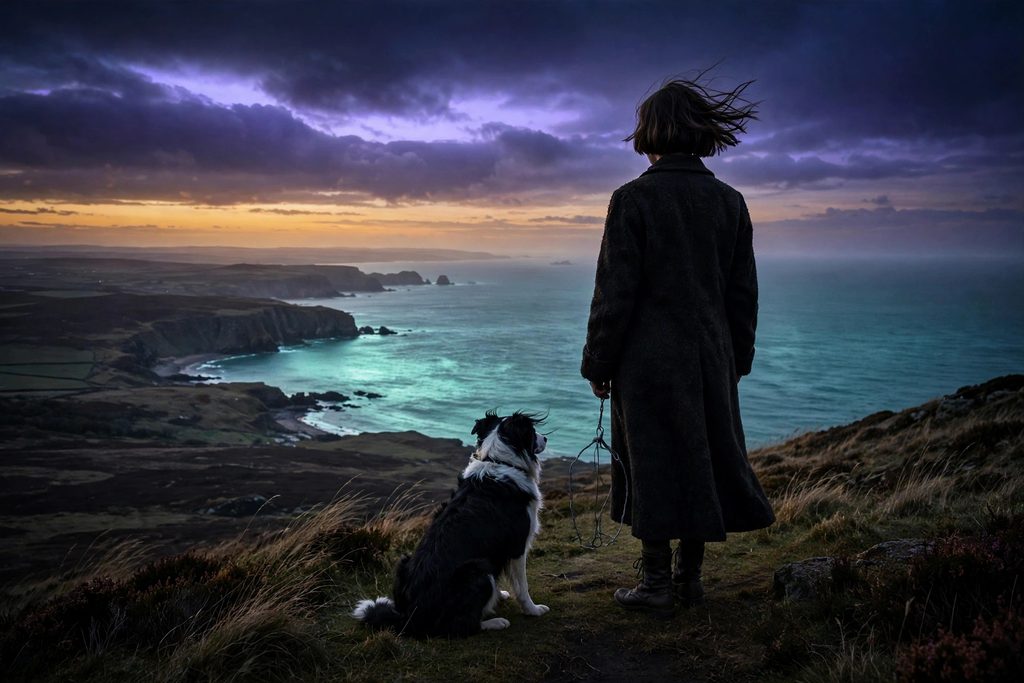
By 1931 the two older children had gone, Elsie to Liverpool and Gilbert to London. Only the youngest was left. Voirrey Irving was born in 1918, so she was about thirteen when the voice began. Those who met her described a clever, solemn girl who had few friends, rarely went out and did not like visitors. She roamed the hills with the family sheepdog, Mona, and she was a fearless catcher of rabbits.
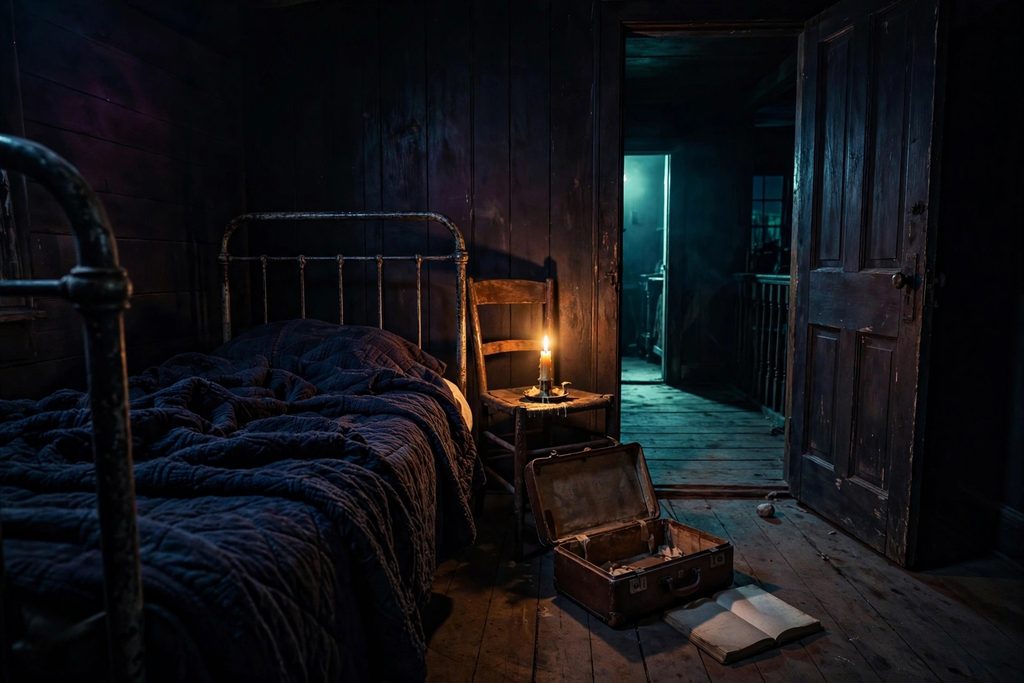
The house itself mattered more than anyone realised at first. To keep out the damp, its stone walls had been lined inside with wooden panels, leaving a hollow space between the boards and the stone that ran around the rooms. Anything moving in that gap could be heard all over the house. Anything speaking in it could seem to come from anywhere.
The Voice Behind the Panels
The Irvings first thought they had vermin. James tried to drive the creature out by making animal noises at it through the boards. To his astonishment, it made the same noises back, and before long it was repeating nursery rhymes after the family and answering questions. The voice was high and shrill, pitched well above any ordinary human voice, and it spoke fast.
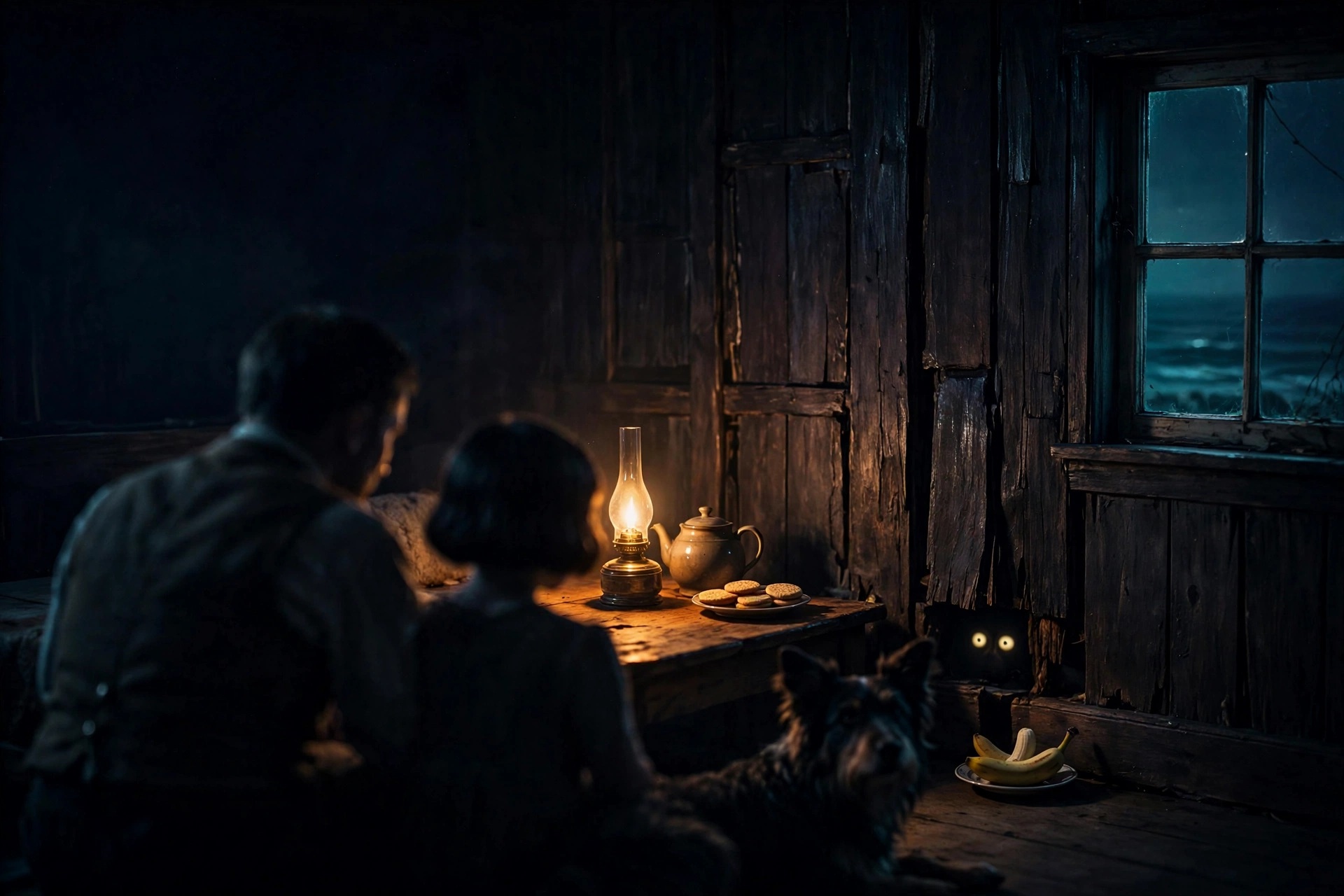
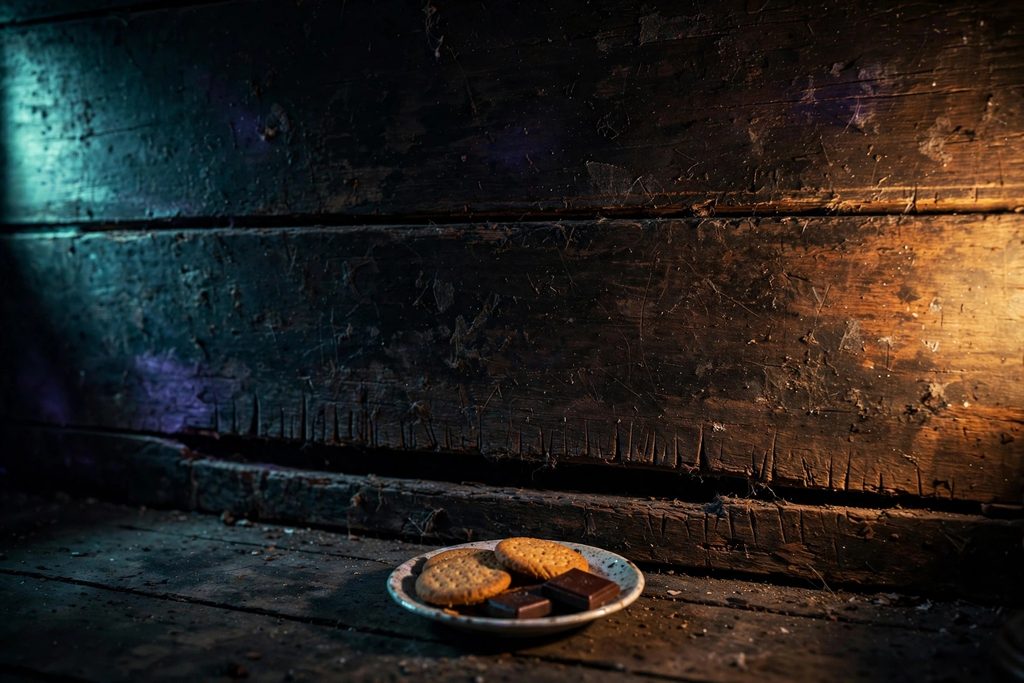
It said it was a mongoose. It had been born in Delhi in 1852, it said, and it had lived with Indians before it came to the island. Voirrey, the only one of the family who said she had seen it properly, described an animal about the size of a small rat, with yellowish fur and a great bushy tail. The family left it chocolate, biscuits and bananas. It ate bacon and left the fat. In return, they said, it killed rabbits for them and left them outside the door, warned them of approaching visitors, woke them when they overslept, and once switched off the stove when the fire had been left burning.
Gef could be charming and it could be frightening. In the early months it laughed what the family called a satanic laugh and threatened Voirrey. Later it became her protector. It called Margaret Irving a witch-woman and wished her good night. It told visitors it disliked to clear off. It boasted of speaking several languages, though its Hindi seemed to stop at a word or two. And it had a great deal to say about itself, most of it contradictory.
The Dalby Spook
News of a talking animal on a farm above Dalby reached the papers in January 1932, and the island’s quietest corner became one of the most visited. Locals called the creature the Dalby Spook. Reporters from Manchester, London and the island’s own papers climbed the track to the farm. Some waited for hours and heard nothing. Others heard a high voice from behind the panels or from the hedges and could not say where it came from.
A reporter for the Manchester Daily Dispatch was among the first to suggest in print that the voice belonged to Voirrey. A reporter from the Isle of Man Examiner wrote that the Irvings seemed sane, honest and responsible people, yet he also said that at one point he heard noises and saw the girl making them, and that her father insisted the sound came from somewhere else. Two local teenagers, Will Cubbon and Henry Hall, said they had seen a yellowish animal with a dark spot on its tail. A friend of the family said he saw a pair of yellow eyes under his bed.
The idea of a mongoose on the Isle of Man was not as absurd as it sounded. The family said that around 1912 a local farmer had released mongooses on the island to keep down the rabbits. Whether any had survived twenty years in a cold, wet climate was another question. Meanwhile, in England, the story did wonders for the trade in mongooses as pets.
Harry Price Climbs the Hill
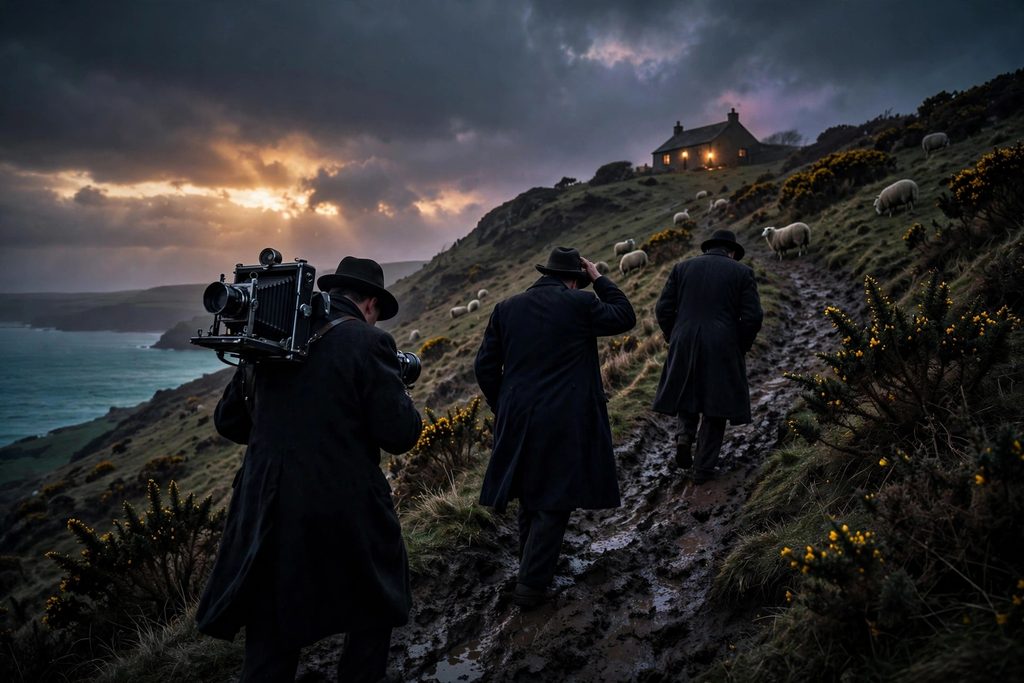
Harry Price was the most famous ghost hunter in Britain, the founder of the National Laboratory of Psychical Research and the man whose name was attached to Borley Rectory, the most haunted house in England. He began writing to James Irving in 1932, and he collected Irving’s long letters and diaries about the mongoose with great interest. In July 1935 he finally made the climb, together with Richard Lambert, the editor of The Listener, the BBC’s weekly magazine.
Gef did not speak to them, and it did not show itself. Price and Lambert examined the house, took measurements and listened. Price noticed at once what the panelling meant. The whole house, he wrote, was one great speaking-tube. A voice spoken softly in one room could travel through the hollow walls and seem to come from another.
What London Made of the Evidence
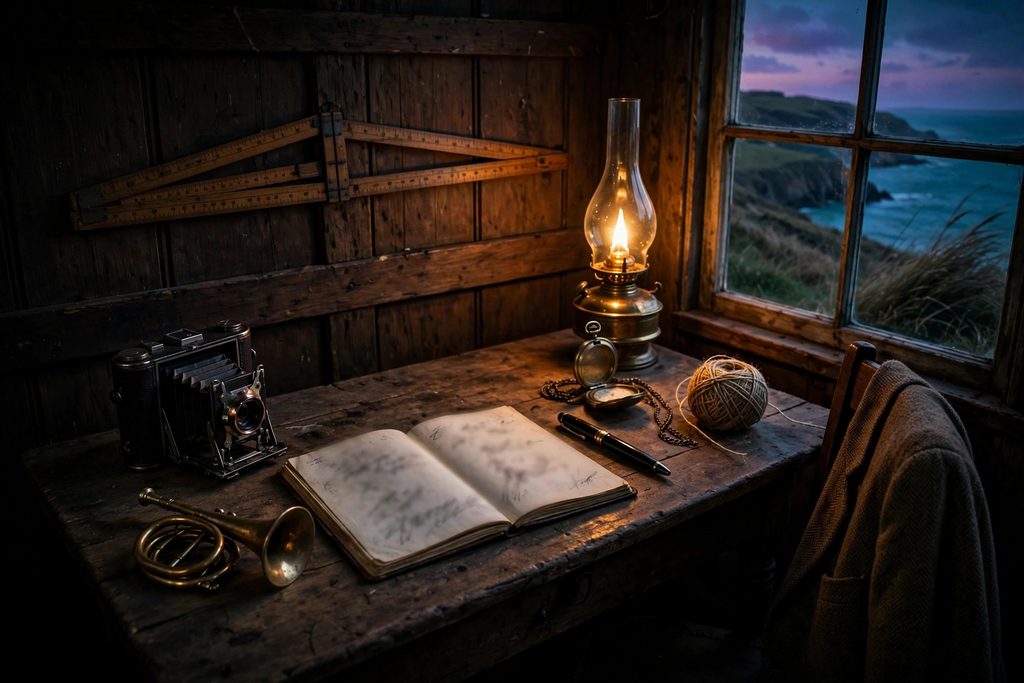
James Irving had promised proof, and he sent it. There were tufts of hair said to have been plucked from Gef, impressions of its paws pressed into plasticine, marks said to have been made by its teeth, and later a few blurred photographs that Voirrey had taken of an animal on a wall.
Price passed the hair to Julian Huxley, who sent it on to the naturalist F. Martin Duncan. Duncan reported that it was not mongoose hair. It came from a dog, and it had been cut rather than pulled. When Price compared it with hair from Mona, the Irvings’ sheepdog, the match was close. The paw casts went to Reginald Pocock at the Natural History Museum, one of the leading authorities on the mammals of the world. He could not match them to any known animal, though he said that one might conceivably have been made by a dog. None of them, he said, was the print of a mongoose. The photographs showed a small, fuzzy shape that could have been anything.
In 1936 Price and Lambert published The Haunting of Cashen’s Gap. They were careful not to call the family liars. They set out what they had seen and heard, which was nothing, and what the evidence showed, which was a dog. They left readers to draw the conclusion. The book sold fewer than four hundred copies. Its fame came from the courtroom.
The Mongoose Case
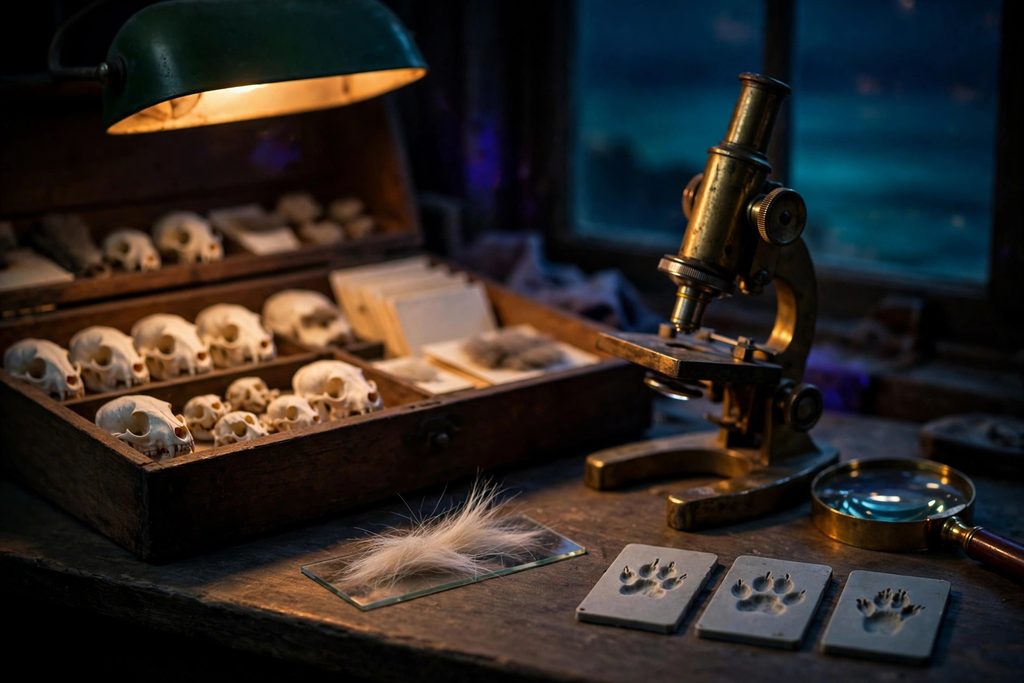
Richard Lambert was a rising figure at the BBC. Sir Cecil Levita, a former chairman of London County Council, told others that Lambert was unfit to sit on the board of the new British Film Institute because he was off his head and believed in a talking mongoose and in the evil eye. Lambert sued for slander. Senior figures at the BBC pressed him to drop the case, and he refused.
The trial was heard in London in November 1936. Every member of the jury was given a copy of The Haunting of Cashen’s Gap. The jury found that investigating a talking mongoose was not evidence of madness, and Lambert was awarded £7,500, an enormous sum for the time. The size of the award owed much to evidence that his job had been put at risk, and the affair led to an official inquiry into the BBC. The newspapers called it the Mongoose Case. Gef had never said a word to Lambert, and yet it had made legal history.
A Week With Nandor Fodor
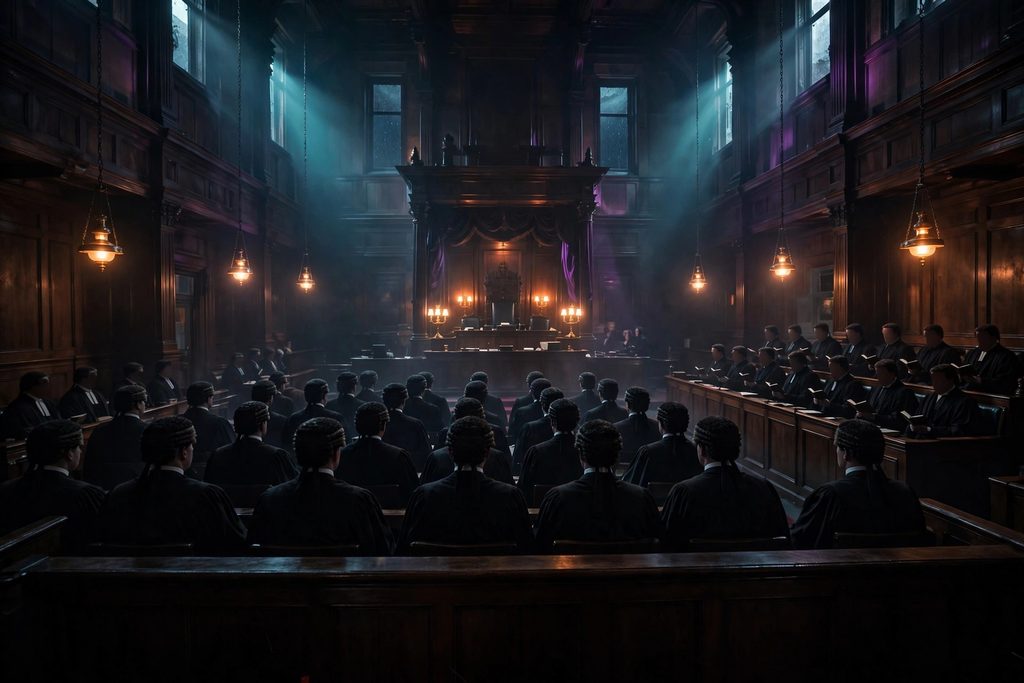
In 1937 the Hungarian psychical researcher Nandor Fodor, research officer of the International Institute for Psychical Research, came to stay at Doarlish Cashen. He spent a week in the house and paid the Irvings £5 for his board. Stones were thrown at him, he said, and a door banged. Gef did not appear and did not speak.
Fodor still went home convinced that the family was honest. In his first report he wrote, with capital letters, that Gef does exist. Years later, after he had become a psychoanalyst in New York, he changed his explanation. Gef, he decided, was a split-off part of James Irving’s own personality, a frustrated, clever, mischievous self that had found a voice in the walls.
The Girl Who Threw Her Voice
For most of those who studied the case, the simplest answer was in the house all along. A former schoolmate later remembered that Voirrey could throw her voice and would shout like a cat to fool people. The Examiner reporter thought he had seen her making the noises. Gef’s voice was high, quick and young, and it was always loudest and most talkative when Voirrey was near. The hair came from her dog, and the photographs came from her camera. The investigator Joe Nickell and others have suggested that Voirrey used ventriloquism, and that her family, the reporters and the believers made the rest. The media historian Jeffrey Sconce has called Gef most likely an imaginary companion created by the Irvings’ own extra extra clever daughter.
Voirrey herself never agreed. She left the farm in 1939 and worked as a machinist for an engineering firm during the war. In 1970 she spoke to the American writer Walter McGraw and insisted that Gef had not been her invention. The whole affair, she said, had been very detrimental to her life. In 1996 she refused to talk to a filmmaker, saying that she had put all that behind her. She died in 2005 without ever changing her story.
After the Voice Stopped
Gef faded as the Irving family changed. Voirrey grew up and went away, James grew old and ill, and by the early 1940s the voice in the walls had fallen silent. James Irving died in 1945 at the age of seventy-two. Margaret sold the farm soon afterwards, reportedly at a loss because of its reputation.
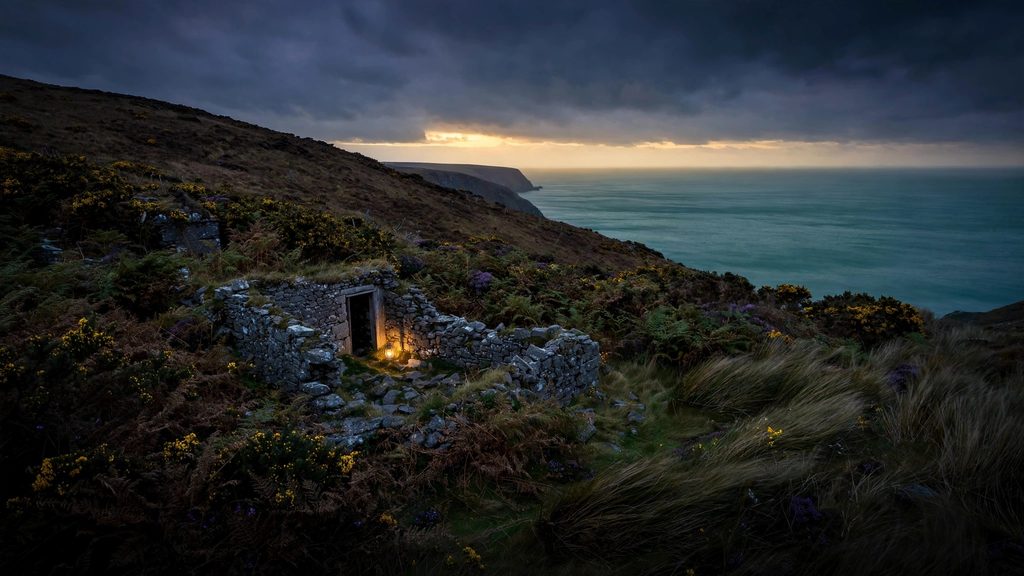
The new owner, Leslie Graham, made his own small contribution to the legend. He announced that he had shot a strange animal on the land and suggested it might have been Gef. It was black and white and much larger than the little yellow mongoose the Irvings had described. Voirrey said it was not Gef. Graham himself seemed unbothered. At any rate, he said, it did not talk to him. The farmhouse was later pulled down, and little remains of Doarlish Cashen today but a few stones and the wind.
The Voice That Outlived Them
Gef has outlived everyone who heard it. In 2017 the librarian Christopher Josiffe published the fruit of seven years’ research into the case, drawing on the papers Harry Price had collected. He left the central question open, and he suggested that the creature may have carried feelings within the family that could not be said any other way, among them James Irving’s fierce protectiveness towards his lonely daughter. In 2023 the story became a film, Nandor Fodor and the Talking Mongoose, with Simon Pegg as Fodor and Neil Gaiman as the voice of Gef.
The lasting puzzle was never whether a mongoose from Delhi learned English on a hillside in the Irish Sea. It is how a family on a remote farm kept a voice alive for about ten years, in front of reporters and investigators, without anyone catching the whole trick, and why the girl at its centre carried it to her grave. One person’s hoax would be hard enough to keep up. A family story, believed in a different way by each of them, with the father filling the diaries, the daughter close to the voice and the mother keeping the peace, would explain why nobody ever confessed, and why so many sensible visitors walked back down the hill unsure of what they had heard.
The Verdict | Debunked
No talking mongoose ever lived in the walls of Doarlish Cashen. Every scrap of physical evidence sent to London pointed somewhere else. The hair was dog hair, cut rather than pulled, and close to the coat of the family sheepdog. The paw prints matched no mongoose, and one may have been a dog’s. The photographs show a blur. Harry Price and Richard Lambert heard nothing, and Nandor Fodor heard nothing in a week under the same roof. The voice spoke most often near a girl who could throw her voice, in a house whose hollow walls carried sound from room to room.
That settles the creature, and the rating is Debunked. It does not settle the family. Who knew what, and why the story was kept up for a decade without a confession, may never be answered. What the hill gave up in the end was no animal, but a dog, a gifted girl, a house built like a speaking-tube and a family that never broke ranks.
- Claim tested
- From 1931 a talking animal, a mongoose by its own account, lived in the walls of the Irving farmhouse at Cashen’s Gap on the Isle of Man.
- Oldest record
- Rung 2 · Reported at the time
The Irving family’s letters and diaries from 1932, the Manchester Daily Dispatch and Isle of Man Examiner reports of January and February 1932, and Harry Price’s files on the case. - The record supports
- A voice heard by the family and by some visitors, a family who seemed sane and sincere to reporters, and a daughter who never changed her account in seventy years.
- It does not support
- A mongoose or any talking animal. The hair was dog hair, the paw casts were not a mongoose’s, the photographs are unclear, and no investigator heard the voice. A reporter said he saw the daughter making the noises.
- Explanations weighed
- A talking mongoose, a poltergeist or spirit, ventriloquism by Voirrey Irving, a split-off self of James Irving as Fodor came to think, and a family story believed in different ways by each member.
- What would change it
- Physical evidence of a mongoose at Doarlish Cashen, or a recording or independent hearing of the voice with every member of the family accounted for elsewhere.
Harry Price’s most famous haunting, and the doubts about his own methods, fill Borley Rectory. Children at the heart of voices and knockings return in the Enfield poltergeist and in the Fox sisters, whose rapping in a New York farmhouse in 1848 began Spiritualism. The investigators who chased such voices for a century gather in the Society for Psychical Research, Leonora Piper and the Cross Correspondences. Their rulings line up side by side on our Verdict Index, and the Archive Standard holds the tests each one had to pass.
Quick Answers About Gef the Talking Mongoose
What was Gef the talking mongoose?
A voice that the Irving family said lived in the walls of their farmhouse, Doarlish Cashen, near Dalby on the Isle of Man, from 1931. It called itself a mongoose born in India in 1852, talked, sang and joked, and became famous in the British press of the 1930s.
Did anyone see Gef?
Very few people claimed to. Voirrey Irving described a small yellowish animal with a bushy tail, and two local boys said they saw a yellow creature. The investigators Harry Price, Richard Lambert and Nandor Fodor neither saw nor heard it.
What did the evidence show?
Hair said to be Gef’s was identified as dog hair, cut rather than pulled, and closely matched the family’s sheepdog. Paw casts examined at the Natural History Museum were not those of a mongoose. The few photographs are too blurred to identify.
Was Voirrey Irving a ventriloquist?
A former schoolmate said she could throw her voice, and many investigators believed she was the voice of Gef. Voirrey always denied it. In 1970 she said Gef was not her invention and had harmed her life, and she never changed her account before her death in 2005.
What was the Mongoose Case?
A slander trial in London in November 1936. Richard Lambert, editor of the BBC’s The Listener, sued Sir Cecil Levita, who had said Lambert was unfit for public office because he believed in a talking mongoose. Lambert won £7,500 in damages.
Is the Gef farmhouse still standing?
No. Doarlish Cashen was sold after James Irving died in 1945 and was later demolished. Only traces of it remain on the hillside above Dalby.