Frederic Myers died in Rome on 17 January 1901. He was a poet, a classical scholar and, for twenty years, the most eloquent voice in the Society for Psychical Research, the Cambridge circle that had set out to test, by the methods of science, whether anything of a person survives death. He had spent his life looking for proof. His friends believed he would go on looking after it.
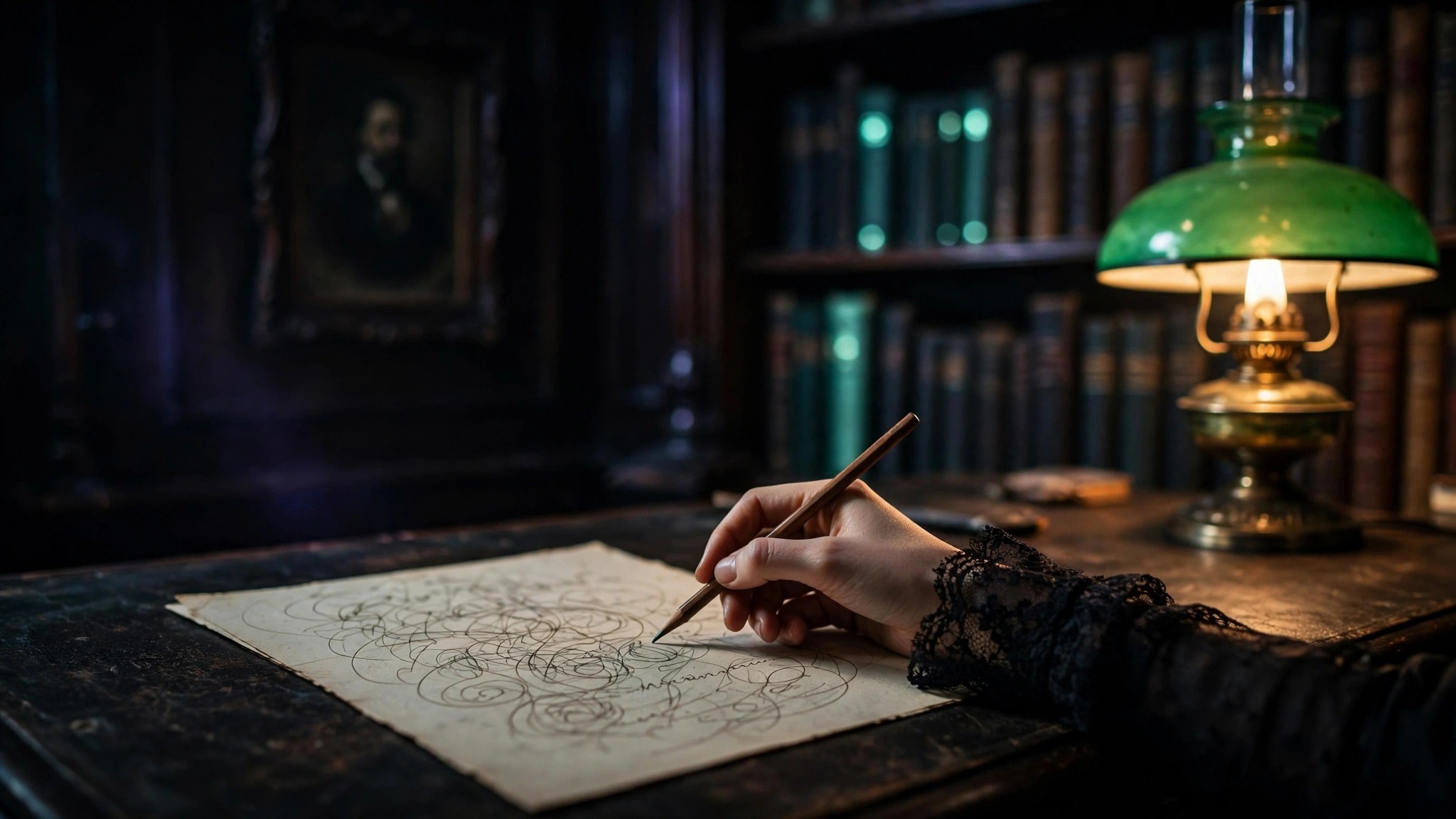
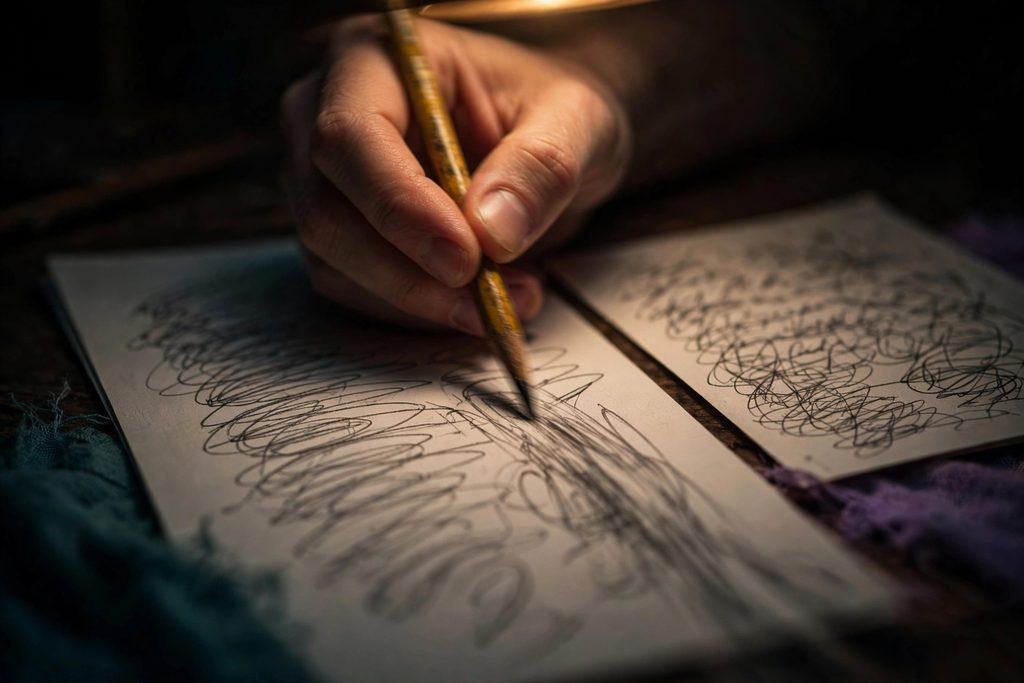
Two months later, in a house in Cambridge, the classicist Margaret Verrall sat down with a pencil and a sheet of paper, emptied her mind and waited for her hand to move. On 13 March 1901 it began to write. The words came in scraps of Latin and Greek, and they were signed Myers.
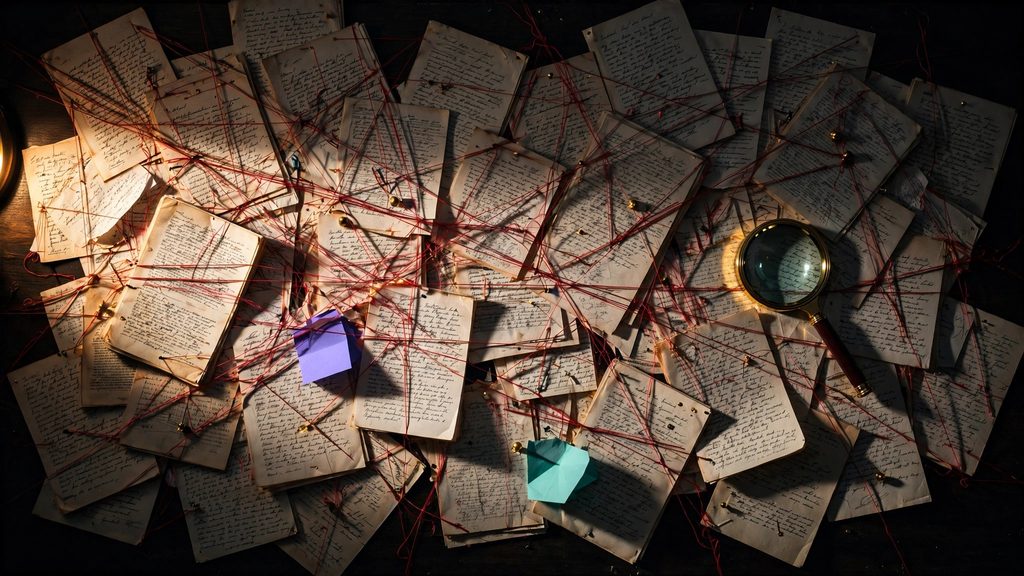
Over the next thirty years, more than three thousand scripts like hers were written by a handful of women in Cambridge, India, Wales and Boston. Read one at a time, most of them make little sense. Read together, the investigators said, they fit like pieces of a puzzle, as if a single mind on the other side of death were dealing out the parts to different writers so that no one living could have put them together. The Society called them the cross correspondences. Some of its finest minds believed they were the strongest evidence for survival ever gathered. They also hid one of the strangest secrets in British public life.
The Cast | Three Circles of One Experiment
A Promise Made in Life
The Society for Psychical Research was founded in 1882 by a circle of Cambridge men who had lost the certainties of religion and hoped to find firmer ground. Henry Sidgwick, the philosopher, was its first president. Edmund Gurney gathered hundreds of accounts of apparitions. Myers gave the movement its theory, a vast work on the hidden powers of the mind, published after his death as Human Personality and Its Survival of Bodily Death.
By 1901 all three were dead. Gurney had died in 1888, Sidgwick in 1900. They had spent years watching mediums, from the careful Leonora Piper to the flamboyant Eusapia Palladino, and they knew the weakness of every message from the dead. A medium could guess. A medium could pick up hints from the sitter. A medium could read another living mind.
Myers had tried to plan around this. In 1891 he sealed a message in an envelope and gave it to the physicist Oliver Lodge, to be opened only if its contents were ever given through a medium. In 1904, after a script by Margaret Verrall seemed to refer to it, the envelope was opened before witnesses. The script was wrong. The Society’s journal reported that this one experiment had completely failed.
The cross correspondences were to be a better test. If a dead mind could split one idea into pieces that meant nothing alone, and scatter them among writers who did not compare notes, then no single living mind could be the source.
The First Scripts
Margaret Verrall was no ordinary sitter. She lectured in classics at Newnham College, Cambridge, and her husband, A. W. Verrall, was one of the best-known classical scholars of his time. For about three months her hand produced little of value. Then the scripts settled into a voice, signed Myers, writing in a Latin and Greek well below her own standard.
Her daughter Helen soon began to write as well. Far away in India, Alice Fleming, the sister of Rudyard Kipling, had begun writing automatically too, and in time her scripts were sent to the Society under the name Mrs Holland. Leonora Piper, the Boston medium who had been studied for twenty years, produced a Myers of her own in trance.
Automatic writing is an old practice, and the hand that writes without the writer’s conscious direction is a familiar phenomenon to psychologists. It is the same unwitting movement that drives a Ouija planchette, and a decade later it produced the novels of Patience Worth in St Louis. What made these scripts different was not how they were written but what the investigators found when they laid them side by side.
A Pattern Appears
The pattern was first noticed by Alice Johnson, the Society’s research officer, whose job was to file and compare the scripts as they arrived. In April 1906 she reached a conclusion that changed the experiment. The fragments in different scripts were not merely similar. They seemed to complete one another, as if they had been designed to be read together. Only a single directing mind, she argued, could have planned it, and that mind appeared to be Myers.
The early examples were small. In August 1906 Mrs Holland and Mrs Verrall both wrote about yellow within two days of each other. Others were more elaborate, built from obscure quotations, Greek puns and allusions to poems that the investigators had to track down in libraries. The Society’s honorary secretary, J. G. Piddington, decided to set a trap.
Hope, Star and Browning
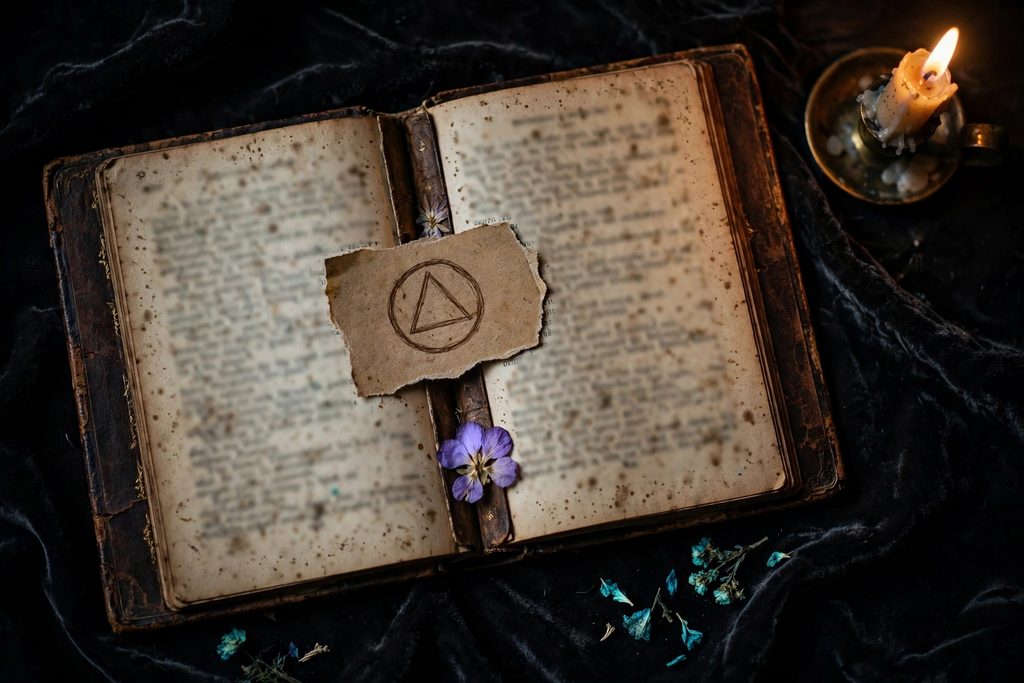
In the winter of 1906 and 1907, Leonora Piper was in England for a series of sittings. On 16 January 1907, Piddington asked her trance Myers to mark any cross-correspondence with a sign, a circle with a triangle inside it. He told no one else.
Over the following weeks, Margaret Verrall wrote about anagrams, stars and lines from Robert Browning. Her daughter wrote of a star above the rats of Hamelin, from Browning’s Pied Piper. Mrs Piper’s Myers spoke of Browning, hope and star, and finally drew the agreed circle and triangle beside the letters B H S. To the investigators, the scattered pieces made one message, and the sign showed it was meant.
The critics pointed out what the believers did not dwell on. The two Verralls lived in the same house. Both had sat with Mrs Piper. Browning was among the most quoted poets in the English-speaking world, and stars, hope and anagrams are not rare ideas. The links were found by investigators who were looking for them, among scripts that ran to thousands of lines.
Lethe
The case that believers still rank highest began with a question. In America, the researcher George Dorr asked Mrs Piper’s Myers what the word Lethe suggested to him. Lethe is the river of forgetfulness in the classical underworld. Mrs Piper knew no Latin or Greek.
Over several sittings her Myers answered with a stream of strange allusions, to the lovers Ceyx and Alcyone and to the goddess Iris sent down to the house of sleep, all from Ovid’s Metamorphoses. Nobody present understood them at first.
Later, in England, Oliver Lodge put the same question to the Myers who wrote through Mrs Willett. The script replied that the question had already been asked elsewhere, and spelled out the name DORR. Over the following weeks it produced its own answer, built from the passage on Lethe in Virgil’s Aeneid. Its Myers explained that he wanted to prove that he had access to knowledge shown elsewhere.
To the believers, two writers who had never met had answered one question with two different classical poems, each pointing to the other. To the critics, the classical underworld was the common property of every educated Edwardian, and the investigators who joined the answers together were themselves steeped in it.

The Ear of Dionysius
By the 1910s the claimed communicators had grown in number. S. H. Butcher, a classical scholar, died in 1910. A. W. Verrall, Margaret’s husband, died in 1912. Soon Mrs Willett’s scripts were claiming to speak for both.
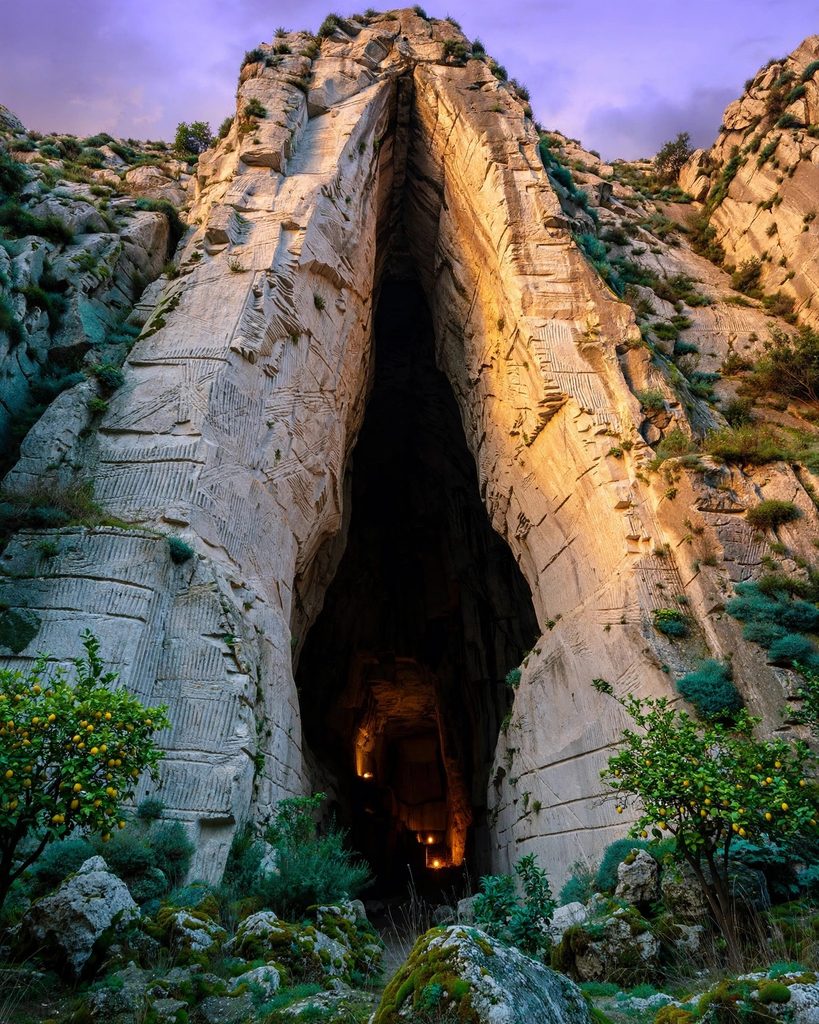
The most famous of their messages was a riddle about the Ear of Dionysius, a cave in the quarries of Syracuse where, the story goes, the tyrant Dionysius listened to his prisoners through the rock. The scripts wove it together with the story of the Cyclops Polyphemus and his love for the sea nymph Galatea, and with a satire by a Greek poet whom Dionysius had sent to the quarries. Gerald Balfour untangled the puzzle and published it in 1918, as a message designed, he believed, by two dead classicists who had each brought their own learning to it.
Mrs Willett was not a classicist. The investigators thought her knowledge of Greek literature far too slight to have built the riddle. Critics replied that nobody could be sure what a well-read woman in an educated family had read or overheard, and that the solution had been found by men who knew exactly where to look.
The Palm Sunday Case
The scripts held one more story, and it touched the most powerful man among the Society’s friends. In 1875 the young Arthur Balfour, later prime minister, had fallen in love with Mary Catherine Lyttelton, known as May. She died of typhus on Palm Sunday that year, before he had proposed. He never married.
Over many years, scripts by Mrs Willett, Mrs Holland and the Verralls returned again and again to images that the investigators linked to her, a palm maiden, may blossom, a lady with a candle, and the nursery rhyme Mary, Mary, quite contrary. Balfour, a philosopher by temperament, was slow to accept any of it. In the end, according to the Society’s account, he came to believe that May Lyttelton had been speaking to him. The case was published in full only in 1960, by Jean Balfour, in the Society’s Proceedings, under the title The Palm Sunday Case.
The Secret in the Scripts
For decades, the identity of Mrs Willett was one of the Society’s best-kept secrets. She was Winifred Coombe Tennant, a wealthy woman from Neath in south Wales who had lost a young daughter, and who would go on to become a suffragist, the first woman magistrate in Glamorgan and, in 1922, the first British woman delegate to the League of Nations.
She met Gerald Balfour, Arthur’s brother and a former president of the Society, through the scripts in 1911. He became their chief interpreter. The scripts, in the voices of the dead, began to speak of a child to be born, a genius of a high order who would help bring peace to the world. In 1912 Winifred and Gerald, both married to other people, began an affair that both appear to have believed the dead had asked for. Their son, Augustus Henry Coombe Tennant, was born on 9 April 1913 and raised as her husband’s child.
Henry never became a messiah. He became something almost as unlikely. He served with the Welsh Guards in 1940, was captured, escaped from a German prison camp in 1942, worked with the Special Operations Executive and won the Military Cross. After years in British intelligence in the Middle East, he became a Benedictine monk at Downside Abbey in 1965, as Dom Joseph. He learned the truth about his birth only as an adult. He died in 1989.
The story came out slowly, from family papers, a book by the astronomer Archie Roy in 2008 that quoted Jean Balfour’s notes, and the work of historians since. The historian Susan Pedersen called it one of the most elaborate justifications for an extramarital liaison ever devised. For the evidence, it matters in one way above all. The man who spent his later years interpreting Mrs Willett’s scripts was the father of the child those scripts had foretold.
Designer or Interpreters?
The case for survival rests on design. Fragments that complete each other, spread across writers in different places, look like a plan, and a plan needs a planner. If the planner was not one of the writers, the believers argue, it must have been someone outside them.
The case against points to everything the writers and readers shared. Most of them knew each other, moved in the same small world of Cambridge and the great country houses, and read the same poets. Some of them saw each other’s scripts. Telepathy among the living, if it exists, would serve as well as survival. Memories of books long forgotten can resurface in a moving hand, the process psychologists call cryptomnesia, which runs through the file on Bridey Murphy. And in more than three thousand scripts full of quotations, chance alone will offer links to anyone who searches for them.
The Verdict | Disputed
Nobody seriously accuses the writers of fraud. The scripts exist, they are dated, and the links the investigators found between them are on the page for anyone to read. What divides readers is the step from pattern to designer. The believers, among them some of the most rigorous minds of their age, saw a plan that only the dead could have made. The critics see a closed and learned circle, joined by friendship, grief and in one case a secret love, finding in its own writing what it hoped to find.
Both readings have serious evidence behind them, and qualified people who have studied the scripts still disagree. The file is stamped Disputed. Myers promised to keep looking. A century later, the people who read his messages are still arguing about whether he found a way.
- Claim tested
- The scripts written by several automatists between 1901 and the 1930s were designed by Frederic Myers and his dead colleagues to prove that they had survived death.
- Oldest record
- Rung 1 · Written at the time
The dated automatic scripts themselves, from Margaret Verrall’s first of 13 March 1901, and her first report on them in the Proceedings of the Society for Psychical Research in 1906. - The record supports
- Fragments by different writers in different countries, dated close together, that the investigators could join into shared themes, among them Hope, Star and Browning in 1907 and the Lethe questions.
- It does not support
- A design that only the dead could have made. The writers shared friends, books and a classical education, some saw each other’s scripts, the clearest test, Myers’s sealed envelope, failed in 1904, and the later scripts were bound up with a secret affair between a writer and her chief interpreter.
- Explanations weighed
- Survival of Myers and his colleagues, telepathy among the living, unconscious memory and shared culture, chance in a body of more than three thousand scripts, and pattern-finding by investigators close to the writers.
- What would change it
- The full release and independent re-reading of the scripts, with the dates fixed and the interpreters’ notes set aside, to test whether the patterns survive without them.
Every stamp in the archive is gathered in the Verdict Index, and the rules behind it are in the Archive Standard. Cambridge is pinned on the Atlas.
Quick Answers About the Cross Correspondences
What were the cross correspondences? A series of automatic writings produced by several women between 1901 and the 1930s, said to come from Frederic Myers and other dead members of the Society for Psychical Research. Fragments in different scripts seemed to complete each other, as if planned by one mind.
Who wrote the scripts? The main writers were Margaret Verrall and her daughter Helen in Cambridge, Alice Fleming in India under the name Mrs Holland, the American medium Leonora Piper, and Winifred Coombe Tennant under the name Mrs Willett.
What was the Hope, Star and Browning case? In early 1907, scripts by Margaret Verrall, Helen Verrall and Leonora Piper made separate references to hope, stars and the poet Robert Browning, and Mrs Piper’s Myers drew a sign that the investigator J. G. Piddington had asked for in secret.
Do the cross correspondences prove life after death? No one has shown that they do. Their supporters argue that the design points to the dead. Critics point to shared friendships, shared classical learning, telepathy among the living and the role of the investigators in finding the links.
What is the Palm Sunday Case? The scripts that were said to carry messages from Mary Lyttelton, who died on Palm Sunday 1875, to Arthur Balfour, who had loved her. The case was published by Jean Balfour in 1960.
Who was Mrs Willett? Winifred Coombe Tennant of Neath, later a suffragist and League of Nations delegate. Her son Henry, born in 1913, was fathered by Gerald Balfour, the chief interpreter of her scripts.