





In the 20th century, futurists envisioned robotic overlords and star-bound ships. But now, in the 21st century, the future looks different, and arguably more dystopian. No longer are we haunted solely by the visions of mechanical dominance or extraterrestrial travel. Instead, we are rapidly approaching an era in which biological inequality, driven by billion-dollar biotech ventures, will redefine what it means to be human.
Imagine a world where the rich stop aging and the poor simply age out of existence. The underlying science driving this scenario is genuine. Whether it actually plays out this way, rather than following the more complicated, often more equalizing path most transformative medical technologies have historically taken, remains an open question this piece will address honestly rather than assume.
The Biotech Gold Rush | How the Wealthy Are Buying Time
Billionaires Betting on Immortality
In the past, snake oil salesmen promised the secret to eternal youth, with no scientific backing behind the claim. Today, it’s Nobel Prize-winning scientists backed by trillion-dollar corporate empires, a meaningful difference in credibility even though the ultimate outcome remains scientifically unproven. The goal is no longer just to live longer. It’s to reverse aging.
Jeff Bezos, the founder of Amazon and one of the richest men in the world, has invested billions into Altos Labs, a secretive biotech company focused on cellular reprogramming. The project involves global scientific luminaries like Shinya Yamanaka, who discovered reprogramming factors that can theoretically return adult cells to a youthful state, and Jennifer Doudna, co-developer of CRISPR gene-editing technology.

This isn’t philanthropy. Bezos’s specific personal motivations for the investment haven’t been publicly detailed by him in these terms. This is the piece’s own speculative characterization rather than a verified statement from Bezos himself.
Genetic Engineering and Organ Printing | A Billionaire’s Fountain of Youth
Progress on bioprinted tissue and organ scaffolding is genuinely underway, with several research teams having successfully bioprinted simplified tissue structures and, in more limited cases, functional components tested in animal models, though a fully functional, transplantable printed human organ, a heart or kidney capable of sustained function in a human recipient, has not yet been achieved in any published, peer-reviewed clinical result. The gap between promising early research and the elite soon replacing worn-out body parts as easily as changing a tire is significant and worth being honest about rather than glossing over.
“Heart giving out? No problem, replace it with a lab-grown version made from your own cells.”
This isn’t science fiction. It’s cutting-edge science, fueled by investments larger than the GDPs of small nations.
The Technologies Rewriting Human Lifespan
Cellular Reprogramming | Resetting the Biological Clock
The most significant game-changer is cellular rejuvenation. Scientists have already reversed aging symptoms in mice using Yamanaka factors. The potential? Turning back the aging clock without turning a person into a mindless stem cell blob.
Experiments in mice and cell cultures have shown genuine success in improving cellular function, reducing markers of age-related decline, and even regenerating some damaged tissues, published results that form a legitimate scientific basis for optimism about the field, even as translation to safe, reliable human treatment remains an active and unresolved area of research.
Senescence Removal | Clearing the Cellular Junk
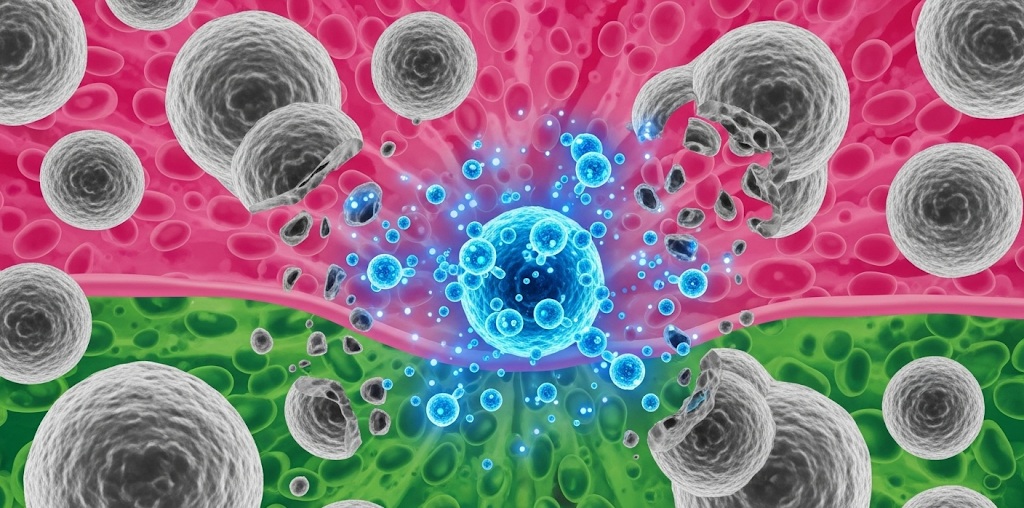
As we age, cells that stop dividing, called senescent cells, accumulate and poison surrounding tissue. Billionaires are now funding companies like Unity Biotechnology and Calico (a Google-backed firm) to develop senolytics, drugs that purge these aging cells and restore vitality.
Elite Monitoring and Personalized Medicine
While the average citizen often waits weeks for a doctor’s appointment, wealthy individuals already have documented access to AI-driven diagnostics, full-genome sequencing, and real-time biometric tracking through existing concierge medicine and executive health programs, a present-day disparity in preventive care access that predates and exists independently of the longevity technologies discussed above.
Result? While most of the world dies from preventable illnesses, the elite receive custom therapies before symptoms even appear.
Society Split by Lifespan | The New Caste System
Healthspan for the Few, Decline for the Many
Let’s consider one possible, speculative scenario twenty years from now, among several plausible outcomes this piece will return to.
You’re in a city square. On one side, wealthy 70-year-olds with wrinkle-free faces, energetic bodies, and perfect cognition, looking no older than 30. On the other side, their same-age peers hunched over, burdened with arthritis, deteriorating vision, and failing memory. One group lives in youth, the other in decay.
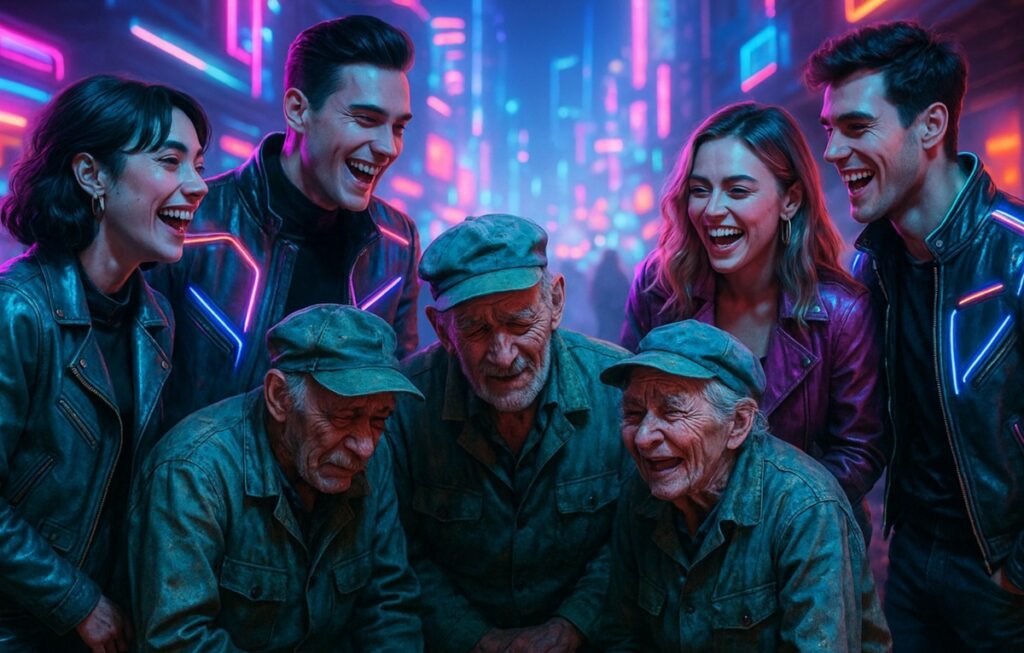
Such a visual gap in vitality would mirror, and then surpass, the current wealth divide.
From Class to Caste | The Emergence of Bioeconomic Divisions
This disparity could create bio-castes, where wealth determines biological fate. The rich will not just live longer. They’ll live better. The poor will work longer, retire later, and die sooner.
Forget middle-class aspirations. In a world of lifespan inequality, health becomes currency, and only the richest can afford it.
The Historical Counter-Pattern
It’s worth weighing this scenario against the well-documented historical pattern most transformative medical technologies have actually followed, since it complicates the straightforward “permanent bio-caste” prediction. Insulin, antibiotics, vaccines, and statins were all initially expensive, limited-access treatments developed with private and elite funding, and all became broadly, if imperfectly, accessible within a few decades through a combination of patent expiration, generic manufacturing, public health policy, and falling production costs. Health economists studying pharmaceutical access point to this as a recurring pattern rather than an exception, though they also note counterexamples where access gaps have persisted far longer, particularly for treatments requiring ongoing specialized administration rather than a one-time manufacturing process. Which pattern longevity biotech ultimately follows depends on contested policy choices, including patent law, public health investment, and international manufacturing agreements, that remain genuinely undecided rather than already determined by the technology itself.
Can Revolutions Still Happen in a Biotech Oligarchy?
AI and Robot Enforcers | Ending the Age of Uprisings
Historically, inequality led to revolt. But in a future ruled by AI surveillance, combat drones, and robotic law enforcement, the potential for uprising could be systematically neutralized.

Think Boston Dynamics security robots, AI-augmented facial recognition, and weaponized drones, all existing technologies already deployed in various policing and security contexts today, even though their specific future use for suppressing biotech-driven unrest remains speculative rather than settled policy. The ruling class won’t necessarily need humans to defend them in the way it once did. Automated technology could, in principle, do that job without conscience or hesitation, though whether and how this actually unfolds depends on contested regulatory and political choices still being made.
This is a serious concern raised by actual scholars studying the intersection of AI, automated policing, and democratic accountability, though it remains a projected risk rather than a settled outcome, and it depends heavily on policy and regulatory choices that haven’t yet been made.
What the Actual Science Currently Supports
It’s worth being precise about where the science currently stands, since the gap between “aging reversed in mice” and “aging reversed in humans, safely, at scale” remains genuinely large. Shinya Yamanaka’s 2006 discovery of the four transcription factors that can reprogram adult cells back to a pluripotent, embryonic-like state earned him the 2012 Nobel Prize in Physiology or Medicine, and subsequent research has demonstrated partial reprogramming can reverse specific age-related markers in mice without fully erasing cell identity. This is published, peer-reviewed science. What remains unresolved is safe application in humans: the same cellular reprogramming pathways implicated in rejuvenation are closely related to pathways that, if triggered incompletely or in the wrong tissue context, can promote cancer, and no human clinical trial has yet demonstrated the kind of comprehensive, safe age reversal this piece describes as an approaching certainty. Altos Labs, Unity Biotechnology, and Calico are all well-funded companies pursuing this research seriously, and their existence reflects genuine scientific optimism about the field’s direction. It does not yet reflect a proven, deployable therapy.
Is There Any Hope? The Quiet Warriors of Equality
The Ethical Scientists and Rogue Hackers
History shows us that not all advancements remain in the hands of the elite. When the U.S. developed the atomic bomb, it was scientists who leaked secrets to the USSR, not out of treachery, but out of a desire to balance global power.
We can expect similar dissent in biotech. There will be underground networks, biohackers, rogue physicians, and open-source scientists who defy corporations and governments to democratize access to longevity treatments.
Underground Medicine | The Black Market of Youth
As with any high-demand commodity, black markets will arise. Anti-aging drugs, stem cell treatments, gene therapy tools, these could flow through illicit but accessible channels. As supply increases, prices will drop. Eventually, even the working class may access low-grade rejuvenation tech.
The genie never goes back in the bottle.
The Future | Inevitable Stratification or Temporary Imbalance?
A New Kind of Inequality, and a Familiar Pattern
Let’s be honest, societal stratification isn’t new. From kings and serfs to CEOs and minimum wage workers, humanity has always balanced on the knife’s edge of inequality. The coming era will merely extend this into biology.
But no imbalance lasts forever. As with electricity, the internet, and vaccines, what begins as a luxury often becomes universal, through rebellion, innovation, or sheer necessity.
Whether the transformation is peaceful or violent, one truth remains: humanity does not accept inequality forever.
The Policy Debates Already Underway
It’s worth noting that the equity concerns this piece raises are not speculative or unaddressed. Bioethicists, health policy researchers, and international bodies including the World Health Organization have already begun substantive work on frameworks for equitable access to emerging longevity and gene therapies, drawing directly on the documented history of access battles over HIV antiretrovirals, hepatitis C treatments, and, more recently, COVID-19 vaccines, each of which involved genuine international negotiation over patent pools, tiered pricing, and compulsory licensing to expand access beyond the wealthiest markets. These aren’t guaranteed solutions, and serious access gaps persisted in each of those cases, sometimes for years. But they demonstrate that the trajectory of an expensive new medical technology is shaped by policy choices made during its rollout, not fixed in advance by the technology’s initial cost or its billionaire early investors. Whether longevity biotech follows a similar path toward broader access, or instead becomes the permanent bio-caste system this piece describes, is a question current policy, patent law, and international cooperation choices are actively shaping right now, not a foregone conclusion already decided.
A Warning, and a Possibility
The idea that “the rich will be forever young, and the poor will outlive their resources and die of old age” is best understood as one plausible cautionary scenario among several, not a settled prediction. As medicine enters a significant new phase of genetic and cellular therapies, the open questions are less about the underlying science, which is proceeding regardless, and more about access, ethics, and the specific policy choices democratic societies make in the coming decades about how new medical technologies are priced, patented, and distributed.
Whether the outcome looks more like universal vaccination, imperfect but broadly accessible, or more like a permanent bio-caste system depends significantly on choices that haven’t been made yet: how governments regulate pricing, whether international patent-sharing agreements get negotiated, how quickly manufacturing costs fall as the technology matures, and how much political pressure the public applies while these decisions are still being made. That’s an active area of ongoing debate, not a foregone conclusion, and treating it as one risks discouraging exactly the kind of engagement that has historically shaped which direction transformative medical technologies actually take.