





The North Magnetic Pole’s position is tracked continuously by the British Geological Survey and by NOAA’s National Centers for Environmental Information. The tracking record shows consistent northward drift throughout the twentieth century at rates averaging approximately fifteen kilometers per year. The record also shows something else: a sharp acceleration beginning in the mid-1990s that has produced drift rates of approximately fifty-five kilometers per year, nearly four times the previous century’s average.
By 2019, the pole’s movement had accelerated sufficiently that the World Magnetic Model, the standard reference used by navigation systems worldwide including GPS, required an out-of-cycle update for the first time in its history. The model is normally updated every five years. The 2019 emergency update was required because the pole’s accelerating movement had pushed the model’s error margins beyond the threshold considered safe for navigation.
The emergency update was not a minor administrative adjustment. It reflected a physical reality: the magnetic pole was moving faster than any model based on the previous century’s behavior had predicted, and the discrepancy was large enough to affect operational navigation systems worldwide.
Whether the acceleration reflects a normal fluctuation in the geodynamo’s behavior, a precursor to a magnetic pole reversal, or something else whose character the current geophysical framework has not fully characterized, is a question that the paleomagnetic record is the primary tool for addressing.
The paleomagnetic record does not show comforting historical precedents for the current combination of trends.
What the Paleomagnetic Record Shows
The Earth’s magnetic field has reversed its polarity multiple times in the geological record, with the North and South Magnetic Poles swapping positions in events whose frequency has averaged approximately every 200,000 to 300,000 years over the past few million years. The last full reversal, the Brunhes-Matuyama reversal, occurred approximately 780,000 years ago. The current polarity epoch is therefore already significantly longer than the average interval between reversals.
Between full reversals, the paleomagnetic record shows shorter-duration events called excursions, in which the magnetic field weakens significantly and the poles shift dramatically before returning to approximately their original positions rather than completing a full reversal. The named excursions recorded in the source are among the most precisely characterized in the paleomagnetic literature.
The Laschamp excursion, approximately 41,000 years ago, is the most extensively studied paleomagnetic excursion in the record. During the Laschamp event, the magnetic field’s intensity dropped to approximately five percent of its current strength, the poles wandered from their normal positions by more than forty-five degrees, and the magnetosphere, the protective bubble that deflects cosmic radiation and solar wind from the Earth’s surface, was reduced to approximately 3.8 times the Earth’s radius compared to its current extent of approximately ten Earth radii.
The Laschamp event lasted approximately 440 years from onset to recovery. The period of maximum field reduction lasted approximately 250 years.
A hypothesis in the paleontological literature connects the Laschamp excursion to the extinction of Neanderthals. Tommy Wills and colleagues published a paper in Science in 2022 reconstructing the global environmental consequences of the Laschamp excursion through climate modeling and paleontological correlation. Their finding: the period of maximum field reduction during the Laschamp event corresponded to a period of increased cosmic radiation flux at the Earth’s surface, ozone layer depletion, increased ultraviolet radiation penetration, and climate perturbations recorded in the proxy record. Their analysis found statistical correspondence between the Laschamp excursion’s maximum intensity and the period in which Neanderthal populations disappeared from the archaeological record.
Whether the Laschamp excursion caused Neanderthal extinction, contributed to it alongside other factors, or is coincidentally correlated with it, is a question the authors present with appropriate scientific caution. The correspondence is on record. The mechanism is physically plausible: a population already stressed by competition with anatomically modern humans, whose tools, social networks, and mobility may have given them adaptive advantages under the environmental challenges of the excursion period, would have been more vulnerable to the additional stress of increased radiation, ozone depletion, and climate perturbation than a larger and more flexible population.
The South Atlantic Anomaly
The South Atlantic Anomaly is a region centered over South America and the South Atlantic Ocean where the Earth’s magnetic field is significantly weaker than the global average. The anomaly is the point where the Van Allen radiation belts, the zones of energetic particles held in place by the magnetic field, dip closest to the Earth’s surface, to altitudes of approximately 200 kilometers, compared to the global average of approximately 1,000 kilometers.
The anomaly is not new. It has been recorded in the geomagnetic record for centuries. What is new is its behavior over the observational period: it is growing, both in area and in intensity.
Satellite operators have been aware of the South Atlantic Anomaly for decades because satellites passing through the region experience elevated rates of electronic failure and data corruption from the enhanced particle flux. The International Space Station requires additional radiation shielding for crew members when it passes through the anomaly’s zone. The anomaly is a practical operational concern rather than a theoretical curiosity.
The growth of the anomaly in recent decades appears in satellite magnetometry data. ESA’s Swarm constellation, three satellites dedicated to measuring the Earth’s magnetic field launched in 2013, produced the most detailed mapping of the anomaly’s current state and its rate of change. Swarm data published in 2020 showed that the anomaly had grown and that it was showing signs of potentially splitting into two separate anomaly centers, a behavior that the computational models of geomagnetic excursions associate with the early stages of a more significant field perturbation.
The computational models that attempt to simulate the current field’s trajectory forward in time produce results whose range spans from continued slow change within normal secular variation parameters to more rapid change consistent with excursion behavior. The models’ uncertainty is large enough that both outcomes are within their predictive range, and the available data does not yet distinguish between them.
The current magnetic field intensity, approximately 10 percent below the average for the current polarity epoch over the past century, is the background against which the pole acceleration and the anomaly growth are occurring. None of these three trends in isolation would be considered alarming by mainstream geophysicists. Their simultaneous occurrence is what the paleomagnetic record suggests requires attention.
The South Atlantic Anomaly adds the most significant navigation consequence of the geomagnetic changes the magnetic pole piece covers: a region of weakened magnetic field between Africa and South America that has been expanding and developing a second intensity minimum in southwest Africa over the past five years, producing confirmed gyroscope interference in maritime navigation and increased radiation exposure for low-orbit satellites and aircraft on polar routes.
The SAA’s expansion appears in ESA monitoring data. The second intensity minimum’s development in southwest Africa appears in the same monitoring record. The geomagnetic reversal hypothesis that the SAA’s growth is cited as evidence for appears in the peer-reviewed geophysics literature.
Whether the SAA represents a precursor to a geomagnetic pole reversal on the timescale of centuries, as some geophysicists propose, or reflects a shorter-term fluctuation in the geomagnetic field whose significance for the reversal timeline is uncertain, is the question that the confirmed expansion and the magnetic pole’s accelerating movement together raise with increasing urgency.
The 12,000-Year Cycle
The source’s claim of a 12,000-year catastrophe cycle driven by external cosmic influence is the most contentious element of its framework and requires careful distinction between what the paleomagnetic record shows and what the causal mechanism proposed for it is.
The paleomagnetic record does show clustering of excursion events at roughly the intervals the source describes. The Gothenburg excursion at approximately 12,000-13,000 years ago corresponds to the Younger Dryas boundary event. The Lake Mungo excursion at approximately 30,000 years ago. The Mono Lake excursion at approximately 32,000 years ago. The Laschamp excursion at approximately 41,000 years ago. The spacing between these events does not conform precisely to a regular 12,000-year cycle, but the Gothenburg excursion’s correspondence to the most recent major catastrophic transition in Earth’s climate and human civilizational history is well established and significant.

The external cosmic influence proposed as the driver of these excursions, an unidentified force that affects the entire solar system at 12,000-year intervals, is not recorded in the mainstream geophysical literature. The mainstream geophysical explanation for magnetic excursions is internal geodynamo variation, the complex convective behavior of the liquid iron outer core that generates the Earth’s magnetic field, which can produce excursions and reversals through its own dynamics without requiring external forcing.
Whether internal geodynamo dynamics alone can explain the clustering of excursions at the known intervals, or whether an additional external forcing mechanism is required, is a genuinely open question in geophysics whose answer the current computational models have not definitively produced. The solar minimum piece in this library covers the correlation between solar activity cycles and terrestrial climate events, and the broader question of whether the solar system as a whole is subject to external influences whose periodicity is in the range of thousands of years is not resolved by the current astronomical record.
The Younger Dryas event, whose approximate correspondence to the Gothenburg excursion makes it the most recent and best-attested instance of the cycle the source describes, is worth examining in detail as the case that the framework predicts should recur.
The Younger Dryas and the Gothenburg Excursion
The Younger Dryas climate event began approximately 12,900 years ago and ended approximately 11,700 years ago. The ending was among the most abrupt climate transitions in the geological record: the Greenland ice core record shows that the transition from Younger Dryas conditions to the Holocene warming occurred over approximately fifty years, with some proxy records suggesting the most rapid changes occurred within a decade.
The Gothenburg geomagnetic excursion is dated to approximately 12,500 to 13,000 years ago, overlapping with the onset of the Younger Dryas. Whether the geomagnetic excursion caused the Younger Dryas, contributed to it, or is coincidentally contemporaneous with it, is a question whose answer depends on the mechanism proposed for both events.
The Younger Dryas Impact Hypothesis, which proposes that a cosmic impact or airburst event triggered the Younger Dryas climate transition, has been the subject of sustained controversy in the geological literature since its initial proposal by Firestone and colleagues in 2007. The hypothesis proposes that a fragmented comet or asteroid impacting or airburst in the atmosphere triggered the climate transition through a combination of wildfires, dust loading, and disruption of the ocean circulation system. The evidence cited includes magnetic spherules, nano-diamonds, high-temperature silica glass, and other impact proxies at the Younger Dryas boundary layer across multiple continents.
The mainstream geological response has been critical, challenging the interpretation of the impact proxies as either non-anomalous or as stratigraphically mislocated relative to the claimed impact layer. The debate has not been resolved to either side’s satisfaction, and the Younger Dryas boundary layer’s anomalous composition remains well established even when its impact interpretation is contested.
Whether the Younger Dryas transition was triggered by cosmic impact, by the internal climate dynamics that mainstream climate science emphasizes, by the geomagnetic excursion’s effects on atmospheric chemistry and cosmic radiation flux, or by a combination of these factors, the convergence of a geomagnetic excursion with a catastrophic climate transition at this period appears in the geological record.
The current period’s combination of accelerating magnetic pole movement, growing South Atlantic Anomaly, declining global field intensity, and solar minimum conditions corresponds structurally to what the paleomagnetic and climate proxy records show in the period immediately preceding the Younger Dryas transition.
The Aurora Record
The recorded aurora behavior in 2023 and 2024 is the most visually immediate indicator of the current magnetic field’s changed character, and its capture in direct public observation makes it the most accessible evidence for a general audience.
The May 2024 geomagnetic storm produced aurora visible across latitudes that included parts of Texas, Florida, northern Mexico, southern Spain, and northern India, among the lowest-latitude observations in recorded instrumental history. The storm’s intensity, rated as a G5 event on NOAA’s geomagnetic storm scale, was the most intense since 2003 and produced the most widespread auroran observed in at least two decades.
The January 2023 red aurora over Germany and the March 2023 aurora visible from Virginia, North Carolina, Oklahoma, and Arizona appear in the observational record and in the meteorological databases of the countries where they were observed.
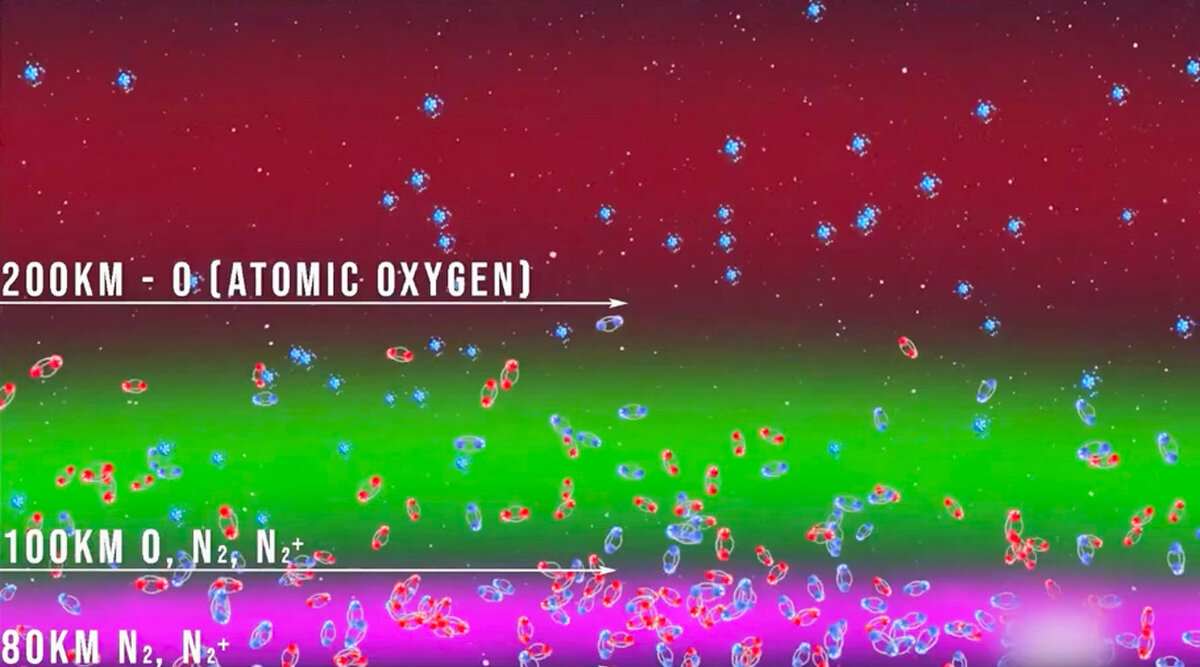
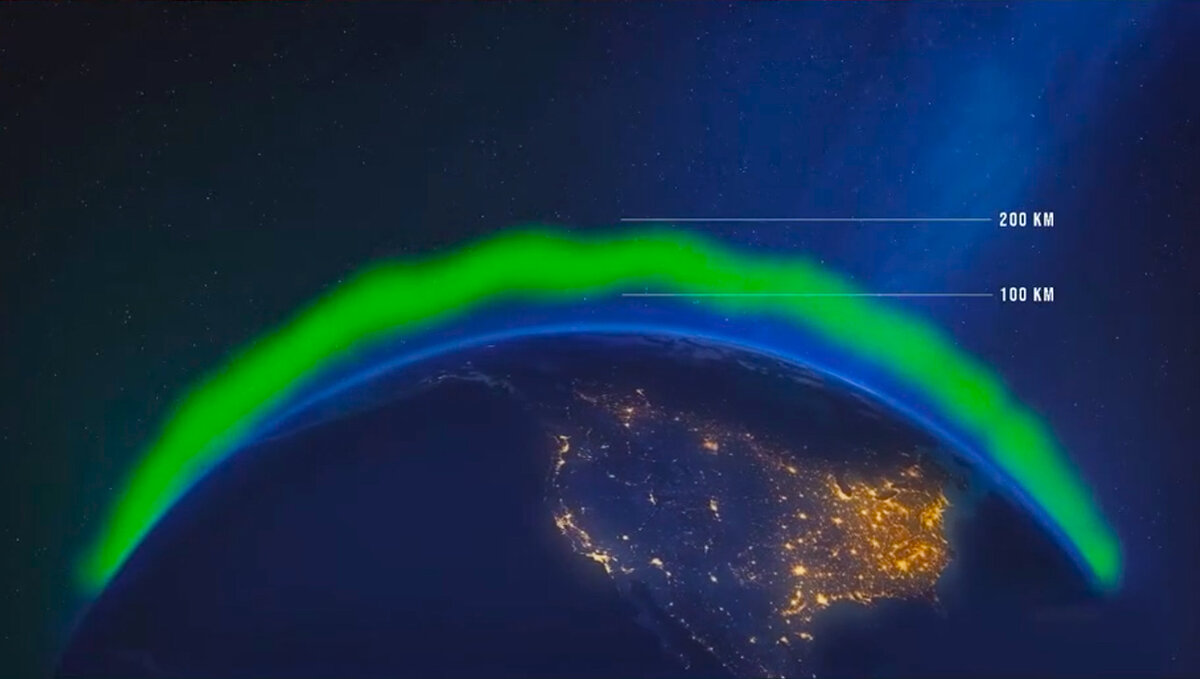
Red auroras specifically indicate the depth of particle penetration into the atmosphere. Green auroras form at altitudes between 100 and 200 kilometers. Red auroras require high-energy particles reaching below 200 kilometers, where they interact with atomic oxygen to produce the characteristic red emission. Red auroras occurring at mid-latitudes, well away from the polar zones where the magnetic field normally channels particles, indicate either an unusually intense solar event or a magnetic field that is permitting particle penetration at locations where the field would normally deflect them.
The recorded occurrence of red auroras at mid-European latitudes during the January 2023 event, and the recorded occurrence of low-latitude aurora across North America during the March 2023 event, is consistent with both an unusually strong solar driver and with a weakened magnetic field providing less deflection than expected for the observed solar wind conditions. The source’s claim that the Sun was in a period of low activity during these events requires checking against the actual solar cycle record.
Solar Cycle 25, which began in December 2019, has produced solar activity that has exceeded the predictions of most forecasting models, with the cycle’s activity level tracking significantly above the forecast baseline as of 2023 and 2024. The claim that the Sun was in a protracted minimum during the 2023 auroran events is not consistent with the actual solar cycle record. The 2023 events occurred during a period of increasing solar activity, and the auroran events were partly driven by the solar cycle’s progress toward its predicted maximum in 2025.
This does not eliminate the magnetic field weakening argument. A magnetic field that is genuinely weaker than its historical average will permit more particle penetration at lower latitudes for a given level of solar activity, and the combination of a strengthening solar cycle with a weakening magnetic field produces exactly the enhanced aurora behavior recorded in the observational record. But the solar driver component needs to be acknowledged alongside the magnetic field component rather than dismissed as insufficient to explain the observations.
The Convergence
The three geophysical trends, magnetic pole acceleration, South Atlantic Anomaly growth, and global field intensity decline, are occurring simultaneously. Their simultaneous occurrence is what makes the current period potentially significant rather than simply a routine continuation of secular magnetic variation.
The paleomagnetic record’s account of geomagnetic excursions that coincided with catastrophic climate and biological events, the Laschamp excursion and the Neanderthal extinction, the Gothenburg excursion and the Younger Dryas, provides the historical context within which the current trends require evaluation.
The solar minimum piece in this library covers the correlation between periods of reduced solar activity and civilizational stress events. The 536 CE event piece covers the mechanism by which volcanic forcing, superimposed on a solar minimum background, produced the worst climate catastrophe in the recorded historical period. The Antarctic volcanoes piece covers the 138 volcanic systems beneath the Antarctic ice sheet that represent a potential additional forcing factor.
The convergence of a weakening and accelerating magnetic field, a solar cycle that is tracking above its predicted activity level toward its maximum, and the background volcanic and climate system instability recorded across multiple pieces in this library, is the multi-factor combination that the paleomagnetic and climate proxy records suggest deserves serious attention.
None of these individual trends constitutes an emergency in isolation. The magnetic pole has moved before. The South Atlantic Anomaly has been growing for centuries. The solar cycle produces aurora every eleven years.
What the paleomagnetic record has not previously shown, in the instrumental observational period, is all three trends accelerating simultaneously in the same direction, against the background of a civilizational stress level that the existing pieces in this library trace from multiple independent directions.
The pole is moving. The anomaly is growing. The field is weakening. The auroras are appearing where they have not appeared before.
The paleomagnetic record knows what this combination has preceded. The sequence is on record. The timing is the only question it cannot answer in advance.