




For twenty-four years, the United States government kept a classified research program alive around a proposition that most scientists would have dismissed before the first experiment was even designed: that a human being might be able to obtain information about a distant place without physically being there.
The remarkable part is not that the government investigated it. Governments investigate almost everything that might confer an advantage. The remarkable part is that the investigation did not disappear after a few embarrassing experiments, did not end when the first results failed to conform to ordinary expectations, and did not remain a footnote in some obscure intelligence archive. The research moved through different agencies, accumulated hundreds of sessions, generated a body of statistical literature, survived internal skepticism, and eventually became the subject of an independent review commissioned by the CIA itself.
When the review finally arrived in 1995, it did not produce the clean answer that either side wanted. The evidence was anomalous enough that one of the outside statistical reviewers argued that psychic functioning had been established to a degree that should not be dismissed, while another argued that methodological problems prevented the results from being confidently attributed to paranormal perception. The operational question was easier to answer. Whatever was happening in the laboratory, it was too inconsistent to become a reliable intelligence capability. The program was not restored. The anomaly remained.
That distinction matters because it is the first place where the story becomes more interesting than the mythology that has grown around it. The government did not prove psychic espionage. It did something more difficult to interpret. It accumulated enough evidence that randomness was not an adequate description of every result, while failing to establish a mechanism that could explain what was happening or a level of reliability that could make the phenomenon operationally dependable. The official record therefore contains something much more uncomfortable than a simple success or failure. It contains a statistically persistent question.
At almost exactly the same historical moment, physicians were encountering another version of the same question in a completely different environment. Patients who survived cardiac arrest were reporting experiences that appeared to contain structured perception, memory, emotion and sometimes apparently accurate observations from periods surrounding the failure of normal consciousness. In 2001, Pim van Lommel and his colleagues published a prospective study of 344 successfully resuscitated cardiac-arrest patients in The Lancet. Sixty-two patients, eighteen percent of the cohort, reported a near-death experience. Forty-one described what the researchers classified as a core experience. The study did not prove that consciousness survives death, but it demonstrated something that was scientifically worth investigating, namely that the occurrence and depth of these experiences could not be reduced simply to the duration of cardiac arrest or unconsciousness in the way a straightforward physiological model might have predicted.
And then there was physics.
For decades, quantum experiments had been forcing physicists to abandon the comfortable classical picture in which a physical object possesses a completely settled history independent of the conditions under which that history is later measured. John Wheeler’s delayed-choice proposal turned that problem into an experiment. In 2007, Vincent Jacques and his colleagues realized a delayed-choice version in the laboratory, demonstrating the predicted quantum behavior under conditions in which the choice of measurement configuration was made only after the photon had entered the interferometer.
The experiment did not prove that human consciousness travels backward through time, and it did not prove that an observer literally rewrites an already completed past. What it did prove was more precise and, in some ways, more disturbing. The classical story in which the particle simply possessed one definite mode of behavior all along and the observer merely discovered which one it had chosen was not an adequate description of the quantum experiment. The result forced physics toward a deeper question about what it means for a physical property to exist before the measurement context that defines it.
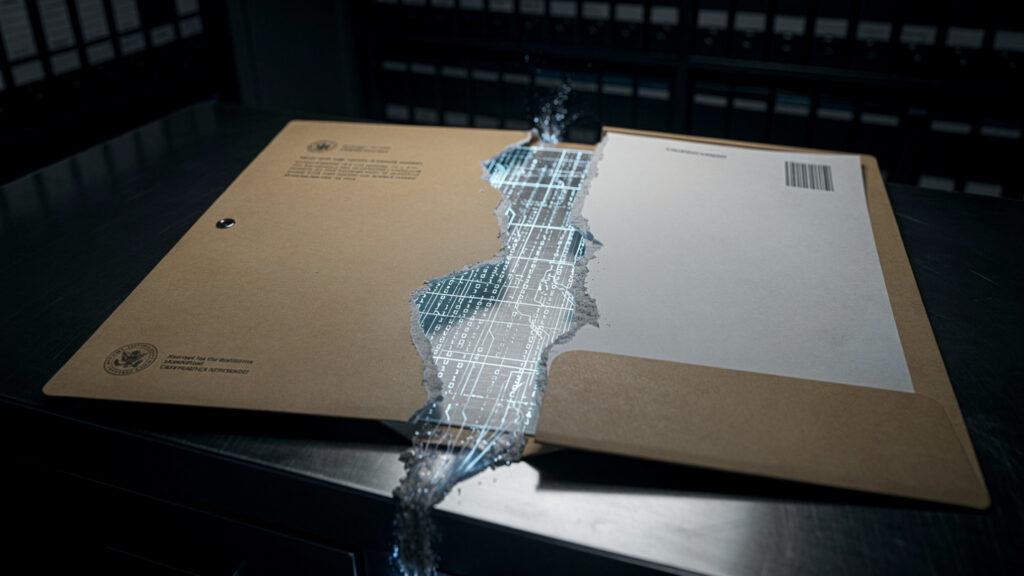
These are not the same experiment. They do not prove the same proposition. They do not belong to the same scientific discipline, and none of the researchers involved set out to establish a theory of simulated reality. That is precisely why the convergence is worth examining.
The previous piece in this series examined the mathematical structure that S. James Gates Jr. encountered while studying supersymmetric physics, where error-correcting codes appeared within the algebraic machinery of supersymmetry. That discovery does not prove that the universe is a computer, and Gates himself has been considerably more cautious about the implication than the popular retelling of his work often suggests. What it does provide is a remarkable conceptual bridge between fundamental physics and the mathematics of information preservation.
This piece moves one level deeper.
The question is no longer whether the architecture contains a mechanism capable of maintaining information. The question is what happens when an observer interacts with that architecture.
STARGATE and the Information That Should Not Have Been There
The story usually begins in the wrong place, with the word psychic, because the word makes the entire subject sound like a paranormal curiosity before the evidence has even been examined. The actual beginning was geopolitical. During the Cold War, American intelligence officials became concerned that the Soviet Union was investing resources into research involving alleged psychic phenomena, and the United States wanted to determine whether any genuine capability existed that might have intelligence value.
Research began in 1972 at Stanford Research Institute, where physicists Russell Targ and Harold Puthoff investigated what they called remote viewing. The basic proposition was simple to state and extraordinarily difficult to explain. A subject would attempt to describe a distant target without being given ordinary sensory information about it. In controlled experiments, the target could be selected from a pool of possible locations, and independent judging procedures were used to compare the resulting descriptions with the actual targets.
The resulting literature became controversial almost immediately. Targ and Puthoff published research in Nature, while critics subsequently challenged the experimental procedures and the possibility of methodological artifacts. Nature itself published both the original work and later criticisms, including a 1978 paper by David Marks and Richard Kammann reporting that their attempts to duplicate the experiments did not verify the original conclusions. Puthoff and Targ responded in print. The controversy therefore did not emerge decades later as an internet conspiracy. It was present inside the scientific record from the beginning.
Yet the government kept investigating.
The program moved through successive names and institutional homes, including GRILL FLAME, CENTER LANE, SUN STREAK and eventually STARGATE. The name STARGATE itself became associated with the Defense Intelligence Agency program during the 1990s, while the CIA had earlier participated in and later reassessed the work. The CIA’s own account makes the institutional history unusually clear. The Agency began its own research in 1972, ended that phase in 1977, transferred the effort to the Defense Intelligence Agency, and later received the program back in the mid-1990s for an independent evaluation.
That evaluation is the document that should be read before making almost any grand claim about STARGATE.
In 1995, the American Institutes for Research reviewed both the laboratory research and the operational intelligence applications. The review included statistician Jessica Utts and psychologist Raymond Hyman, whose interpretations of the evidence were substantially different. Utts regarded the statistical evidence as strong enough to support the existence of anomalous information transfer. Hyman argued that methodological issues prevented the paranormal interpretation from being established with the required confidence. The larger review reached the practical conclusion that whatever anomalous effects might exist, remote viewing had not demonstrated sufficient reliability to justify continuing it as an operational intelligence capability.
The CIA itself now summarizes the result in almost exactly those terms. Its public history states that enough accurate remote-viewing experiences existed to defy randomness, while the phenomenon remained too unreliable, inconsistent and sporadic to be useful for intelligence purposes. That distinction is the entire story in miniature. The data did not behave like a clean null result. The phenomenon also did not behave like a reliable intelligence technology.
That is not proof of psychic perception.
It is something more difficult to dispose of than proof would have been.
It is an unresolved statistical anomaly surviving inside an official government research program long enough to acquire its own institutional history, its own adversarial scientific literature, its own declassified archive and its own independent evaluation.
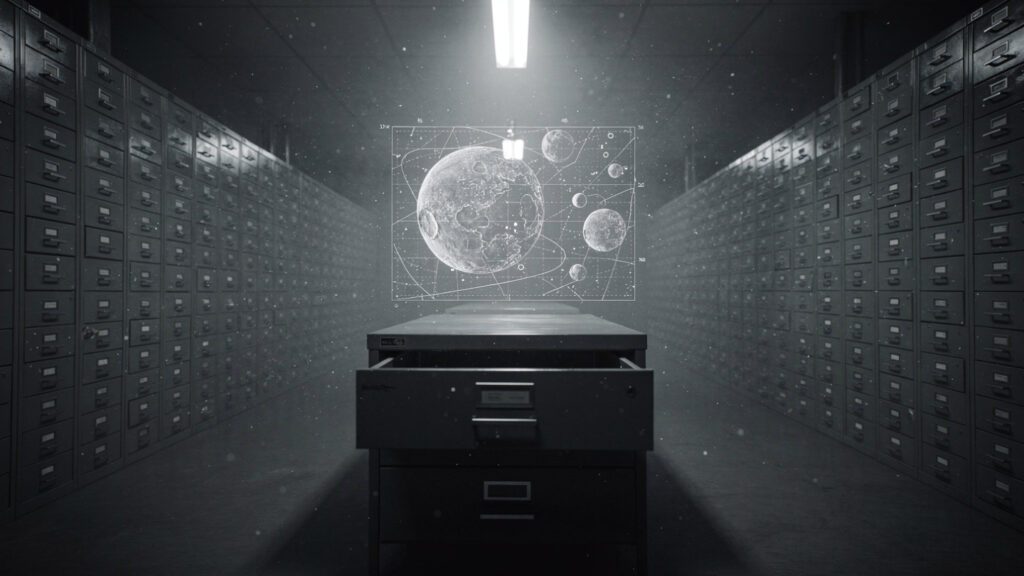
And the declassified record is stranger than the summary.
The CIA reading room contains individual remote-viewing session reports in which viewers were given targets and instructed to describe what they perceived. Some sessions contain striking correspondences. Others contain descriptions that fail completely. The archive therefore does not present a magical catalogue of impossible successes. It presents something much more recognizably scientific, and much more frustrating. There are hits, misses, ambiguities, methodological complications and transcripts in which the viewer appears remarkably close to the target.
One declassified session, for example, records a viewer describing a narrow, winding body of water on a flat plain with cliffs on either side. The target coordinates had been entered incorrectly and did not point to the originally intended site. The report states that the viewer’s description nevertheless corresponded to the geographic area identified by the coordinates.
Another class of records involved operational requests, including attempts to gather information relating to the American hostage crisis in Iran. The documents themselves are careful about what they contain. They repeatedly state that the viewer’s impressions constitute raw intelligence data and have not necessarily been independently analyzed or validated.
This is exactly where the mythology should stop and the deeper question should begin.
If even a small component of the statistical effect represented genuine access to information outside the ordinary sensory channel, then the implication would not be that someone possessed a supernatural power in the medieval sense. The implication would be informational. The human nervous system would have access to information that the ordinary biological interface does not appear to deliver.
That is a very different proposition.
The Dead Brain Problem
Remote viewing asks whether information can sometimes appear where ordinary sensory access says it should not. Near-death research asks a related but more intimate question. What happens to consciousness when the biological conditions normally associated with conscious experience become severely disrupted?
In the Dutch prospective study led by Pim van Lommel, 344 consecutive patients who had been successfully resuscitated after cardiac arrest were studied across ten hospitals. Sixty-two patients, eighteen percent, reported a near-death experience, while forty-one described what the researchers classified as a core experience. The study was prospective, which matters because the investigators defined their methods before collecting the data rather than selecting remarkable cases after the fact.
The result that deserves attention is not the existence of tunnels or lights or deceased relatives, because those features are phenomenological descriptions and can be interpreted in multiple ways. The important result is that the occurrence of the experience was not associated with the duration of cardiac arrest or unconsciousness, and the study did not find a simple relationship between physiological severity and the likelihood of reporting an NDE.
That finding does not establish that the brain was completely inactive throughout the subjective experience. It does not establish that a person was consciously observing the hospital room while no neural activity whatsoever was occurring. It does not prove that consciousness detached from the brain. Those claims go beyond what the study measured.
But the study does establish that a substantial minority of survivors reported highly structured experiences associated with cardiac arrest and that the occurrence of those experiences was not explained simply by the duration of cardiac arrest or unconsciousness. That is enough to keep the mechanism open.
The distinction is crucial. A scientific anomaly becomes more interesting when the strongest version of the claim is removed and the evidence still refuses to disappear.
The conventional explanation has several possibilities available. Some features of an NDE may arise before complete loss of consciousness, during recovery, through residual or rapidly changing neural activity, through memory reconstruction, or through combinations of physiological and psychological processes that remain incompletely understood. The existence of those possibilities means the van Lommel study cannot be used as a laboratory demonstration that consciousness exists independently of the brain.
But it also means that consciousness during extreme physiological disruption remains a serious scientific problem rather than a solved one.
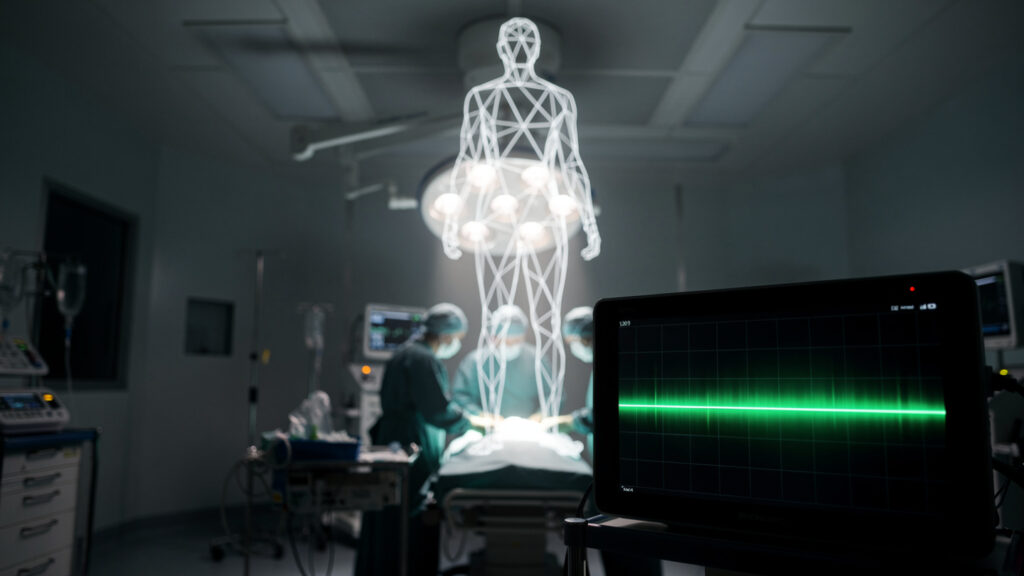
The original paper was published in The Lancet in December 2001. Its authors did not claim to have solved the mystery of consciousness. They reported the observations and argued that existing scientific explanations were insufficient to account for every aspect of the phenomenon.
That is where the second line of evidence intersects the first.
Remote viewing suggests that information may sometimes be available without the normal sensory route. Near-death research suggests that conscious experience may persist through physiological conditions that profoundly disrupt the normal biological substrate. Neither proposition has been conclusively established in the strongest possible form.
But both point toward the same unresolved architectural question.
Is the brain the source of consciousness, or is it an interface through which consciousness operates?
Wheeler and the Problem of a Fixed Reality
The third line of evidence does not come from intelligence agencies or hospitals. It comes from the foundations of quantum mechanics, where the problem is stranger because the anomaly is not a report from a human subject. It is an experimental property of the physical system itself.
John Archibald Wheeler spent much of his career confronting the implications of quantum theory. He became one of the great advocates of the idea that observation could not simply be treated as an irrelevant afterthought added to an otherwise complete physical description. His participatory universe was an attempt to take that implication seriously, proposing that observers play a fundamental role in the emergence of the physical reality we describe.
Wheeler’s delayed-choice experiment became one of the most famous thought experiments designed to expose the problem.
In the ordinary double-slit experiment, quantum objects produce interference when the experimental arrangement preserves the possibility of wave-like behavior. When the arrangement permits which-path information to be obtained, the interference disappears. The result already challenges ordinary intuition because the same object cannot be described using the classical categories of particle and wave in the simple way that everyday objects can.
Wheeler then asked what would happen if the decision about the measurement arrangement were delayed until after the photon had already entered the apparatus.
The answer was not that a conscious observer magically travelled backward through time and altered a completed event. The answer was that the quantum predictions remained correct even under the delayed choice. In 2007, Vincent Jacques and colleagues experimentally realized Wheeler’s proposal and observed the expected complementarity behavior.
The philosophical implications are enormous because the experiment removes one of the easiest classical escape routes. We cannot simply imagine that the photon possessed an ordinary classical history all along and that the experimenter later discovered which history had occurred. Quantum mechanics does not provide that comfortable picture.
But physics has not settled what this means ontologically. Different interpretations provide different accounts. Some treat the quantum state as a complete description of physical reality. Others treat it as information about possible outcomes. Still others invoke branching worlds, retrocausal structures or different conceptions of spacetime. The experiment does not select one interpretation for us.

That uncertainty is precisely what makes the experiment useful to this series. The quantum world does not behave like a collection of objects carrying completely fixed classical properties that exist independently of the conditions under which those properties are measured. The observer is not necessarily creating the universe with a thought, but the measurement arrangement participates in determining which physical description becomes experimentally available.
Reality is not simply sitting there waiting to be photographed.
The manner in which the question is asked becomes part of the answer.
Three Experiments Looking Through Three Windows
Now place the three bodies of evidence beside one another, without pretending that they prove more than they do.
STARGATE asks whether information about a physical target can sometimes be obtained without ordinary sensory access. The evidence contains statistically significant results, official records and striking individual sessions, but the mechanism remains unresolved and the operational reliability was judged inadequate. The CIA’s own public account acknowledges both sides of that conclusion.
The van Lommel study asks what happens to conscious experience around cardiac arrest. It finds that eighteen percent of the 344 survivors studied reported NDEs and that the occurrence of those experiences was not simply explained by the duration of cardiac arrest or unconsciousness. The study does not prove consciousness outside the brain, but it prevents the question from being dismissed as nothing more than an anecdotal curiosity.
Wheeler’s delayed-choice experiment asks whether physical behavior can be described independently of the measurement context in the classical manner. The answer is no. The experimental result is fully compatible with quantum mechanics, but its deeper ontological interpretation remains open.
Three questions. Three disciplines. Three different methods.
And beneath them, one increasingly difficult problem.
The ordinary interface model assumes that information travels from the external world through the senses into the nervous system, that consciousness is generated by the activity of the brain, and that physical events possess determinate histories independent of whether anyone chooses to measure them. The three research traditions do not destroy that model. They complicate it.
Remote viewing, if the anomalous component is genuine, would mean that information can sometimes reach consciousness without following the ordinary sensory route. Near-death experiences, if some of their most difficult features cannot ultimately be reduced to neural processes surrounding cardiac arrest, would mean that consciousness may not be as straightforwardly identical with ordinary brain activity as the simplest materialist picture assumes. Quantum delayed-choice experiments demonstrate that the classical conception of a fully determinate physical history independent of measurement cannot simply be carried intact into the quantum domain.
None of those statements requires a simulation hypothesis.
That is important.
The simulation hypothesis is not the only possible explanation for any of these phenomena, and in some cases it is not even the explanation most working scientists would consider. The value of the hypothesis for this series lies elsewhere. It provides a single architectural language capable of placing information, observation, computation and consciousness into one framework.
That is where the mythology begins to acquire structure.
The Interface
Imagine a system in which the human brain is not the origin of consciousness but its local interface, the way a terminal provides access to a larger information architecture without containing the entire architecture inside itself.
Under that model, the ordinary senses would constitute the standard input layer. Vision, hearing, touch, smell and proprioception would not provide direct access to reality in its entirety. They would provide a controlled stream of information selected for survival inside the local environment. The interface would therefore be useful precisely because it is limited.
That limitation would explain something that otherwise seems almost trivial. Human beings do not experience the universe as it mathematically exists. They experience a highly compressed biological representation of it. We see only a narrow band of electromagnetic radiation. We hear only a limited range of frequencies. We experience objects as stable surfaces rather than quantum fields. We experience time as a sequence rather than as a mathematical coordinate within spacetime.
The interface is not reality. It is the format in which reality becomes available to the organism.
Now consider what remote viewing would mean if even a small component of its statistical anomaly represented genuine information access. The subject would not necessarily be performing a supernatural act. The subject would be accessing information through a route other than the standard sensory interface.
Consider what an NDE would mean under the same architecture. The failure of the biological interface would not necessarily constitute the destruction of consciousness itself. It would constitute the interruption of the local terminal.
And consider the quantum measurement problem. If physical states are not simply fixed classical properties waiting to be observed, then the observer is not merely a passive camera pointed at an already completed world. The interaction between system and observer becomes part of the process through which a particular physical result becomes available.
Three different phenomena suddenly become variations on one architectural possibility.
Information can bypass the ordinary interface.
Conscious experience may not be reducible to the ordinary operation of the interface.
The physical system itself may not possess the fully determinate classical state that the interface makes it appear to possess.
That is not a proof of simulation.
It is an architecture.
The Archon Problem
This is where the ancient material from the previous article returns.
The Apocryphon of John describes a world in which the inhabitants are embedded inside a lower material order whose governing powers do not possess complete knowledge of the reality above them. The Archons function as administrators of that lower order, while the human being contains something the lower system does not fully explain, a divine element whose origin belongs to a higher reality.
Read literally, this is Gnostic cosmology.
Read structurally, it is a theory of interfaces.
The inhabitant experiences the local world through the rules of the local world. The administrative layer controls the conditions under which information is available. The inhabitant is therefore encouraged to mistake the interface for the whole of reality.

That is an extraordinarily modern way of stating an ancient religious problem.
The Gnostic does not escape the material world by acquiring more information about the material world. Gnosis is a recognition of origin. The problem is not that the inhabitant lacks data. The problem is that the inhabitant has mistaken the data interface for the totality of existence.
Remote viewing becomes interesting here because it represents, at least hypothetically, information arriving outside the ordinary sensory channel. Near-death experience becomes interesting because it raises the possibility that the conscious subject may remain phenomenologically coherent when the ordinary biological interface is severely disrupted. Quantum measurement becomes interesting because it reveals that the physical world itself does not always conform to the classical assumptions through which the interface ordinarily makes it appear stable and objective.
The three findings do not prove the Archons.
They make the Archons conceptually legible in a language that did not exist when the text was written.
The Maintenance Is Not Passive
The first article in this sequence established the idea of maintenance through the information structure of physics. Error-correcting codes are mechanisms for preserving information in the presence of noise. They belong naturally to communication systems because communication systems have a problem that pure mathematics does not. Messages can be corrupted, signals can degrade and information can be lost.
When such a structure appears inside the mathematics used to describe physical reality, it is tempting to leap immediately to the conclusion that someone must have written the universe like software.
The stronger argument is subtler.
A universe whose deepest mathematical descriptions contain structures associated with information preservation invites the information-theoretic question. A universe in which measurement participates in the determination of physical outcomes invites the observer question. A universe in which consciousness repeatedly appears to exceed the simple boundaries of ordinary sensory access invites the interface question.
Once those three questions are placed together, maintenance no longer looks like a purely passive property of equations.
It begins to look like an information architecture.
But an information architecture is not yet a purpose.
That distinction will become critical later in the series.
A system can preserve information without having a designer in the theological sense. A physical law can generate order without conscious intention. Quantum mechanics can produce observer-dependent outcomes without requiring a human mind to collapse reality. Near-death experiences can remain scientifically mysterious without demonstrating a disembodied consciousness. Remote-viewing experiments can produce statistical anomalies without establishing paranormal information transfer.
Every one of those statements can be true and the convergence can still be worth investigating.
The question is not whether each anomaly has already been converted into proof.
The question is whether the anomalies are easier to understand as isolated problems or as different observations of a deeper information architecture.
The Independence Matters
There is another reason this convergence deserves attention. The investigators did not begin with a shared theory and then go looking for evidence to confirm it.
Targ and Puthoff were investigating an alleged intelligence capability. Van Lommel was studying patients after cardiac arrest. Wheeler was working through the implications of quantum theory. The questions emerged from different institutions, different methods and different historical problems.
The convergence therefore cannot be treated as if one group simply copied another group’s assumptions.
But neither should independence be confused with proof.
Independent researchers can converge on the same mistaken interpretation. Independent experiments can share hidden methodological assumptions. Humans can impose the same narrative structure on unrelated anomalies. The existence of convergence raises the evidentiary value of a pattern, but it does not remove the need to test the individual components.
The intellectually serious position is therefore neither dismissal nor certainty.
It is to hold the pattern in view while refusing to pretend that the gaps between the observations have already been crossed.
That is precisely what makes the pattern interesting.
What the Three Windows Actually Show
STARGATE shows that a government research program accumulated results that its own later review considered sufficiently anomalous that randomness alone was not an adequate description of the laboratory data, while simultaneously finding the operational phenomenon too unreliable for intelligence use.
The van Lommel study shows that near-death experiences occur in a measurable minority of cardiac-arrest survivors and that their occurrence cannot simply be predicted from the duration of cardiac arrest or unconsciousness.
Wheeler’s delayed-choice experiments show that quantum behavior cannot be described adequately using the classical assumption that a photon simply possessed one predetermined mode of behavior independent of the later measurement arrangement.
Those are the facts.
The architecture begins when the facts are placed beside one another.
If consciousness can obtain information without the ordinary sensory route, the interface is not the entire information boundary.
If conscious experience remains phenomenologically structured under extreme physiological disruption, the relationship between consciousness and its biological substrate is not yet fully understood.
If quantum measurement conditions participate in determining which physical behavior becomes manifest, the observer cannot be treated as a completely irrelevant spectator standing outside the physical system.
And if the fundamental physics also contains mathematical structures naturally understood through information preservation, then the information-theoretic interpretation becomes difficult to avoid as a question, even if it remains impossible to elevate it to a conclusion.
The four pieces of the architecture now begin to touch.
The Signature of a Bypass
The most important word in this article is not psychic.
It is bypass.
Every interface defines what can ordinarily enter and leave the system. The human sensory system is an interface. A computer operating system is an interface. A network protocol is an interface. A language is an interface between thought and communication. Each interface makes some forms of information easy to access and other forms difficult or impossible to access without a different protocol.
If remote viewing contains a genuine anomalous component, it would represent a bypass of the ordinary sensory interface.
If some NDE observations ultimately prove impossible to account for through activity occurring before, during or after cardiac arrest, they would represent a bypass of the ordinary assumption that conscious experience is generated entirely by local neural activity.
If quantum mechanics shows that the physical state available to an observer depends fundamentally on the measurement context, then the observer is not simply standing outside the system and reading an already completed database.
The interface is participating.
That is the point at which the ancient Gnostic language becomes unexpectedly useful.
The Archons are not interesting because we can prove that winged or invisible entities are operating hospital rooms or manipulating quantum particles. There is no evidence in these experiments that establishes such a literal claim. The Archons become interesting as an architectural metaphor for an intermediate management layer, a structure that regulates what an inhabitant can perceive while remaining itself outside the inhabitant’s ordinary field of awareness.
The ancient text described inhabitants trapped inside an informationally limited world. Modern experiments are beginning to reveal how limited the ordinary human interface actually is.
That is not the same claim.
It is the same question.
What the Evidence Does Not Say
A pillar article should not hide its weakest points. It should expose them, because the strongest version of an argument is the one that survives after its exaggerations have been removed.
STARGATE does not prove that psychic perception exists. The evidence remains contested, and the official review did not establish a reliable intelligence capability. Nature published both the original remote-viewing research and later critiques that challenged its conclusions.
The van Lommel study does not prove that consciousness leaves the body during cardiac arrest. It demonstrates that NDEs occur and that their occurrence is not simply predicted by the duration of cardiac arrest or unconsciousness. The physiological timing of the experiences remains a major unresolved question.
Wheeler’s delayed-choice experiment does not prove that human consciousness travels backward through time. It demonstrates quantum behavior that violates the classical intuition that the photon must possess a single predetermined wave or particle history independent of the later measurement arrangement. The ontological interpretation remains open.
And none of the three proves that the universe is a simulation.
But that final statement is exactly why the evidence becomes more interesting rather than less.
Because the simulation hypothesis does not need to be treated as an established fact for it to function as a unifying model. The question is whether the model produces a coherent architecture capable of accommodating phenomena that otherwise appear unrelated.
In a computed system, information is fundamental. An interface can expose only a selected portion of the underlying information. A process can continue independently of a local display device. A system can render states according to rules governing observation. Error correction can preserve system integrity against noise. None of those features is individually extraordinary in computation.
What would be extraordinary is discovering all of those characteristics in the architecture of physical reality itself.
The Maintenance Is Active
The first article found a possible signature of information preservation in the mathematics of physics.
This article finds the observer problem.
The system is not merely preserving information. It is deciding, through its physical laws, how information becomes available to an observer. The observer does not receive a complete copy of reality. The observer receives an outcome generated through an interaction between observer and system.
At the human level, the same possibility appears in another form. The sensory interface presents a narrow representation of reality, yet anomalous reports sometimes suggest that information may become available outside the normal route. At the boundary of life and death, consciousness sometimes appears to generate experiences whose relationship to measurable physiology remains incompletely understood.
Again, none of this proves the computed system.
But it changes the question.
The question is no longer whether consciousness is merely watching a pre-existing universe from the outside.
The question is whether consciousness is one of the mechanisms through which the universe becomes informationally available at all.
That is a much deeper problem.

The Question That Survives All Three
There is a point in every investigation where the original question becomes too small for the evidence that has accumulated around it.
STARGATE began with a military question. Could an enemy obtain intelligence through an apparently impossible method?
Near-death research began with a medical question. What happens to consciousness during the extreme physiological conditions surrounding cardiac arrest?
Wheeler’s experiment began with a quantum question. Can the behavior of a quantum system be understood independently of the measurement arrangement that determines which property becomes observable?
Each question has now opened into something larger.
How does information reach consciousness?
What is consciousness actually operating on?
And what is the physical world before an observer interacts with it?
Those three questions point toward the same boundary.
The boundary is the interface between observer and reality.
The Gnostic tradition gave that boundary a theological name. The Archons were the administrators of a world whose inhabitants mistook the lower system for the whole of existence. Gnosis was the recognition that something in the inhabitant originated beyond the system’s apparent limits.
Modern science uses completely different language. Information theory speaks of channels and error correction. Neuroscience speaks of neural correlates and sensory integration. Quantum physics speaks of measurement, state preparation and complementarity. Intelligence research speaks of remote viewing protocols and statistical significance.
The languages are different.
The question is not.
What if the human being is not experiencing reality directly?
What if the human being is experiencing an interface?
And what if, under sufficiently unusual conditions, the interface can be bypassed?
That is the possibility hidden inside the three bodies of evidence.
It is not proof of a simulation.
It is the reason the simulation question refuses to disappear.
The CIA archive cannot tell us what remote viewing ultimately is. The Lancet study cannot tell us where consciousness ultimately resides. Wheeler’s experiment cannot tell us which interpretation of quantum reality is finally correct.
But each investigation reaches the same wall from a different direction.
The information is stranger than the interface.
The observer is stranger than the substrate.
And reality is stranger than the picture presented by ordinary perception.
The first piece of this series found the signature of maintenance in the mathematics.
This piece finds something more unsettling.
The inhabitants may not merely be living inside the maintained system.
They may be interacting with it in ways the interface was never supposed to reveal.
And if that is true, the next question is no longer whether the system can be bypassed.
The next question is what happens when something outside the interface answers back.