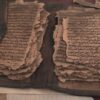





No verified archive, museum, or academic institution anywhere has ever confirmed the Dropa stone discs, the 1938 cave discovery, or the scholars credited with translating them.
What’s real is a mysterious, still-unexplained Chinese village of unusually short-statured residents, worth knowing about accurately, entirely separate from the legend that’s become tangled up with it.
“Dr. Caryl Robin-Evans” Has No Verified Record
This figure anchors a great deal of the surrounding story, so it’s worth starting there. No verified biographical, academic, or expedition record confirms the existence of “Dr. Caryl Robin-Evans,” the supposed 1947 explorer credited with photographing the “Dropa’s ruling couple.” This name circulates across several related, unverifiable regional legends without any independently confirmed institutional affiliation, published expedition report, or archived photograph traceable to a credentialed source. Treat it, for now, as unverified.
No Institution Has Ever Catalogued the 1938 Cave Find
No archaeological institution, museum collection, or peer-reviewed publication has ever produced or catalogued the metallic cylinder, the seven small corpses, or the carved hieroglyphs this story describes as found in the Bayan-Kara-Ula mountains in 1938. The Bayan-Kara-Ula mountain range itself does straddle the China-Tibet border, but no credible archaeological record documents this claimed expedition, and no named team of “amateur archaeologists” has ever been independently identified, located, or verified by anyone.

“Professor Tsum Um Nui” and the Untraceable Academy
This is perhaps the story’s most significant unverifiable element. No record confirms an academic named “Professor Tsum Um Nui,” and no institution called the “Beijing Academy of Prehistoric Research” has ever been identified in any verified Chinese academic directory, archive, or institutional history. No physical stone discs matching this description have ever been found to exist in any confirmed museum collection anywhere in the world, despite decades of interest from researchers who have specifically searched for them. The claimed translation, the reported persecution, and the professor’s reported death all have no independent corroboration beyond the story’s own repeated retelling over the decades.
The widely circulated translated quote attributed to the discs, describing beings who “came down from the clouds in their aircraft,” has no verified source document behind it and should be read as part of the unverified legend rather than an authenticated ancient text.
The Mysterious Yangsi Village
This place deserves to be named and discussed accurately, on its own terms, entirely separate from the unverified legend that’s become loosely attached to it. A village in Sichuan Province, generally referred to as Yangsi, does have an unusually high concentration of residents with short stature, with roughly 40 percent of its population affected, a documented, still medically unexplained phenomenon. The condition was officially recorded starting in 1951, though local reports reportedly extend back to 1911, considerably predating and entirely separate from the 1938 Dropa cave story. Chinese medical researchers and scientists have investigated this village, testing local soil, water, and grain sources, with a 1997 hypothesis proposing elevated mercury levels in the soil, though this hasn’t been definitively proven, and the cause remains unresolved in medical literature. This still-open medical mystery deserves to be reported on its own accurate terms, not folded into an unrelated extraterrestrial narrative.

What Real Science Says About High-Altitude Human Adaptation
Populations do show measurable physiological adjustments to low-oxygen environments, credentialed context worth adding here. Published peer-reviewed research on populations in the Andes, the Ethiopian highlands, and the Tibetan plateau has documented genetic and physiological adaptations to high-altitude life, including differences in lung capacity, blood oxygen processing, and, in some populations, more compact body proportions that may offer thermoregulatory advantages in cold environments. This body of genetics and physiology research offers a legitimate scientific framework for understanding how human populations adapt to challenging environments, though no published research connects it to unusually large heads, blue eyes, or extraterrestrial ancestry.
Where the Dropa Legend Comes From
Understanding where a story like this actually originates is often more revealing than simply asking whether it might, in some sense, be true. Skeptical researchers and folklorists studying the Dropa legend’s actual print history have traced its widespread popularization to European ancient-astronaut authors writing in the 1960s and 1970s, a publishing genre that flourished during this period, blending unverifiable claims with genuine archaeological sites and figures to create commercially successful, dramatic narratives. This pattern, an unverifiable core claim gaining apparent credibility through repetition across multiple books and, later, websites, each citing the previous account rather than any primary source, is a general feature of how this kind of legend achieves lasting cultural traction independent of any actual supporting evidence.
Dedicated skeptical researchers attempting to trace the Dropa claim back to a primary source have consistently found the trail terminates in secondary and tertiary retellings, books citing other books, websites citing those books, with no path leading to an archived expedition report, museum accession record, or peer-reviewed academic publication. This pattern, sometimes called source amnesia in the study of misinformation, describes exactly how an unverifiable claim can appear well-documented simply because it’s been repeated so many times across so many retellings, even though none of those retellings actually traces back to primary, checkable evidence. Investigative journalists and skeptical researchers specializing in this kind of claim generally treat an untraceable origin combined with widespread repetition as itself a meaningful, negative indicator worth taking seriously when evaluating any similar claim.
When Similar Claims Did Turn Out to Be True
Fairness matters here. Not every seemingly implausible archaeological claim turns out to be false, since real discoveries have occasionally vindicated stories that initially sounded similarly extraordinary. The 1974 discovery of China’s actual Terracotta Army, uncovered by farmers digging a well, is a real archaeological find that initially sounded almost too remarkable to be true, and was subsequently confirmed through rigorous archaeological excavation, published findings, and now stands as an UNESCO World Heritage site open to public verification. This comparison is useful precisely because it shows what separates a confirmed extraordinary discovery from an unverifiable legend: physical, examinable evidence, deposited in an institution, verified independently by multiple credentialed researchers, exactly the kind of evidentiary trail the Dropa claim has never produced despite decades of circulation.

How Chinese Archaeological Discoveries Get Reported
The standard institutional process behind actual Chinese archaeological announcements today is considerably more transparent and bureaucratic than this claim’s secretive framing suggests. China’s National Cultural Heritage Administration oversees archaeological excavation permits and announcements, and significant discoveries, including the Terracotta Army and numerous other finds, are typically announced through official channels, published in Chinese archaeological journals, and made available for international scholarly examination and collaboration. Foreign researchers have participated in and published on numerous Chinese archaeological projects over recent decades, an ongoing pattern of international scientific cooperation. No comparable announcement, excavation permit record, or published academic paper has ever surfaced for the claimed 1938 Dropa discovery or the 1962 disc translation, a telling absence given how thoroughly documented China’s actual major archaeological discoveries from this same general period have been.
The Cultural Revolution Claim, Addressed Directly
China’s Cultural Revolution did involve widespread destruction of cultural and historical artifacts between 1966 and 1976, an extensively studied tragedy in modern Chinese history, worth knowing accurately on its own terms. But historical destruction of countless genuine artifacts during this period doesn’t, on its own, provide evidence that any specific unverified artifact, including the claimed Dropa discs, ever actually existed in the first place. The Cultural Revolution’s extensive destruction of cultural heritage is a real historical tragedy, separate from its use here as an explanation for the convenient absence of physical evidence that was never independently verified to exist even before that period began.

Why an Alien Explanation Feels More Satisfying Than an Open Question
This general observation applies well beyond the Dropa case specifically. Psychological research on uncertainty and pattern recognition has found that humans experience unresolved mysteries as cognitively uncomfortable, and a dramatic, complete explanation, even an unverifiable one, can feel more satisfying than a honest admission that a phenomenon remains fully unexplained. The Yangsi village’s unresolved medical mystery offers exactly this kind of uncomfortable, open-ended question, one scientists have investigated for decades without a confirmed answer. An extraterrestrial origin story, however unverifiable, provides a complete, dramatic narrative arc that a honestly unresolved medical mystery simply cannot, which may help explain why the invented Dropa legend has proven so much more durable and widely repeated than the still-unsolved village it became entangled with.
How Real Artifacts Get Authenticated
Real artifact authentication is considerably more rigorous than the Dropa story’s account of a single, contested translation. Museums and archaeological institutions evaluating a claimed ancient artifact typically employ multiple independent, scientific dating methods, including radiocarbon dating for organic material and thermoluminescence dating for ceramics and worked stone, alongside material composition analysis to confirm whether an object’s physical properties are consistent with its claimed age and origin. Forgery detection has a long, well-established history of exposing fabricated artifacts specifically because these scientific methods exist and continue improving, from exposed art forgeries to debunked archaeological hoaxes uncovered decades or even centuries after their original claims. No comparable scientific dating, material analysis, or independent verification has ever been applied to the claimed Dropa discs, for the straightforward reason that no verified physical specimen has ever been made available for scientists to examine in the first place.
A Real Mystery, Worth Investigating on Its Own Terms
The Dropa stone discs, the 1938 expedition, and Professor Tsum Um Nui’s translation remain, as far as any verifiable record shows, unconfirmed elements of an account with no primary source trail leading back to any institution, museum, or credentialed researcher. What’s genuinely real and still scientifically unresolved is the Yangsi village itself, a place with an unexplained medical pattern that Chinese scientists continue investigating using rigorous methods. That ongoing mystery is worth following through legitimate medical and scientific channels, entirely on its own merits, rather than through an unverifiable extraterrestrial narrative layered on top of it, and it will likely be genuine, patient medical research, not a rediscovered stone disc, that eventually explains what’s actually happening in that Sichuan village, if a definitive explanation ever arrives at all.