Every case file in this archive closes on a single word. Before it come the names and the dates, the excavation reports, the council minutes and the letters nobody opened for a century. After it, there is nothing left on the page.
That word carries a great deal for something so small. It sits on a haunting in a council house in north London, a kingdom of silver under the Spanish marshes, a medium in Boston who seemed to know things she had no way of knowing. Anyone who reads it deserves to know what it means, how it was chosen and what it would take to change it.
- The Life of a Case File | Five Stages
- The Source Ladder | How Close Is the Record?
- The Five Stamps | Rules and Limits
- One Claim, One Stamp
- The Case Record | Every Verdict Shows Its Work
- What Moves a Stamp
- Challenging a Verdict
- What the Standard Does Not Judge
- The Record of This Standard
- Quick Answers About the Archive Standard
This page sets out the rules. It is the standard every file in the archive is held to, written down, dated and open to challenge. It does not exist to close mysteries. It exists so that when a mystery is left open, everyone can see exactly where the record stops.
The About page tells the story of the Elf, who keeps the records, and the Monkey, who asks what if. This is the rulebook they both work to.
The Life of a Case File | Five Stages
- 01OpenedWhat exactly is being claimed?ProducesOne sentence, narrow enough to test.
- 02TracedWhere does the story first appear, and how far is that from the event?ProducesThe source ladder, from the oldest record up.
- 03TestedWhat does the evidence directly show, and what else could explain it?ProducesClaim checks and rival explanations, weighed on the same record.
- 04StampedWhich verdict does the record support?ProducesOne stamp, given by the rules below.
- 05Added by this standardReviewedWhat would change the stamp, and has it happened?ProducesTwo dates, first stamped and last reviewed.
The About page names four stages, Opened, Traced, Tested and Stamped. The standard adds a fifth. A stamp is a conclusion, not a monument, and every file now carries the date it was last looked at again.
The most important work happens first, before a single source is opened. A claim that cannot be stated plainly cannot be tested. The idea that the Egyptians had electricity is a mood. The claim that the reliefs in the crypts of Dendera show working electric lamps is something the record can answer. A file that cannot put its claim in one sentence is not ready to be traced.

The Source Ladder | How Close Is the Record?
In the summer of 1518 the people of Strasbourg danced in the streets and could not stop. The city council met about it, wrote to its bishop about it and paid for the dancers to be carried to a saint. Not one of those papers mentions a death. The first death appears in a chronicle written in 1636, one hundred and eighteen years later, and most of what is repeated online about the dancing plague comes from the top of the ladder.
Distance matters because stories grow as they travel. A number doubles, a name appears, a death arrives. Following a claim down to the oldest record that mentions it is the single most useful thing an investigation can do, and it is where the Elf spends most of every file.
The ladder is not a ranking of honesty. A council can lie and a witness can be mistaken in the same hour they saw something. Scholarship at rung four often corrects a contemporary record at rung one, because the historian can see the whole archive and the clerk could only see the room. What the standard forbids is the shortcut, a verdict built on retellings alone, without anyone going down to look.
The Five Stamps | Rules and Limits
The Verdict Index gives each stamp a single line. These are the rules behind those lines, the conditions for giving each one and the readings it does not allow.
Two stamps are misread more than the others. Unresolved is not a polite word for false, and it is not a door left open for ghosts. It says the record ran out, and it says so plainly. About a quarter of the archive carries it, and those files are not failures of the method. They are where the method stops, at the edge of what anyone can know from the evidence that survives.
Disputed is not a coin toss either. The Enfield poltergeist is stamped Disputed because the girl at its centre later said that about two percent of it was faked. A confession that covers two percent of the events leaves an argument about the other ninety-eight, and the file sets out which side of that argument has the stronger evidence and why it is still not enough.
Some of the older files carry no stamp at all. They are marked Open file. The archive is reviewing its back catalogue one file at a time, and until a file has passed through every stage of this standard, it stays open. An open file is not a verdict and not a hint. It is an invitation to read the evidence and weigh it yourself.

One Claim, One Stamp
A stamp answers one question, and the question is named in the file. Tartessos was a kingdom of silver in the far south-west of Spain, and its gold is on display in Seville. The claim that it was Plato’s Atlantis is stamped Debunked in the Tartessos file. The dancing plague happened, and its file is stamped Documented, while the fifteen deaths a day are taken apart inside it, one source at a time.
Stretching a stamp from one detail to a whole subject is a mistake the standard forbids in both directions. A false detail does not debunk an event, and a true event does not rescue the legend built on top of it.
Inside the longer files, smaller claims get their own marks. The ten tests in the Leonora Piper ledger lean three ways. Each of the twelve works in UFOs in old paintings carries its own verdict. The stamp at the bottom of a file belongs to its core claim, and from now on that claim is written out in full in the file’s Case Record.
The Case Record | Every Verdict Shows Its Work
From 4 November 2026, every new file in the archive closes with a Case Record. It sits beside the verdict, at the end of the file, because a Monkey & Elf file is an investigation and the verdict is where it arrives, not where it begins.
The record names the claim tested and the oldest source found, with its rung on the ladder and its distance from the event. It sets out what that record supports and what it does not, the explanations that were weighed against each other, and what new evidence would change the stamp. It carries two dates, when the file was first stamped and when it was last reviewed. Older files receive their records as they come up for review.
This is the Case Record for the dancing plague of 1518.
- Claim tested
- In the summer of 1518, people in Strasbourg danced compulsively for weeks, and the city treated it as a disease.
- Oldest record
- Rung 1 · Same summer
The Strasbourg council’s deliberations of 23 July 1518, its letter to the bishop of 25 July, and the annals of the city secretary, Sebastian Brant. - The record supports
- Dancers in the streets, about fifty at once by Brant’s count, a physicians’ diagnosis of overheated blood, a pilgrimage to Saint Vitus near Saverne paid for by the city, and a ban on public dancing and music on 2 August.
- It does not support
- Frau Troffea, four hundred dancers, or fifteen deaths a day. No paper from 1518 records a death. The first appears in a chronicle of 1636.
- Explanations weighed
- Mass psychogenic illness, favoured by most historians. Ergot poisoning, unlikely. Organised ritual, a better fit for earlier outbreaks than for Strasbourg.
- What would change it
- Evidence that the council papers were misdated or misread. A record from 1518 counting deaths would change the story told about the event, not the stamp.
What Moves a Stamp
Records change. Archives open, laboratories test old samples with new methods, a manuscript turns out to be a later copy, and now and then the archive misreads a source of its own. A stamp is the best reading of the evidence on the day it was given, and it is meant to move when the evidence does.
- A record found closer to the event than any used before
- Physical evidence tested by an independent laboratory
- A source shown to be forged, misdated or misquoted
- An error in the archive’s own reading of a source
- An experiment repeated, or failing to repeat, under controls
- The same claim repeated by more people
- A new documentary, viral post or bestselling book
- The reputation of the person making the claim
- Testimony with no record behind it
- Whether the answer is comfortable
When a stamp changes, the file says so. The old verdict, the new one, the date and the reason are added to its Case Record, so a reader who arrives years later can see how the conclusion moved and why. Small corrections of spelling or style are made without notice. Changes of fact or verdict are never made in silence.
Challenging a Verdict
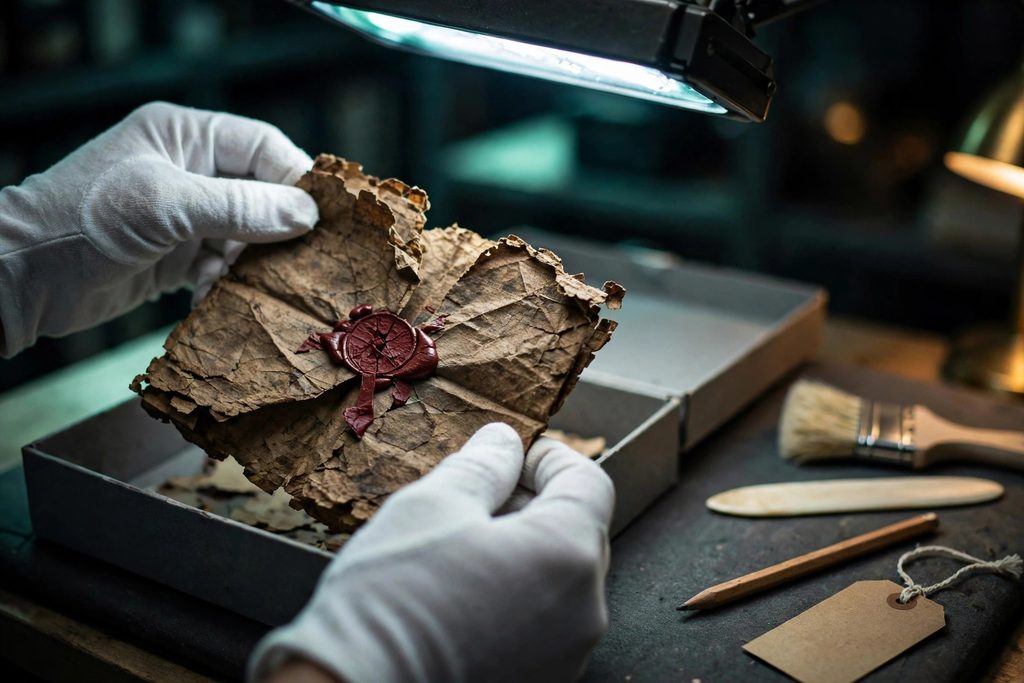
Every verdict in this archive can be challenged, and the standard says how. Write through the contact page and name three things, the file, the claim you believe has been wrongly judged, and the source that shows it. Bring the source from as low on the ladder as you can find. A source counts for more than an argument, and a reference to an archive, a paper or a museum catalogue carries more weight than a link to another website.
Every challenge that names a source is checked against that source. Not every challenge will move a stamp. When one does, the Case Record notes the change and the date, and with the reader’s permission, the name of the person who found it.
What the Standard Does Not Judge
The archive stamps claims about the record. It does not stamp anyone’s experience. A person who wakes to a dark figure standing at the foot of the bed has seen something, and the file on shadow people does not call them a liar. It asks what history and science can say about that moment, and leaves the experience with the person who had it.
Faith is not stamped either. A file can trace the day a relic first appears in a church inventory, or follow the tears of the weeping statues into a laboratory, but it does not rule on what anyone believes. The standard measures the distance between a story and its oldest record. What lies beyond the record is not its to judge.

The Record of This Standard
The standard is dated and versioned in the same way as the files it governs. When it changes, the change is listed here with its date and the earlier wording is kept, so that every file can be read against the rules that stood on the day it was stamped.
Every stamp in the archive is counted in the Verdict Index, and every file with a place on Earth is pinned on the Atlas.
Quick Answers About the Archive Standard
What is the Archive Standard? The published rules Monkey & Elf uses to trace, test and stamp every case file. It covers the five stages of a file, the source ladder, the rules for each verdict, the Case Record and how to challenge a verdict.
What are the five verdicts? Documented, Disputed, Debunked, Unresolved and Invented. Each one judges a single core claim named in the file, never a whole subject.
What is the difference between Disputed and Unresolved? A Disputed file has serious evidence on more than one side and qualified people who still disagree. An Unresolved file has run out of record before reaching an answer.
Does Debunked mean the witnesses were lying? No. It means the claim does not survive its own sources. Witnesses can describe what they saw honestly while the story built on their words is false.
What does Open file mean? The file has not been stamped yet. Older files are being reviewed one by one, and until a file carries a verdict it stays open, so readers can weigh the evidence themselves.
What is a primary source? A record made at the time of an event by people or instruments that were present, such as council minutes, a ship’s log, a photograph or the object itself. It is the first rung of the source ladder.
Can a verdict change? Yes. A new record closer to the event, independent laboratory evidence, a forged or misdated source, or an error in the archive’s own reading can move a stamp. Every change is dated in the file’s Case Record.
How can I challenge a verdict? Use the contact page to name the file, the claim and the source that shows the verdict is wrong. Every challenge that names a source is checked against it.