




The geologists were not looking for confirmation of an ancient story.
Kat Hammill, Erin Matchan, and their colleagues were dating volcanic rocks. They applied argon-argon radiometric dating to samples from Budj Bim, the volcano known in the Western geological record as Mount Eccles in southwest Victoria, Australia, and from Tower Hill, a second volcano approximately forty kilometers to the southeast. Their goal was to establish the eruption dates of these two volcanoes with greater precision than previous dating methods had allowed.
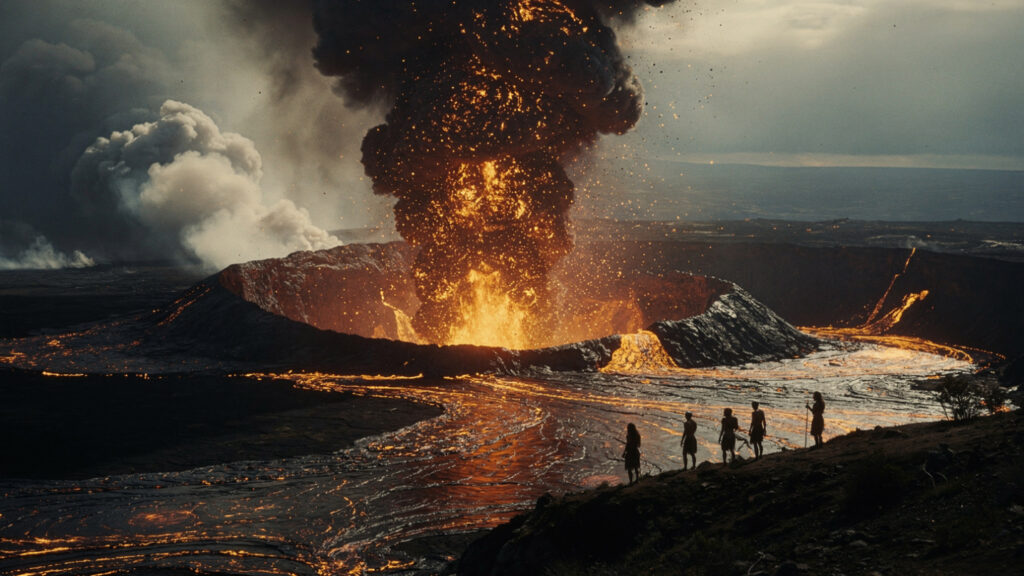
The results, published in 2020, placed both eruptions at approximately 37,000 years ago in a rapid sequence that the geological data suggested was nearly simultaneous. The two volcanoes did not erupt centuries apart. They erupted together, or nearly so, in a dual event whose scale and sudden character would have been catastrophic for any population in the surrounding region.
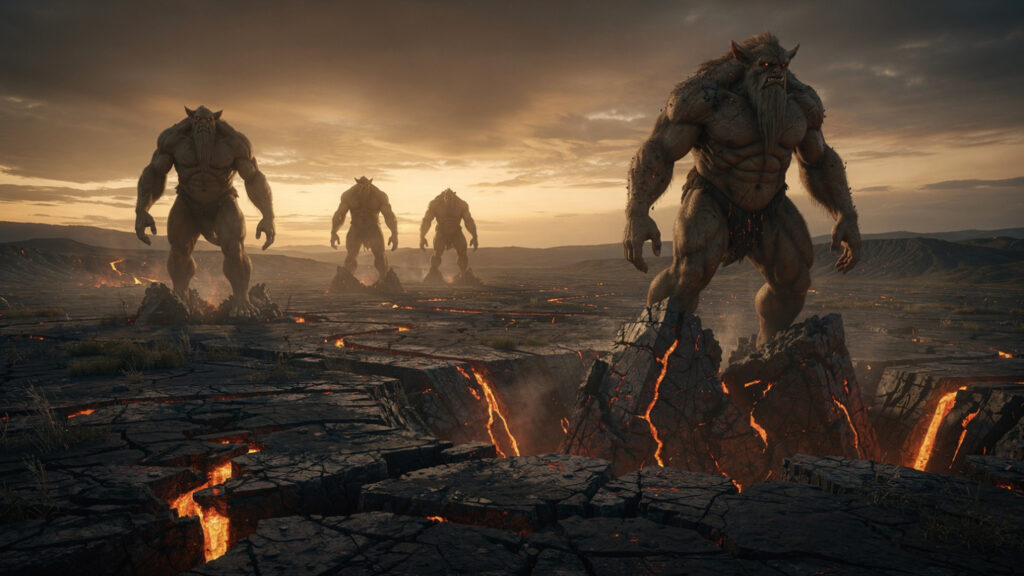
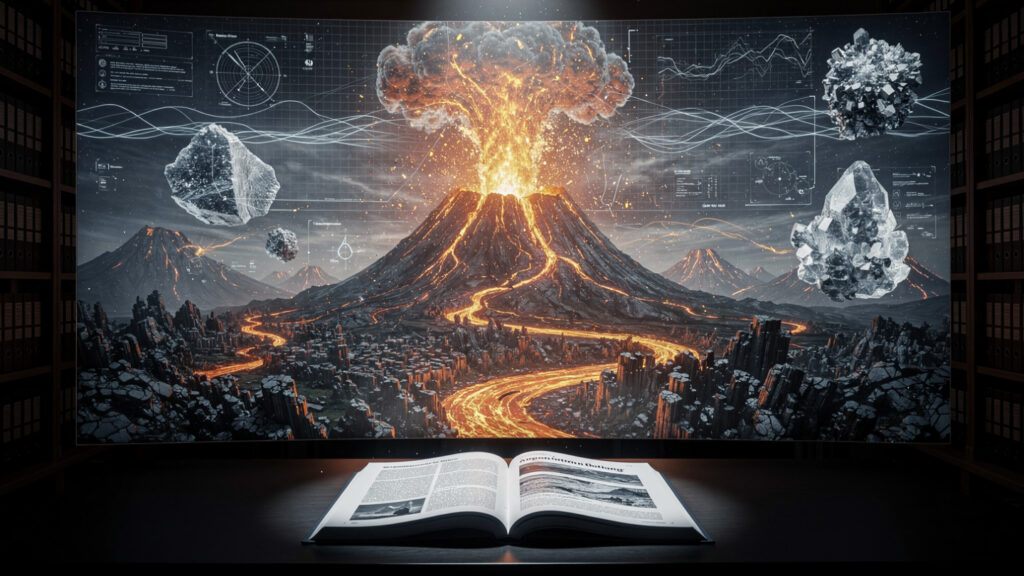
When Hammill and her colleagues reviewed the existing literature on what Indigenous communities in the region had passed down, they found the Gunditjmaran account of the four giants: four beings who arrived in southeastern Australia in the deep past, three of whom continued their journey across the continent while the fourth, whose name was Budj Bim, stayed and was transformed into a volcano, his teeth becoming lava flows.

The correspondence between what the account describes, a sudden volcanic transformation, and the geological dating of the eruption to a period within the potential range of human occupation of the region, produced the finding that has made the Budj Bim case one of the most extensively cited examples in the scientific literature treating indigenous oral memory as a geological archive: a story told continuously for approximately thirty-seven thousand years that accurately preserves the memory of a geological event geologists confirmed only in 2020.
What Preserving a Memory for Thirty-Seven Thousand Years Implies
The conventional view of how reliably word-of-mouth accounts hold up across time is conservative. Folklore scholars generally treat what is passed down orally as subject to cumulative modification through each generation’s retelling, susceptible to the distortions that memory, cultural interpretation, and changing social contexts introduce, and unlikely to preserve factual content accurately across more than a few generations.
The Budj Bim case challenges this conservative view with geological evidence. If what has been passed down accurately preserves the memory of volcanic eruptions dated to approximately 37,000 years ago, the chain of retelling has functioned with sufficient fidelity to preserve the character of the event, the sudden formation of a volcano, its approximate location, and the interpretation handed down of the event as the transformation of a being, across a period that encompasses the entire span of recorded history many times over.
Whether this preservation reflects a uniquely effective method of oral transmission developed by Australian Aboriginal cultures, the mnemonic power of traumatic geological events whose landscape-scale consequences provided continuous physical reminders anchoring the story to observable features, or the possibility that what is told today is somewhat younger than 37,000 years but was attached to the volcano’s features at a later date through the standard process of legendary elaboration around prominent landscape features, is the question the Budj Bim case raises.
The geological argument for a genuine 37,000-year memory is specific: if the eruptions occurred 37,000 years ago and there have been no subsequent major volcanic events in the region that could have inspired similar stories, then what the Gunditjmara have passed down either preserves the original eruption event’s memory or was composed from cultural imagination at some later date without any volcanic event to inspire it. The second option seems less probable than the first given how closely the account matches the geological record.
The Budj Bim case is not the only recorded instance of Australian Aboriginal oral memory preserving ancient geological or environmental content. Research by Patrick Nunn, a professor of geography at the University of the Sunshine Coast, has recorded multiple Australian Aboriginal accounts describing the drowning of coastal lands that correspond to the post-glacial sea level rise known to have occurred between approximately 14,000 and 7,000 years ago. Nunn’s work, published in peer-reviewed geography and folklore journals, argues that the correspondence between these accounts and the geological record of coastal submersion constitutes evidence of continuous oral transmission across periods of seven thousand to fourteen thousand years.
Whether these separate cases together establish a general principle that what Australian Aboriginal communities pass down by word of mouth can preserve factual environmental content across very long time periods, or whether each case requires individual evaluation against the geological and anthropological evidence, is the methodological question that the accumulating body of evidence makes increasingly relevant.
The Gunditjmara and Their Country
The Gunditjmara are the traditional custodians of the land in southwest Victoria that includes both Budj Bim and the surrounding region. Their relationship to Budj Bim is not purely historical or mythological: it is ongoing and active.
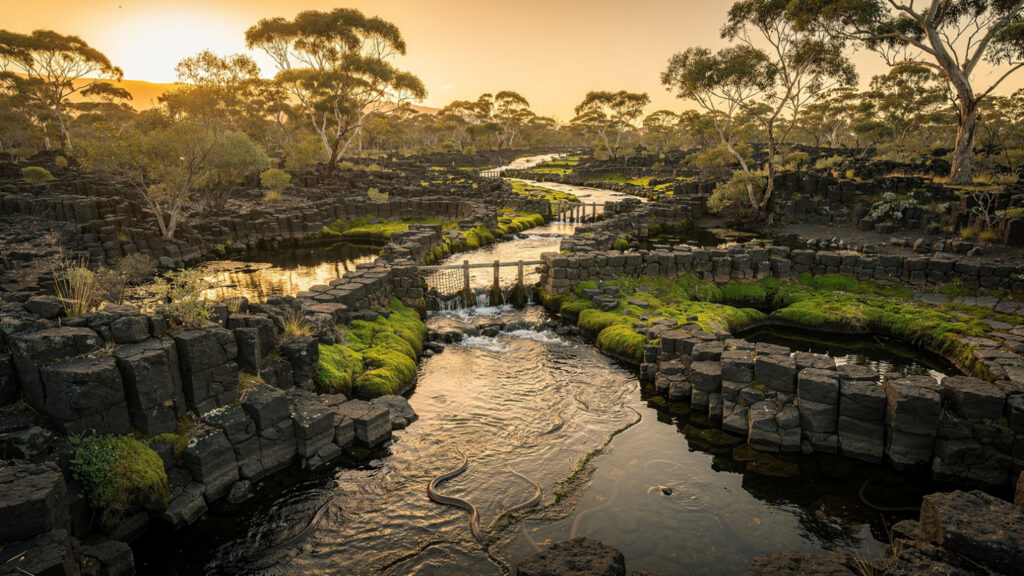
The Gunditjmara’s traditional land management practices include one of the oldest and most sophisticated aquaculture systems documented in Australia. The Budj Bim Cultural Landscape, inscribed on the UNESCO World Heritage List in 2019, preserves evidence of a complex system of channels, weirs, and holding ponds constructed to manage eel populations across the volcanic landscape that Budj Bim’s lava flows created. The system is documented archaeologically to at least 6,600 years ago and may be significantly older, representing one of the earliest examples of systematic aquaculture in the world.
The connection between the volcanic landscape, described as Budj Bim’s transformed body, and the sophisticated ecological management system the Gunditjmara developed in that landscape is the element that connects this geological memory to the broader framework of ancient knowledge preservation this library has recorded across multiple cultures.
Whether the Gunditjmara’s knowledge of the landscape’s volcanic origin informed their understanding of its ecological properties, particularly the freshwater eel habitat created by the volcanic rock formations, or whether the account of the volcano and the aquaculture knowledge developed independently and were only later connected in what the community passed down, is a question that the archaeology and the oral memory together raise without fully answering.
The Giants in a Broader Context
The four giants at the center of the Budj Bim account are the element that connects this volcanic memory to the broader pattern of giant beings covered across this library’s Nephilim, Watchers, and ancient anomalies pieces.
What is described are four beings of anomalous physical scale who arrived from outside the region, moved across the continent, and whose physical transformation into geological features left lasting landscape evidence. Whether these beings are mythological personifications of the geological forces that produced the volcanic landscape, genuine cultural memory of a population of anomalously large physical stature that occupied the region in the deep past, or something between these interpretations expressed in the vocabulary available to whoever first told the story, is the question that the consistency of giant beings recurring across unrelated cultures makes worth examining.
Australian giant folklore recorded across multiple unrelated communities, including the Tjangara of Western Australia and the accounts of the Yowie in eastern Australia, reflects a broader pattern of claimed giant beings in the indigenous record that parallels what Near Eastern sources describe as the Nephilim and the giant beings described by the Cherokee, the Aztec, and multiple other indigenous cultures covered across this library.
The Rex Gilroy claims of giant fossilized remains near Bathurst, New South Wales, including reported footprints and oversized stone tools, are the physical evidence claims in the Australian context that the Anomalous Skeletal Remains piece addresses at a general level. Whether Gilroy’s finds constitute genuine archaeological evidence of anomalously large human populations requires the independent verification that has not yet been published in the peer-reviewed literature.
What the Budj Bim account establishes without requiring Gilroy’s unverified claims is that what Australian Aboriginal communities have passed down by word of mouth can preserve accurate memories of events from the very deep past, and that the beings identified as the agents of those events, the four giants one of whom became the volcano, are described in terms consistent with the pattern of giant beings this library has recorded from multiple independent cultures worldwide.
What Thirty-Seven Thousand Years of Memory Means
The Budj Bim case is not simply a curious correspondence between geology and folklore. It is an empirical challenge to the conventional understanding of human memory capacity and how reliably word-of-mouth accounts hold up over time, with significant implications for how this library’s framework approaches everything passed down by indigenous communities.
If what is passed down by word of mouth can preserve accurate factual content across thirty-seven thousand years, then the indigenous accounts describing contact with anomalous beings, giant populations, non-human intelligences, and technologically advanced visitors are not obviously dismissible as mythological elaboration without factual basis. They may be preserving factual content across timescales that the conventional scholarly framework has not been willing to take seriously as a reliable transmission medium.
What is told about the Wandjina in this library’s dedicated piece claims an origin placed before the current world, in a period whose depth is consistent with the Budj Bim volcanic memory’s geological corroboration. The Cherokee recorded by Mooney and examined in this library describe phenomenological details whose physical trace evidence correlates appear in the contemporary UAP record. Flood accounts recorded across indigenous cultures worldwide, whose memory the Sundaland and Black Sea flood evidence partially corroborates, are distributed across cultures in exactly the geographic regions that the post-glacial sea level rise submerged.
Whether these convergences reflect genuine long-duration oral memory of the events they describe, independent cultural elaboration of common human psychological responses to environmental conditions, or something between these frameworks whose character the available evidence is still characterizing, is the question that the Budj Bim geological confirmation makes significantly more interesting than it was before Hammill and her colleagues dated those volcanic rocks.
The story said a giant became a volcano.
The geologists dated the volcano to 37,000 years ago.
What was told was right about what happened. Whether it was right about who caused it is the question that the geological confirmation has made impossible to dismiss and that the available evidence has not yet resolved.