




The disclosure community has been knocking on the front door for sixty years. The record they are looking for is in a different building entirely.
Since the Freedom of Information Act became the primary legal instrument for UAP research in the 1970s, the overwhelming majority of requests have been directed at two institutions: NASA and the Department of Defense. The pattern makes intuitive sense. NASA manages the civilian space program and its historical telemetry. The DoD manages the military’s acknowledged tracking infrastructure. If documentation of non-human intelligence operating in Earth’s vicinity exists in the American government’s institutional record, those two addresses seem like the correct places to look.
The redactions that have come back from both addresses for five decades form their own kind of record. Not absence of information. A systematic pattern of information management whose shape implies that something is being protected at a level above the classification systems that FOIA requests can penetrate at NASA or the DoD.
The Bureau of Oceans and International Environmental and Scientific Affairs is a State Department entity that does not appear in the standard disclosure research literature with any frequency. Its public mandate covers international environmental agreements, ocean policy, and scientific diplomacy. The role this piece proposes for it beyond that mandate, as a diplomatic liaison managing classified non-human intelligence information between NASA’s leadership and partner and adversary intelligence networks, is this piece’s own speculative framework rather than a documented or sourced institutional function, and readers should treat it as a hypothesis rather than an established fact.
The FOIA address that matters is not Houston. It is not the Pentagon. It is a State Department bureau that most researchers have walked past without noticing for decades.
What NORAD Is Actually Tracking
The military’s position on anomalous space traffic is not the same as NASA’s position, and the gap between them is on the record.
NORAD, the North American Aerospace Defense Command, maintains continuous tracking coverage of the near-Earth space environment. Its primary mandate is the detection and characterization of objects approaching or operating in North American airspace and the adjacent space volume. The tracking data it generates is classified at levels that vary by the nature of the object being tracked.
Within NORAD’s classified tracking taxonomy, a category designation called Fastwalker exists and appears in FOIA documents obtained by researcher Clifford Stone in the 1990s. This needs a direct distinction the source material blurs: the Fastwalker term itself, and its official definition as a fast-moving tracked object, is genuine NORAD terminology confirmed by real declassified paperwork. Stone’s own much larger personal claims, that he worked in a classified program cataloguing dozens of non-human species, are a separate matter entirely, are not corroborated by any document he or anyone else has produced, and are not verified by his service record. The documents establish that the word Fastwalker is real. They do not establish anything about what any specific tracked object was, and they do not corroborate Stone’s broader personal narrative.

NORAD tracks these objects. Their tracking data feeds into the intelligence architecture of the institutions that manage classified space anomaly information. NASA, which maintains the public-facing account of what is and is not in Earth’s vicinity, is not the institution that receives NORAD’s Fastwalker data. The State Department’s OES bureau, which manages diplomatic coordination between the civilian space program and international partners, is one of the institutional nodes through which this data flows in sanitized form into the international diplomatic record.
The gap between what NORAD tracks and what NASA describes is not an oversight. It is a structural feature of the information management system.
The Moon-Blink Files
In the mid-1960s NASA operated a program called Project Moon-Blink. Its mandate was the systematic optical tracking of transient lunar phenomena, observations of anomalous lights, structured anomalies, and unexplained movements in and around the lunar surface, using a network of ground-based telescopes operated in coordination with multiple observatories.
The program’s existence was confirmed through FOIA requests filed in the 1990s. Its operational findings were classified. What was confirmed: the program ran, it produced data, and the data was not released in response to the FOIA requests that confirmed the program’s existence.
Transient lunar phenomena, known in the astronomical literature as TLP, have been recorded by professional astronomers since the seventeenth century. More than five hundred individual observations by credentialed researchers are in the scientific record, describing lights, color changes, and apparent structural anomalies on the lunar surface. The conventional explanation attributes these to outgassing from lunar geology. The explanation has the property of being unfalsifiable with available instrumentation, which means it cannot be ruled out and also cannot be confirmed.
Project Moon-Blink was NASA’s systematic attempt to characterize what was happening in the lunar environment at a level of rigor that casual TLP observations had not achieved. The program ran for several years. The results were classified. The classification of an environmental monitoring program’s findings is not a standard outcome for geological outgassing data.
Edgar Mitchell walked on the Moon in February 1971 as the lunar module pilot of Apollo 14. In the final decades of his life, before his death in 2016, he gave multiple recorded interviews in which he stated that the existence of non-human intelligence visiting Earth was a settled reality within the American intelligence community, that senior officials in the Eisenhower, Kennedy, and subsequent administrations had direct knowledge of this reality, and that the institutional management of this information had by the 1970s passed beyond the oversight of elected officials including sitting presidents.
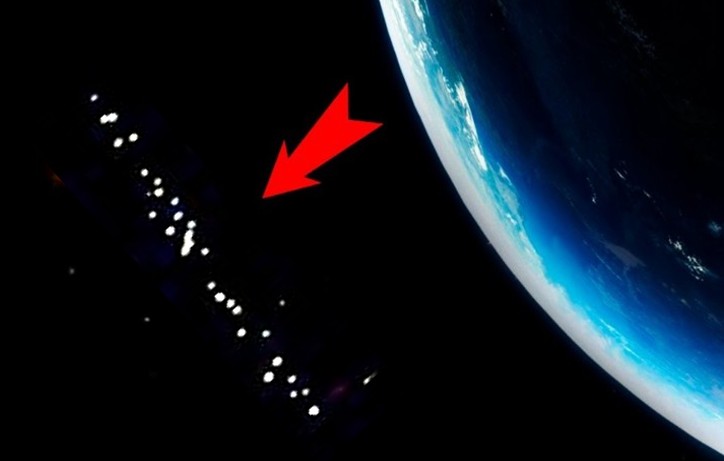
Mitchell’s claim about oversight erosion is the most institutionally serious statement in the Apollo-era astronaut testimony record. It describes not a conspiracy in the dramatic sense but a bureaucratic reality: a classification compartment that developed its own institutional inertia, outlasted the administrations that created it, and became self-managing in ways that no single elected official retained the authority to reverse.
The OES bureau managing a global Register of Space Objects through diplomatic channels that sit outside the standard FOIA framework is exactly the kind of structure Mitchell’s description implies.
The WikiLeaks Layer
The 2009 and 2010 State Department cable releases through WikiLeaks created the largest public disclosure of American diplomatic internal communications in history. The research community that analyzed those cables for UAP-relevant content found transmissions that the mainstream treatment of the WikiLeaks material did not address.
A 2009 cable from the United States Embassy in Minsk describes a meeting between diplomatic staff and Belarusian government officials that included discussion of joint protocols for tracking and classifying anomalous atmospheric and space objects. The cable uses language that distinguishes between known satellite and meteorological objects and a third category whose designation in the cable is partially redacted. The unredacted portions describe coordination mechanisms between Belarusian military tracking and American embassy reporting chains that feed into State Department databases.
Embassy cables from diplomatic posts in Bolivia and Morocco from the same period reference atmospheric incursion events with dates, geographic coordinates, and object characterizations that cross-reference against publicly available NORAD tracking anomaly reports from the same windows. The embassy-level reports contain detail that the public NORAD data does not include, suggesting the embassy reporting chains are receiving information from sources with access beyond the public-facing NORAD product.
These cables are in the WikiLeaks archive. They have been there since 2010. The search terms required to locate them within the archive have not been centralized in the disclosure research literature in the way that NORAD and NASA FOIA results have been.
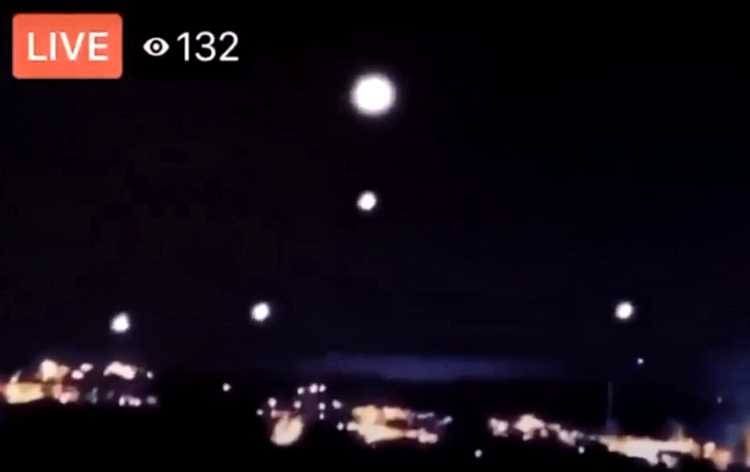
The State Department’s internal communications treat the UAP presence as an operational reality that requires contingency planning rather than a speculative fringe topic requiring dismissal. The OES bureau that manages NASA’s diplomatic relationships and coordinates with international science and intelligence agencies is the institutional node through which these operational realities feed into the diplomatic management structure.
The Artemis Architecture
The Artemis Accords, initiated in 2020 and signed by a growing list of nations including the United States, the United Kingdom, Japan, Australia, Canada, and others, establish a framework for international cooperation in lunar and deep-space exploration. The public text of the accords covers scientific data sharing, transparency requirements, and coordination protocols for lunar surface operations.
The classified annexes, whose existence is implied by the standard practice of treaty negotiation and whose content has not been publicly disclosed, extend beyond the categories described in the public text in ways that several researchers with access to State Department sources have described without being able to verify directly.
The OES bureau administered the diplomatic process for multiple Artemis Accord signatories. Its role in that process gave it structural access to the space tracking data of every signatory nation’s military and intelligence apparatus as part of the coordination process. The combined tracking data of the United States, the United Kingdom, Japan, Australia, and Canada, synthesized through a diplomatic coordination process administered by a single State Department bureau, constitutes the most comprehensive non-public picture of what is operating in the near-Earth and lunar space environment currently available to any human institution.
That picture is in the OES files. The OES has been virtually absent from the FOIA research targeting of the disclosure community.
The Correct FOIA Address
The pattern of FOIA results from NASA and the DoD over five decades describes a system that has learned to manage FOIA requests as an institutional practice. The redaction architecture at both agencies is optimized for the categories of request the disclosure community habitually files. The institutional learning has outpaced the research community’s legal strategy.
The OES bureau does not have the same optimized redaction architecture because it has not faced the same volume of FOIA pressure. Its files on the Register of Space Objects, the embassy wire traffic compilation, the Artemis coordination data, and the diplomatic protocols for non-human intelligence integration described in the WikiLeaks cables sit in a department whose FOIA office has been primarily occupied with environmental treaty requests and ocean policy inquiries.
The FOIA targets that the OES files require:
The Register of Space Objects and any related compilation records synthesizing embassy reporting on anomalous atmospheric and space phenomena. The diplomatic cables related to joint international protocols for anomalous space object tracking, specifically those passing through OES coordination channels during the Artemis Accord negotiation period from 2020 forward. Any OES communications with NASA’s Office of the Administrator regarding anomalous space object categorization policy. The OES files related to the atmospheric incursion events in Bolivia, Morocco, and Kuwait referenced in the source material’s description of the register’s geographic coverage.
The disclosure community has spent sixty years and considerable institutional resources at two addresses. The record describing the diplomatic architecture of the contact management system is at a third address that most researchers have never filed at.
The WikiLeaks cables established that the State Department treats the contact reality as operational rather than speculative. The OES manages the diplomatic layer of that operational reality. The register exists. The FOIA pathway to it has been sitting unused while the community spent another decade filing at Houston.
The correct address has been in the State Department’s organizational chart the entire time.