



Clifford Stone was a decorated US Army veteran who spoke publicly for decades about UFO crash retrievals and a catalog of 57 alien species.
His claims are significant within ufology and deserve to be reported accurately, which means reporting both what’s independently verified about his military service and what remains, by his own supporters’ account, entirely uncorroborated personal testimony.
Who Clifford Stone Actually Was
Clifford Earl Stone was born January 2, 1949, and served 22 years in the US Army before retiring in 1990, dying on February 10, 2021. His official, established military occupational specialty was administrative specialist, commonly known as a clerk typist, and Army records show approximately 37 months of overseas service in total, not all of it in Vietnam as some retellings of his story claim. This is the verified, documented baseline of his career.

Stone’s own account, told consistently across decades of interviews, holds that his clerical assignment was a cover for classified duty on UFO crash retrieval teams operating under programs including Moon Dust and Operation Blue Fly, and that he had direct physical contact with recovered craft and both deceased and living extraterrestrial beings across the span of his military career. This is precisely where independent verification and Stone’s personal testimony diverge, and it is important to state that divergence plainly rather than blend the two together as though they carry equal evidentiary weight.
What Kevin Randle’s Investigation Found
Kevin Randle, a retired US Air Force captain and longtime, credentialed UFO researcher who personally interviewed Stone, examined the available military record and reached a specific, published conclusion: Stone’s official record shows training and assignment consistent with clerical duty, with no official record of assignment to any classified retrieval unit or specialized training program. Randle did not accept Stone’s explanation that this clerical record was itself the cover story, arguing there was no independent way to verify that claim beyond Stone’s own account of it. This isn’t a fringe or hostile dismissal from an outside skeptic. It’s the specific, published finding of a fellow ufology researcher who took Stone’s claims seriously enough to personally investigate them in detail.
What Moon Dust and Blue Fly Actually Were
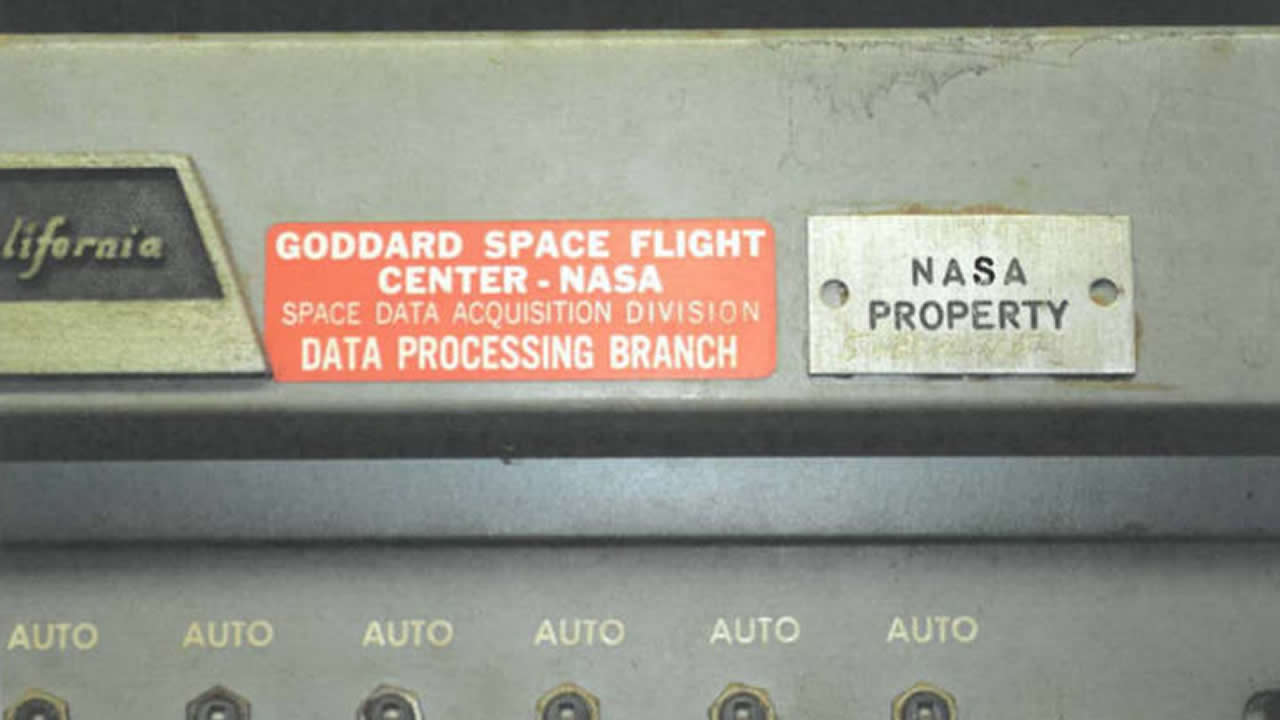
Project Moon Dust and Operation Blue Fly are declassified US military programs, and Stone’s own FOIA requests helping bring some of their paperwork into public view is a substantive contribution to the historical record. This needs a direct clarification, though: the official records for these programs describe their purpose as recovering foreign space debris and aerospace materials, particularly Soviet-origin hardware during the Cold War, not alien spacecraft or biological remains. Stone’s interpretation, that these programs functioned as a cover for a separate, unacknowledged alien retrieval mission, is his own inference layered onto documented records, not something those records themselves state. Readers deserve to know that distinction clearly: the programs existed, the released files exist, and the alien-retrieval interpretation of them is Stone’s addition to what’s actually written on the page.

The 57 Species Catalog
The specific claim of 57 confirmed extraterrestrial species deserves particular scrutiny, since it’s frequently repeated as though it were an established figure. Even within ufology’s own research community, this specific number is widely disputed and not generally treated as reliable, independent of the broader debate about Stone’s credibility overall. No independent physical evidence, biological sample, or corroborating record from any other source has ever confirmed this catalog or its contents. It exists entirely as testimony from a single source, repeated and elaborated across many interviews but never independently corroborated by anyone outside that single original account.
The Untested Artifact
One detail from Stone’s story is worth reporting carefully because it illustrates the general pattern in his case. Stone reportedly kept a physical fragment, said to be from a crash retrieval, hidden and showed it privately to journalist Paola Harris on multiple occasions over the years. This is, in principle, exactly the kind of claim independent testing could resolve. It never was. The object’s location was never disclosed before Stone’s death in 2021, meaning the one piece of his account with the clearest potential for independent physical verification was, in the end, never actually checked by anyone outside his personal circle.

The 2001 Disclosure Project Press Conference
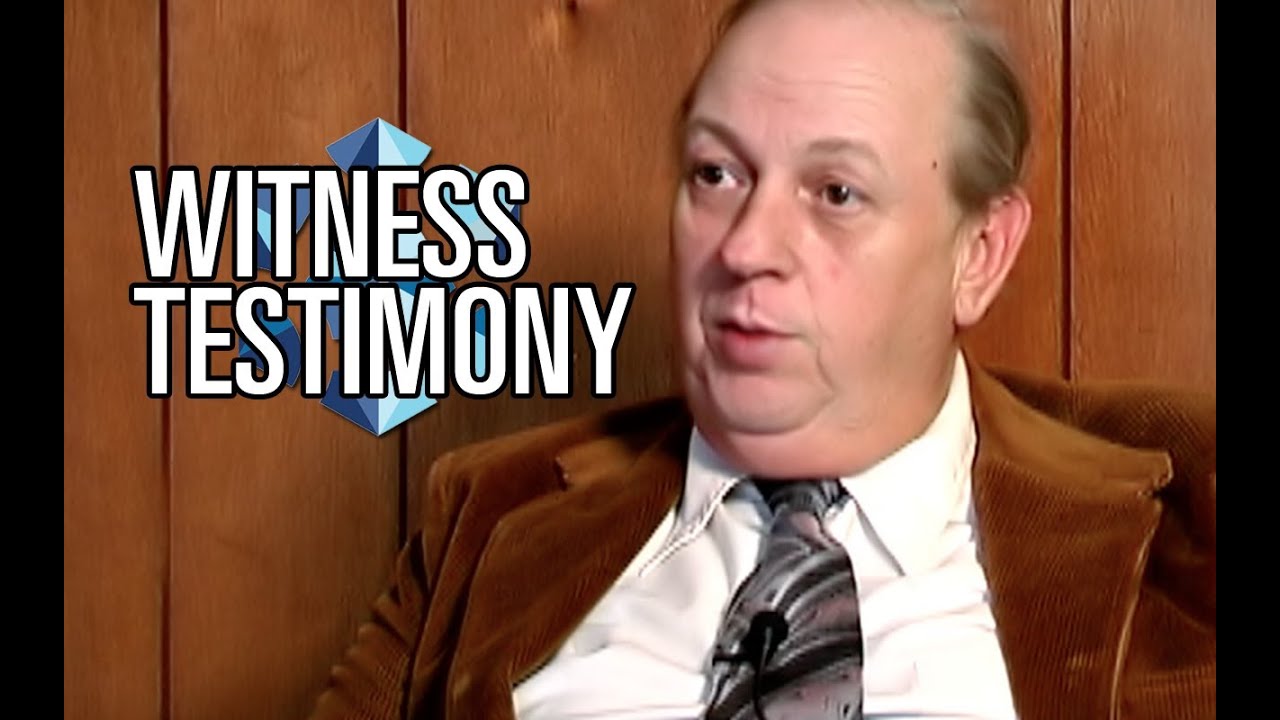
Stone’s testimony was part of a documented event: the Disclosure Project’s May 2001 press conference at the National Press Club in Washington, D.C., organized by Dr. Steven Greer, at which over twenty individuals with claimed military, government, or scientific backgrounds spoke publicly about UAP-related experiences. This event happened, was covered by mainstream press outlets at the time, and remains a notable moment in the modern history of the UAP disclosure movement. It’s worth being precise about what it establishes: the event demonstrates that a number of people with varied professional backgrounds were willing to make public claims about UAP encounters, itself an interesting fact. It does not, on its own, independently corroborate the specific content of any individual speaker’s testimony, including Stone’s. Each witness’s claims still require individual evaluation on their own evidentiary merits, and mainstream scientific and journalistic coverage of the event, including later reporting by outlets like The New Yorker, has generally treated the specific extraordinary claims made there as unverified rather than confirmed.
What Made Stone a Credible Witness to Many, Even Without Corroboration
It’s worth being fair about why Stone was taken seriously by many researchers within the field, even absent independent physical corroboration. He was, by all accounts, a decorated combat veteran who told a consistent version of his story across roughly forty years of interviews, sought no significant financial gain from his claims, and by most personal accounts from people who knew him, presented as sincere rather than as someone constructing a deliberate hoax for profit or attention. Consistency and apparent sincerity are meaningful, if limited, forms of evidence, worth weighing honestly rather than dismissing outright. They are not, however, a substitute for independent physical, forensic, or paper-trail verification, which his central claims have never received from any source outside his own testimony and the broader ufology research community built partly around it.
The Broader Disclosure Movement Context
It’s worth situating Stone’s claims within the broader modern disclosure movement, since he was an early and prominent figure within it. The Disclosure Project, founded by Dr. Steven Greer, has spent over two decades gathering testimony from individuals claiming military, government, or scientific knowledge of UAP-related programs, and Greer’s advocacy work has helped push UAP-related transparency into more mainstream political conversation, including congressional hearings that have occurred in the years since Stone’s original 2001 testimony. This broader movement is worth taking seriously as a significant force in American political and cultural life, independent of whether any individual testimony within it, Stone’s included, is independently verified. A serious push for institutional transparency and a specific individual’s uncorroborated personal account are two different things worth evaluating on their own separate terms, and conflating momentum for one with evidence for the other overstates what either actually establishes.
2023 Congressional Testimony, for Comparison
It’s useful to compare Stone’s case to more recent developments for perspective. In 2023, former intelligence officer David Grusch testified before Congress under oath, with whistleblower protections, alleging the US government possesses retrieved non-human craft, a formal congressional proceeding with real legal stakes attached to false testimony. Grusch’s specific claims about physical craft and biological material remain, as of this writing, similarly uncorroborated by independent physical evidence, and multiple government officials have publicly disputed them. The comparison is instructive: even sworn congressional testimony carrying legal consequences for perjury has not, on its own, produced independent physical confirmation of retrieved craft or non-human biological material. This is worth keeping in mind when evaluating any individual testimony in this broader area, including Stone’s own account from decades earlier, since even testimony given under considerably higher legal stakes than Stone’s has not yet crossed the threshold from claim to independently verified fact.
Why Testimony Alone Is a Difficult Standard
It’s worth explaining, in general terms, why sincere, consistent personal testimony, even from someone with an honorable service record and no apparent financial motive, doesn’t function the same way as independently verifiable evidence in any rigorous evaluation of an extraordinary claim. Human memory, even honestly reported, is susceptible to gradual reconstruction over decades of retelling, especially when a story receives sustained attention, community reinforcement, and repeated interview requests from sympathetic researchers over a span of forty years. This isn’t a claim that Stone was lying. It’s a recognition that consistency across many retellings can result from either an accurately preserved memory or from a narrative that has been sincerely internalized and refined through repetition, and that these two possibilities can look identical from the outside without independent corroboration to distinguish them. This is precisely why courts, scientific bodies, and serious historical researchers generally require physical evidence, documentary corroboration, or independent witness testimony before treating an extraordinary claim as established, not because personal sincerity doesn’t matter, but because sincerity alone cannot reliably distinguish an accurate memory from an honestly mistaken one.
The Humanoid Morphology Detail
One specific element of Stone’s catalog deserves closer examination, since it’s often treated as a puzzling, scientifically noteworthy detail rather than a potential clue about the account’s actual origin. Stone described his cataloged species as including multiple subtypes of “grays,” classified by height and shading, alongside beings nearly indistinguishable from humans and other, more unusual forms. He presented the prevalence of humanoid morphology among these species as a scientific puzzle, since an independently evolved alien biology would not be expected to converge on a broadly human-like body plan by chance. This is a fair point as pure biology, and it’s also worth noting the more straightforward explanation available: this same cluster of humanoid archetypes, grays of varying heights and shades, human-passing visitors, taller and stranger variants, closely mirrors the existing, well established repertoire of descriptions already circulating throughout twentieth-century ufology well before Stone’s own testimony became prominent, rather than describing a truly novel, independently observed set of biological forms. A catalog built from an already-familiar cultural vocabulary of alien description is a simpler explanation for this particular puzzle than an independently surveyed alien biology that happens to converge on exactly the same shapes popular culture had already established.

Weighing the Full Picture
The honest summary of Clifford Stone’s case has two documented anchors and one large, unverified claim built on top of them. The documented anchors: a decorated 22-year Army career, and FOIA-obtained records of real Cold War-era programs, Moon Dust and Blue Fly, that dealt with recovering unidentified aerospace materials. The unverified claim: that his own clerical assignment was a cover for a separate, classified alien retrieval role, that he personally participated in recovering craft and both deceased and living extraterrestrial beings, and that a catalog of 57 confirmed species exists. None of the second category has been independently confirmed by any record, physical sample, or corroborating witness outside Stone’s own testimony and those who have chosen to believe it. Readers deserve both halves of this story, clearly separated, rather than a single, seamless narrative that treats testimony and verified record as the same kind of evidence, and that separation is not a dismissal of Stone as a person, whose military service and apparent sincerity deserve genuine respect, but a necessary distinction for anyone trying to understand what is actually known versus what has only ever been claimed.
That exact distinction is the organizing question of the wider disclosure debate.