




The engineer kept them for fifty years.
Between 1968 and 1972, while working for IBM on NASA contracts during the height of the space race, an engineer whose name is redacted in the released FOIA documents asked to take home IBM computers and associated magnetic data storage tapes that his employer had decided to discard. He stored them in his basement in Pittsburgh, Pennsylvania. He kept them there for the remainder of his working life and through his retirement. He kept them until he died.
After his death, his heirs contacted a scrap dealer. The scrap dealer contacted NASA. The heir’s message to the scrap dealer is preserved in the FOIA release: please tell NASA these items were not stolen. They belonged to the IBM Allegheny Center in Pittsburgh.
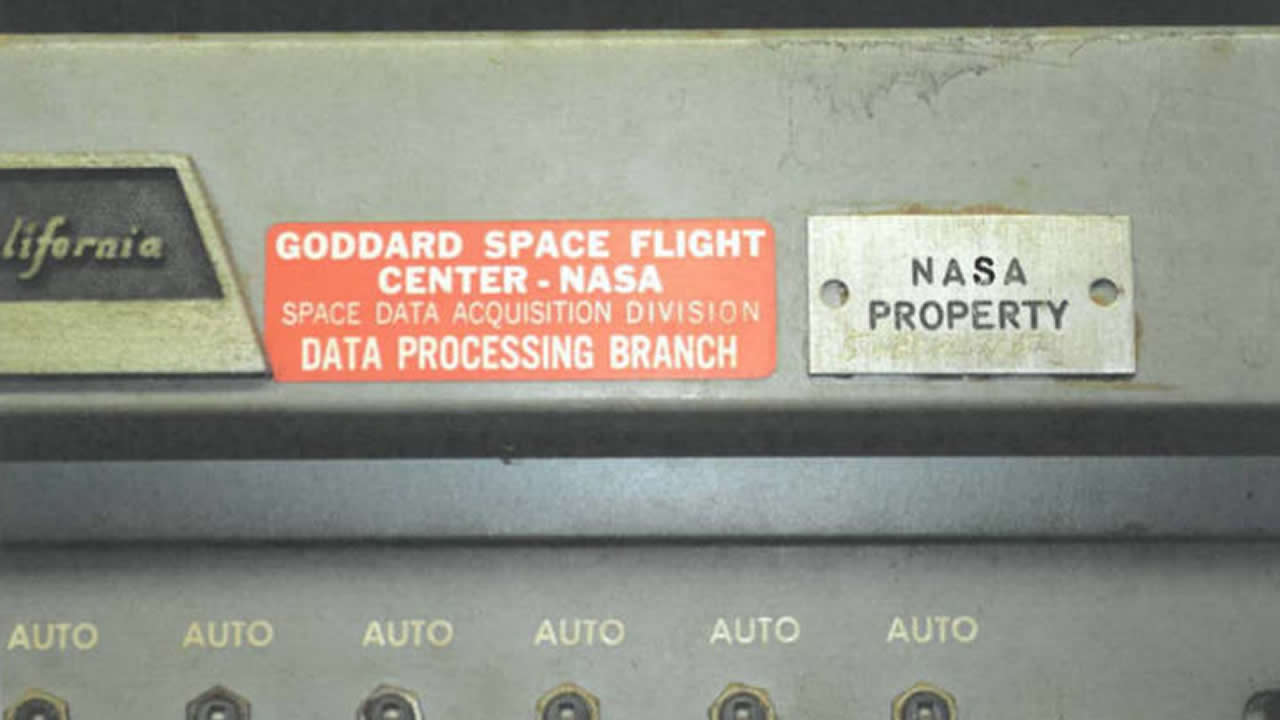
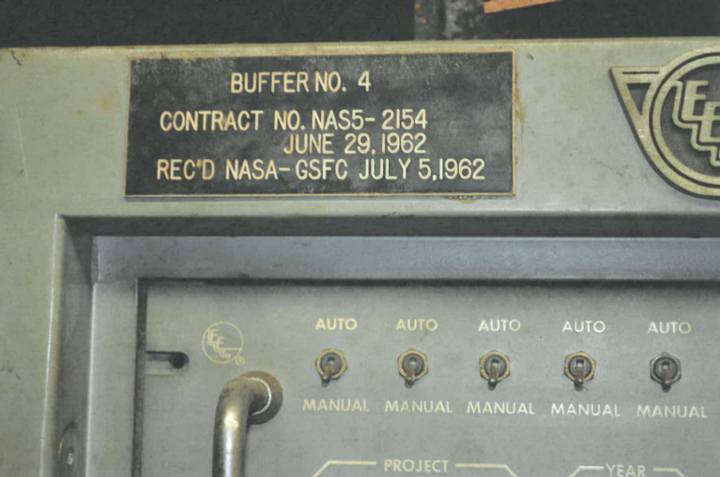
NASA sent an archivist to inspect the materials. The archivist counted 325 magnetic data storage tapes, 215 of them unlabeled, and the remainder bearing identifications including Pioneer 10 and Pioneer 11 mission designations. The tapes dated from 1967 to 1974 by NASA’s inspection. The two IBM computers associated with the collection bore a contract code: NAS5-2154.
NASA ordered all the tapes destroyed.
The rationale recorded in the FOIA release is two-part: no evidence that the tapes contained historically significant material, and the archivist’s assessment that recovery of stored data would be very expensive due to the moldy condition of the tapes with no guarantee that anything could be recovered.
Whether this rationale accurately describes NASA’s decision-making about materials from the most significant period in American space exploration history, or represents a recognizable institutional pattern of managing what information about that period reaches the public record, is the question that the combination of the unidentified contract code and the destruction order raises.
The Contract Code and What It Should Mean
NASA contract code NAS5-2154 appears in the FOIA release as having no recorded entry with the United States government.
The NAS prefix in NASA contract numbering is standard: NAS followed by a number designates the NASA center administering the contract, with NAS5 designating contracts administered by Goddard Space Flight Center in Greenbelt, Maryland. Goddard’s mission during the 1960s and 1970s included satellite development, unmanned scientific missions, and the technical infrastructure supporting the Apollo program’s communications and tracking systems.
Whether the absence of a recorded contract for NAS5-2154 reflects fifty years of record loss in a period before systematic digital archiving of government contracts, deliberate removal of the contract record from the accessible government database, or a clerical error or redaction in the FOIA document itself, is the question that the absence raises.
Government contract records for the Apollo era are not uniformly preserved in accessible form. The period from 1967 to 1974, which the tapes’ dating covers, includes the most classified period of American space program activity, including the Apollo missions, the classified military payload launches that occurred alongside the civilian space program, and the known intelligence satellite programs whose contract records remain partially or fully classified.

Whether NAS5-2154 was a standard Goddard contract whose records were lost through normal archival attrition, a contract whose work was classified at a level that excludes it from the accessible government contract database, or a contract that does not appear in the accessible database for a reason that the available FOIA documentation does not establish, is the question that the absence motivates examining.
The engineer who kept the computers and tapes for fifty years specifically instructed his heirs to tell NASA that the materials were not stolen. Whether this instruction reflects the concern of someone who understood that keeping government property was legally questionable regardless of permission, someone who understood that the materials had a significance that their official treatment did not reflect, or someone who simply wanted to ensure that a bureaucratic confusion did not complicate his estate, is the question that this message raises.
Pioneer 10 and Pioneer 11 | What the Labeled Tapes Contained
The labeled tapes’ designations, including Pioneer 10 and Pioneer 11, are the element of the collection whose historical significance is most directly assessable against NASA’s destruction rationale.
Pioneer 10, launched in March 1972, was the first spacecraft to travel through the asteroid belt and conduct direct observations of Jupiter, whose gravitational field, magnetic environment, and atmospheric structure it recorded in the first close-passage data ever collected. Pioneer 10 subsequently became the first human-made object confirmed to be on a hyperbolic trajectory that would carry it out of the solar system, becoming the first interstellar probe by default rather than by design.
Pioneer 11, launched in April 1973, followed a similar trajectory, conducting Jupiter observations and subsequently the first Saturn flyby by an American spacecraft, recording Saturn’s ring structure and the first direct observations of the planet’s magnetic environment.
The data collected by both Pioneer missions during the Jupiter and Saturn encounters in the early 1970s is well established as scientifically significant: the Pioneer anomaly, the well known unexplained deceleration of both spacecraft that deviated from the predicted trajectory by a small but precisely measured amount and generated decades of scientific debate before being explained by thermal radiation pressure in 2012, appeared in the Pioneer mission data and was the subject of ongoing scientific analysis for more than thirty years after the missions.

Whether the tapes in the engineer’s basement contained Pioneer mission data that was not otherwise archived, duplicated data that exists in other collections, or data whose scientific content is not assessable from the FOIA document’s description, is the question that the labeled tape designations raise.
NASA’s stated destruction rationale, no historically significant material, applied to a collection that included Pioneer mission data, is the institutional judgment that the historical record of both missions’ scientific significance challenges.
The Apollo Era’s Information Management Pattern
The decision to destroy rather than archive the recovered tapes connects this decision to the institutional pattern of Apollo-era information management that the library’s Apollo Anomalies piece develops.
The library’s Apollo Anomalies piece covers Ken Johnston’s account of being instructed to destroy NASA photographs that showed anomalous structures on the lunar surface, and the Brookings Report’s 1960 recommendation that NASA consider the psychological implications of discovering evidence of extraterrestrial intelligence before releasing such information publicly.
Whether the NAS5-2154 tapes’ destruction reflects the same institutional pattern seen in Johnston’s account and in the Condon Report’s missing chapter, or reflects a straightforward cost-benefit decision about degraded historical materials whose recovery costs exceeded their assessed archival value, is the question that the pattern’s consistency raises without the available evidence resolving.
The comparison between the NAS5-2154 destruction and the Condon Report’s missing chapter is instructive: in both cases, the institutional decision involved the destruction or removal of material from the Apollo era whose content was not publicly assessed before destruction was ordered. In both cases, the institutional rationale provided emphasizes cost, difficulty, or lack of significance in ways that independent assessment might challenge. In both cases, the material’s absence makes independent assessment impossible after the fact.
Whether this pattern reflects a coherent institutional strategy for managing Apollo-era information, the normal bureaucratic tendency to minimize archival costs for materials whose significance is not immediately apparent, or coincidental decisions by different institutional actors that produce the same outcome through different mechanisms, is the question that this pattern’s consistency motivates examining.
What Was in the Tapes
The content of the 215 unlabeled tapes is unknown and will remain unknown. The tapes have been destroyed. The content of the labeled Pioneer mission tapes is known only by their designation, not by their data. Whether the Pioneer tapes contained data that duplicates archived collections or data that has no other surviving copy is not established in the FOIA release.
The engineer who kept the materials for fifty years made a choice across his working life, his retirement, and his old age, to maintain custody of government property whose official disposition was to be discarded. Whether this choice reflected an understanding of the materials’ significance that he did not share publicly, a general sense that historical materials should not be destroyed that is recorded as a common tendency among engineers and scientists who work on significant projects, or a simple practical accumulation of materials that he never got around to returning, is the question that his fifty-year custody raises.
His heir’s message to the scrap dealer, the explicit instruction to tell NASA the materials were not stolen, suggests that the heir understood the legal complexity of the situation without necessarily understanding the historical significance of what was being turned over. Whether the heir also understood what specifically was on the tapes, and whether the engineer had shared any information about the materials’ content before his death, is not established in the available record.
NASA inspected the tapes. NASA ordered them destroyed. The archivist’s stated assessment, that recovery would be expensive with no guarantee of success, is the technical judgment that terminated the possibility of knowing what the 215 unlabeled tapes contained.
Whatever was on them, it is not accessible.
Whether it was historically significant is the question that the destruction order made permanently unanswerable.