The dog’s name was Diamond.
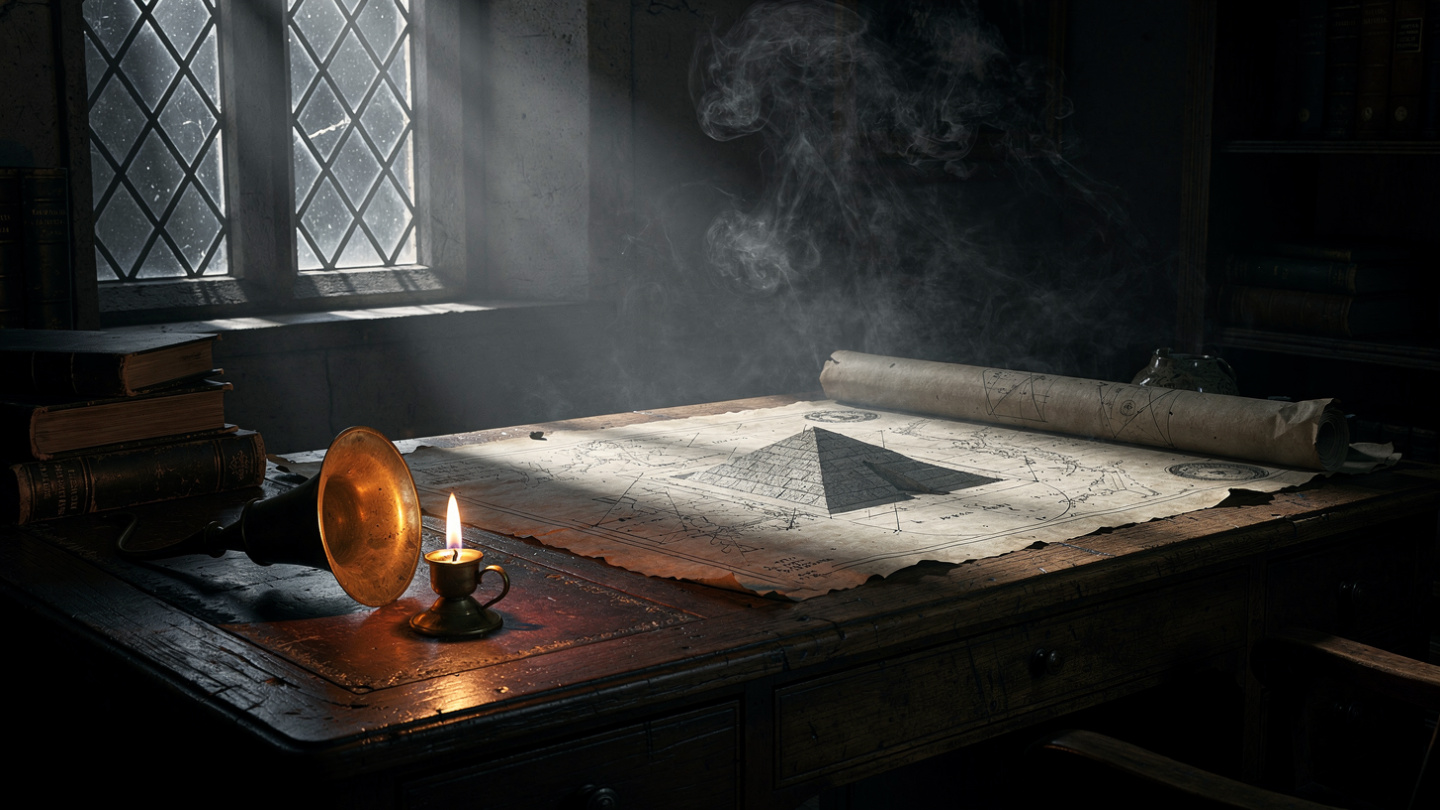
The tradition that has served the history of science for three hundred years holds that Isaac Newton’s laboratory candle was knocked from the table at Woolsthorpe Manor during the winter of the 1680s by his dog, Diamond, igniting a body of unpublished research that Newton chose not to reconstruct before his death in 1727. The burned papers concerned alchemy, sacred geometry, and the decoding of the biblical end-of-time sequence from the architectural measurements of the Great Pyramid of Giza.
The tradition is convenient. A domestic accident involving a named animal and an overturned candle forecloses the question of whether the burning was deliberate. The question is worth asking. Newton understood precisely what the papers contained. He understood what would happen to his position at Trinity College Cambridge, his mastership of the Royal Mint, and his standing within the Royal Society if the content became public. He had maintained a regime of operational secrecy around his alchemical and theological work for decades. The man who spent thirty years hiding his rejection of the Trinity from the institution named after it was capable of burning his own papers.
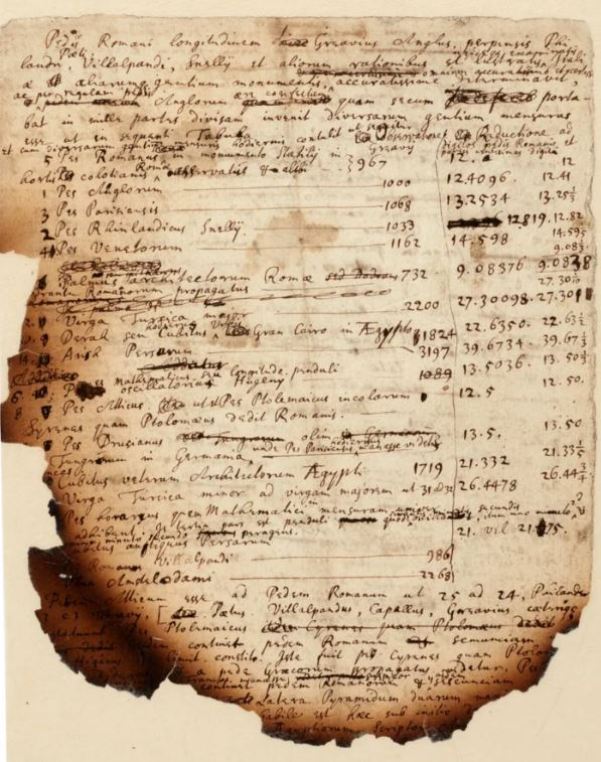
Three pages survived. In December 2020, Sotheby’s in London finalized their sale. The buyer’s identity was not disclosed.
The Magician
John Maynard Keynes purchased a large portion of Newton’s unpublished alchemical manuscripts at the first Sotheby’s dispersal in 1936, two centuries after Newton’s death. He read them in their entirety. In 1942, invited to deliver a lecture marking the tercentenary of Newton’s birth, Keynes opened with a statement that has never been adequately absorbed by the institution he was addressing.
Newton was not the first of the age of reason. He was the last of the magicians.
Keynes had read the papers. He knew what they contained. The Newton that the Scientific Revolution had constructed as its founding figure, the rational empiricist who derived universal laws from observation and mathematics, was a retrospective fabrication built on the careful selection of a fraction of Newton’s actual output. The fraction that fit the narrative. The remainder, millions of words on alchemy, biblical prophecy, sacred geometry, and the decoding of the divine plan from ancient architectural measurements, was hidden by his family for two centuries and has been absorbed into institutional collections where it receives, relative to its volume and significance, minimal scholarly attention.
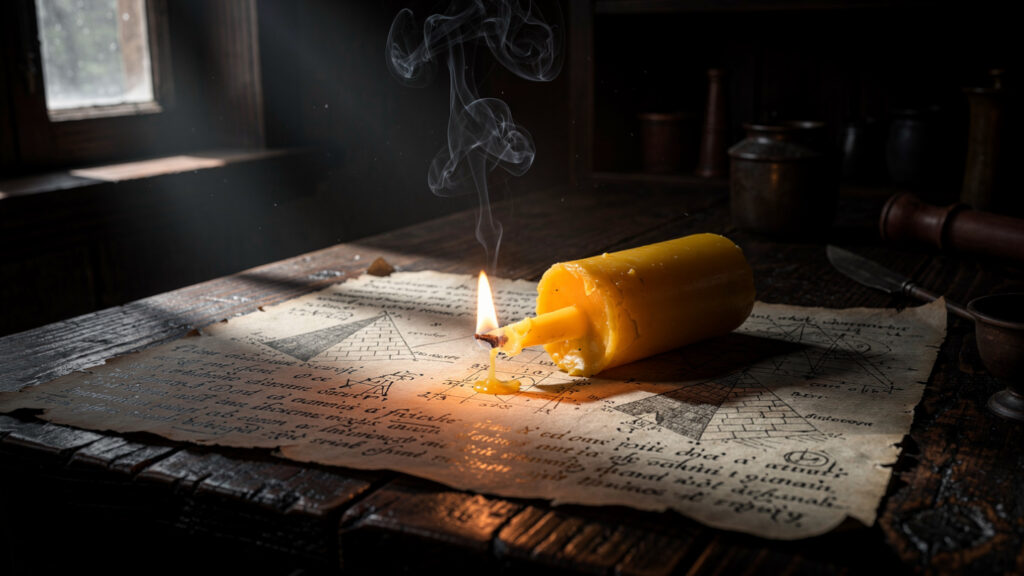
The Keynes Collection at King’s College Cambridge holds the bulk of what survived. The burned sheets are in private hands. The name of the person who purchased them in 2020 has not been released.
The Metrological Problem
Newton’s entry into pyramidological research was not mystical in its origin. It was mathematical. He had a technical problem and the Great Pyramid was the only surviving artifact precise enough to solve it.
His equations describing universal gravitation required an accurate measurement of the Earth’s total circumference. The contemporary European measurements available to him in the 1680s contained a margin of error that prevented his orbital calculations from achieving mathematical closure. The Moon’s observed orbit did not match his theoretical predictions within acceptable parameters. Something in the foundational geodetic data was wrong.
Newton’s research into ancient metrology isolated a chain of transmission he believed solved the problem. Eratosthenes, working in Alexandria in the third century BCE, had calculated the Earth’s circumference with extraordinary accuracy using a unit called the stadium. Newton suspected Eratosthenes had not derived this measurement independently. He had inherited it from Egyptian surveying records whose precision predated the Greek tradition by millennia. The Egyptian records were encoded in the cubit, the foundational unit of construction at Giza.
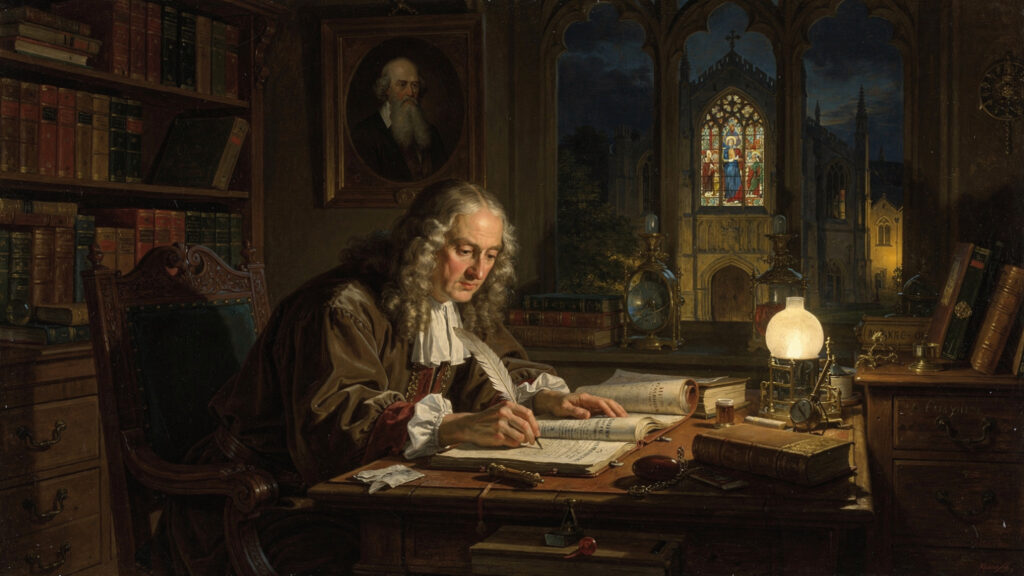
If Newton could determine the exact physical length of the Egyptian sacred cubit from the surviving measurements of the Great Pyramid, he could reverse-engineer the Greek stadium, isolate the exact polar radius of the Earth, and close the mathematical gap in his gravitational theory.
He succeeded. The polar radius he extracted from the pyramidal measurements matched the contemporary geodetic value to a precision his seventeenth-century instruments could not have produced independently. The Great Pyramid contained an accurate measurement of the Earth embedded in its construction geometry. The builders knew the exact dimensions of the planet. They encoded those dimensions in stone in a form that would survive long enough for someone to extract them.
Newton extracted them. His gravitational theory achieved mathematical closure. The published version, in the Principia, does not mention where the foundational geodetic measurement came from.
What He Found in the Pyramid
The metrological chain led Newton to a conclusion he spent the remainder of his life elaborating in secret.
The sacred cubit of 63.435 centimeters, derived from the Giza measurements, was the same unit the Biblical text of Kings specified for the construction of the Temple of Solomon. The same unit in the instructions Yahweh gave Noah for the Ark. The same unit prescribed to Bezalel for the construction of the Ark of the Covenant. One unit of measurement, used by divine instruction for three separate constructions at three separate moments in the Biblical timeline, traceable back to the architectural geometry of a structure whose builders encoded the Earth’s polar radius and the ratio of a circle’s circumference to its diameter.
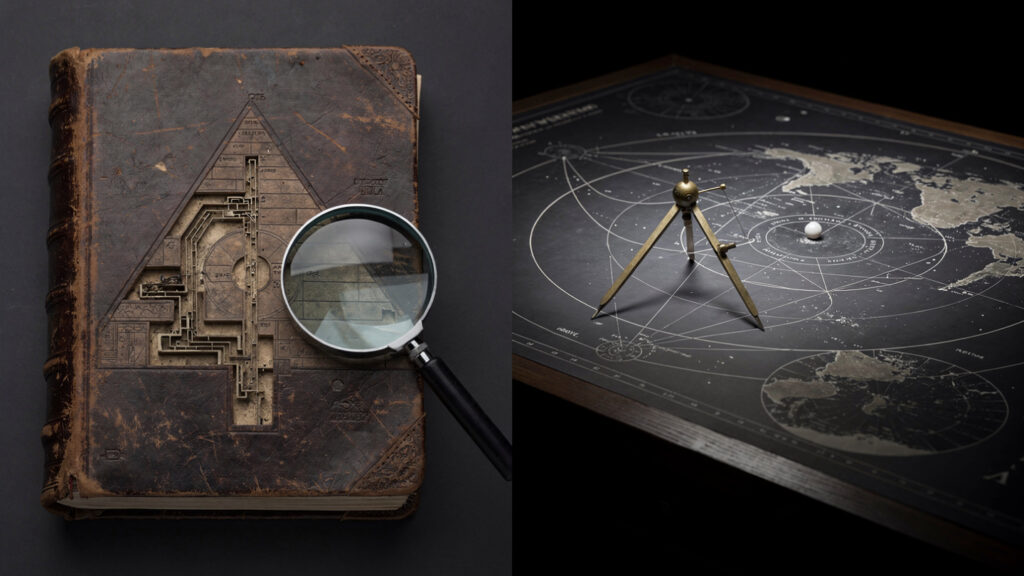
Newton’s conclusion was that these structures shared a source. The pre-deluge knowledge system that the Egyptian priesthood had preserved in the architecture of Giza had been transmitted forward through the Mosaic tradition into the measurements of the Temple of Solomon. The temple was not a place of worship in the conventional sense. It was a chronological instrument. Its architectural dimensions encoded a timeline. The unit of length corresponded to a duration of solar years and the layout of the temple courts, the height of the pillars, the volume of the inner sanctuary, were mathematical variables in an apocalyptic equation whose solution was the date of the terminal phase of the current civilizational cycle.
The primary texts providing the timeline were the Book of Daniel and the Book of Revelation. Daniel’s 1,260-day period, interpreted through the day-year principle standard in Newton’s prophetic methodology, produces 1,260 solar years. Daniel’s 2,300-day period produces 2,300 years. The starting points of these periods, their anchors in the historical record of the Jewish-Roman world, and their terminal dates when the pyramidal conversion is applied, produced a sequence of historical waypoints that Newton tracked against the documented record of European civilization with the same rigor he applied to the orbital mechanics of Jupiter.
The calculations filled thousands of pages over forty years. The burned sheets were a fraction of the total. The surviving Keynes Collection contains enough to establish the methodology. The terminal calculation is the missing piece.
The Heresy
Understanding why the papers were hidden requires understanding what Newton believed when he wrote them.
His systematic analysis of the Biblical texts, conducted with the same close textual methodology he applied to the alchemical manuscripts of antiquity, had led him to a conclusion that was not a marginal theological position in seventeenth-century England. It was grounds for permanent professional destruction and potentially worse.
Newton did not believe in the Trinity.
He was an Arian, holding the position that Christ was a created being of the highest order but subordinate to and distinct from the Father, a position condemned as heresy at the Council of Nicaea in 325 CE and carrying severe institutional penalties in Restoration England. He held the Lucasian Professorship of Mathematics at Trinity College Cambridge. The institution’s name was not coincidental to his predicament. He applied for and received a royal dispensation exempting the Lucasian Professor from the ordination requirement that would have forced him to publicly affirm the doctrine he privately rejected. The dispensation was granted. Its grounds were not published.
For thirty years Newton conducted his theological research inside an institution whose foundational doctrine he considered a deliberate corruption of the original Christian message, engineered by the post-Nicaean church hierarchy to consolidate administrative control over European civilization. The prophetic timeline he was extracting from the pyramidal measurements was, in his reading, a timeline of that corruption’s duration and its scheduled termination.
The institution he was hiding from was the institution he worked inside. The papers could not be published while he lived. His family understood this after his death and implemented what the manuscript researcher Sarah Dry recorded as a two-century policy of administrative containment. The papers represented, in her analysis, institutional dynamite. Newton’s heirs recognized that if the scientific community discovered that the architect of the laws of motion derived his foundational geodetic measurements from Egyptian sacred geometry and spent four decades calculating the biblical apocalypse, the authority of the Scientific Revolution would require reconstruction.
They were correct in the assessment. The containment held until 1936, when financial pressures forced the dispersal at Sotheby’s. Keynes bought the largest portion. The rest scattered into private collections. The burned sheets surfaced in 2020.
The 2060 Question
Among the Newton manuscripts that have been examined in institutional collections, one document has received more public attention than any other in the theological corpus. A Trinity College manuscript in Newton’s hand states a calculation: the world will not end before 2060.
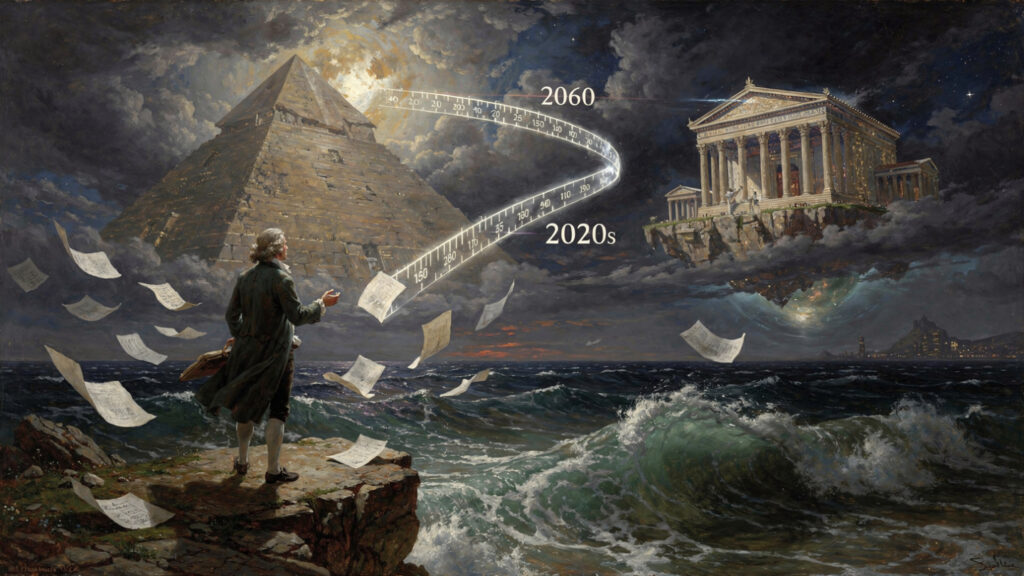
The phrasing is precise and deliberately qualified. Not that the world will end in 2060. That it will not end before it. The distinction matters. Newton was not predicting apocalypse at a fixed date. He was establishing a lower bound on the terminal sequence based on his Daniel calculations, using the 1,260-year period anchored to the rise of the Holy Roman Empire in 800 CE and running forward to 2060.
The burned Sotheby’s sheets contain a different calculation. The fragments that survived the thermal event show a compressed timeline using a shorter metrological conversion derived from measurements in the low passages of the King’s Chamber. The passages that the pyramidological tradition maps to the early twentieth century and the period of maximum civilizational stress. Newton appears to have been working on a secondary timeline running parallel to the Daniel sequence, anchored differently, converging on a narrower window.
The terminal point of the compressed calculation has not been published by whoever purchased the sheets in December 2020. The buyer’s identity remains undisclosed.
What the published material allows is this: Newton’s primary timeline establishes 2060 as the earliest possible terminal date. His secondary calculation, visible in the fragments, produces a shorter interval whose endpoint falls within a window the source material places in the late 2020s. The two timelines are not contradictory. They are measuring different components of the same sequence. The compressed calculation may be identifying a transitional threshold within the larger terminal arc, a structural rupture rather than a final endpoint.
What the Institutions Knew
The history of Newton’s manuscripts is a history of institutional management of dangerous information.
His family hid the papers for two centuries. When financial necessity forced dispersal in 1936, Keynes purchased the bulk of the alchemical and theological material, read it privately, and delivered one public lecture in 1942 that summarized his conclusions in a single sentence before the King’s College collection absorbed the remainder. The 2020 sale moved three burned sheets containing the compressed timeline calculation into private hands whose identity the auction house did not disclose.
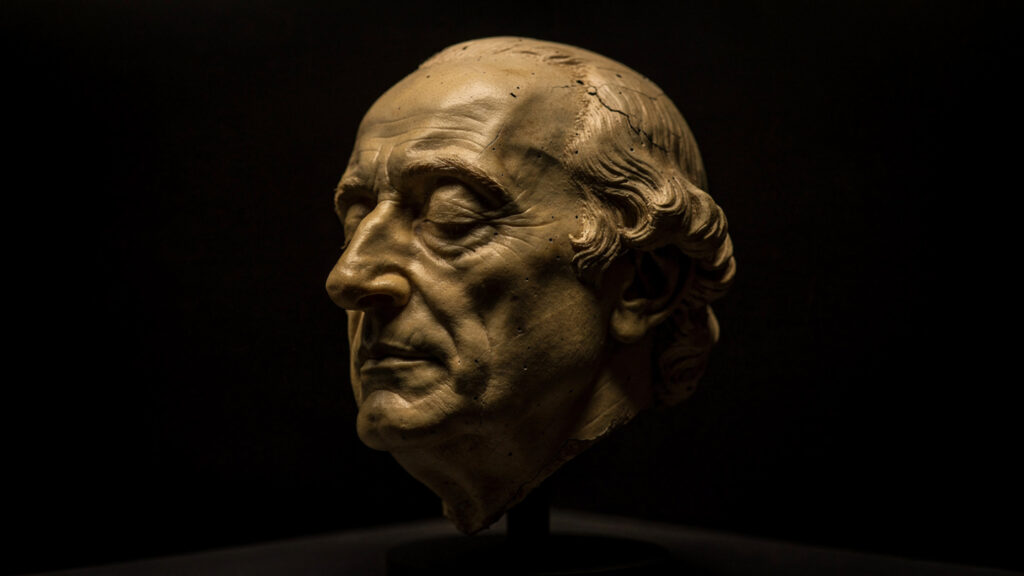
The pattern is specific. Material is acknowledged as existing. Its content is partially summarized by someone who has read it. The full content remains inaccessible. The person who currently holds the most version of the calculation, the three burned sheets with the compressed timeline, is unknown.
Newton spent forty years deriving an apocalyptic timeline from the same architectural measurements that encode Pi, the speed of light, and the geographic center of the Earth’s landmass. He derived those measurements while solving the foundational problem of modern gravitational physics. He published the physics. He burned the rest.
Three pages survived the burning. They contain a calculation whose terminal date falls in the current decade, developed by the same intellect that described the laws governing the motion of every planet in the solar system.
The buyer has not published what the sheets contain. The institutions that hold the remaining manuscripts have not published the full Daniel calculations. The name of the pre-deluge source that Newton believed transmitted the pyramidal metric through the Egyptian priesthood to Eratosthenes to the Mosaic tradition has not been formally identified by any institution with the resources to investigate it.
The burned leaves sit in a private collection somewhere. The timeline they contain is running.
Whether the institutions currently managing the official account of Newton’s work know where it runs to is the question that the two-century pattern of containment makes very difficult to answer with confidence.
The dog’s name was Diamond. The accident happened in the 1680s. The papers burned.
Three pages did not.
Newton’s burned apocalypse research survives only in three pages, and even those were never meant to be read by anyone else.