


Veronica Lueken and Jeane Dixon were people whose predictions have been extensively recorded, and whose full track records complicate the retellings that circulate about them. Sarah Hoffman’s account has circulated too, but it lacks the kind of independent verification available for the other two.
What follows reports what’s actually verifiable about each, using the primary historical record wherever it could be located.
The Seers | Real Figures, Uneven Track Records
Veronica Lueken and Jeane Dixon are historically recorded figures, though their complete predictive records are considerably more mixed than the retrospectively selected predictions that typically circulate about them. Sarah Hoffman’s story has circulated primarily through niche spiritual communities, and no independent documentation of her account beyond secondhand retellings could be located, meaning it should be read as unverified personal testimony rather than an established historical record.
Veronica Lueken | The Ball of Redemption
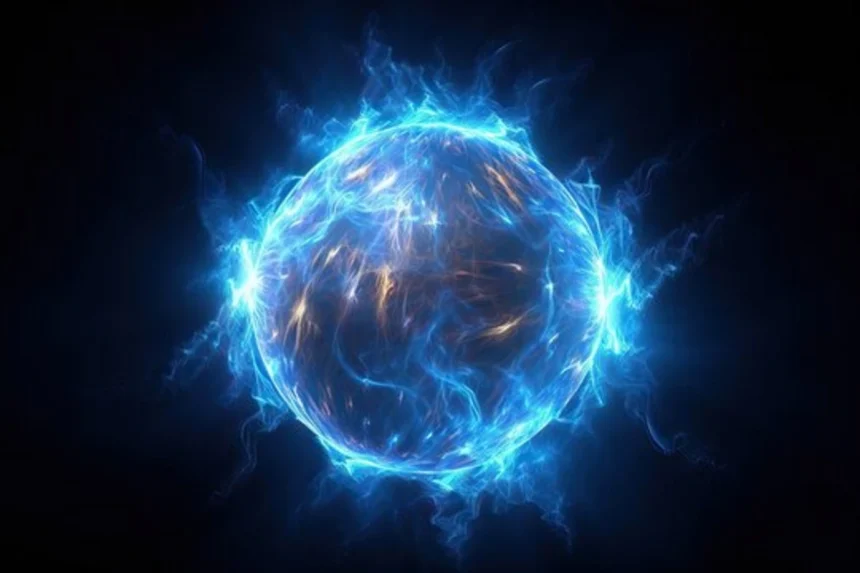
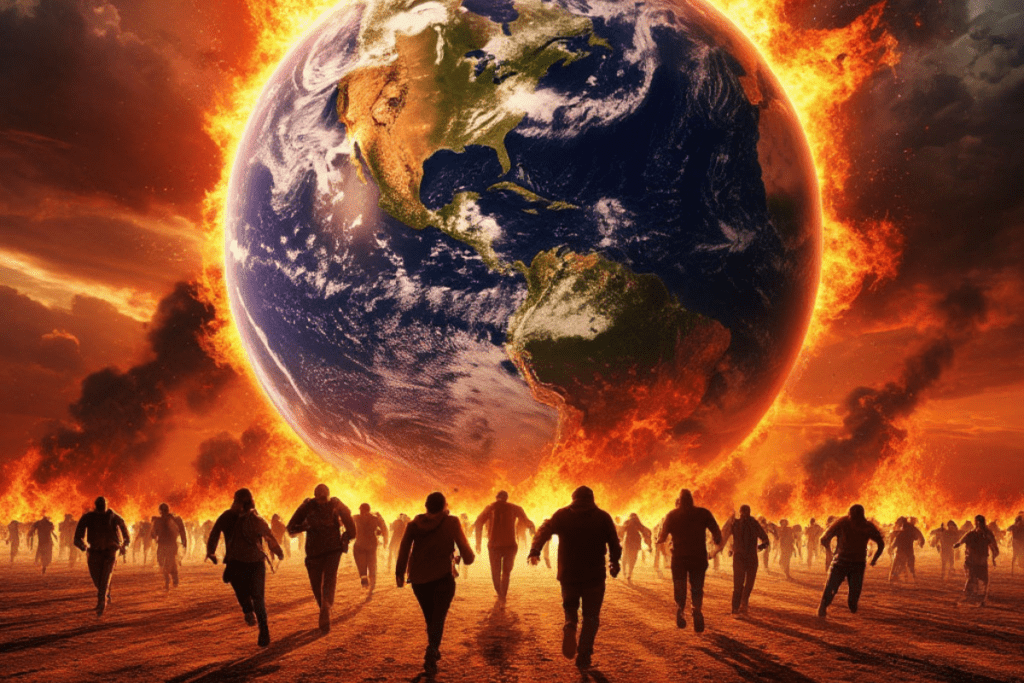
Veronica Lueken (1923-1995) and her Bayside, Queens apparition claims, beginning in 1970 and continuing until her death, genuinely built a devoted following, formally known as the “Our Lady of the Roses” movement. This needs an important correction the original framing omitted: the Catholic Church, through the Diocese of Brooklyn, formally and repeatedly investigated and rejected Lueken’s claimed apparitions as inauthentic, a documented institutional judgment that belongs alongside her claims themselves. Her “Ball of Redemption” prophecy, describing a massive fiery orb heralding global catastrophe, remains, decades after her original claims and three decades after her death, entirely unfulfilled.
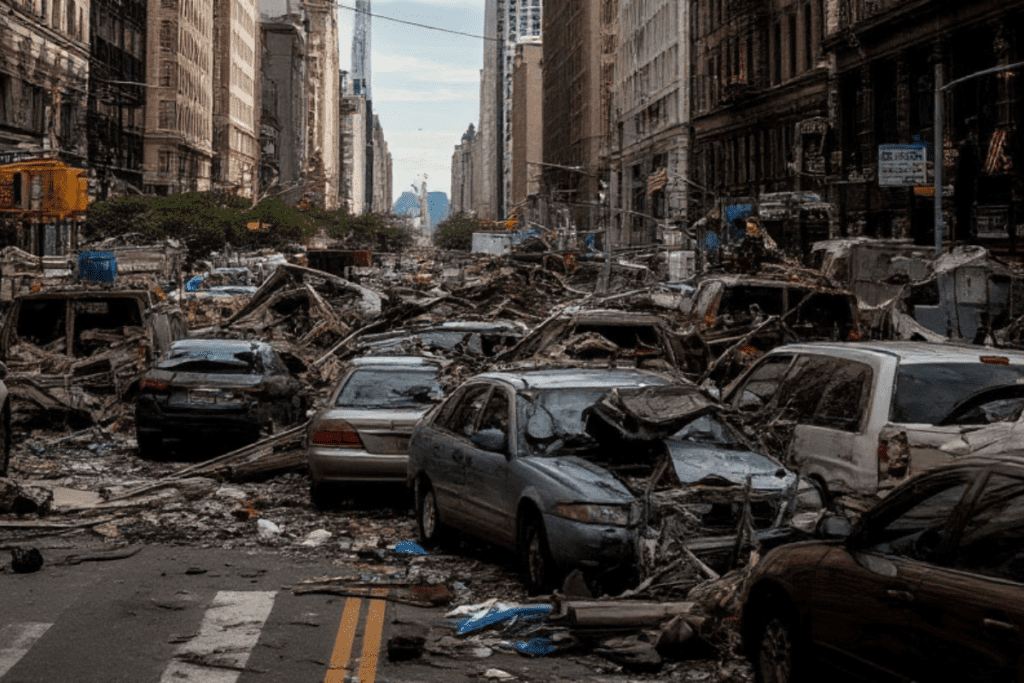
“My child, the number of earthquakes will increase. One of them will be in New York. I tell you this so that you can prepare,” Lueken recounted, attributing the words to the Virgin Mary.
This kind of broad, geographically unspecific prediction, earthquakes will increase, one will occur somewhere in a populous region, follows a recognizable pattern: it’s difficult to falsify and easy to retroactively match to whatever seismic activity eventually occurs somewhere in a large, densely populated area, which describes the New York region generally rather than predicting any single, dated event.
Jeane Dixon | The Story Behind the JFK Legend
This needs a substantial, direct correction, starting with her name: she is Jeane Dixon (1904-1997), not “Jean Dixon” as commonly misspelled, born Lydia Emma Pinckert. Her career and connections to figures including Nancy Reagan are well documented. What requires serious correction is the famous claim that she predicted John F. Kennedy’s assassination.
Her 1956 Parade magazine statement said only that the 1960 election would be “dominated by labor and won by a Democrat” who would then “be assassinated or die in office, though not necessarily in his first term,” a vague statement that never named Kennedy directly. Far more significantly, and consistently omitted from retellings, Dixon reversed her own prediction as the actual 1960 election approached, publicly predicting that Richard Nixon would win instead. This reversal happened before Kennedy was even elected, let alone assassinated. This case is significant enough within the study of psychic claims that mathematician John Allen Paulos coined a term for the underlying pattern, the “Jeane Dixon effect,” describing the tendency to remember and publicize a forecaster’s rare apparent hits while forgetting the far larger number of documented misses, including her repeated and incorrect predictions of Fidel Castro’s downfall, which never occurred during his decades in power.
“A strong earthquake in the East will serve as a sign for an Arab attack on Israel,” Dixon is reported to have said, though the quote has not been verified against a primary, dated source.
Dixon’s complete predictive record, properly examined against the primary source material, shows a mathematician-verified pattern of selective memory around a small number of vague, later-embellished hits amid a considerably larger volume of specific, incorrect predictions.
Sarah Hoffman | An Unverified Personal Account
Sarah Hoffman’s 1979 near-death experience account genuinely circulates within niche spiritual and prophecy-focused communities, but no independent verification, a named publication, dated interview, or third-party corroboration, establishes the account’s provenance beyond secondhand retelling. It should be read and reported as personal testimony that has circulated informally, not as an established historical record with the kind of verifiable paper trail available for Lueken and Dixon.
“I saw sick and dying people,” Hoffman is said to have recalled. “People stumbled and fell, and then died within a short time.”
The Common Thread | Why This Genre of Prediction Endures
Naming, honestly, the emotional function these predictions serve for people encountering them matters here, since that function is genuine and deserves acknowledgment rather than dismissal. Broad, ominous warnings about the future can offer readers an, if illusory, sense of control over genuinely uncertain and frightening world events, a way of imposing narrative order onto the actual chaos of geopolitics, disease, and disaster that most people otherwise have very little power to predict or influence. This psychological need for meaning and pattern in the face of uncertainty is the actual, human reason these stories keep finding new audiences, decade after decade, even when the specific historical record behind any individual prophet turns out to be far messier than the popular legend suggests.
The well-studied psychological pattern underlying why these predictions feel compelling regardless of their actual track record deserves naming directly. Predictions broad enough in scope, war, earthquakes, societal decline, will always eventually find some real-world event to match against, given enough time and a large enough set of possible matching events across the globe. This is the same underlying mechanism skeptics and psychologists have studied closely in Dixon’s case through the “Jeane Dixon effect,” and it applies just as readily to Lueken’s and Hoffman’s broader, similarly unspecific warnings.
Are These Prophecies Credible?
Evaluating these claims honestly requires weighing the established gaps between the popular legend and the actual historical record:
Lueken’s apparitions were formally investigated and rejected as inauthentic by the Catholic Diocese of Brooklyn, an official institutional finding.
Dixon’s famous JFK prediction never named Kennedy, was vague enough to fit multiple outcomes, and was reversed by Dixon herself before the 1960 election.
Hoffman’s account lacks independent verification beyond informal, secondhand circulation within niche communities.
Psychologists studying near-death experiences generally attribute the vivid, often symbolically dramatic imagery reported to well studied neurological and psychological processes occurring during extreme physiological stress, rather than to literal precognitive access to future events. This is the leading, evidence-based explanation, distinct from mere skepticism.
What Can We Learn?
Whether or not these prophecies hold any predictive value, the underlying anxieties they speak to are real and deserve direct engagement:
Geopolitical stability. Ongoing Middle East volatility deserves engagement through actual diplomatic and policy analysis, not retroactively fitted prophecy.
Environmental resilience. Earthquake risk and climate adaptation are genuine, evidence-based public policy priorities.
Media literacy. The Jeane Dixon effect is a genuinely useful concept for evaluating any prediction, from psychics to pundits, whose fame rests on selectively remembered hits.
Why the Retellings Consistently Simplify These Stories
Explaining directly why popular retellings of both Lueken’s and Dixon’s stories consistently drop the complicating details covered above matters here. A dramatic, uncomplicated story, a psychic accurately foresaw a presidential assassination, a visionary received warnings later validated by unfolding events, is simply more compelling and more shareable than the messier history, in which a prediction was vague, later reversed, and only retroactively matched to an outcome after the fact. This pattern extends well beyond these two specific figures: extraordinary claims about prediction and prophecy tend to survive in public memory in whichever form is most dramatic and most easily repeated, while the qualifying details that would complicate the story, a formal church rejection, a reversed prediction, a mathematician’s specific critique, tend to fall away over successive retellings unless someone actively goes back to the primary sources to recover them.
What Research Says About Near-Death Experiences
The credentialed scientific research into near-death experiences generally deserves expansion here, since Hoffman’s account fits within this broader category of human experience. Researchers, including physicians and neuroscientists studying cardiac arrest survivors, have found that vivid, often symbolically structured experiences reported during states of extreme physiological crisis are a recurring, well-documented phenomenon across cultures, though their precise neurological mechanism remains an active area of scientific investigation, with proposed explanations including oxygen deprivation effects on the brain, surges of specific neurotransmitters during crisis states, and the brain’s own documented tendency to construct narrative meaning even under extreme physiological stress. This ongoing scientific research offers a considerably more evidence-grounded framework for understanding experiences like Hoffman’s than treating them as literal previews of future geopolitical events, without requiring any dismissal of how genuinely vivid and meaningful such experiences feel to the people who report them.
A Comparison | How Nostradamus’s Legend Followed a Similar Path
None of this is offered to dismiss the genuine cultural weight prophecy traditions carry across many religious and spiritual practices, weight that deserves its own respectful treatment on its own terms. It’s offered to distinguish that broader cultural and religious tradition from the narrower, checkable claim that a particular individual accurately foresaw a particular named future event, which is the kind of claim that actually can be evaluated against a historical record, and which, in case after case researchers have examined closely, tends not to hold up as well as the popular retelling suggests.
The far more famous, similarly complicated case of Nostradamus makes for an instructive comparison, since the underlying mechanism is genuinely the same. The 16th-century French astrologer wrote his famous quatrains in deliberately vague, symbolic, and non-chronological language, published verses that historians of the period have studied at length. Later readers and interpreters have retroactively matched these deliberately ambiguous verses to major historical events centuries after they occurred, from the French Revolution to World War II, a well established pattern of retrospective interpretation that literary scholars and historians studying Nostradamus’s actual original French text have identified and criticized directly. This comparison matters because it shows the pattern identified in Dixon’s case isn’t unique to 20th-century American psychics. It’s a recurring, well-studied feature of how prophecy and prediction claims accumulate credibility over time, regardless of century, culture, or the specific individual making the original claim.
A Future Unwritten
The established histories of Veronica Lueken and Jeane Dixon are considerably more complicated, and more instructive, than the simplified legends that circulate about them. Lueken’s apparitions were formally rejected by her own church. Dixon’s most famous prediction never named its supposed subject and was abandoned by Dixon herself before the relevant election even occurred. Sarah Hoffman’s account remains, honestly, unverified personal testimony. None of this diminishes the worthwhile underlying questions about geopolitical instability, environmental risk, and how societies process collective anxiety about the future, questions best addressed through evidence and policy rather than through retroactively fitted prophecy. The better story here is arguably the one about how memory itself works: how a culture collectively remembers the rare, dramatic hits from figures like these while quietly forgetting the far larger volume of predictions that never came true, a genuinely human pattern that holds regardless of whether any individual prophecy eventually proves accurate. That pattern, more than any single prediction from Lueken, Dixon, or Hoffman, is the part of this story that reliably repeats itself, decade after decade, regardless of which seer or which century happens to be the one currently capturing public attention.