




The base at Camp Hero is not classified anymore. It is a state park.
The Montauk Air Force Station on the eastern tip of Long Island, New York, operated under multiple names and multiple programs from its establishment in 1942 through its official closure in 1981. The physical facility, including the large SAGE radar tower that dominates the landscape, is accessible to visitors. The underground bunkers and tunnels are sealed but their existence is not disputed. The official history of the base, covering its World War II coastal defense function and its Cold War SAGE radar role in the air defense network, is in the public record.
What is not in the public record is the complete history of everything that occurred at the base between 1942 and 1981. This is true of virtually every military installation that operated classified programs during the Cold War. It is specifically true of Montauk because the base’s physical characteristics, its remote location, its underground infrastructure, and its radar equipment operating in frequency ranges that subsequent research identified as having effects on human neurological function, made it particularly suited to research programs that the official history does not fully account for.
The Montauk Project narrative, developed primarily by Preston Nichols in a series of books beginning in 1992, claims that the base’s classified history included time travel experiments, dimensional portal creation, and contact with extraterrestrial intelligences through the created portals. These claims derive from Nichols’s account of recovered repressed memories, a category of evidence that the psychological literature on memory has established as substantially unreliable. The content of Nichols’s memories cannot be independently verified.
What can be examined is the recorded context within which the Montauk tradition emerged, and whether that context contains elements that make some version of classified research at the facility more plausible than the official history’s silence implies.
The Philadelphia Experiment’s Documented Layer
The Montauk narrative traces itself to the Philadelphia Experiment, the claimed 1943 test of electromagnetic cloaking technology on the USS Eldridge. The Philadelphia Experiment has its own documentary history that predates the Montauk claims and provides their historical anchor.
The primary known source for the Philadelphia Experiment is a series of handwritten annotations in the margins of Morris Jessup’s 1955 book The Case for the UFO, made by a person who signed himself Carl M. Allen (also known as Carlos Allende). The annotations describe witnessing a test in which a naval vessel was made invisible and teleported. Jessup received these annotations from Allen in a series of letters. The Office of Naval Research became interested in the annotated copy and had it reproduced.
Carl Allen is a recorded historical figure. His annotations are on file. The Office of Naval Research’s interest in the annotated book is a matter of record. What Allen describes witnessing, the invisibility and teleportation of the USS Eldridge, is not independently confirmed. The USS Eldridge’s deck logs from the relevant period show no unusual activity at the time Allen claims the experiment occurred. Navy records place the ship elsewhere than Philadelphia during the period.
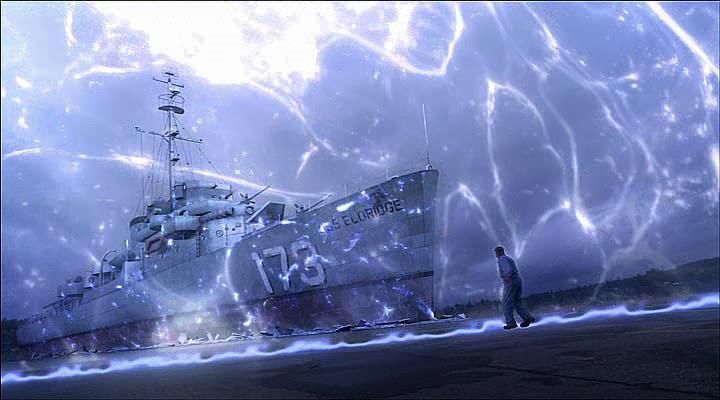
The Navy’s denials are on record. Allen’s annotations are on record. The ONR’s interest is on record. The experiment itself is not independently confirmed.
What actually happened in the relevant period is that the Navy conducted extensive research into degaussing, the demagnetization of ships to prevent triggering magnetic mines, and that this research involved wrapping ships in large electromagnetic coils and passing electrical currents through them. A sailor observing degaussing equipment and procedures without understanding their purpose might describe the experience in terms consistent with Allen’s account. Whether Allen witnessed degaussing and misunderstood it, or witnessed something more exotic, or fabricated his account entirely, is not established by the available evidence.
What SAGE Research Actually Established
The Semi-Automatic Ground Environment radar system, SAGE, was the United States Air Force’s continental air defense network during the Cold War. The Montauk installation’s SAGE radar operated in the frequency range of 410-425 MHz, the range that Nichols’s account identifies as affecting human neurological function.
Electromagnetic effects on human neurological function in the frequency ranges used by SAGE and related military radar systems were a subject of confirmed government research during the Cold War. The research programs are partially described in declassified materials from the CIA and Defense Department.
Project PANDORA, initiated by the CIA in the 1960s following the discovery that the Soviet embassy in Moscow was being irradiated with microwave signals at frequencies, investigated the potential psychological and physiological effects of electromagnetic irradiation on human subjects. The findings of Project PANDORA are partially declassified. They confirm that the CIA considered electromagnetic effects on human cognition as both a potential offensive capability and a potential threat from Soviet programs.
The microwave hearing effect, also called the Frey effect after researcher Allan Frey who identified it in 1962, is a recorded phenomenon in which microwave pulses produce auditory perceptions in human subjects without conventional sound production. The effect appears in the peer-reviewed literature and has been confirmed by independent researchers. It represents one mechanism by which electromagnetic signals in frequency ranges used by radar systems can affect human sensory perception.
The claim that the Montauk SAGE installation’s 410-420 MHz signals were used for psychological manipulation research is not recorded in any declassified record. The general claim that the government researched electromagnetic effects on human psychology during the period when Montauk was operational is confirmed through Project PANDORA and related programs.
MKULTRA and the Research Context
The CIA’s MKULTRA program, whose existence was partially confirmed through FOIA releases in the 1970s after the documents survived a destruction order that most of the program’s records did not, encompassed a systematic research program into psychological manipulation techniques including hypnosis, psychoactive drugs, sensory deprivation, and what the program’s surviving records describe as electronic stimulation of psychological states.
MKULTRA is documented. Its techniques, its institutional structure, and its operations at facilities appear in the surviving records. Its connections to academic institutions, hospitals, and military research facilities across the United States are on record. The destruction of most of its records by CIA Director Richard Helms in 1973 before the Church Committee investigation is a matter of historical record.
What the record establishes about MKULTRA is disturbing enough without the Montauk additions: the CIA conducted systematic non-consensual human experimentation in psychological manipulation across decades, destroyed most of the evidence, and the partial record that survived describes research into techniques whose application would constitute torture by any contemporary legal standard.
The Montauk Project narrative can be read as an elaboration of the well established MKULTRA tradition, extending its techniques into domains, time travel, dimensional portals, that the known record does not support but that represent the logical extension of the research direction. Mind control becomes reality manipulation. Psychological manipulation becomes physical reality manipulation. The institutional structure, classified programs funded through off-budget channels connected to Nazi-recovered assets, extends a well established practice of CIA black budget funding through channels designed to avoid congressional oversight.
Whether the Montauk claims represent a literal extension of MKULTRA into more exotic research, a distorted account of classified programs that were significant but less exotic than the Montauk narrative describes, or a creative elaboration of the MKULTRA template by individuals who may or may not have participated in some version of the classified research, is not established by the available evidence.
Preston Nichols and Recovered Memory
Preston Nichols presents the central evidentiary problem for any serious treatment of the Montauk Project. He is the primary source for most of the Montauk claims, and his account rests on recovered repressed memories rather than on physical evidence, witness corroboration from independent sources, or physical evidence.
Recovered memory is a category of testimony that the psychological literature has addressed extensively since the False Memory Syndrome controversy of the 1980s and 1990s. The research literature, including Elizabeth Loftus’s well known work covered in the Mandela Effect piece in this library, establishes that human memory is reconstructive, vulnerable to suggestion, and capable of producing detailed false memories of events that did not occur. The recovered memory context is specifically vulnerable to these effects because the recovery process itself, typically involving hypnosis or other suggestive techniques, introduces the conditions under which false memory implantation is most likely.
Whether Nichols participated in classified research at Montauk, experienced something that he subsequently encoded as the Montauk narrative, or constructed the narrative from available cultural materials including science fiction, the known history of government research programs, and the Philadelphia Experiment tradition, is not determinable from the available evidence.
What his account provides, regardless of its literal accuracy, is a coherent, internally consistent narrative that maps onto the known history of government electromagnetic and psychological research in ways that are too detailed to dismiss as pure invention while being too dependent on unverifiable recovered memory to treat as established fact.

Jacques Vallée’s assessment, cited in the source material, that the Montauk narrative appears to derive from Nichols’s recovered memories, is the most credible single-source evaluation of the Montauk Project’s evidentiary status. Vallée’s credentials in both conventional science and anomalous phenomena research, spanning his career from astrophysics through the UAP research that the site’s other pieces cover, make his assessment worth treating as authoritative at the claim level while noting that it does not preclude the possibility that some version of classified research at the facility underlies the narrative Nichols recovered.
What Camp Hero Actually Documents
The physical facility at Camp Hero is accessible and its known history provides the framework within which any classified research claims need to be evaluated.
The base was established in 1942 as a coastal artillery installation for the defense of New York Harbor and the Long Island Sound against naval attack. Its location at the eastern tip of Long Island, with direct ocean exposure and elevation suitable for long-range observation, made it strategically significant for its designed purpose. The coastal artillery installations, some of which remain visible in the state park, are confirmed historical infrastructure.
The SAGE radar installation was added in the 1950s as part of the continental air defense network. The SAGE installation at Montauk, including the large rotating antenna whose structure dominates the facility’s landscape, appears in the SAGE program’s public history. The underground infrastructure associated with SAGE operations, the computer facilities, the power systems, and the personnel support infrastructure, required significant underground construction that appears in the base’s engineering history.
The underground tunnels whose existence the Montauk Project narrative uses as evidence of secret programs are documented as SAGE infrastructure rather than as secret program infrastructure. Whether they were used for additional classified programs beyond their confirmed SAGE function is the question that the official history does not address.
The Air Force’s official closure of the base in 1981 is a matter of public record. New York State’s acquisition of the property and its development into a state park followed soon after. The SAGE radar tower’s preservation as a historical landmark is likewise uncontested.

What the known history does not address is the complete inventory of programs that operated at the facility between 1942 and 1981. Military installations with classified programs do not provide complete program histories in their official records. The absence of a complete public record is not evidence of the Montauk Project’s claims. It is the normal condition of any Cold War military facility with classified programs.
the Frequency Research
The most scientifically grounded element of the Montauk narrative is the claim about the psychological effects of electromagnetic frequencies in the 410-425 MHz range that the SAGE installation operated.
The peer-reviewed literature on electromagnetic effects on human cognition is recorded across multiple research traditions. The Frey effect, first described in 1962 and independently confirmed, establishes that microwave signals can produce auditory perceptions in human subjects. The research into extremely low frequency effects on human psychology, recorded in the scientific literature and in partially declassified government research records, establishes that frequencies have measurable effects on human neurological function.
The claim that the Montauk SAGE installation’s frequencies were deliberately calibrated for psychological effects rather than radar performance is not recorded. The general claim that the government was researching electromagnetic psychological effects during the Montauk installation’s operational period is confirmed through Project PANDORA and related programs.
The connection between the confirmed electromagnetic research programs and the Montauk installation is enough to be taken seriously as a hypothesis: an installation with the required power output, the required frequency range, and the required remoteness for classified experimentation, operating during a period when the relevant agencies were actively researching electromagnetic psychological effects, in a tradition that MKULTRA established for conducting non-consensual human experimentation in classified contexts.

Whether this hypothesis describes what actually happened at Camp Hero between 1942 and 1981 is not established by the available evidence. The hypothesis is consistent with the known record. It does not require the time travel and dimensional portal elements of the Nichols account. It requires only that the confirmed research programs extended to the Montauk installation’s capabilities, which is a significantly more modest claim.
What the Narrative Is Doing
The Montauk Project narrative, whatever its relationship to actual classified programs, performs a cultural function that is worth examining independently of the literal accuracy question.
It takes the known history of government psychological research, specifically the atrocities of MKULTRA and the electromagnetic research programs, and extends them into domains that are simultaneously more extreme and more fantastic. By adding time travel and dimensional portals to the real mind control research, the Montauk narrative makes the underlying programs seem comparatively benign by association: MKULTRA becomes the real history behind an even more extreme fiction, and the fiction’s implausibility retroactively softens the seriousness of established crimes.
Whether this is the narrative’s intended function or an unintended consequence of its structure is not clear. What is clear is that the Montauk narrative has become the most widely known version of the story of classified government psychological research at Cold War military installations, and that its implausibility elements, time travel, dimensional portals, Martian ruins, have made it easier for the real programs to occupy the position of relatively credible alternative to the more extreme claims.
The documented programs are real. MKULTRA happened. The electromagnetic research happened. The Montauk narrative is the version of this history that most people know, and its dimensional portal elements ensure that most people treat the entire tradition as entertainment.
That outcome, the association of documented programs with undocumented claims in ways that make those programs harder to take seriously, is consistent with the disinformation mechanism that the site’s CIA piece describes as the Robertson Panel’s recommended approach to the management of inconvenient public knowledge.
Whether the Montauk narrative is an organic cultural product or a managed disinformation artifact is a question whose answer would be as interesting as any of the claims in the Montauk tradition.
The base is a state park. The radar tower is a historical landmark. The underground bunkers are sealed. The complete program history of the facility between 1942 and 1981 is not in the public record.
Whatever happened at Camp Hero, the version of it that most people know involves time travel and dimensional portals, and that version is not provable. The documented version involves electromagnetic research and classified psychological programs, and that version is less interesting.
The narrative exists in the gap between those two versions.