




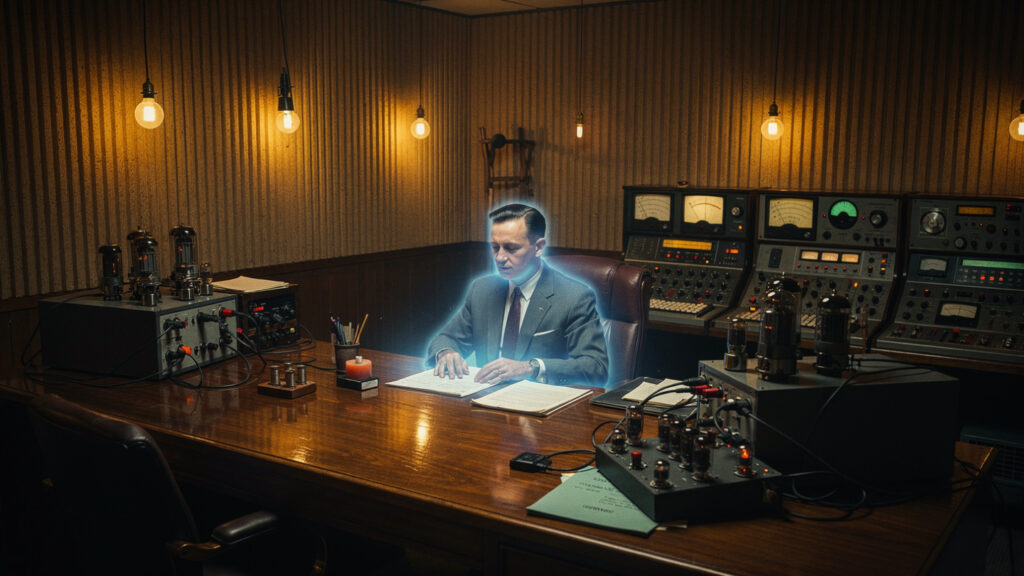
Robert Monroe was not looking for a cosmology when his out-of-body experiences began. Born in Indiana in 1915, he built a successful career in radio broadcasting and had no established spiritual system waiting to explain what began happening to him in 1958. The experiences were involuntary at first, and by his own account they were disturbing enough that he spent years trying to determine what, if anything, they represented. He eventually devoted much of his life to investigating altered states of consciousness, founded the Monroe Institute, developed Hemi-Sync, and published three books describing his experiences: Journeys Out of the Body in 1971, Far Journeys in 1985, and Ultimate Journey in 1994.
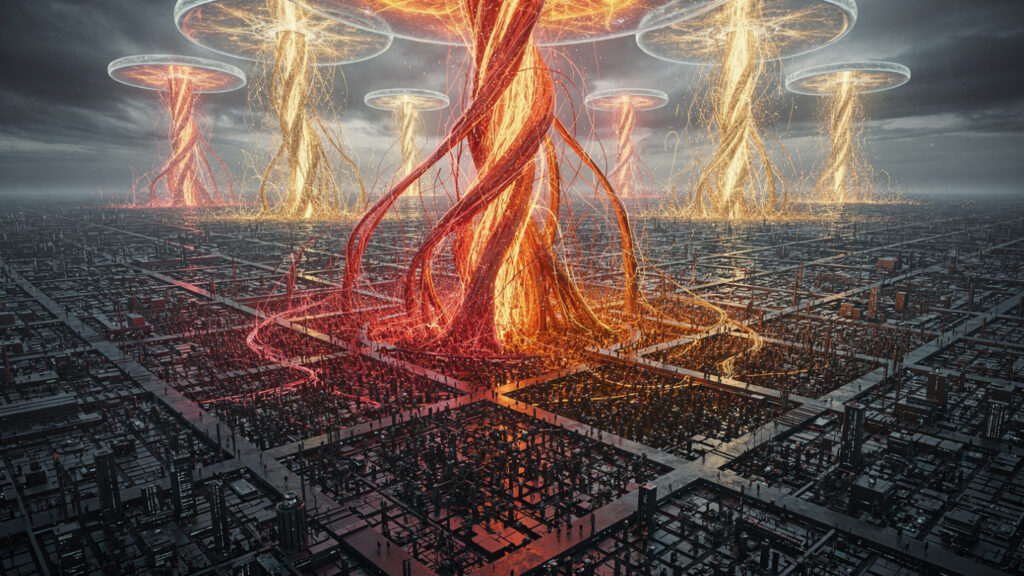
Among the strangest material in those books is a cosmology Monroe encountered during an out-of-body experience. In his account, he was given an explanation of Earth as a system that produces an energy through living experience, which he called Loosh. The implications were horrifying. Later, Monroe described receiving a different account, one that transformed the same system from something resembling a farm into something resembling a school: the energy was not being harvested from suffering, but was connected to love and growth. The first explanation disturbed him so deeply that he abandoned his practice for a period. The second gave him a framework he could live with.
That creates a problem far more interesting than whether Loosh exists. If two contradictory explanations arrive through the same extraordinary channel, and one tells you that reality is fundamentally predatory while the other tells you that it is fundamentally benevolent, what reason do you have to trust either one?
What Monroe Described
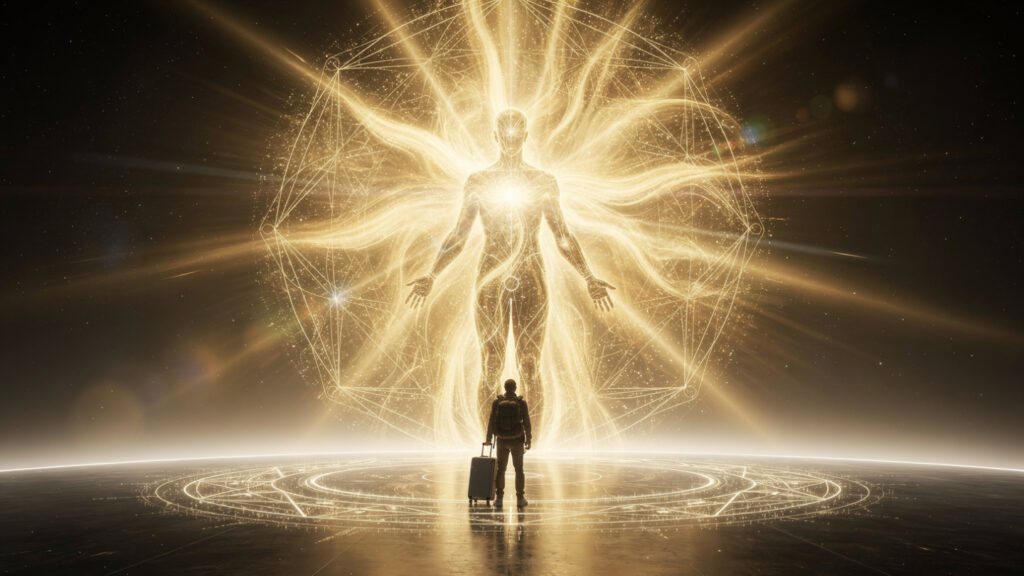
In Far Journeys, Monroe described receiving information during an out-of-body experience from a source he understood to possess knowledge about Earth’s underlying design. The account he recorded was radically different from the ordinary human understanding of life. Living organisms were described as generating an energetic product through experience, and Monroe gave that product the name Loosh. Human beings, in particular, were described as producing an unusually broad and intense range of it because of the emotional depth of human life.
In Monroe’s account, the most intense forms of Loosh were associated with intense experience: love, grief, fear, loss, sacrifice and other states capable of producing unusually powerful emotional responses. The implication was not merely that suffering existed for some mysterious reason. It was that the emotional richness of earthly existence itself served a function within a larger system, and that the inhabitants of that system might be producing something they did not understand.
Monroe did not find the idea liberating. He described falling into a prolonged depression and abandoning his out-of-body practice for months. The significance of that reaction is not that emotional distress somehow proves the cosmology. It does not. What it tells us is that Monroe himself did not initially transform an unsettling experience into a comforting spiritual doctrine. He took the implications seriously enough to be disturbed by them.
That distinction matters. Monroe’s book is evidence that Monroe reported having this experience and drew these conclusions from it. It is not independent evidence that Earth actually operates according to the system he described.
Then the Story Changed
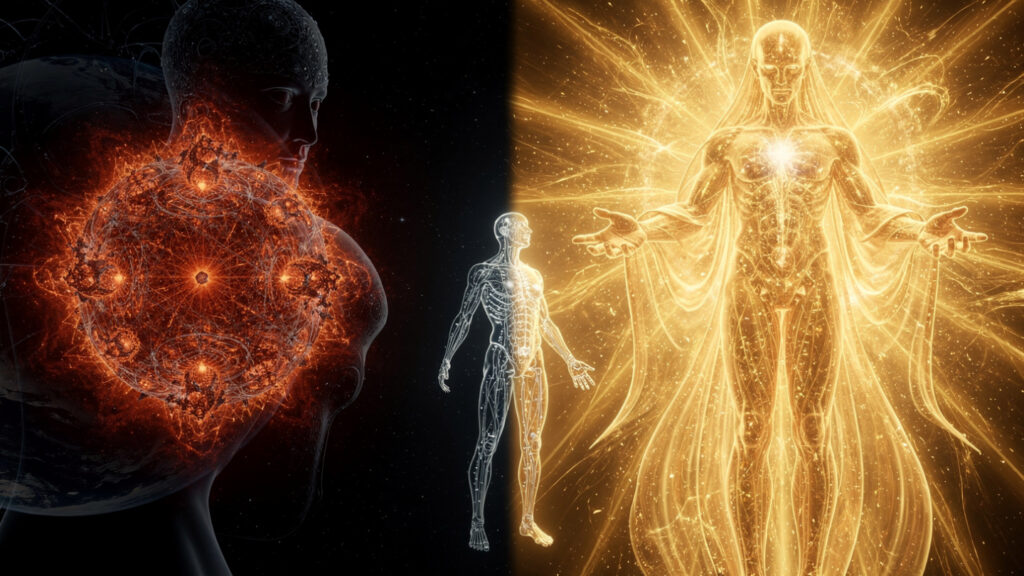
Monroe later described receiving a second explanation. The basic structure remained strangely similar: Earth was still part of a larger process, human experience still had significance beyond ordinary material existence, and consciousness was still participating in something larger than itself. But the moral character of the system changed.
The first account suggested extraction. The later account suggested transformation. The first made human beings resemble a crop. The second made them resemble students. What had appeared to be a system exploiting emotional experience could instead be understood as a system in which emotional experience served development, growth and love.
For Monroe, the difference was enormous. The second interpretation was easier to accept, and he returned to his exploration of altered states with renewed purpose. But psychological relief and epistemic confirmation are not the same thing.
The Dangerous Question About Reassurance
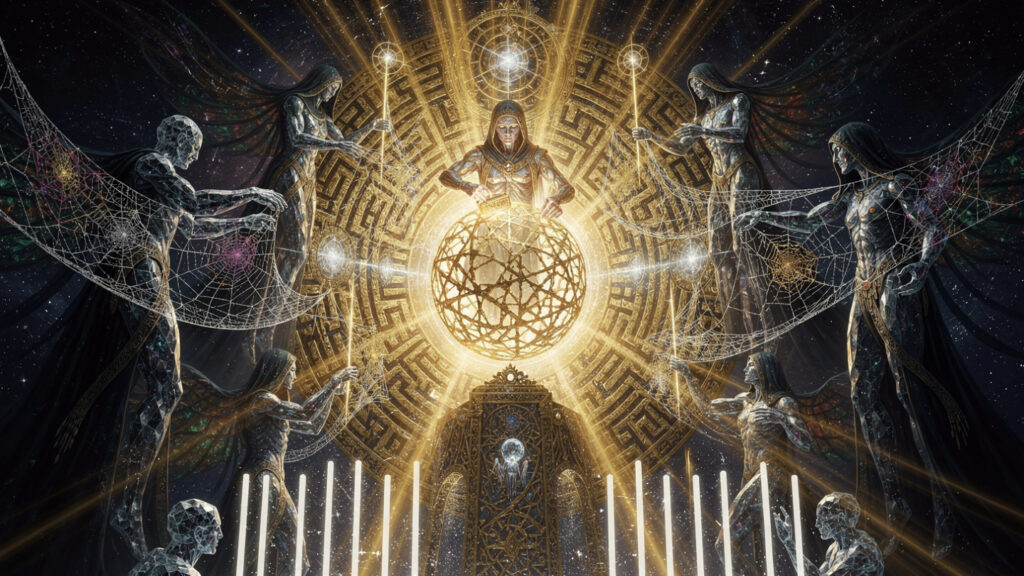
There is an intriguing idea in the Gnostic tradition that makes Monroe’s second account worth examining from another direction. Some of the texts associated with the ancient Gnostic movements, including those recovered at Nag Hammadi in 1945, portray the visible world as a flawed or deceptive order governed by powers that do not possess the highest form of knowledge. In these texts, liberation depends not simply on accepting an explanation of the world but on awakening to a deeper knowledge of one’s own condition.
That creates a striking comparison with Monroe’s two accounts. If the first explanation says, in effect, you are living inside a system whose purposes are not what you assumed, while the second says, the system is ultimately benevolent and your experience has a reassuring purpose, the Gnostic perspective would naturally make the second explanation worth examining rather than automatically accepting it. But there is an important difference between saying that a tradition provides a useful interpretive lens and saying that the tradition has correctly identified what happened to Monroe.
The Gnostic texts are ancient religious literature. Monroe’s account is a twentieth-century first-person report. Neither becomes independent confirmation of the other simply because they share a structural resemblance. The full history of the Nag Hammadi discovery, and what the recovered texts actually say about the Demiurge and the Archons, is covered in more depth elsewhere in this library.
The Parallel Is Real. The Conclusion Is Not.
The resemblance between Monroe’s Loosh account and certain Gnostic cosmologies is therefore worth taking seriously as a comparison, but not as proof. Both can be read as accounts of a world in which human beings do not fully understand the system they inhabit. Both raise the possibility that apparent reality and ultimate reality might not be identical. Both place unusual importance on the possibility that consciousness can become aware of the conditions shaping it.
But resemblance is not evidence in the strong sense. A modern experience can resemble an ancient myth without being caused by that myth, and an ancient myth can resemble a modern experience without predicting it. The resemblance becomes intellectually interesting precisely because we do not have to decide in advance what produced it.
There is another reason to be careful. The Gnostic tradition was not a single unified doctrine, and its surviving texts do not present one standardized cosmology. Different texts describe the Demiurge, the Archons, creation, ignorance, salvation and the material world in different ways. It is therefore too simple to say that “the Gnostics believed” that every reassuring experience was an Archonic deception. Some texts and traditions support related ideas. Others differ significantly. That nuance actually makes the comparison more interesting, because it prevents an ancient tradition from being turned into a machine for confirming a modern theory.
The Problem With Making the Reassuring Account Automatically Suspicious
There is a temptation to take the Gnostic comparison one step further and argue that Monroe’s reassuring account must be the less trustworthy one precisely because it is reassuring. If a system wanted to keep its inhabitants compliant, the argument goes, what better strategy could it have than to convince them that everything is ultimately for their own good? That is an interesting hypothesis. It is not, however, a method of proving that the hypothesis is true.
The problem is that the reasoning can become impossible to falsify. If a frightening message appears, it is interpreted as a revelation because it is difficult to hear. If a comforting message appears, it is interpreted as manipulation because it is comforting. Under that system, contradictory evidence can always be absorbed into the same conclusion. That is not skepticism. It is a closed interpretive loop.
A genuinely useful framework has to leave open the possibility that it is wrong. Otherwise the framework is no longer testing the evidence. It is deciding in advance what every possible piece of evidence must mean.
And Yet the Question Does Not Go Away
Rejecting that closed loop does not make Monroe’s story uninteresting. Quite the opposite. It brings the real problem into sharper focus.
Suppose, for the sake of argument, that a person genuinely experienced contact with an intelligence outside ordinary waking consciousness. How would that person determine whether the intelligence was truthful? A being can claim to be benevolent. It can claim to be wise. It can present an elaborate cosmology. It can offer an explanation that makes the universe feel coherent. None of those characteristics independently establishes the reliability of the source.
The same problem appears throughout the literature of altered states. People report beings, guides, teachers, entities, presences and sources of extraordinary information. Some experiences are terrifying. Others are overwhelmingly loving. Some produce elaborate cosmologies. Others produce almost no conceptual content at all. The experience may be profound without the interpretation being correct. That distinction is one of the most important in this entire subject.
Castaneda, the Flyers and Another Version of the Same Pattern
A related comparison appears in the writings of Carlos Castaneda, whose books describe non-human or non-ordinary intelligences that interact with human consciousness. The comparison is tempting, but Castaneda’s evidentiary status is substantially weaker. His books were presented as accounts of an apprenticeship with a Yaqui teacher, yet anthropologists and later investigators, most thoroughly Richard de Mille, challenged the factual basis of those accounts, and independent evidence for the historical existence of the central figure, don Juan, has never established the story on the terms Castaneda presented it.
That does not make every idea in Castaneda worthless. It does mean that his writings cannot simply be placed beside Monroe’s as though they were two independent researchers reporting the same phenomenon. At most, they provide another literary and conceptual parallel: the idea that human consciousness may operate inside a structure whose interests are not necessarily identical to its own. Again, the pattern is interesting. The evidentiary conclusion remains open.
The Simulation Question Enters From a Different Direction
Nick Bostrom’s 2003 simulation argument introduces yet another version of the question, but it should not be confused with Monroe’s experience or with Gnostic cosmology. Bostrom’s argument is philosophical rather than experiential. It asks whether, given certain assumptions about technological civilizations and the number of simulated observers that might eventually exist, we should assign a meaningful probability to the possibility that we ourselves inhabit a simulation.

That is a very different kind of argument from Monroe’s. Monroe reported an experience and the cosmological information he believed he received through it. The Gnostic texts preserve religious and philosophical traditions about the nature of the world and consciousness. Bostrom constructed a philosophical argument about probability and future technological civilizations. Their convergence is therefore conceptual, not evidentiary. All three can make us ask whether apparent reality is necessarily the whole of reality. None establishes the others.
What Monroe Actually Built
Whatever one concludes about Loosh, Monroe’s documented life is more substantial than the popular image of a man who simply had strange visions. He founded the Monroe Institute in Faber, Virginia, in 1974 and developed Hemi-Sync, an audio technology using binaural beats, two slightly different tones played separately into each ear, intended to guide the brain toward particular states of consciousness. The declassified CIA Gateway Process document, and Monroe’s connection to the wider history of altered-state research, covers this side of his work in more depth. The Institute became part of the wider history of twentieth-century consciousness research, and its facilities and methods were later associated with training connected to the U.S. government’s real Stargate remote-viewing program. Monroe died in 1998, and leadership of the Institute passed to his daughter. It remains an active research and education program today, decades after his death.
Monroe also spent decades recording his experiences, testing some claims where he believed verification was possible, and trying to construct a coherent map of what he was encountering. That does not establish the metaphysical interpretation he eventually attached to those experiences. It does, however, distinguish his work from a single anecdote reported once and forgotten.
The difference matters because serious examination does not require either reverence or ridicule. A person’s credentials do not make an extraordinary claim true. But the existence of a serious investigative record can make the claim worth examining more carefully than a casual internet story.
What Remains Open
Monroe’s two accounts create a peculiar epistemological problem. The first tells us that the world may be fundamentally different from what we assume, and that human emotional experience may serve purposes hidden from those experiencing it. The second offers a more benevolent interpretation of the same general territory. Monroe found the second easier to accept. But neither emotional impact nor psychological usefulness tells us which cosmology is true.
The Gnostic comparison adds another layer. Some Gnostic traditions would caution against accepting the apparent benevolence of the world at face value and would place greater emphasis on direct knowledge and liberation from ignorance. That makes the reassuring interpretation an interesting object of scrutiny. It does not make the disturbing interpretation true. That is where this account should stop.
We can say that Monroe documented an extraordinary sequence of experiences. We can say that the Loosh account bears striking structural similarities to certain ancient cosmologies and to later ideas about simulated or controlled realities. We can say that his second account raises an unusually sharp question about whether reassurance should ever be mistaken for evidence. We can examine the psychological, philosophical and religious implications of both interpretations.

What we cannot honestly say is that Monroe discovered the true architecture of reality, that the Gnostics independently confirmed it, or that the reassuring account was an Archonic deception. Those are interpretations of the material, not conclusions established by it.
And perhaps that is what makes Monroe’s story more interesting rather than less. The disturbing account may be wrong. The reassuring account may be wrong. Both may be products of the extraordinary state in which Monroe encountered them. Or there may be something about consciousness that neither interpretation has adequately captured.
The enduring question is therefore not which story feels better. It is whether consciousness can ever know the difference between an explanation that reveals its condition and an explanation that merely makes that condition easier to accept.