



On the morning of December 26, 1980, Staff Sergeant Jim Penniston of the United States Air Force walked toward a landed object in Rendlesham Forest, Suffolk, England, touched its surface, and experienced what he subsequently described as a download of binary code transmitted directly into his consciousness.
Penniston was stationed at RAF Bentwaters, a NATO dual-use facility in eastern England that stored American B61 nuclear gravity bombs under the dual-key arrangement that governed NATO’s nuclear sharing program. Whatever he encountered that night, he was a trained military professional at one of the most security-sensitive installations in the North Atlantic alliance.
His subsequent institutional experience followed the pattern recorded consistently across military UAP witness cases: immediate debriefing, confiscation of his notebook, signing of a statement that was subsequently altered, and decades of institutional silence enforced by the combination of military loyalty, career vulnerability, and explicit warnings from superior officers.
Penniston waited thirty years to reveal the binary code. When he did, the decoded sequence produced geographic coordinates and a text: exploration of humanity, origin 1980. Whether this is a genuine received transmission, a confabulation produced by the psychological stress of a genuinely anomalous encounter, or a constructed narrative built over three decades of reflection on an experience whose original character has become impossible to separate from its elaboration, is the question that the recorded institutional pressure toward silence makes more interesting rather than less.
The pressure toward silence is the recorded institutional reality that connects every military UAP case in this library’s record. Whatever the witnesses encountered, the institutional response to their encounters was consistent: classify, suppress, and manage the witness.
Porton Down and the British Experimentation Record
Porton Down, the Defence Science and Technology Laboratory located near Salisbury in Wiltshire, has been Britain’s primary chemical and biological defense research facility since 1916. Its history includes the most extensively evidenced case of illegal human experimentation in British military history.
On May 6, 1953, Corporal Ronald Maddison of the Royal Engineers was brought to Porton Down as a volunteer for what he was told was a common cold research program. He was given extra pay for participating, which was the standard recruitment incentive for Porton Down human subjects. On the day of his death, 200 milligrams of the nerve agent sarin were applied to his arm. He died within forty-five minutes.
The Ministry of Defence held an inquest in 1953 that recorded a verdict of misadventure. The verdict was effectively sealed and the true circumstances of Maddison’s death were not publicly disclosed for fifty years. In 2004, a second inquest was held following pressure from Maddison’s family and from veterans’ advocacy groups. The 2004 jury returned a verdict of unlawful killing, establishing that the 1953 inquest had been a cover-up of institutional culpability.
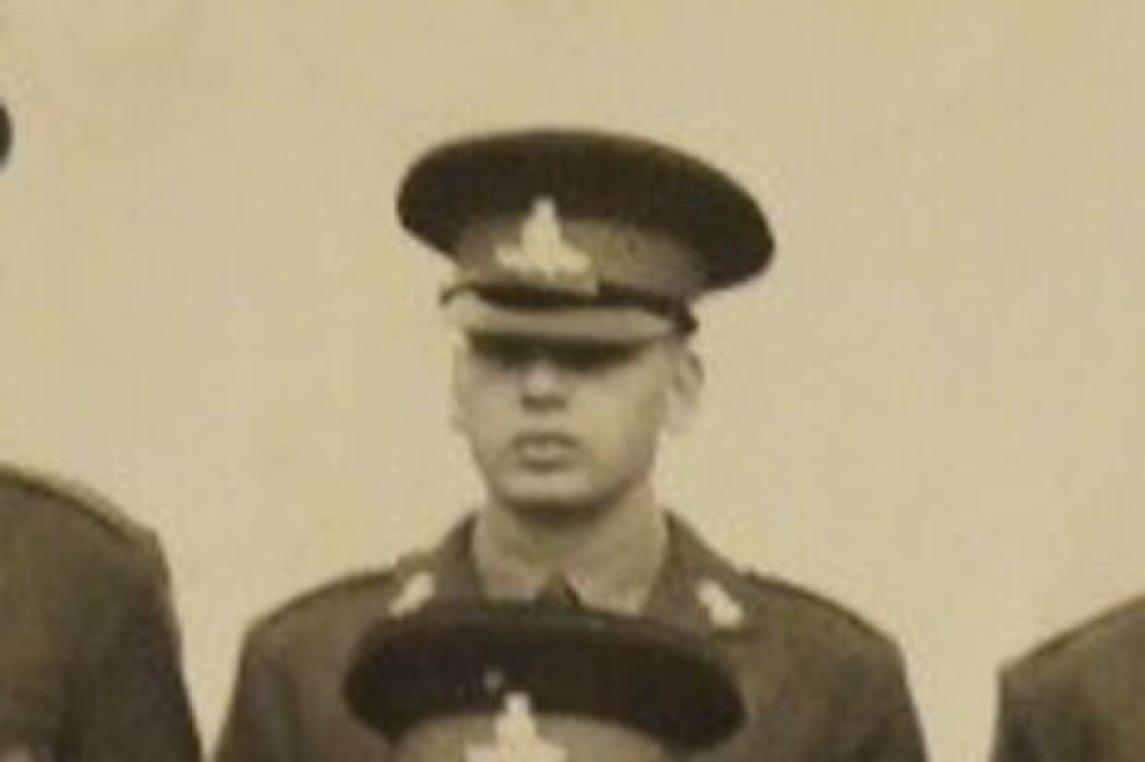
The Maddison case was not isolated. In 2008, the British government paid compensation to 360 veterans who had been used as test subjects in Porton Down experiments without full informed consent. The confirmed experiments included exposure to nerve agents, mustard gas, CS gas, and psychoactive substances including LSD. The recruitment method was consistently the same: soldiers were told they were participating in common cold research or similar benign studies, were offered small cash payments and extra leave, and were not informed of the actual nature of the experiments until they were already inside the facility.
The confirmed LSD experiments at Porton Down are the most directly relevant to the pattern of military personnel reporting anomalous psychological experiences during and following their service. The effects of LSD on perception, memory formation, and the interpretation of subsequent unusual experiences are well-recorded in the pharmacological literature. A soldier who was administered LSD without their knowledge, was exposed to deliberately disorienting experimental protocols, and was subsequently warned to maintain silence about what happened, would have exactly the combination of genuine unusual experience, memory confusion, and institutional silence that characterizes a subset of military UAP witness accounts.
Whether Bill Brooks was a Porton Down subject cannot be verified from his account alone. What can be verified is that the institutional framework he describes, coercive recruitment of soldiers for classified psychological experiments including LSD administration, with subsequent non-disclosure agreements and institutional pressure toward silence, accurately describes a real British military research program whose existence is established through court records, compensation settlements, and parliamentary documentation.
MKULTRA and the Atlantic Framework
The CIA’s Project MKULTRA, whose existence was established through the 1977 Senate Select Committee on Intelligence hearings chaired by Senator Frank Church and subsequently confirmed through the partial recovery of documents that had survived CIA Director Richard Helms’s 1973 document destruction order, was the most extensively recorded institutionalized human experimentation program in American history.
The scope of MKULTRA is specific: 150 research programs conducted at 80 institutions including hospitals, universities, prisons, and mental health facilities across the United States and Canada, operating from 1953 to 1973. The program used LSD and other psychoactive substances on unwitting subjects, developed psychological manipulation and behavior modification techniques, and explored the question of whether human beings could be programmed to perform actions without subsequent conscious memory of performing them.
Whether MKULTRA’s research framework was shared with NATO partner defense research programs through the known Cold War intelligence sharing structure is not established in the available declassified record. What is established is that the CIA and British intelligence maintained a well established close collaboration throughout the Cold War period, that Porton Down was identified by American intelligence as a partner facility in chemical and biological defense research, and that the experimental methodologies recorded in MKULTRA, LSD administration to unwitting subjects, psychological disorientation techniques, and post-experience memory management, correspond to the methodologies recorded in the Porton Down veteran compensation claims.
Whether this correspondence reflects genuine program coordination or independent parallel development of similar techniques by two allied defense research establishments responding to the same Cold War imperatives, is a question that the available declassified record does not clearly resolve.
The significance of MKULTRA for the military UAP witness pattern is specific: if the American defense research establishment was systematically investigating whether human experiences could be created, suppressed, and managed through pharmaceutical and psychological intervention, then the cluster of military UAP witnesses who report anomalous experiences followed by memory suppression, institutional silence, and subsequent partial recovery of suppressed material, exists in an institutional context where the tools for exactly this kind of management were known to exist and were being actively deployed.
Whether individual military UAP witnesses were subjected to deliberate memory management using MKULTRA or Porton Down techniques, or whether their reported memory irregularities reflect the natural psychological response to genuinely anomalous encounters combined with institutional pressure toward silence, is a question that the confirmed existence of both the anomalous encounters and the memory management programs makes genuinely difficult to resolve.
The Non-Disclosure Agreement as Institutional Tool
The non-disclosure agreement is the recorded institutional mechanism through which military UAP witness silence is maintained across every case in this library’s record.

Jim Penniston signed a statement about the Rendlesham Forest encounter that he subsequently stated had been altered from his original account before he signed the altered version. Larry Warren, another USAF witness to the Rendlesham events, recorded in his co-authored book Left at East Gate being debriefed by intelligence officials who took his original written statement and produced a sanitized version. The Soviet military engagement piece in this library covers the orders issued to Soviet military personnel following the 1978-1979 UAP engagement investigations, requiring silence about the encounters.
The institutional function of the NDA in the military context is different from its function in civilian employment contexts. Military non-disclosure agreements are enforced through the Uniform Code of Military Justice, whose penalties for violation include court-martial, imprisonment, and dishonorable discharge. The threat facing a military UAP witness who chose to speak publicly was not civil litigation but criminal prosecution under military law.
Whether this institutional enforcement mechanism was applied specifically to UAP witnesses or reflects the standard security architecture of any classified military installation is a question that answers itself: UAP encounters at classified installations are classified encounters, and classified encounters at any installation produce the same institutional response regardless of the nature of the encounter.
The recurring pattern of military UAP witnesses reporting institutional pressure toward silence, NDA signing, and career consequences for disclosure is not unique to UAP encounters. It is the standard institutional response to any classified incident. What makes the UAP pattern specifically significant is the cross-cultural consistency: American, British, Soviet, Belgian, and French military witnesses all report the same institutional response pattern regardless of the details of their encounters.
Whatever the encounters are, the institutional response to them is the same in every known national military context. This institutional consistency implies either that all major military establishments independently developed the same response protocol for the same class of unknown phenomenon, or that the response protocol was coordinated through the international military intelligence sharing structure whose existence appears in the NATO and Cold War intelligence cooperation records.
Rendlesham and Its Full Recorded History
The Rendlesham Forest incident of December 26-28, 1980 is the most extensively recorded British military UAP case and the one whose combination of physical evidence, witness testimony, institutional response, and subsequent revelation most fully illustrates the pattern developed below.
The incident occurred over three consecutive nights at RAF Bentwaters and RAF Woodbridge, twin bases operated by the United States Air Force Third Air Force under the NATO dual-key nuclear weapons arrangement. The facilities stored nuclear weapons. Their commander was Colonel Charles Halt.
On the first night, Sergeant John Burroughs and Airman First Class John Cabansag observed unusual lights in Rendlesham Forest adjacent to the base and approached them. Penniston, who followed with security personnel, subsequently claimed to have touched a structured craft and received the binary transmission. Burroughs has stated that his USAF medical records from the period immediately following the incident were classified and inaccessible to him for decades, and that when they were finally released following a Freedom of Information Act request, they showed radiation exposure treatment that was never explained to him.

On the third night, Colonel Halt himself led a security team into the forest following additional light observations. His contemporaneous audio tape recording, made on a handheld recorder as the events were occurring, is one of the most thoroughly recorded pieces of evidence in any military UAP case. The tape preserves Halt’s real-time observations of anomalous lights, his description of one of them firing laser-like beams toward the ground and toward the nuclear weapons storage area, and his team’s physical and instrument responses to what they were experiencing.
Halt’s subsequent recorded behavior is the institutional element that makes the Rendlesham case most significant for the broader institutional pattern: he submitted an official memorandum to the British Ministry of Defence describing the events, and subsequently stated in multiple recorded interviews that his official memo deliberately understated what occurred, that additional classified reporting was made to American intelligence channels, and that the British Ministry of Defence’s stated claim that the events had no defense significance was not accurate.
A base commander who submitted a deliberate understatement of events in his official memo is an institutional actor who made a deliberate choice to maintain the institutional management of the incident rather than provide a full account to his oversight authority. Whether this choice reflected his own assessment of the institutional constraints he was operating under, direct instruction from above, or the professional culture of military service that makes underreporting of inexplicable events the rational career choice, is a question the record raises without clearly resolving.
The Coercive Recruitment Pattern
Bill Brooks’s account of being recruited for Porton Down experiments through the offer of extra leave in exchange for participating in what he was told were routine tests is the detail that most directly matches the known Porton Down recruitment methodology.
Whether his account is accurate, the surviving evidence establishes that the methodology he describes was real and was used. The 360 veterans who received compensation in 2008 included individuals who had been recruited through exactly this mechanism: told they were participating in benign research, offered incentives, and not informed of the actual experimental content until they were already inside the facility.

The combination of institutional access and institutional vulnerability that military service provides is the factor that made military personnel the preferred experimental subjects for both Porton Down and MKULTRA: soldiers could be recruited without genuine informed consent because military culture does not create conditions for the refusal of institutional requests, their movements and activities were monitored by the institutional structure making follow-up observation easy, their subsequent silence was enforceable through military law, and their accounts if they ever made them public could be dismissed as the claims of individuals under military service conditions that the institutional framework could characterize as unreliable.
Whether the intersection of military personnel as preferred experimental subjects for classified psychological research and military personnel as the highest-concentration UAP witness group reflects a causal relationship, the same institutional conditions that make soldiers useful experimental subjects also make them UAP witnesses whose encounters occur at UAP-concentrated military installations, or a coincidental overlap, is the question that the institutional framework raises.
The Physical Evidence Claims
The most verifiable elements of military UAP witness accounts are the physical evidence claims: the radiation measurements, the physical trace evidence, and the institutional medical records.
Colonel Halt’s audio tape preserves his real-time description of radiation detector readings in Rendlesham Forest. The USAF subsequently conducted soil analysis of the reported landing site and recorded elevated radiation readings above background levels. Whether these readings were genuinely anomalous or reflected normal variation in the Suffolk soil composition is a question that the readings and the local geological context together would allow to evaluate, but whose complete analysis has not been published in an accessible peer-reviewed form.
John Burroughs’s classified medical records record radiation exposure treatment in the period following the Rendlesham incident. The radiation treatment of a USAF airman following a recorded UAP encounter at a nuclear weapons facility is one of the most specifically consequential physical evidence claims in the British military UAP record because it connects a human medical outcome to the incident in a form that appears in institutional records rather than in personal testimony alone.
Whether the radiation treatment was connected to the Rendlesham encounter or to some other undisclosed exposure in the course of Burroughs’s service at a nuclear facility is not established by the available record. What is established is that his records were classified, that their classification was maintained for decades after his discharge, and that when they were finally released they recorded treatment whose cause was never officially explained to him.
The combination of classified medical records, institutional silence, and confirmed treatment consistent with radiation exposure in a military witness to a UAP event at a nuclear facility is the physical evidence intersection that makes the Rendlesham case most directly relevant to the broader pattern being traced here.
What the Intersection Establishes
The intersection of well established Cold War military human experimentation programs and recorded military UAP witness accounts in the same institutional population, subject to the same institutional suppression mechanisms, produces a evidentiary problem that the available evidence has not resolved.
If military UAP witnesses were subjected to experimental psychological intervention as part of confirmed MKULTRA or Porton Down programs, then the memory irregularities, confabulation patterns, and institutional silence that characterize a subset of their accounts are potentially artifacts of deliberate psychological management rather than genuine reflections of anomalous experience. The encounter may be real and the memory may be managed, or the encounter may be managed and the memory may be the real anomaly.
If military UAP witnesses were not subjected to deliberate memory management but simply experienced the standard institutional pressure toward silence combined with the natural psychological response to genuinely anomalous encounters, then the recorded memory irregularities reflect the normal cognitive response to experiences that exceed the experiencer’s interpretive framework.
Whether the confirmed existence of experimental memory management programs in the same institutional context as recorded UAP encounters represents a causal relationship or an institutional coincidence is the question that the available evidence has established as genuinely important without providing the data that would resolve it.
Porton Down’s classified experimentation records have not been fully released. MKULTRA’s destroyed documents cannot be recovered. The classified medical records of military UAP witnesses are slowly being released through FOI processes that measure their progress in decades.
Whatever was done to the soldiers in the forests and the bases and the underground facilities, the institutional record of it is still mostly classified.
Whatever they saw, the institutional response was the same everywhere.
Sign here. Don’t speak. Go back to your post.