



The order came from the Ministry of Defense. It was issued to all units. The language was specific: UAP must not be engaged.
The reason given by a top Air Defense official, recorded in George Knapp’s account of his conversations with the director of the Soviet Union’s ten-year UAP investigation program, was equally specific: the objects may have incredible retaliatory capabilities.
This claim’s evidentiary basis needs to be stated precisely before going further. It rests on one source, journalist George Knapp, describing what a program director told him in conversation, based on Soviet-era materials Knapp himself has described as obtained illegally from Russia and that cannot be checked against the original archives. Knapp submitted this account to Congress in writing, which is a real, verifiable fact, and Knapp is a credentialed journalist with a long track record covering aerial phenomena. But the underlying claim about a Ministry of Defense stand-down order remains a secondhand account of unverifiable materials, not an independently confirmed military policy document, and this piece will keep that distinction clear throughout.
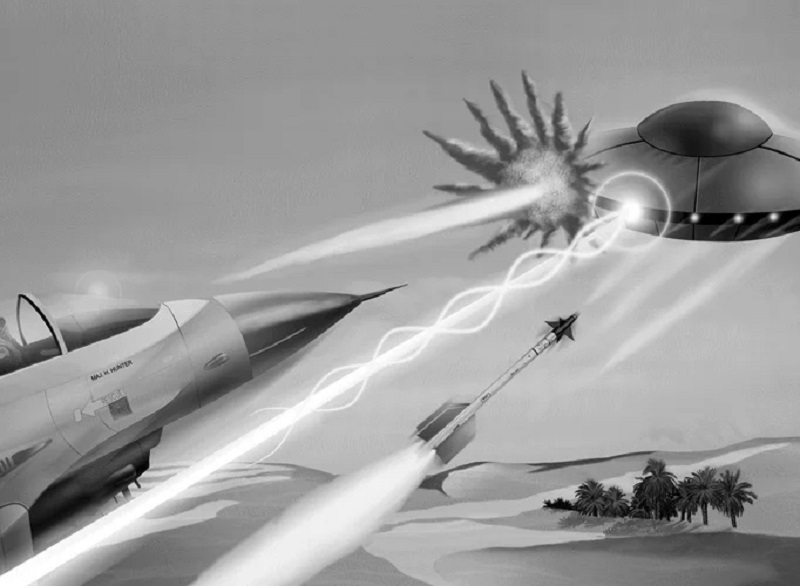
By the time the order was issued, the Soviet and Russian military had logged at least 45 separate engagements with UAP. In three of those engagements, Russian warplanes had crashed. Two pilots were killed. The objects, in the program director’s description to Knapp, were launched at incredible speeds in most incidents. In three incidents they demonstrated a different capability: they deployed what the record describes as decoys that lured the pursuing aircraft into situations from which they did not recover.
Decoys. Not just acceleration away from pursuit. Not just electromagnetic interference. Tactical decoys that exploited the pursuing pilot’s engagement instincts to create conditions for the aircraft’s destruction.
This is the content that Knapp placed in the Congressional record on July 26, 2023, in a letter submitted to the House Oversight Committee before its historic hearing on UAP. The letter was entered into the official Congressional record. It is in the public archive of the United States Congress.
The Soviet Investigation
The program that produced the 45 engagements record was, in Knapp’s characterization from his conversations with its director, probably the largest UAP investigation ever conducted. It ran for approximately a decade. It produced thousands of case files compiled from interviews with military personnel. Its scope, systematic and nationwide rather than case-by-case, gave it a completeness that no Western investigation program has matched in the available public record.
The Soviet Union’s institutional approach to anomalous phenomena was different from the American approach in a way that the comparison between their recorded responses illuminates. The American military’s official position, unchanged since 1969, was that UAP posed no threat to national security and did not merit systematic investigation. The Soviet military ran a ten-year systematic investigation and produced a doctrine change based on its findings.
Whether the American official position reflected genuine institutional belief or reflected the kind of managed public communication that the Robertson Panel and the CIA psychological warfare pieces in this library describe as official policy is the question that Knapp’s congressional letter raises. His letter notes directly that the dismissive stance since 1969 is in direct contrast to what has been revealed in documents, reports, and internal memos.
Documents, reports, and internal memos are not the public official position. The public official position since 1969 has been consistent. The internal record has been something else, recorded across the Navy UAP videos, the AATIP program, the Nimitz encounter report, and now the congressional testimony of a former NGA intelligence official.
Knapp has been reporting UAP since 1987. The Bob Lazar piece in this library covers his role in breaking the S4 story. His relationship with Senator Harry Reid, the Nevada Democrat who secured the classified funding for AATIP, is well established. His acquisition of Soviet UAP materials, described in his congressional letter as obtained illegally from Russia, represents a different acquisition pathway from the FOIA releases and official declassification records that most of this library’s UAP content is sourced from.
The materials Knapp obtained cover the operational history of a major military power’s encounter with UAP over a decade. Their provenance, illegally obtained from Russia, means they cannot be independently verified against the original Soviet archives. Their content, as Knapp represents it, is the most complete single-source account of military UAP engagement operations in any country’s known record.
What the Engagements Showed
The tactical pattern that emerges from the 45 engagement record, as described in Knapp’s congressional letter, is worth examining for what it implies about the objects’ capabilities and their relationship to the military forces pursuing them.
In most incidents the objects simply accelerated away. This is the pattern recorded in the American engagement record as well, from the 1952 Washington DC overflights through the Nimitz Tic Tac encounter. The objects demonstrate an acceleration capability that exceeds whatever pursuit capability is deployed against them and simply leave the engagement zone. No damage to either party. No tactical interaction beyond the display of speed differential.
The three incidents that produced crashes represent a different pattern. The program director’s description to Knapp characterizes these as the objects deploying decoys that drew the pursuit aircraft into fatal situations. This is not an acceleration event. This is a tactical engagement in which the object actively shaped the pursuing aircraft’s behavior by creating false targeting information and exploiting the pilot’s engagement responses.
The capability implied by this pattern is more disturbing than simple speed superiority. An object that can simply outrun pursuit is displaying a passive defense capability. An object that deploys tactical decoys to destroy pursuing aircraft is displaying active offensive tactical intelligence. It is not just fleeing. It is hunting.
The Ministry of Defense’s language reported to Knapp, that the objects may have incredible retaliatory capabilities, reflects this assessment. Given the sourcing caveat established above, the three crashes and two deaths should be read as a serious, credentialed secondhand claim rather than an independently confirmed record. It has not been verified against any primary Soviet or Russian archive.
The order’s instruction to stand down from engagement rather than to change tactics, seek better weapons, or continue the investigation with greater caution, reflects an institutional assessment: the engagement is not winnable at any available capability level, and continued engagement will produce continued losses without producing any strategic or intelligence benefit that justifies the casualties.
The CIA’s independent record of UAP activity at Soviet weapons facilities provides corroboration for the Soviet military’s own internal record from a completely independent intelligence source.
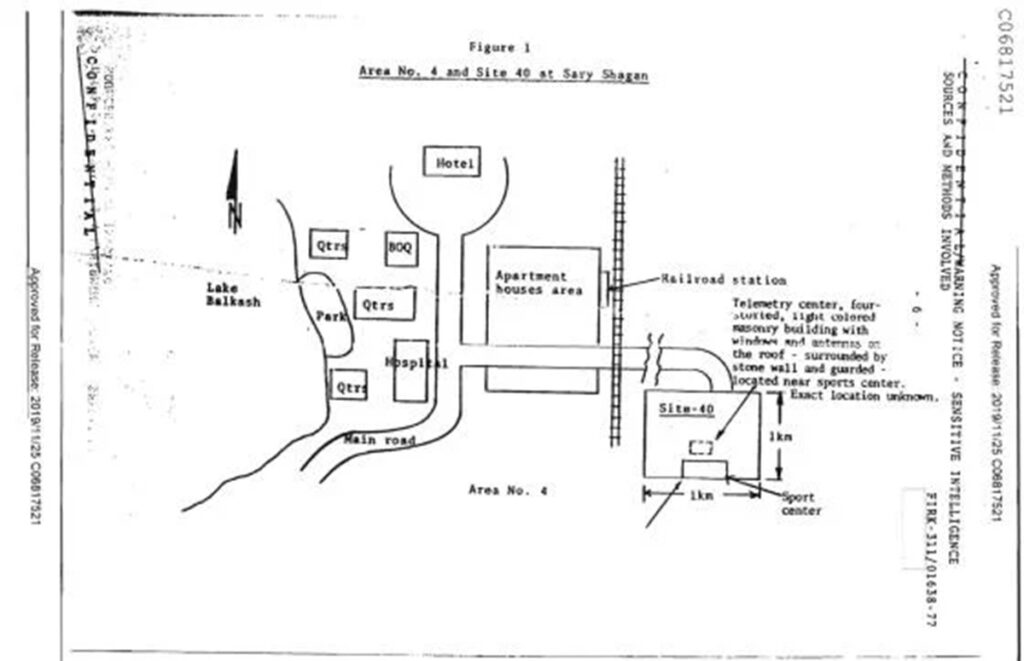
A CIA intelligence report, first released in heavily redacted form in 1978 and more fully declassified following a Mandatory Declassification Review request by researcher John Greenewald of The Black Vault, records a UAP sighting at the Soviet Union’s Sary Shagan Weapons Testing Range in present-day Kazakhstan in the summer of 1973. The range was one of the Soviet Union’s primary facilities for experimental missile and warhead development.
The sighting appears in the CIA report with the specificity of a formal intelligence product: the source, identified as a named individual whose name remains redacted, observed a bright green circular object or mass hovering above cloud level in a clear sky. Within ten to fifteen seconds of initial observation, the green circle widened and several concentric circles formed around the central mass. Within minutes the coloring disappeared entirely. No sound was associated with the phenomenon.
The CIA report’s intelligence value was not primarily the UAP sighting itself. It was the detailed map of the Sary Shagan facility’s layout, command hierarchy, and weapons testing program that accompanied the UAP account. The same report that recorded the green circular object also noted, in a separate passage, that according to hearsay, experiments involving laser weapons were being conducted at an unknown location at the range, involving powerful antennas.
Central Intelligence Agency
The convergence of an unexplained aerial phenomenon with a facility conducting experimental weapons development involving powerful antennas is the same pattern recorded at Malmstrom Air Force Base during the 1967 ICBM deactivation event. Whether the UAP at Sary Shagan was monitoring the laser weapon experiments, was affected by or affecting the antenna systems at the facility, or was present independently of the weapons testing program for reasons the intelligence report does not establish, is not determined by the available record.
What the CIA report establishes is that the American intelligence community was tracking UAP activity at Soviet weapons facilities in 1973 using the same intelligence collection methodology it used for recording the facilities’ weapons programs. The UAP sighting was included in a formal intelligence product alongside facility maps and personnel estimates, treated by the CIA’s analytical framework as a legitimate datum in the same report as the weapons testing material.
The Soviet military’s own internal program logged 45 engagement incidents and issued a stand-down order. The CIA’s independent intelligence collection recorded UAP concentration at Soviet weapons testing facilities in the same period. Two independent intelligence traditions, one from inside the Soviet system and one from outside it, describing the same general phenomenon at the same general locations.
The stand-down order, as Knapp reported it, covered Soviet military personnel. The CIA report covered a site. Neither is the complete picture, and the CIA report specifically is in the public record in a way the stand-down order is not.
The Dalnegorsk Crash and the Physical Evidence the Soviet Academy Analyzed
The Dalnegorsk incident of January 29, 1986 is the most extensively recorded physical trace UAP case in the Soviet record and the event that motivated the Soviet-Chinese joint research program recorded in the CIA’s reading room.
At approximately 8 PM on January 29, a luminous reddish sphere approximately one meter in diameter flew over Dalnegorsk, a mining town in the Maritime Territory of the Soviet Far East, at low altitude and crashed on Izvestkovaya Hill on the town’s eastern edge. Multiple witnesses observed the approach and impact. The object burned on the hillside for approximately one hour before the fire extinguished.
Soviet researchers who subsequently investigated the site recovered material from the crash location that was submitted to analysis at multiple Soviet scientific institutions including the Vladivostok Institute of Aviation Materials, the Khabarovsk Polytechnic Institute, and laboratories associated with the Soviet Academy of Sciences.
The findings of these analyses appear in the Soviet ufological research literature, including the work of Valery Dvuzhilny of the Committee on Anomalous Phenomena in the Maritime Territory, whose detailed investigation report is the primary source for the physical evidence findings.
The recovered material included: mesh-like metallic structures whose composition showed iron, silicon, carbon, and gold in unusual configurations; small spherical particles of various compositions; quartz crystals with structural anomalies; and material described as having unusual electromagnetic properties. The mesh-like structures, whose geometric regularity suggested manufactured rather than natural origin, were the most discussed element of the recovered material in the subsequent Soviet and international analysis.
Whether the recovered material genuinely represents manufactured extraterrestrial technology, represents natural mineral formations that the crash environment produced, or represents contamination of the crash site with industrial material from the mining operations in the surrounding area, is a question that the available analysis does not definitively resolve.
The CIA record referenced in the source describes the Soviet-Chinese joint research program that the Dalnegorsk incident motivated: Soviet and Chinese experts on anomalous phenomena met in Dalnegorsk specifically because of the concentration of UAP activity in the region, devising a joint investigation program and exchanging video and photographic materials on recorded incidents. The CIA record’s language, that scientists from the PRC and Soviet Far East started a joint UAP study, establishes that by the late 1980s the two largest communist powers were conducting coordinated official research into UAP phenomena at the institutional level, parallel to the American Stargate and AATIP programs covered in this library’s existing pieces.
Three major powers. Three institutional research programs. The same phenomenon reported from different national perspectives in the same period.
The American Contrast
The American military’s official position on UAP since 1969 has been the statement that Knapp quotes in his congressional letter: UAP do not pose a threat to national security and do not merit further study.
The recorded American military UAP encounters in this library’s archive tell a different story at the operational level.
The Malmstrom Air Force Base incident of 1967, recorded in the dedicated piece in this library, involved the simultaneous deactivation of ten Minuteman ICBMs during a UAP overflight. The deactivation of ten nuclear weapons by an unidentified aerial phenomenon is not consistent with the official position that UAP pose no national security threat. It is the most significant demonstrated interference with American strategic nuclear capability in the known record.
The Nimitz Tic Tac encounter of 2004 involved objects that David Fravor, in his congressional testimony, described as demonstrating capabilities far superior to anything we had then, have today, or are going to develop in the next ten-plus years. Objects with capabilities far superior to current American military technology, operating in American military airspace, are not consistent with the official position that UAP pose no national security threat.
The hundred-plus page scientific analysis of the Tic Tac encounter series, whose existence Fox News Digital has reported and whose non-public status is confirmed, analyzed the technological details and performance capabilities from the multi-week, multi-vehicle event series that preceded the Fravor engagement. A hundred-plus page scientific analysis of technological details and performance capabilities is not the work product of an institution that has concluded UAP do not merit further study.
The gap between the American military’s official public position and its recorded operational and analytical engagement with UAP is the contradiction that the entire body of evidence in this library’s UAP cluster reveals. The Russian military’s recorded response, a ten-year systematic investigation producing a doctrine change based on operational losses, is the alternative institutional response to the same class of phenomena that the American military’s official public position denies are worthy of serious attention.
Whether the gap between official position and operational reality in the American case reflects the Robertson Panel’s recorded recommendation that UAP sightings be actively debunked to prevent public interest from creating pressure on classified programs, or reflects a genuine institutional belief that the phenomena are not strategically significant despite the operational record, is the question that Grusch’s congressional testimony addressed.
Grusch and What He Testified
David Grusch’s testimony on July 26, 2023, to the House Oversight Committee’s national security subcommittee was the first formal congressional testimony under oath from a current or recently serving intelligence official specifically about non-human intelligence and recovered materials.
Grusch served at the National Geospatial-Intelligence Agency, a senior intelligence agency responsible for satellite imagery analysis and geographic intelligence. His work on UAP during his government service included participation in the UAP Task Force established in 2020. He is protected as a whistleblower under the Intelligence Community Whistleblower Protection Act, which provides legal protection for intelligence community personnel who disclose information about classified programs to Congress through the appropriate channels.
His testimony stated that the United States government is in possession of non-human intelligence and non-human biological material recovered from UAP crash retrieval operations. He stated that the programs managing these materials are hidden from congressional oversight through improper use of special access program classification. He stated that individuals with knowledge of these programs have faced illegal retaliation for attempting to disclose their existence through proper channels.
These are claims under oath from a credentialed intelligence official with legal whistleblower protection. The institutional response to his testimony, characterized by the Department of Defense as unsubstantiated and by other official spokespersons as lacking direct evidence, has been dismissal rather than investigation. Whether the dismissal reflects genuine institutional skepticism or the managed communication pattern that the Robertson Panel, CIA memo, and AATIP pieces in this library describe as official policy is the question that the persistent gap between official position and internal record continues to raise.
Graves and Fravor, the Navy pilots who testified alongside Grusch, provided the operational context that the Russian engagement record’s congressional submission paralleled from a different direction. Graves described ongoing UAP encounters by active-duty Navy pilots that he characterized as occurring daily. Fravor described the 2004 Tic Tac encounter in the technical terms that the hundred-plus page unreleased analysis covers in detail that has not been made public.
Three witnesses, one intelligence official and two operational pilots, all testifying under oath to the same congressional committee, describing a UAP reality that the military’s official public position has been denying since 1969.
The Pattern Across the Library
The Russian engagement record that Knapp submitted to Congress in 2023 is the most complete single-source account of military UAP operational losses in the publicly available record. It covers a decade-long systematic investigation, 45 engagements, three crashes, two deaths, and a doctrine change based on the findings.
The American record, assembled across the OES piece, the Pentagon UAP piece, the Nimitz piece, the Malmstrom piece, the Tehran piece, and now this piece, reveals a different institutional pattern: systematic denial combined with systematic operational engagement, internal programs whose existence has been recorded through FOIA and whistleblower testimony, and a public position maintained since 1969 that contradicts the known operational reality.
The Russian Ministry of Defense concluded that the objects have retaliatory capabilities and ordered its forces to stand down. The American military has officially concluded that the objects pose no national security threat and do not merit study, while internally maintaining programs that the Grusch testimony and the Knapp-Corbell congressional letters describe as extensive and ongoing.
The difference between these two institutional responses to the same class of phenomena is itself a data point. One major military power conducted a ten-year systematic investigation, recorded its findings internally, and changed its operational doctrine based on those findings. The other major military power maintained a public position of denial while internally conducting research and analysis programs whose scope and findings have not been publicly disclosed.
What the Russian investigation reportedly found, in the program director’s account to Knapp, was that the objects fought back when engaged, and two pilots reportedly died in the incidents described. This should be read as a serious, credentialed secondhand claim worth taking seriously, not as a confirmed finding.
The stand-down order has been in effect since before 1993. The hundred-plus page Tic Tac analysis has not been released. Grusch’s testimony is in the Congressional record.
The objects are still there. The official position has not changed. That same evidentiary category, credentialed but unverified, defines the broader disclosure debate this record sits inside