




The memory error explanation is correct for most of it.
Nelson Mandela did not die in prison in 1985. He was released in 1990, served as South Africa’s first democratically elected president from 1994 to 1999, and died on December 5, 2013. The people who remember his 1985 prison death, including the memorial service and the widow’s eulogy they feel certain they watched on television, are misremembering. The mechanism that produces this kind of misremembering appears in the peer-reviewed psychology literature with enough rigor that Fiona Broome’s multiverse explanation, whatever its merits as a cosmological hypothesis, is not required to account for the case.
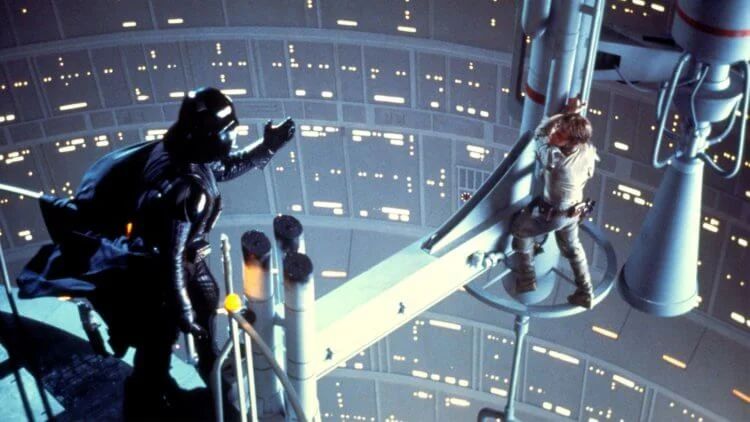
Darth Vader’s line in The Empire Strikes Back is Luke, I am your father in the memory of most people who have seen the film. The actual line is No. I am your father. The contracted version sounds more dramatically emphatic and is more linguistically natural as a revelation. Human reconstructive memory fills gaps with plausible completions. The memory for the line that most people have is the line their memory constructed from what felt like the most appropriate version of what they heard, not the actual audio on the tape.
The Berenstain Bears is spelled with an A, not an E. The Monopoly Man does not wear a monocle. Curious George does not have a tail. These are details that people misremember with high frequency and that memory error theory explains competently: the plausible version is what gets encoded, not the actual version.
The memory error framework handles these cases well. Its mechanism is documented, its predictions are consistent with the data, and its explanatory power is sufficient for the majority of what is called the Mandela Effect.
The problem is the minority. The cases that memory error theory handles poorly are not the famous ones. They are the ones, and they are the ones that the source material on this subject consistently skips past.
What Elizabeth Loftus Found
Elizabeth Loftus spent five decades at the University of California building the most comprehensive scientific account of human memory’s vulnerability to post-event modification. Her work is the strongest version of the conventional explanation for the Mandela Effect and it deserves treatment at full strength before the cases it cannot accommodate are introduced.
The misinformation effect, Loftus’s foundational finding, demonstrates that information encountered after an event can be incorporated into the memory of the event itself, creating a composite memory that feels entirely original. In her seminal 1978 studies, subjects who witnessed a staged automobile accident and were subsequently asked questions containing false information, describing the car as having run a stop sign when it had passed a yield sign, later reported the false information as part of their actual memory of the accident. The false information did not feel like an addition or a correction. It felt like what they had seen.
The social contagion mechanism extends this individual vulnerability to collective contexts. When one person states a false memory in a group, other members of the group who had no independent memory of the relevant detail sometimes incorporate the stated version into their own memory. The stated version displaces the absence of memory as effectively as it displaces an accurate memory. The group converges on the shared false version through a mechanism that is entirely social and entirely non-conspiratorial.
The false memory implantation studies show the full scope of the vulnerability. In the lost in the mall paradigm developed by Loftus, researchers told subjects that their family had confirmed a childhood event that had never occurred: being lost in a shopping mall as a young child. Approximately twenty-five percent of subjects subsequently reported genuine memories of the false event, with sensory and emotional detail. In studies conducted by researchers at Tennessee and elsewhere, subjects were told they had nearly drowned as children before being rescued, an event that had not occurred. Approximately fifty percent of subjects developed some form of false memory of the event.
These results establish that human memory is not a recording system. It is a reconstructive process that builds the past from available fragments, fills gaps with plausible material, and is vulnerable to contamination by post-event information, social suggestion, and leading questions. The vulnerability is not a malfunction. It is how memory works.
The Mandela Effect’s most famous cases are explained by this mechanism. The memory of Mandela’s 1985 prison death is the product of a plausible false event, the imprisonment of a political figure who was in fact imprisoned and who could plausibly have died there, spread through social contact and media discussion until enough people shared the memory that its apparent collective validation reinforced individual confidence in its accuracy.
This is the correct explanation for most of it. Most, not all.
The Category That Does Not Fit
The Fruit of the Loom logo does not contain a cornucopia. The Fruit of the Loom company has confirmed this directly in response to press inquiries. Their corporate archives contain no cornucopia. Their historical branding records, as far as any researcher has been able to verify, contain no cornucopia. The current logo contains fruit. It has always contained fruit.
Thousands of people, across multiple countries, multiple age groups, and multiple cultural contexts with no connection to each other, remember a cornucopia in the Fruit of the Loom logo. Their memory is not of a vague background element. It is specific: a wicker cornucopia or basket overflowing with fruit, positioned to the right or behind the main fruit grouping, providing a visual anchor for the arrangement.

The memory error framework accommodates this case with the following argument: the cornucopia is a visually plausible element in a fruit-themed brand identity. Reconstructive memory, working from the general category of fruit brand imagery, would naturally generate a cornucopia as a plausible completion of an incompletely encoded memory. The false memory is more than what the actual logo contains because reconstructive memory fills in detail from prototypical templates.
This explanation is internally consistent. It is also making a claim: that thousands of people’s memory for a brand they were exposed to repeatedly across years or decades is less accurate than their memory for the fictional version their reconstructive process generated, and that this occurred with sufficient consistency across independently operating individuals that it produced a convergent false memory of a non-existent element.
The explanation is possible. It is also unsatisfying in a technical sense: the Fruit of the Loom logo is a brand element that millions of people have looked at on product packaging dozens or hundreds of times over years of exposure. High-frequency repeated exposure to a visual stimulus is precisely the condition under which memory for the stimulus should be most accurate, not least accurate. The reconstructive error explanation requires accepting that the high-frequency exposure condition failed to produce accurate encoding, and produced instead a convergent false memory shared across independent observers.
The Kit Kat bar hyphen is a related case. Kit Kat, without a hyphen, is the current branding. Kit-Kat, with a hyphen, is what many people remember. The distinction between a hyphenated and unhyphenated brand name is exactly the kind of trivial orthographic detail that reconstructive memory should be least likely to add fictitiously, because it is the kind of detail that serves no narrative or semantic function in the memory’s reconstruction. People remember the hyphen because they saw it on the packaging repeatedly, or they don’t. Reconstructive memory does not add hyphens to brand names because they feel more narratively complete.
These are the cases that resist the memory error explanation. Not the famous ones. The ones.
The Physics of Parallel Timelines
The multiverse interpretation of the Mandela Effect is presented in popular discussion as a simple claim: we slipped from one universe to another and some details changed. This framing is less rigorous than the actual physics underlying the concept.
Hugh Everett’s Many Worlds interpretation of quantum mechanics, published in 1957 as his doctoral thesis at Princeton under John Wheeler, proposes that the quantum wavefunction never collapses. Every time a quantum measurement produces a definite result rather than a superposition of possible results, the universe does not collapse to the measured state: it branches. Every possible outcome of every quantum measurement occurs in a separate branch of the universal wavefunction. The branches do not interact with each other after the branch point. From within any branch, the universe appears to have collapsed to a definite state. From a perspective outside the wavefunction as a whole, every state exists simultaneously.
Max Tegmark, a physicist at MIT, has argued that the Many Worlds interpretation is not merely a philosophical position about quantum measurement but a literal description of a physical reality containing all possible quantum states simultaneously. In Tegmark’s framework, there are branches of the universal wavefunction in which the Fruit of the Loom logo contains a cornucopia, in which Mandela died in prison, in which the Kit Kat hyphen exists. These branches are real. They are as physically real as the branch we appear to occupy.
The question the Mandela Effect raises is whether information transfer between branches is possible. The standard interpretation is that branches are mutually inaccessible after divergence: no information, no matter, no observer can cross from one branch to another. In the standard Many Worlds interpretation, the Mandela Effect cannot be evidence of branch crossing because branch crossing is forbidden by the mathematics.
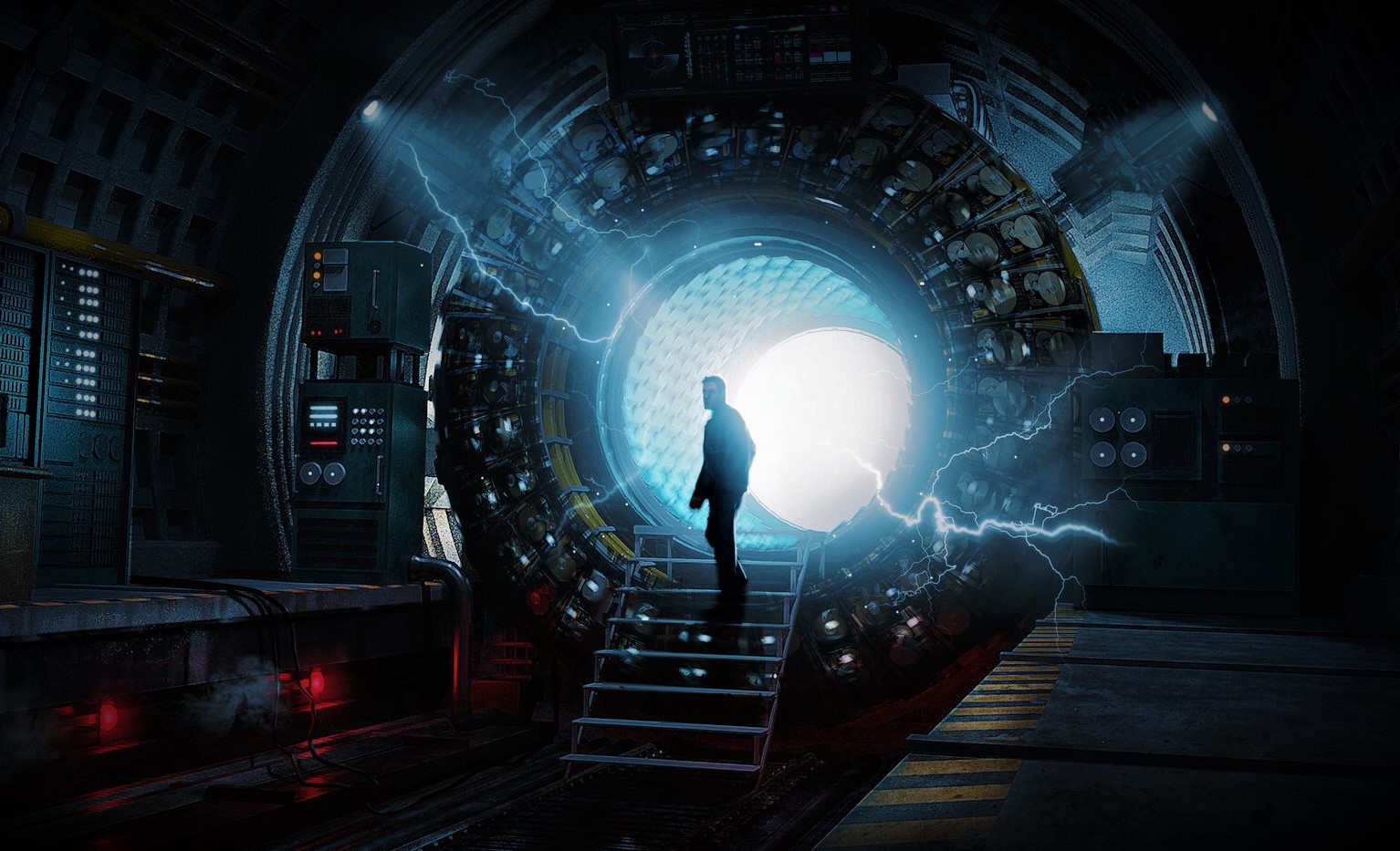
In the non-standard interpretations, which exist at the theoretical frontier, there are conditions under which very weak quantum information transfer between branches might occur. These conditions are not well-defined theoretically and have not been demonstrated experimentally. The CERN Large Hadron Collider’s high-energy collision experiments produce conditions in which quantum effects are maximized and in which, if branch interactions were ever to occur, they would be most likely to be observed. Whether the LHC has produced any such effects is not established and is probably not testable with current methods.
The multiverse explanation for the Mandela Effect does not require weak branch interaction in the Many Worlds framework. It requires only that human consciousness, which quantum mechanics already treats as playing a role in the measurement process, might be sensitive to information from adjacent branches in ways that manifest as memories of events that did not occur in the current branch. This is a considerably more modest claim than the popular version, and it is not obviously falsified by the current state of physics.
The Simulation Framework
The consciousness and simulation pieces already in this site’s library provide a third framework that neither the memory error nor the multiverse explanation requires but that accommodates both.
If the physical reality experienced by human consciousness is a computational substrate, as the simulation hypothesis in its various forms proposes, then the cases that resist the memory error explanation, the cases where physical artifacts appear to have changed rather than where memories of events appear to be false, could reflect what programmers call patch updates: revisions to the underlying substrate that propagate forward in time but not backward through the recorded history that observers carry in their memories.
A simulation that updates a brand logo from Kit-Kat to Kit Kat does not update the memories of everyone who has seen the previous version. The physical record in the world reflects the new version. The memories of observers who encoded the previous version reflect the old version. The discrepancy between memory and current physical record is not evidence of memory error. It is evidence of an update that did not include memory revision.
This framework is speculative in the sense that it requires accepting the simulation hypothesis as a premise. The simulation hypothesis, as recorded in the consciousness and simulation piece on this site, is a position with serious advocates in both philosophy and physics, including Nick Bostrom whose 2003 paper is among the most cited in contemporary philosophy of mind. It is not a fringe position. Whether it is correct is a different question.
What it provides for the Mandela Effect is a framework that accommodates both the memory error cases and the physical change cases under a single mechanism, without requiring the human memory system to be uniquely and selectively unreliable for precisely the class of details that would be most expected to be accurately encoded.
Why the Residual Matters
The Mandela Effect’s famous cases, Mandela’s death, Darth Vader’s line, the Berenstains, are memory errors. The psychological literature is adequate to explain them. The explanation does not require parallel universes or simulation substrates. It requires only that human memory is reconstructive, socially contagious, and vulnerable to post-event information, all of which is documented.
The cases that resist the memory error explanation are not famous. They are specific. The cornucopia. The hyphen. The geographic position of New Zealand. The shape of certain coastlines on maps that people remember having studied carefully. The number of US states people who were taught the answer in school now remember differently.
These cases are not explained by the memory error framework. They can be accommodated by the framework, in the sense that any individual memory error is always possible, but the convergent specificity of the false memories across independent observers who had high-frequency exposure to the actual objects makes the accommodation strained.
Whether the residual cases represent quantum branch interaction, simulation substrate updates, or a class of memory error that the current psychological framework has not fully characterized is not established. The residual cases exist. Their existence is documented. The explanation for them has not been settled.
The memory error framework correctly identifies most of the Mandela Effect as a product of human cognitive architecture rather than a cosmological anomaly. The residual cases correctly identified as resisting the memory error explanation are the data that the next theoretical development will need to accommodate.
The Fruit of the Loom packaging did not have a cornucopia. The company confirmed this. The thousands of people who remember it do not have a simple explanation for their memory. The framework that will explain it does not yet exist in any fully satisfying form.
The cornucopia is either the most and widely shared mass memory error in the documented psychological literature, or it is something else.
Both possibilities are worth taking seriously.