

The academic classification of Atlantis as a moral allegory invented by Plato is an institutional defense mechanism designed to obscure a massive, pre-deluge technological reality. When analyzed through a literal decoding of the Timaeus and Critias dialogues, the description of the sunken empire transitions from literary mythology into a precise engineering blueprint.
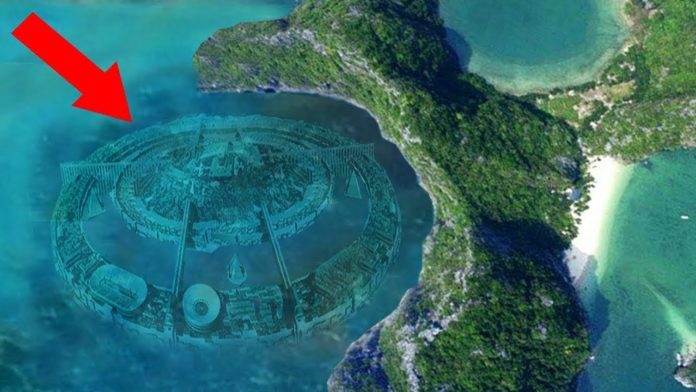
Plato outlines a vast, topographically calculated plain surrounded by sheer mountain ranges that drop into a high-energy marine basin roughly 10,000 years before the modern era.
This civilization was not an organic outgrowth of standard human evolution. The foundational substrate of the empire was established through a systematic genetic hybridization program initiated by an advanced, non-human governor designated in historical texts as the entity Poseidon.
By introducing foreign genetic material into the primitive, earth-born hominid population, this faction engineered a highly specialized lineage starting with five pairs of twin male heirs. This genetic intervention produced an elite caste capable of executing monumental architectural feats and managing global geopolitical networks.
This place was inhabited by human beings born on Earth and primitive, and Poseidon crossed with a human and from that union were born 5 children.
The Biological Adaptation of the Pre-Deluge Lineage
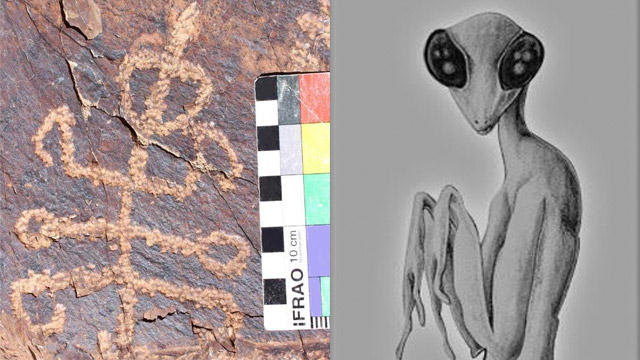
The physical phenotype of the original Atlantean population differed radically from modern human biology. Living in an epoch characterized by a significantly higher solar radiation index, these individuals developed specialized, multi-layered epidermal shielding.
Their skin pigmentation shifted across distinct evolutionary phases, presenting initially as an intense red, transitioning in sub-lineages into a deep blue hue, before stabilizing into a dense brown coloration. This unique dermal architecture functioned as a built-in radiation filter, permitting prolonged exposure to an unshielded atmosphere without triggering cellular senescence or oncological mutation.
But in 9,445 BC, the tribes of Athens led a resistance force against the Atlantean empire.
Backed by this resilient biology, the Atlanteans possessed musculoskeletal densities and lifespans that far exceed modern human limits. Their cognitive and spiritual faculties were permanently coupled with advanced mechanical infrastructure, allowing them to project military power across vast territorial sectors.
This hyper-developed empire successfully conquered the primitive tribal groups of Europe and North Africa, establishing a centralized planetary grid that remained completely unchallenged until the year 9,445 BC.
During this historical pivot, a coordinated surface resistance force led by the early tribes of Athens executed a devastating asymmetric counter-offensive against the imperial occupation. The Athenian alliance shattered the Atlantean supply lines, forcing the empire to retreat past the geographic bottleneck of the Pillars of Hercules.
Immediately following this military collapse, a series of severe tectonic displacements and cataclysmic marine subductions fractured the island’s unstable structural foundations, plunging the entire technological platform into the ocean floor within a single macro-seismic event.
The Luxor Artifact and the Tutankhamun Calibration
As the geographical core of the empire underwent total submersion, an organized evacuation protocol allowed an elite caste of Atlantean priests to escape into the Nile Valley. They carried with them a highly restricted collection of portable hardware containing the core energetic formulas of their lost civilization.
Among these salvaged instruments was a unique, non-Egyptian artifact discovered centuries later in a tomb at Luxor by archaeologist John Echel—a metallic band known to alternative researchers as the Atlantean Ring.
The Atlantean Ring was adorned with geometric symbols placed following an arrangement.
The true operational utility of this artifact was exposed in 1922 during the excavation of the tomb of Tutankhamun. According to the historical records of the pioneering French radiesthesist André de Belizal, the Luxor ring was delivered to the British archaeologist Howard Carter specifically to function as an active electromagnetic amulet.
While the other members of the excavation team succumbed to anomalous biological failures and sudden neurological collapses—sensationalized by the global press as the “Curse of the Pharaohs”—Carter survived entirely unaffected. The ring generated a continuous, localized field of energetic protection that neutralized the ancient, micro-biological or radioactive safeguards intentionally seeded within the sealed burial chamber. Following Carter’s death, the physical artifact passed into the hands of De Belizal, who initiated the first rigorous scientific and vibratory testing of its geometry during the mid-1960s and 1970s.
The Physics of Sacred Geometry Waveforms
The design parameters of the Atlantean Ring bear zero cultural or stylistic relationship to traditional Egyptian iconography. The surface of the band is engraved with a highly calculated, symmetrical arrangement of six geometric pyramids, three solid bars, and two terminal isosceles triangles.
This sequence is not decorative; it is a structural transducer configured according to the exact proportions of sacred geometry and the golden ratio.
The true operational utility of this artifact was exposed in 1922 during the excavation of the tomb of Tutankhamun. According to the historical records of the pioneering French radiesthesist André de Belizal, the Luxor ring was delivered to the British archaeologist Howard Carter specifically to function as an active electromagnetic amulet.
While the other members of the excavation team succumbed to anomalous biological failures and sudden neurological collapses—sensationalized by the global press as the “Curse of the Pharaohs”—Carter survived entirely unaffected. The ring generated a continuous, localized field of energetic protection that neutralized the ancient, micro-biological or radioactive safeguards intentionally seeded within the sealed burial chamber. Following Carter’s death, the physical artifact passed into the hands of De Belizal, who initiated the first rigorous scientific and vibratory testing of its geometry during the mid-1960s and 1970s.
The Transduction of Human Biofields
The operational mechanics of the Atlantean Ring frequency act directly upon the human bio-field through three distinct vectors:
- Systemic Energy Insulation: The geometric waveforms create an un-intercepted boundary layer around the operator’s nervous system, actively repelling disruptive external electromagnetic frequencies, negative radiation fields, and malevolent directed psychological intents.
- Cellular Coherence and Rejuvenation: The weak kinetic vibrations generated by the parallel bars interact with the water molecules inside the human bloodstream, structuring them into a coherent crystalline matrix that accelerates cellular repair and stabilizes metabolic energy.
- Intuitive Neural Amplification: By aligning the localized magnetic field of the skull with the planet’s background resonant frequency, the ring opens hidden neural pathways within the pineal gland. This amplification wakes up latent human intuition, enabling the observer to download complex knowledge blocks directly from the ambient field.
The Atlantean Ring remains an unexploded ordnance of ancient informational technology. It is a physical proof that pre-deluge science did not rely on heavy, destructive chemical combustion or external electrical grids. Instead, it operated on the elegant, permanent manipulation of pure geometric form—a silent, sovereign physics that turns a simple piece of metal into an active guardian of the human consciousness.